PANACHES Culture · Works

Works that feed creation.

Discover films, animation, series, anime, documentaries, live, manga, BD, comics, books, games, music, then explore their associated studios, tools and articles.

884 works · 274 entries

Akira
Manga 1982 6 Volumes

Akira

In Neo-Tokyo in 2019, a massive city rebuilt after a catastrophe destroyed the old capital, Kaneda leads a gang of teenage bikers frequently involved in violent clashes. After an accident, his friend Tetsuo is taken in by the military, who discover that he possesses strange psychic abilities. As these powers become increasingly difficult to control, Kaneda is drawn into secret experiments, political struggles, and t…

  • Action
  • Horror
  • Crime
🇯🇵 Japan
Aldous Huxley : Island
Book

Aldous Huxley : Island

Welcome to Pala, an island where the East and the West embrace each other, where everything is for the best in the fairest, wisest, most peaceful environment. Utopia? Either. But for Will Farnaby, a journalist and happy shipwrecked, the dream is real. Communion of men and nature, artificial paradises, meditation, wisdom, freedom, respect for resources and individuals... It was said imaginary: Pala opens to him, very…

  • Science fiction
  • Novel
  • Philosophy
🇬🇧 United Kingdom
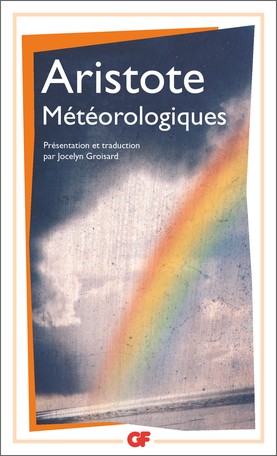
Aristote : Meteorology
Book

Aristote : Meteorology

To the curious reader to know how the Ancients represented the Earth in practice within the Universe and how they explained phenomena as diverse as comets, shooting stars and the Milky Way, winds and rivers, rain and hail, the salinity of the sea, earthquakes or rainbows, this treaty will allow us to discover what was on These questions the teaching of Aristotle, whose conceptions have exerted a considerable influen…

  • Philosophy
🇬🇷 Greece
Aristotle: Does Happiness Come Naturally?
Book

Aristotle: Does Happiness Come Naturally?

Is happiness a natural disposition, the result of learning, or something achieved through our actions? In Does Happiness Come Naturally?, a selection of Aristotle's writings invites readers to examine the conditions of a truly fulfilling life. The philosopher explores the roles of virtue, pleasure, knowledge, and fortune in the pursuit of happiness. He distinguishes temporary satisfactions from a life directed towar…

  • Philosophy
🇬🇷 Greece
Aristotle: Eudemian Ethics
Book 2013

Aristotle: Eudemian Ethics

What constitutes a happy life, and which qualities allow human beings to achieve it? In Eudemian Ethics, Aristotle examines the conditions of happiness and the role of virtue in human existence. He explores the relationships between pleasure, courage, justice, and friendship, while considering freedom of choice, responsibility for one's actions, and the influence of external circumstances. For Aristotle, happiness i…

  • Philosophy
🇬🇷 Greece
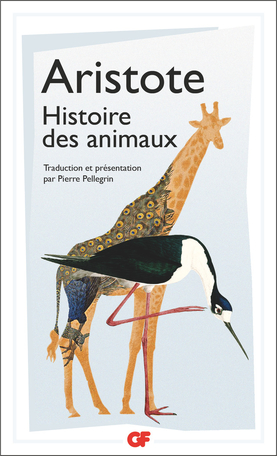
Aristotle: History of Animals
Book

Aristotle: History of Animals

How can we understand the diversity of the animal world and the characteristics that distinguish different species? In History of Animals, Aristotle undertakes an extensive investigation into living creatures, their bodily structures, behaviors, and methods of reproduction. He compares terrestrial and aquatic animals, examining their organs, movements, feeding habits, and relationships with their environments. By id…

  • Philosophy
🇬🇷 Greece
Aristotle: Metaphysics
Book

Aristotle: Metaphysics

What is being, and what are the fundamental principles of reality? In Metaphysics, Aristotle seeks to define a science capable of studying what exists insofar as it exists, independently of the particular domains explored by other disciplines. He examines first causes, the nature of substances, and the principles that make it possible to understand the existence of things. This investigation, which he calls first ph…

  • Philosophy
🇬🇷 Greece
Aristotle: Nicomachean Ethics
Book

Aristotle: Nicomachean Ethics

How can we lead a good life, and what activity gives human existence its ultimate meaning? In Nicomachean Ethics, Aristotle investigates the highest good toward which human actions are directed: happiness, understood as the fulfillment of a life lived in accordance with virtue. He examines the formation of character, courage, temperance, justice, and practical wisdom, while exploring the roles of pleasure, friendshi…

  • Philosophy
🇬🇷 Greece
Aristotle: On the Heavens
Book

Aristotle: On the Heavens

How is the universe organized, and what principles govern the movement of celestial bodies? In On the Heavens, Aristotle examines the structure of the cosmos, the nature of heavenly bodies, and the principles distinguishing the terrestrial world from the regions above. He defends a conception of a unique, spherical, and eternal universe, with an immobile Earth at its center. While terrestrial elements undergo change…

  • Philosophy
🇬🇷 Greece
Aristotle: On the Soul
Book 1982

Aristotle: On the Soul

What is the soul, and what distinguishes a living being from an inanimate body? In this treatise, Aristotle examines the views of earlier philosophers before defining the soul as the fundamental principle of life. From the nutritive functions shared by plants and animals to sensation, desire, movement, and thought, he explores the faculties that characterize different forms of living beings. His investigation into t…

  • Philosophy
🇬🇷 Greece
Aristotle: Physics
Book

Aristotle: Physics

What is nature, and how can movement and change be explained? In Physics, Aristotle seeks to understand the principles governing transformations in the natural world. He examines different forms of motion, the relationships between matter and form, and the causes that explain natural phenomena. His investigation also addresses time, place, continuity, and infinity, while exploring the fundamental conditions that mak…

  • Philosophy
🇬🇷 Greece
Aristotle: Poetics
Book

Aristotle: Poetics

What makes a story compelling, and how can a work of art evoke emotions? In Poetics, Aristotle examines the principles of poetic creation and the different ways of representing human actions. Focusing particularly on tragedy and epic poetry, he analyzes plot construction, the role of characters, the sequence of events, and the effects produced on an audience. His investigation distinguishes a mere succession of inci…

  • Writing
  • Essay
  • Philosophy
🇬🇷 Greece
Aristotle: Politics
Book

Aristotle: Politics

Why do human beings live in communities, and what makes a government just? In Politics, Aristotle examines the origins of the city-state, the role of citizens, and the different ways political power can be organized. Through his study of constitutions, he distinguishes governments directed toward the common good from those serving the private interests of their rulers. His investigation also addresses justice, the d…

  • Philosophy
🇬🇷 Greece
Aristotle: Rhetoric
Book

Aristotle: Rhetoric

How can words persuade, and what mechanisms make a speech convincing? In Rhetoric, Aristotle examines the means by which a speaker can defend an idea, develop an argument, and influence an audience's judgment. He distinguishes logical reasoning, the credibility of the speaker, and the emotions of listeners, while studying the different forms of discourse used in political and judicial life. His investigation gives p…

  • Philosophy
🇬🇷 Greece
Aristotle: Short Treatises on Natural History
Book

Aristotle: Short Treatises on Natural History

How do we perceive the world, why do we retain memories, and what happens when we sleep? In Short Treatises on Natural History, Aristotle brings together several investigations into functions shared by the soul and body. He examines the mechanisms of sensation, memory, sleep, and dreams, while also exploring respiration, aging, and the conditions of life and death. By studying these phenomena in living beings, he se…

  • Philosophy
🇬🇷 Greece
Assassination Classroom
Manga 2012 21 Volumes

Assassination Classroom

Class 3-E at Kunugigaoka Junior High welcomes a highly unusual teacher: an immensely powerful creature capable of moving at incredible speed and responsible for destroying a large part of the Moon. He announces that he will destroy Earth in one year unless his students manage to assassinate him before then. Nicknamed Koro-sensei, he nevertheless proves to be a caring and exceptionally effective teacher, helping his …

  • Action
  • Comedy
  • Supernatural
🇯🇵 Japan
Being in full consciousness
Book

Being in full consciousness

"The man who lives in the full consciousness understands, acts. The man who is unconscious, not vigilant, mechanical, robotized, reacts. And when you act immediately, in full consciousness, by observing with attention, your intelligence is sharpened. You begin to be luminous, to radiate." "Living in full consciousness is living by being in the present moment, attentive, aware of yourself and aware of everything that…

  • Self-help
  • Philosophy
🇮🇳 India
Berserk
Manga 1989 43 Volumes

Berserk

Guts is a lone mercenary shaped by a violent childhood and a life spent on battlefields. His encounter with Griffith, the charismatic leader of the Band of the Hawk, changes his life and draws him into wars, political ambitions, and increasingly brutal conflicts. As the bonds between the group’s members grow stronger, Guts begins to question which path he wants to follow and what place his own desires should have in…

  • Action
  • Adventure
  • Drama
🇯🇵 Japan
Blaise Pascal: Man Is a Thinking Reed
Book

Blaise Pascal: Man Is a Thinking Reed

What gives human beings their greatness when they remain so fragile before the immensity of the universe? In Man Is a Thinking Reed, a selection of fragments from the Pensées, Blaise Pascal explores the contradictions of the human condition. Capable of reasoning, acquiring knowledge, and becoming aware of their own existence, human beings nevertheless remain subject to error, passion, and death. Pascal examines this…

  • Philosophy
🇫🇷 France
Blaise Pascal: On the Art of Persuasion
Book

Blaise Pascal: On the Art of Persuasion

Why do some ideas convince us through their logic, while others win our agreement because they appeal to us? In On the Art of Persuasion, Blaise Pascal examines the mechanisms through which human beings accept an opinion or recognize a truth. He distinguishes two paths to persuasion: the understanding, which responds to rational proofs, and the will, which is influenced by desires and inclinations. This investigatio…

  • Philosophy
🇫🇷 France
Blaise Pascal: On the Geometrical Spirit
Book 1728

Blaise Pascal: On the Geometrical Spirit

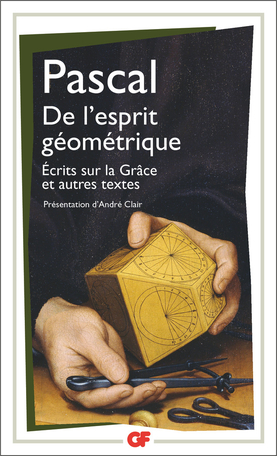
How can we distinguish truth from error and construct rigorous reasoning? In On the Geometrical Spirit, Blaise Pascal examines the principles that make it possible to demonstrate a proposition with clarity and certainty. Taking geometry as his model, he explores the role of definitions, axioms, and the logical progression of proofs. He shows, however, that not everything can be defined or demonstrated, since all kno…

  • Philosophy
🇫🇷 France
Blaise Pascal: Thoughts
Book 1670

Blaise Pascal: Thoughts

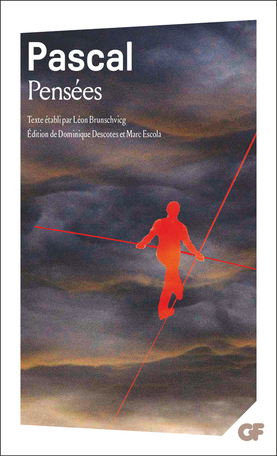
What does it mean to be human, and how can we give meaning to our existence? In Pensées, Blaise Pascal explores the contradictions of the human condition, divided between greatness and wretchedness, reason and passion, the desire for happiness and the awareness of death. He examines the illusions governing human behavior, the need for diversion, the limits of knowledge, and the difficulties involved in seeking truth…

  • Philosophy
🇫🇷 France
Blaise Pascal: Three Discourses on the Condition of the Great
Book

Blaise Pascal: Three Discourses on the Condition of the Great

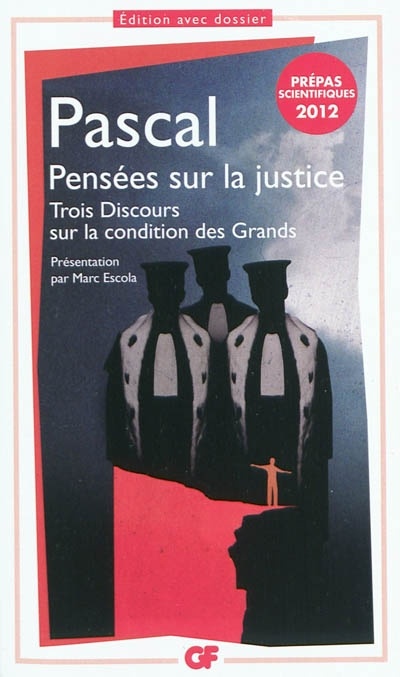
Do birth, wealth, and power make one human being superior to another? In Three Discourses on the Condition of the Great, Blaise Pascal examines the foundations of social hierarchies and the duties of those who occupy privileged positions. Through three lessons addressed to a young aristocrat, he argues that distinctions of rank rest on human conventions rather than natural superiority. He contrasts established great…

  • Philosophy
🇫🇷 France
Bleach
Manga 2001 74 Volumes

Bleach

Ichigo Kurosaki has always been able to see ghosts, but this ability doesn't change his life nearly as much as his close encounter with Rukia Kuchiki, a Soul Reaper and member of the mysterious Soul Society. While fighting a Hollow, an evil spirit that preys on humans who display psychic energy, Rukia attempts to lend Ichigo some of her powers so that he can save his family; but much to her surprise, Ichigo absorbs …

  • Action
  • Adventure
  • Supernatural
🇯🇵 Japan
Boruto: Two Blue Vortex
Manga 2023 8 Volumes

Boruto: Two Blue Vortex

Three years after the events that turned Konoha upside down, Boruto Uzumaki lives far from the village and continues his training in order to master his new abilities. Now regarded as an enemy by those who were once close to him, he must deal with the consequences of a deeply altered reality and increasingly dangerous opponents. When a new threat strikes Konoha, Boruto returns to the heart of the conflict, while Sar…

  • Action
  • Adventure
  • Fantasy
🇯🇵 Japan
Camus: The Just Assassins
Book 1970

Camus: The Just Assassins

In revolutionary Russia, a group is preparing an attack on a grand duke. The play confronts commitment, murder, innocence and moral limits of political action.

  • Philosophy
🇫🇷 France
Camus: The Myth of Sisyphus
Book 2000

Camus: The Myth of Sisyphus

Camus starts from the question of suicide to think the absurd, born from the mismatch between the human desire for meaning and the silence of the world. He defends a lucid revolt that allows to live without false hope.

  • Essay
  • Philosophy
🇫🇷 France
Camus: The Rebel
Book 1969

Camus: The Rebel

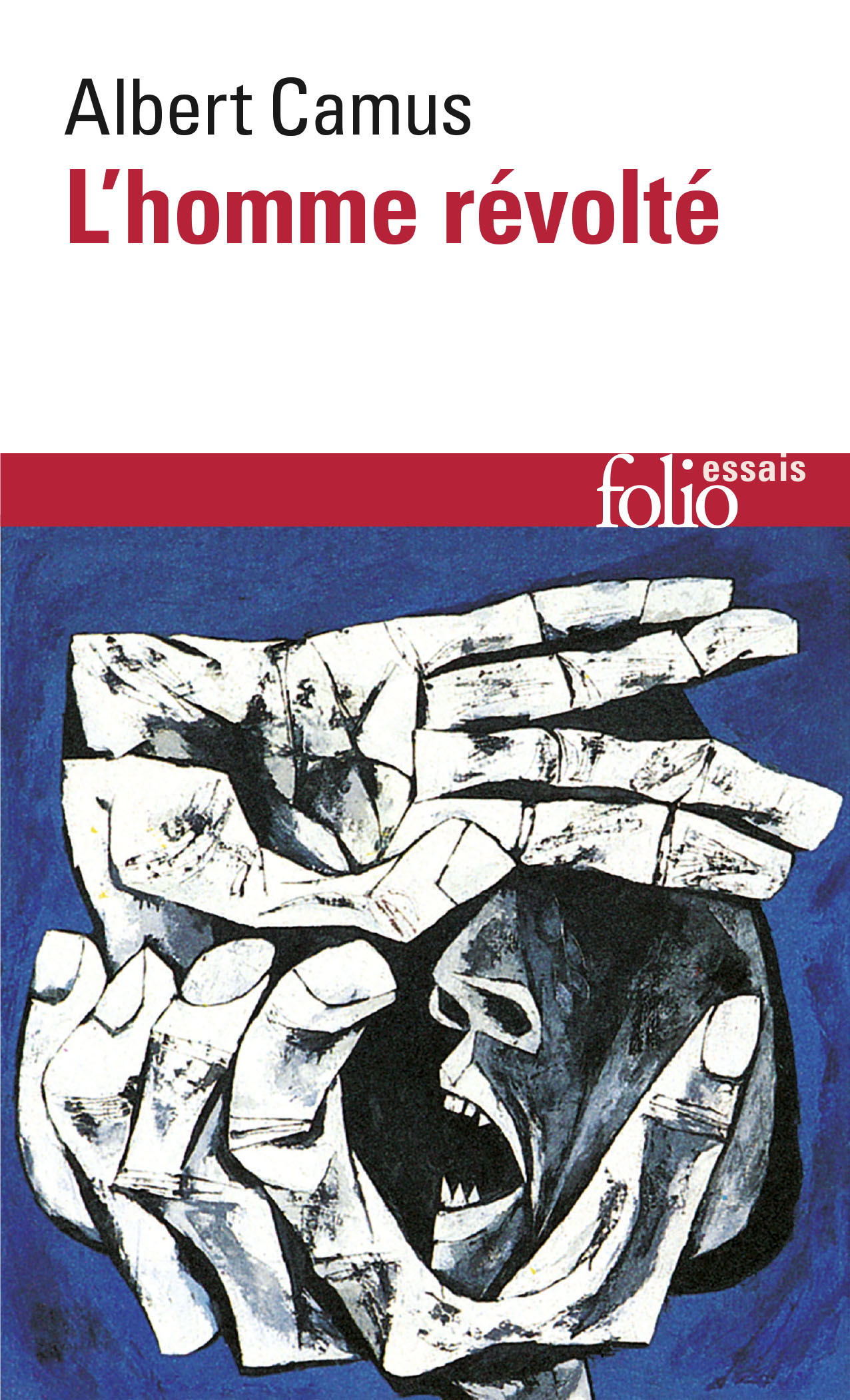
Camus studies the metaphysical and historical forms of revolt. He looks at how to refuse injustice without turning emancipation into terror or sacrificing the human being to an absolute idea.

  • Philosophy
🇫🇷 France
Camus: The Stranger
Book 1998

Camus: The Stranger

Meursault goes through his mother's death, murder and trial with apparent indifference. Camus shows the absurd, social judgment and confrontation of a man with the truth of his condition.

  • Philosophy
🇫🇷 France
Chainsaw Man
Manga 2018 24 Volumes

Chainsaw Man

Denji is a young man buried in debt who survives by hunting devils with Pochita, a small demonic creature with a chainsaw. After a betrayal costs him his life, Pochita merges with him and transforms his body, giving him the ability to become Chainsaw Man. Recruited by Public Safety, Denji joins a unit specializing in devil hunting and discovers a world where humans, supernatural creatures, and secret organizations a…

  • Action
  • Comedy
  • Drama
🇯🇵 Japan
Cicero: Academica
Book

Cicero: Academica

Can we attain certain knowledge, or are our judgments always open to question? In Academica, Cicero examines the foundations of knowledge and the limits of human certainty. Through a confrontation of Greek philosophical doctrines, he presents the arguments of the Academic skeptics against Stoic theories of truth. He questions the reliability of sensory perception, the possibility of distinguishing a true impression …

  • Philosophy
🇮🇹 Italy
Cicero: As It Should Be Among Honorable Men…
Book

Cicero: As It Should Be Among Honorable Men…

What makes someone an honorable person, and how should we act justly toward others? In As It Should Be Among Honorable Men…, a selection from On Duties, Cicero examines the principles that should guide human conduct. He distinguishes four essential dimensions of virtue: the pursuit of truth, respect for justice and commitments, greatness of spirit, and self-control. These closely connected qualities help define the …

  • Philosophy
🇮🇹 Italy
Cicero: On Duties
Book

Cicero: On Duties

How can we determine what is right when our personal interests seem to conflict with our moral obligations? In On Duties, Cicero examines the principles that should guide human conduct, both in private life and in social and political relationships. Drawing particularly on Stoic philosophy, he distinguishes what is morally honorable from what appears useful or advantageous. He explores the major virtues, the demands…

  • Philosophy
🇮🇹 Italy
Cicero: On Fate
Book

Cicero: On Fate

Are our actions predetermined, or are we genuinely free to choose? In On Fate, Cicero examines the relationships between necessity, natural causes, and human will. Confronting Stoic, Epicurean, and Academic doctrines, he questions the idea that all events are governed by an inevitable chain of causes. His investigation explores the consequences of this conception for moral responsibility, the possibility of acting o…

  • Philosophy
🇮🇹 Italy
Cicero: On the Ends of Good and Evil
Book

Cicero: On the Ends of Good and Evil

What is the highest good that human beings should pursue in order to lead a happy life? In On the Ends of Good and Evil, Cicero confronts the major ethical doctrines of ancient philosophy to examine the foundations of happiness and virtue. Through a series of dialogues, he presents Epicurean teachings, which place pleasure at the center of existence; Stoic principles, which regard virtue as the only true good; and t…

  • Philosophy
🇮🇹 Italy
Cicéron : On Divination
Book

Cicéron : On Divination

Why today read this Latin treatise written in 44 B.C.E.? First, because it informs us about the different types of divination practiced in Rome and Greece and throughout the Mediterranean world: it enlightens the origin and functioning of it, but above all it analyses the beliefs and theories related to these practices. Then, because many historical, philosophical and literary documents, especially fragments of Lati…

  • Philosophy
🇮🇹 Italy
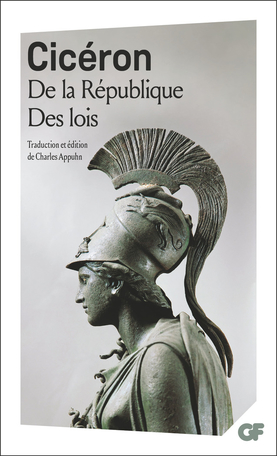
Cicéron : On the Republic – On the Laws
Book

Cicéron : On the Republic – On the Laws

"Cicero, in my opinion, is one of the greatest spirits that have ever been: the soul always beautiful, when it was not weak." Montesquieu

  • Essay
  • Philosophy
  • Political
🇮🇹 Italy
Compassion
Book

Compassion

Treatise on compassion by this tantric master. In contrast to the passion by which the subject, possessed by biological energies, is a slave to himself, compassion indicates that he has transcended physiology, works consciously and is master of his energies.

  • Self-help
  • Philosophy
🇮🇳 India
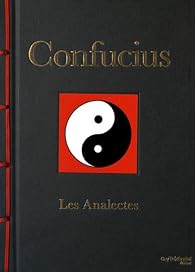
Confucius: The Analects
Book

Confucius: The Analects

How can we become virtuous individuals and build a society founded on respect and harmony? In The Analects, the teachings attributed to Confucius explore the principles that should guide human conduct, social relationships, and the exercise of political authority. Through conversations with his disciples, observations, and brief reflections, the Chinese philosopher emphasizes benevolence, righteousness, learning, an…

  • Philosophy
🇨🇳 China
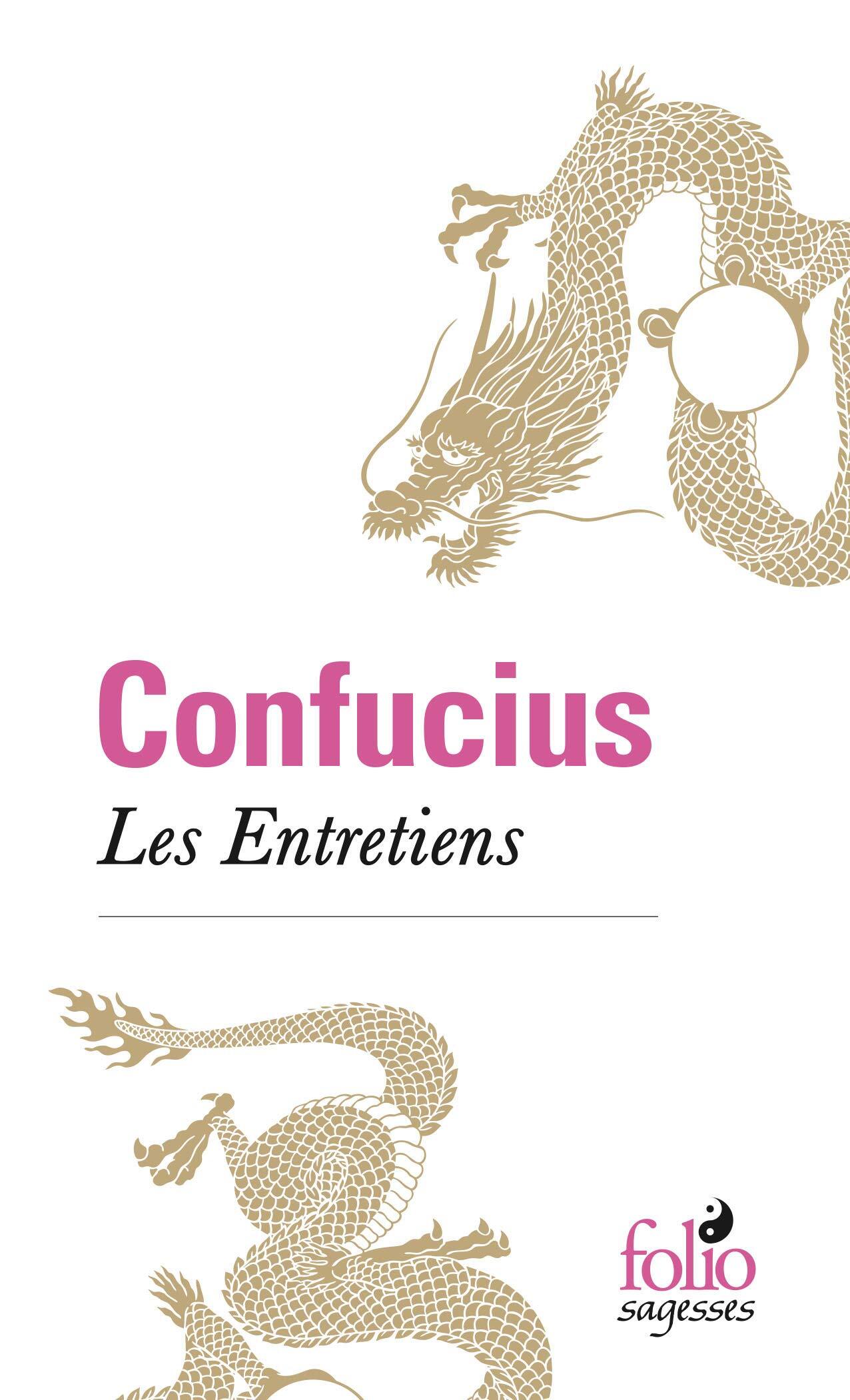
Confucius: The Analects of Confucius
Book

Confucius: The Analects of Confucius

How can we learn to live wisely and act justly toward others? In The Analects of Confucius, the sayings and conversations attributed to the Chinese philosopher present the principles of a life grounded in virtue, education, and respect for human relationships. Through exchanges with his disciples and brief reflections, Confucius addresses benevolence, righteousness, ritual propriety, family responsibilities, and the…

  • Philosophy
🇨🇳 China
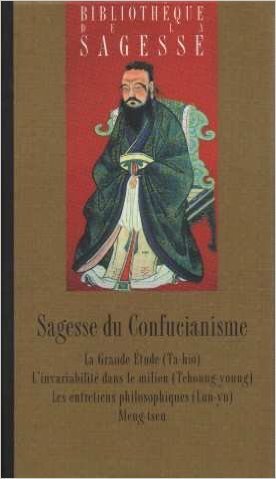
Confucius: The Wisdom of Confucianism
Book

Confucius: The Wisdom of Confucianism

How can we cultivate virtue and build a society founded on justice and harmony? In The Wisdom of Confucianism, four foundational texts of the Confucian tradition explore the relationships between personal cultivation, moral conduct, and government. The Great Learning connects self-improvement with harmony within the family and the state, while The Doctrine of the Mean examines the principles of just and balanced con…

  • Philosophy
🇨🇳 China
Confucius: The Wisdom of Confucius
Book

Confucius: The Wisdom of Confucius

How can we cultivate wisdom and find a balance between personal fulfillment and social harmony? The Wisdom of Confucius brings together teachings and reflections attributed to the Chinese philosopher on the fundamental questions of human existence. Through thoughts on happiness, family, morality, righteousness, and political authority, the work presents the essential principles of conduct grounded in virtue. Confuci…

  • Philosophy
🇨🇳 China
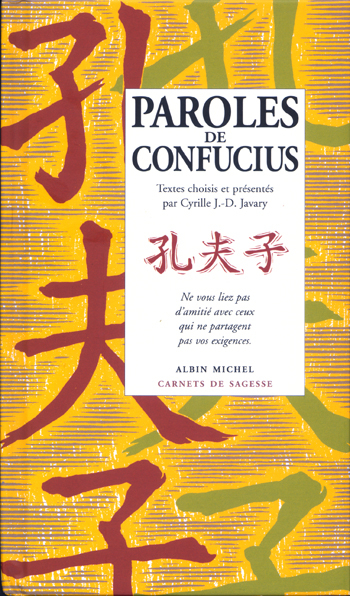
Confucius: Words of Confucius
Book

Confucius: Words of Confucius

What determines a person's true worth, and how can we cultivate harmonious relationships with others? In Words of Confucius, a selection of sayings and aphorisms presents the essential principles of Confucian wisdom. Compiled by sinologist Cyrille J.-D. Javary, these teachings place friendship, righteousness, benevolence, and courage at the center of moral life. They remind us that true nobility does not depend on b…

  • Philosophy
🇨🇳 China
Death Note
Manga 2003 13 Volumes

Death Note

Light Yagami is a brilliant high school student who discovers a mysterious notebook belonging to a death god named Ryuk. The Death Note possesses a terrifying power: anyone whose name is written in it will die, as long as their face is known. Convinced that he can create a world free from crime, Light begins eliminating those he considers guilty and soon becomes known as Kira. His actions attract the attention of L,…

  • Drama
  • Supernatural
  • Crime
🇯🇵 Japan
Descartes: Discourse on the Method
Book

Descartes: Discourse on the Method

How can we distinguish truth from falsehood and build knowledge on solid foundations? In Discourse on the Method, René Descartes begins with a conviction: reason is naturally shared by all human beings, but using it properly requires a rigorous method. Through an account of his intellectual journey, he questions received knowledge and proposes four rules for guiding thought with order and discernment. This investiga…

  • Essay
  • Philosophy
🇫🇷 France
Descartes: Meditations on First Philosophy
Book

Descartes: Meditations on First Philosophy

How can we be certain that we know the truth when our senses, reasoning, and beliefs may deceive us? In Meditations on First Philosophy, René Descartes seeks to establish solid foundations for knowledge by subjecting his former certainties to methodical doubt. He examines the reasons for questioning sensory perceptions and received opinions until he discovers a first truth that cannot be denied: the existence of the…

  • Philosophy
🇫🇷 France
Descartes: Principles of Philosophy
Book 1950

Descartes: Principles of Philosophy

In Principles of Philosophy, first published in Latin in 1644 under the title Principia philosophiae, René Descartes brings together the foundations of his philosophical and scientific system. Building on the reflections developed in Discourse on the Method and Meditations on First Philosophy, he presents the principles of human knowledge before examining the nature of matter, the laws of motion, and the organizatio…

  • Philosophy
🇫🇷 France
Descartes: Rules for the Direction of the Mind
Book

Descartes: Rules for the Direction of the Mind

How can we direct our thinking correctly in order to attain certain knowledge? In Rules for the Direction of the Mind, René Descartes seeks to establish a rational method capable of guiding the intellect in its search for truth. He distinguishes two fundamental operations, intuition and deduction, and explains how to break down difficulties, organize reasoning, and verify the connections between its successive steps…

  • Philosophy
🇫🇷 France
Descartes: The Passions of the Soul
Book 1994

Descartes: The Passions of the Soul

How can we understand human emotions and learn to control them without suppressing them? In The Passions of the Soul, the last work published during his lifetime, René Descartes explores the relationships between the body, the mind, and human feelings. Drawing on his understanding of human physiology, he examines the mechanisms that produce the passions and their effects on our thoughts and behavior. This scientific…

  • Philosophy
🇫🇷 France
Descartes: The Search for Truth
Book

Descartes: The Search for Truth

How can we attain certain knowledge without blindly accepting received teachings? In The Search for Truth, René Descartes presents the foundations of his philosophy through a dialogue between three characters: Eudoxus, who advocates reason free from prejudice; Polyander, a man without formal philosophical training; and Epistemon, who represents traditional learning. Their conversation confronts the authority of book…

  • Philosophy
🇫🇷 France
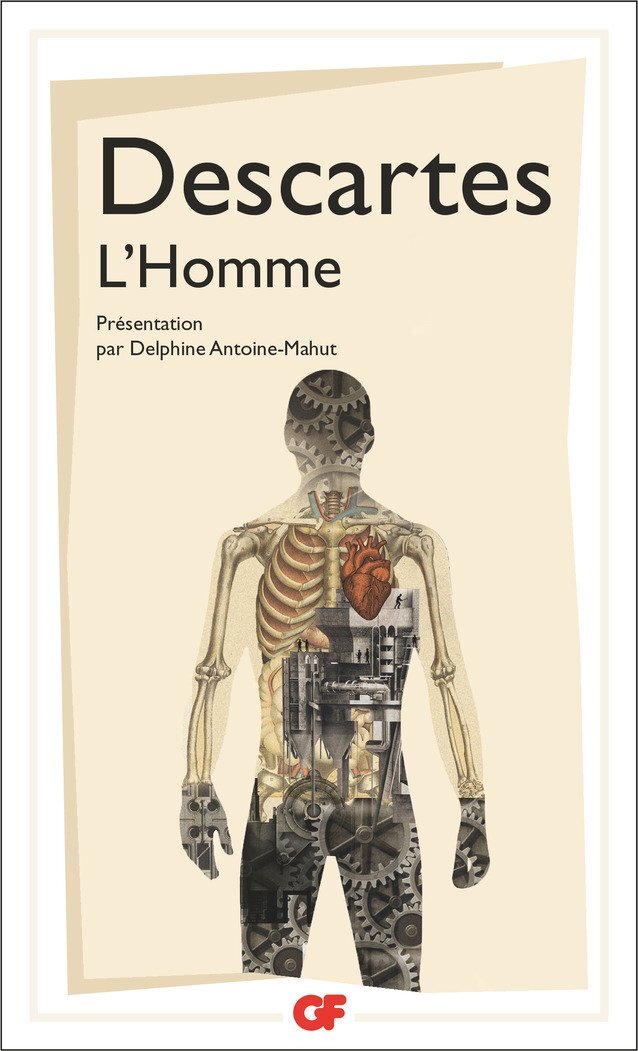
Descartes: Treatise on Man
Book

Descartes: Treatise on Man

How does the human body function, and to what extent can its activities be explained through the laws of nature alone? In Treatise on Man, René Descartes develops a mechanistic conception of living organisms by imagining an artificial machine whose organization reproduces that of the human body. Through this thought experiment, he examines digestion, blood circulation, respiration, muscular movement, and the functio…

  • Philosophy
🇫🇷 France
Dialogue on Love
Book

Dialogue on Love

"Erotikos" is the original title of this dialogue, which is a philosophical discussion on love: can we reconcile love and marriage? In Thespies, Plutarch, young bride, meets his friends to discuss the subject of love and relations between men and women. They end up making the apologies of the god Eros.

  • Essay
  • Philosophy
🇬🇷 Greece
Diderot : Philosophical Thoughts – Additions to the Philosophical Thoughts
Book

Diderot : Philosophical Thoughts – Additions to the Philosophical Thoughts

Written in 1746, without author's name, and immediately condemned to fire by the Paris Parliament, the Philosophical Thoughts take part in Christianity, and beyond all revealed religions: or faith is compatible with human reason and religions must accept doubt and criticism and reform themselves to join "natural religion"; or it is not, and how to admit then that God demand men to sacrifice their reason for him? Thi…

  • Essay
  • Philosophy
🇫🇷 France
Diderot : Thoughts on the Interpretation of Nature
Book

Diderot : Thoughts on the Interpretation of Nature

The Thoughts on the Interpretation of Nature are an emblematic work of the spirit of the Enlightenment. Written in the margins of the publication of the Encyclopaedia in 1753, they measure the epistemological and metaphysical upheavals that accompany the birth of the new experimental sciences of life and earth. The discovery of fossils and the analysis of the layers that make up the earth's globe, for example, contr…

  • Philosophy
🇫🇷 France
Diderot : Treatise on Beauty
Book

Diderot : Treatise on Beauty

We know that Diderot assumed his role as a moralist and that he praised Greuze, among other things, because his painting educated and edited the viewer, giving him lessons of virtue. Although he fears that beauty as goodness often hurts, little is already necessary, in the Treaty of Beau, that Diderot associates the beautiful, except with the useful and the true, at least to the good (the Holy Trinity of the moral c…

  • Essay
  • Philosophy
🇫🇷 France
Diogène : Lives and Opinions of Eminent Philosophers, Volume 1
Book

Diogène : Lives and Opinions of Eminent Philosophers, Volume 1

What difference between cyrenaics and epicureans? Did Pythagoras really let himself be killed for refusing to walk on beans? What are the definitions of happiness and wisdom according to Aristippe, Zeno, Epicurus and Pyrrhon? From the founders of philosophy to the cynical philosophers, to the stoicians and pythagoricians, Diogene Laërce, of which we know little, except that he would have been born between 200 and 50…

  • Philosophy
🇬🇷 Greece
Diogène : Lives and Opinions of Eminent Philosophers, Volume 2
Book

Diogène : Lives and Opinions of Eminent Philosophers, Volume 2

"Alexander met him one day and said to him, "I am the great king Alexander.""Diogene then came and said, "I'm Diogene, the dog.""They asked him why he was called a dog: "Because I caress those who give me, I bark against those who don't give me, and I bite those who are wicked." The keeper said to him, "Yesterday, a man was hanged there.""I cleanse him," Diogen said. »

  • Philosophy
🇬🇷 Greece
Dr. Stone
Manga 2017 27 Volumes

Dr. Stone

One fateful day, all of humanity was petrified by a After a mysterious phenomenon petrifies almost all of humanity for several thousand years, Senku Ishigami awakens in a world where civilization has disappeared and nature has reclaimed the land. Passionate about science, he decides to gradually rebuild human society by recreating inventions, medicine, tools, and technologies from natural resources. Joined by severa…

  • Action
  • Adventure
  • Comedy
🇯🇵 Japan
Emerson : Fate and Illusions
Book

Emerson : Fate and Illusions

"Life is a succession of lessons that you must live to understand. Everything is a riddle, and the key to the riddle is another riddle. There are as many pillows of illusion as there are flakes in a snowstorm." (R. W. Emerson) When he published "The Conduct of Life" in 1860, Ralph Waldo Emerson was already one of the most important intellectuals of the young ... """Life is a succession of lessons that must be lived …

  • Essay
  • Philosophy
🇺🇸 United States
Emerson : Friendship
Book

Emerson : Friendship

Friendship, an apparently accessible and daily reality, is in fact a formidable challenge for thought, because it is something that one lives before actually understanding or defining it. And it is precisely when one seeks to determine its own requirements that it proves elusive, even disturbing, because it refuses to attach itself to some justification, because it is an insituable desire, perhaps even more so than …

  • Essay
  • Philosophy
🇺🇸 United States
Emerson : Nature
Book

Emerson : Nature

The reason why the world lacks unity and lies broken and in pieces is that man is separated from himself. He cannot study nature until he meets all the requirements of the mind. Love is as necessary to him as the ability to perceive. In fact, neither of them can achieve perfection without the other. In the full sense of the word, thought is fervent and fervour is thought.

  • Essay
  • Philosophy
🇺🇸 United States
Emerson : Self-Reliance
Book

Emerson : Self-Reliance

The following text demonstrates surprising modernity. Its author, Ralph Waldo Emerson, develops the idea that self-confidence, which is essential to the development of each person, is necessarily associated with anticonformism. To get out of the gravity of social frameworks, to learn to think and see the world without being influenced by public opinion and propriety, would be the path that all great men take.So we m…

  • Essay
  • Self-help
  • Philosophy
🇺🇸 United States
Emerson : Trust Yourself
Book

Emerson : Trust Yourself

As important and symbolic in the United States as the notions of freedom and equality in France, self-reliance refers not only to self-confidence but also to the autonomy of the individual. The soul is active: it uses its own judgment and reveals a non-conformism, as fierce as it is vital. Emerson invites us to rely on the present, to always live in a new day. This active confidence in oneself works both emotionally…

  • Essay
  • Self-help
  • Philosophy
🇺🇸 United States
Epictetus : Of freedom
Book

Epictetus : Of freedom

Epictetus defines freedom as mastery of one’s judgements and desires rather than the absence of external constraints. A free person lucidly accepts the order of things.

  • Philosophy
🇹🇷 Turkey
Epictetus : What philosophy promises
Book

Epictetus : What philosophy promises

Epictetus reminds us that philosophy is not an abstract discourse but a discipline of life. It teaches us to align our judgements, desires and actions with what truly depends on us.

  • Philosophy
🇹🇷 Turkey
Epictetus : Which depends on us
Book

Epictetus : Which depends on us

This collection presents the central principle of Epictetus’s Stoicism: distinguishing what belongs to our judgement from what lies beyond our control. This distinction opens a path towards inner freedom.

  • Philosophy
🇹🇷 Turkey
Epictetus: Interviews
Book

Epictetus: Interviews

“My goal is to finally make of you men freed from all constraints, from all constraints, from all obstacles, free, peaceful, happy, who turn their eyes towards God in both small and big things. » A lame slave who became a philosopher, Epictetus orally gave his students and disciples lessons which, through the study of exemplary models, aimed at their edification. Recorded by one of them, his teaching is above all ba…

  • Philosophy
🇹🇷 Turkey
Epictetus: Manual
Book

Epictetus: Manual

A summary of Epictetus' thought bequeathed by his disciple Arrian, the Manual - that is to say the enkheiridion, the dagger that we have on hand to face any eventuality - is dedicated to ethical effectiveness. It is brief and incisive by necessity. It is not addressed to the wise, who have no need of it, but to those, among the unwise, who are progressing and practicing wisdom. An exercise book for philosophical edu…

  • Philosophy
🇹🇷 Turkey
Epictetus: Of inner contentment
Book

Epictetus: Of inner contentment

Epictetus teaches that contentment does not depend on goods or events, but on the use of our ability to judge. The text proposes a concrete exercise of freedom and inner coherence.

  • Philosophy
🇹🇷 Turkey
Epictetus: On the attitude to take towards tyrants
Book

Epictetus: On the attitude to take towards tyrants

In the face of arbitrary power, Epictetus affirms the independence of judgment and will. The tyrant can coerce the body, but not the internal use that each makes of his representations.

  • Philosophy
🇹🇷 Turkey
Epictetus: Peace of the soul
Book

Epictetus: Peace of the soul

These Stoic lessons show how to appease the mind by reforming its representations. serenity arises from a desire adjusted to what depends on us and from a daily practice of attention.

  • Philosophy
🇹🇷 Turkey
Epicurus: Letter to Menoeceus
Book

Epicurus: Letter to Menoeceus

Epicure exposes a simple method of reaching happy life: dispelling the fear of the gods and death, understanding desires and cultivating stable pleasures. Wisdom becomes a care of the soul.

  • Philosophy
🇬🇷 Greece
Epicurus: Letters on Happiness
Book

Epicurus: Letters on Happiness

These letters condense Epicurean ethics and physics. They show how knowledge of nature, friendship and the moderation of desire lead to freedom from disturbance.

  • Philosophy
🇬🇷 Greece
Epicurus: Letters, maxims and sentences
Book 1994

Epicurus: Letters, maxims and sentences

Human life, hideous to behold, lay on the earth, crushed under the weight of a religion which reared its head from the heavenly regions, towering over mortals, looking horrible, when for the first time a Greek, a mortal, dared to turn his eyes upon it, and the first to stand against it; neither what was said about the gods, nor the lightning, nor the sky and its menacing rumble stopped him (...). Therefore, the vigo…

  • Philosophy
🇬🇷 Greece
Étienne de La Boétie : Discourse on Voluntary Servitude
Book 1835

Étienne de La Boétie : Discourse on Voluntary Servitude

The renown of Étienne de La Boétie, a friend of Montaigne, is attached to a written text composed "in honor of freedom, against tyrants." How can one explain that an entire people can bend under the yoke of one man without strength or prestige? To this question, the author answers that servitude is voluntary; it is the peoples who, in agreeing to submit themselves, are in contravention of what is deeper in human nat…

  • Essay
  • Philosophy
  • Political
🇫🇷 France
Frieren
Manga 2020 15 Volumes

Frieren

After defeating the Demon King alongside the hero Himmel and their companions, the elven mage Frieren resumes her journey, aware that a few decades mean almost nothing to her. But as time gradually takes away those with whom she shared that adventure, she realizes how little she understood humans and the brevity of their lives. Frieren then sets out on a new journey, accompanied in particular by Fern and Stark, hopi…

  • Adventure
  • Drama
  • Fantasy
🇯🇵 Japan
Fullmetal Alchemist
Manga 2001 27 Volumes

Fullmetal Alchemist

Edward and Alphonse Elric are two brothers fascinated by alchemy who attempt to bring their mother back to life despite the absolute prohibition against human transmutation. The experiment ends in disaster: Edward loses part of his body while Alphonse loses his entire body, leaving his soul bound to a suit of armor. Determined to restore their original bodies, the brothers set out in search of the Philosopher’s Ston…

  • Action
  • Adventure
  • Comedy
🇯🇵 Japan
Gaarder : Sophie's World
Book

Gaarder : Sophie's World

It all begins on the day that Sophie Amundsen, a fifteen-year-old girl, finds in her box a letter addressed to her, on which is written only one sentence: "Who are you?" A second envelope reaches her, and inside a new word: "Where does the world come from?" Sending these letters remains a mystery, but the questions asked intrigue Sophie. It is the beginning of a strange correspondence that will plunge the girl in se…

  • Historical
  • Philosophy
🇳🇴 Norway
Ghost in the Shell
Manga 1989 1 Volume

Ghost in the Shell

In a future where humans can replace large parts of their bodies with cybernetic implants and connect their minds to digital networks, Major Motoko Kusanagi leads a special unit tasked with fighting terrorism, hacking, and technological crime. Alongside Section 9, she investigates cases involving artificial intelligence, data manipulation, and cybercrime. Through her missions, Motoko is also confronted with deeper q…

  • Action
  • Crime
  • Cyberpunk
🇯🇵 Japan
Hegel: Elements of the Philosophy of Right
Book 1820

Hegel: Elements of the Philosophy of Right

Published in 1820 by Hegel, the Grundlinien der Philosophie des Rechts, a work known in France under the title of Principles of the Philosophy of Law, is one of the major works of modern philosophy. On the basis of a considerably expanded idea of law, corresponding to all the manifestations of what he calls “objective spirit”, Hegel successively exposes the structures of “abstract law” (which corresponds to private …

  • Philosophy
🇩🇪 Germany
Hegel: Encyclopedia of the Philosophical Sciences
Book 1817

Hegel: Encyclopedia of the Philosophical Sciences

Hegel's Encyclopedia of Philosophical Sciences is the first, but also the last total thought of reality which bases its necessity on the identity of the rigorously respected self-identity of thought and the concretely explored difference from itself of reality; concept and experience triumph here jointly. This first part of the work - the science of logic - which dialectically deploys all the meanings organically en…

  • Philosophy
🇩🇪 Germany
Hegel: Lectures on the Philosophy of History
Book 1837

Hegel: Lectures on the Philosophy of History

Hegel interprets universal history as the progressive development of the consciousness of freedom. Through the great political and cultural forms, the Spirit transforms conflicts, passions and institutions into moments of a rational process whose necessity philosophy seeks to understand.

  • Philosophy
🇩🇪 Germany
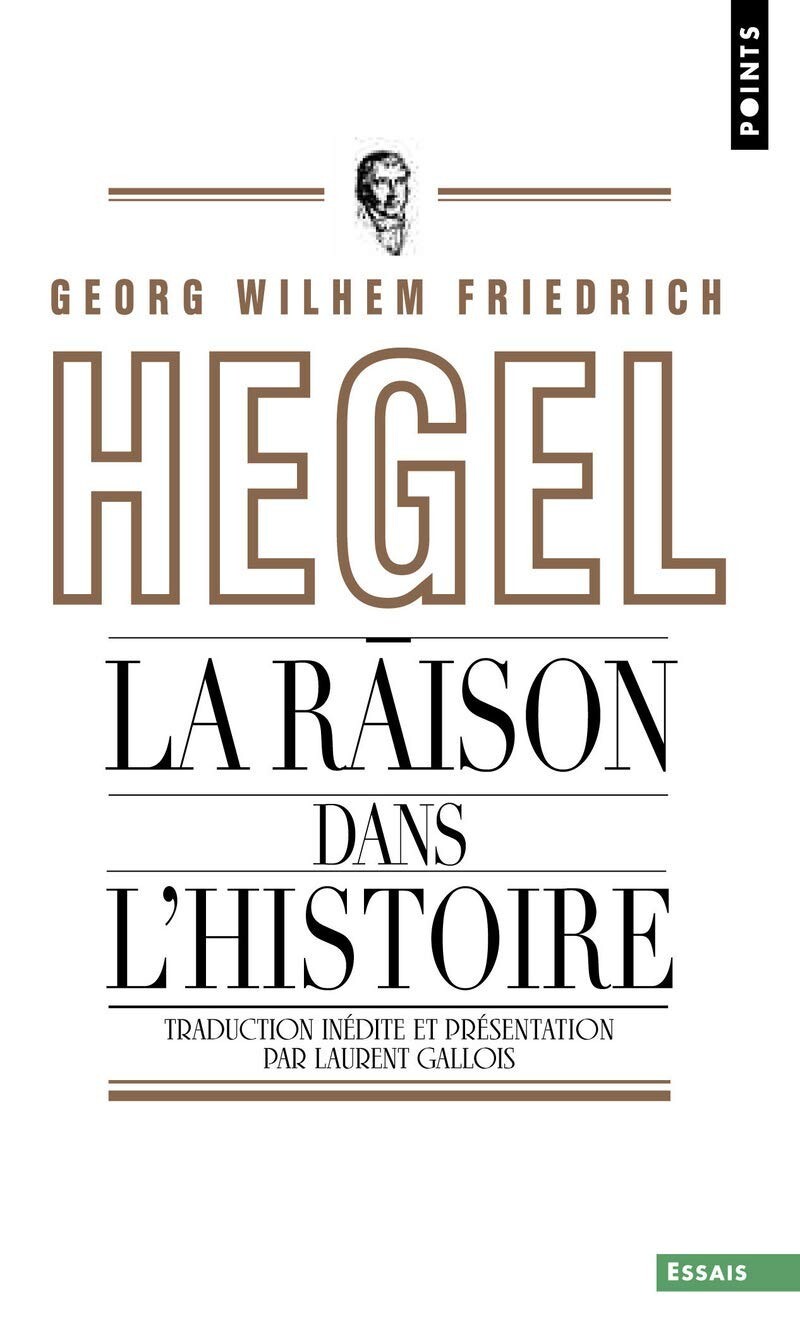
Hegel: Reason in History
Book

Hegel: Reason in History

Hegel interprets universal history as the progressive deployment of freedom. Particular passions and conflicts participate, often without the knowledge of the actors, in a broader rational movement.

  • Philosophy
🇩🇪 Germany
Hegel: The Phenomenology of Spirit
Book 1807

Hegel: The Phenomenology of Spirit

The Phenomenology of Spirit is not only a decisive work in the history of philosophy: it is also, alongside Shakespeare's theater or Dante's Divine Comedy, one of the major works of Western culture. Completed in a hurry, published in 1807 in a Europe agitated by the Napoleonic wars, it had a late success: in France, it was not until the 20th century that we recognized in it the summit of German idealist philosophy –…

  • Philosophy
🇩🇪 Germany
Hobbes: De Corpore
Book 1655

Hobbes: De Corpore

Published for the first time in 1655, this text is Hobbes' major work in logic, first philosophy and physics, but also one of the greatest metaphysical texts of the 17th century. There we find a theory of logic as calculation, one of the decisive elements of which is a critique of language. This logic is the condition of a first philosophy.
  • Philosophy
🇬🇧 United Kingdom
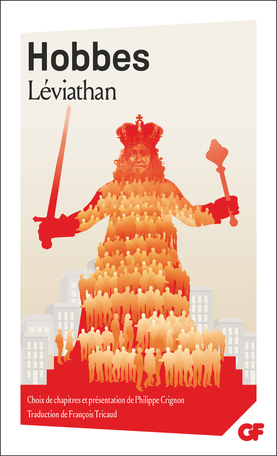
Hobbes: Leviathan
Book 1651

Hobbes: Leviathan

Leviathan by Hobbes (which appeared in 1651) is one of the rare founding texts of philosophy, like Plato's Republic, to which its author compared it. He lays, in fact, the foundations of the modern political tradition, by inventing the myth of sovereignty: considering their natural state, frightened by the deadly exacerbation of their passions, men decided, through their own faculty of wanting and thinking, to equip…

  • Philosophy
🇬🇧 United Kingdom
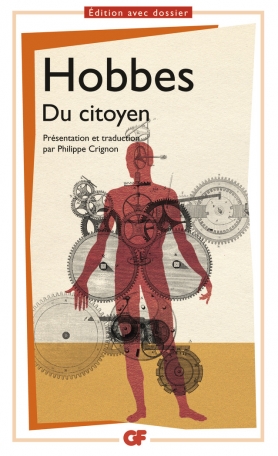
Hobbes: On the Citizen
Book 1642

Hobbes: On the Citizen

Retranslated in full for the first time in more than three centuries, Du Citoyen (1642 then 1647) turns out to be much more than a step towards Leviathan. Initially conceived as the third and final section of the Elements of Philosophy, the work was ultimately written and printed before the other two. If the circumstances of the civil war are the occasion for this change of calendar, they above all allow Hobbes to p…
  • Philosophy
🇬🇧 United Kingdom
Hobbes: The Elements of Law, Natural and Politic
Book 1650

Hobbes: The Elements of Law, Natural and Politic

The Elements of Natural and Political Law is Hobbes's first political work. Written in 1640, they circulated in manuscript, just before Hobbes returned to France where he remained in exile for eleven years to escape the horrors of the English civil war. The writing of this work is therefore directly linked to the political context. However, Hobbes accomplished a radical deterritorialization of politics. Far from sta…

  • Philosophy
🇬🇧 United Kingdom
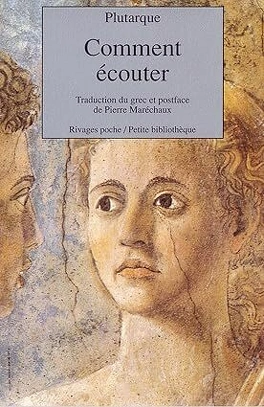
How to Listen
Book

How to Listen

A small didactic essay on the art of listening, on a "rhetoric of the ear". Plutarch's text occupies pages 7 to 69 and is followed by a "Postface" (p. 79-106) which comments on the content and scope of the Greek philosopher's text. It is the art of listening to someone who speaks to teach or teach or transmit knowledge.

  • Essay
  • Philosophy
🇬🇷 Greece
Hume : Morality
Book

Hume : Morality

What are the virtues? What are our duties? Because it carries ambitious plans to "introduce the experimental method into moral subjects", the Treaty of Human Nature is likely to provide us with a precise answer to these questions. Powerful with a critical look in the moral and political thought of his time, Hume exposes in book III his "moral of passions" where interest and sympathy, nature and artifice, useful and …

  • Essay
  • Philosophy
🇬🇧 United Kingdom
Hume: A Treatise of Human Nature
Book 1739

Hume: A Treatise of Human Nature

It was in 1734, at the age of twenty-three, that the young David Hume began writing A Treatise on Human Nature. Complex and polymorphous, this Treatise aims to establish a “science of man”, that is to say a science whose object would be the human being, studied as a phenomenon. It consists of three books, the first two of which appeared in 1739 and the third in 1740.

  • Philosophy
🇬🇧 United Kingdom
Hume: An Enquiry Concerning Human Understanding
Book 1748

Hume: An Enquiry Concerning Human Understanding

“It is vain to pretend to teach the principles and contents of Hume's philosophy. And the problem is not to leave room for controversy, but to understand that we are not dealing with a system, that the principles are obscure and that the contents are skeptical. The career of commentary is indefinitely open, as long as one does not fall into dogmatism. Through a constantly deceptive rationality, Hume brings all those…

  • Philosophy
  • Classical
🇬🇧 United Kingdom
Hume: An Enquiry Concerning the Principles of Morals
Book 1751

Hume: An Enquiry Concerning the Principles of Morals

Hume seeks the origin of our moral judgments in human experience. He examines utility, benevolence, sympathy and the feeling of approval to show that morality is neither reduced to personal interest nor to an abstract reason: it is rooted in our sensitivity and in common life.

  • Philosophy
🇬🇧 United Kingdom
Hume: Dissertation on the Passions
Book

Hume: Dissertation on the Passions

Hume analyses the direct and indirect passions, their causes and their relations with the will. It shows that human action is driven by feelings rather than by reason alone.

  • Philosophy
🇬🇧 United Kingdom
Hume: Essays, Moral, Political, and Literary
Book 1741

Hume: Essays, Moral, Political, and Literary

Through their diversity, depth of reflection and elegance of style, these essays perfectly serve Hume's purpose: that of developing a practical philosophy, closely linked to common life. Some titles of these essays: The Delicacy of Taste and the Delicacy of Passion, On Freedom of the Press, On Impudence and Modesty, On Love and Marriage, On the Study of History, On the Independence of Parliament...

  • Philosophy
🇬🇧 United Kingdom
Hunter x Hunter
Manga 1998 38 Volumes

Hunter x Hunter

Gon Freecss is a young boy who discovers that his father, whom he believed to be absent from his life, is actually a renowned Hunter, part of an elite group capable of exploring the most dangerous places, tracking criminals, searching for treasures, and carrying out extraordinary missions. Determined to follow in his footsteps and understand why he chose this life, Gon decides to take the Hunter Exam. Along the way,…

  • Action
  • Adventure
  • Comedy
🇯🇵 Japan
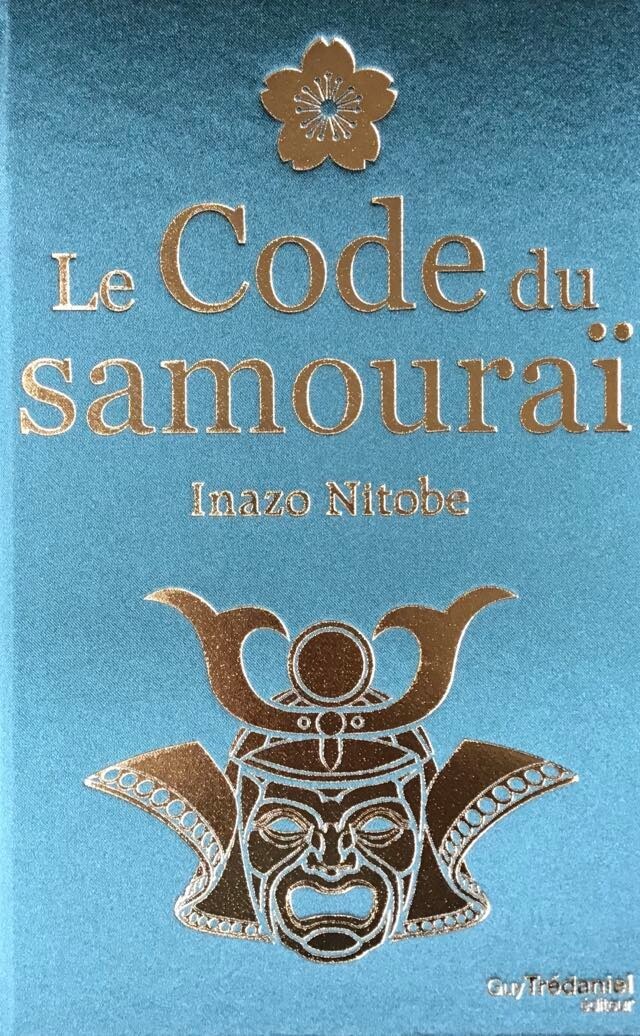
Inazō Nitobe: The Samurai Code
Book

Inazō Nitobe: The Samurai Code

What values guided the conduct of the samurai, and how did their legacy shape Japanese culture? In The Samurai Code, Inazō Nitobe presents bushidō, the 'way of the warrior,' as a set of moral principles grounded in justice, courage, benevolence, politeness, sincerity, honor, and loyalty. Through a reflection on the history of Japanese warriors, their education, and their traditions, he examines the ethical demands t…

  • Philosophy
🇯🇵 Japan
Inner Serenity
Book

Inner Serenity

This treatise of Stoic morals, written in the first century, brings together the considerations that Plutarch addresses to his friend Paccius, a Roman senator: faced with the grip of passion, sickness, and political adversity, the philosopher seeks remedies. Not the inaction, which is bad, but a kind of self-suggestion by which the soul convinces itself of its own happiness.

  • Essay
  • Philosophy
🇬🇷 Greece
Kant : Analytic of the Beautiful
Book

Kant : Analytic of the Beautiful

In this part of the Critique of the Power of Judgement, Kant examines aesthetic judgement. Beauty gives pleasure without concept or interest while laying claim to a distinctive form of universality.

  • Philosophy
🇩🇪 Germany
Kant: Critique of Judgment
Book 1790

Kant: Critique of Judgment

Kant studies the faculty of judging through beauty, the sublime and the organization of life. Aesthetic judgment claims a common validity without relying on a determined concept; teleological judgment thinks of natural beings as ends. The work thus seeks a passage between nature and freedom.

  • Philosophy
🇩🇪 Germany
Kant: Critique of Practical Reason
Book 1788

Kant: Critique of Practical Reason

“The moral law is holy (inviolable). Man is undoubtedly very far from holiness, but the humanity in his person must be holy for him. In all of creation, whatever one wants, and whatever one has power over, can also be used simply as a means; man alone, and with him every reasonable creature, is end in himself. He is, in fact, thanks to the autonomy of his freedom, the subject of the moral law, which is holy. It is p…

  • Philosophy
🇩🇪 Germany
Kant: Critique of Pure Reason
Book 1781

Kant: Critique of Pure Reason

The Critique of Pure Reason revolutionized our relationship to knowledge. The Introduction from 1787 reproduced in the present edition is the royal road to enter this cathedral work. The text offers a powerful definition of the overall objective of Critique: to trace the boundaries of human knowledge. But the stakes are even greater. It is a question of determining the destiny of metaphysics, whether to place it bac…

  • Philosophy
🇩🇪 Germany
Kant: Essays on History
Book

Kant: Essays on History

These essays examine progress, cosmopolitanism, peace and humanity’s political destiny. Kant looks for a rational guiding thread in the conflict-ridden course of history.

  • Philosophy
🇩🇪 Germany
Kant: Groundwork of the Metaphysics of Morals
Book 1785

Kant: Groundwork of the Metaphysics of Morals

What are the Foundations of the Metaphysics of Morals and the Critique of Practical Reason about? On the foundation of moral discourse, of a coherent discourse, absolutely valid for all beings endowed with reason, binding on everything that is finite and reasonable. It is not a question of morality in the traditional sense of the term, of a system of rules of conduct for concrete situations, of precise prescriptions…

  • Philosophy
🇩🇪 Germany
Kant: Logic
Book

Kant: Logic

Kant presents the general rules of the use of understanding and reason. The manual distinguishes the logical form of thought from its contents and describes the operations of concept, judgment and reasoning.

  • Philosophy
🇩🇪 Germany
Kant: Prolegomena to Any Future Metaphysics
Book 1783

Kant: Prolegomena to Any Future Metaphysics

Kant presents in a more accessible form the central problem of the Critique of Pure Reason: how is synthetic a priori knowledge possible? By examining the conditions of mathematics, physics and metaphysics, he clarifies the limits of reason and the foundations of his critical philosophy.

  • Philosophy
🇩🇪 Germany
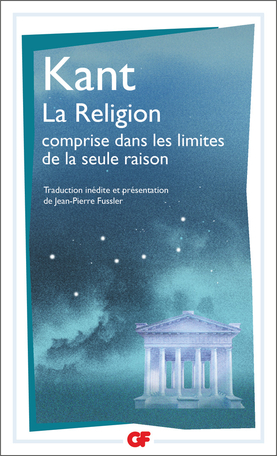
Kant: Religion within the Bounds of Bare Reason
Book 1793

Kant: Religion within the Bounds of Bare Reason

A small treatise on philosophical theology, and not strictly biblical, this is how Kant presented his work to the theologian Matern Reuss in 1793. This work deals with natural religion as conceived by the philosopher Konisgberg, that is to say a religion above all rational and reasonable. Its object is in fact the faith of man which is based solely on reason: a faith in which every man could and should rediscover, b…

  • Philosophy
🇩🇪 Germany
Kant: The Metaphysics of Morals
Book 1797

Kant: The Metaphysics of Morals

Kant applies the principles of his moral philosophy to law and virtue. The Doctrine of Law analyzes the external conditions allowing the freedom of each person to coexist with that of others; The Doctrine of Virtue sets out the duties that the subject gives to himself, towards himself and towards others.

  • Philosophy
🇩🇪 Germany
Kant: Toward Perpetual Peace
Book 1795

Kant: Toward Perpetual Peace

Towards Perpetual Peace appeared in 1795. The work, which was a great success, closed a movement to rationalize the law which determined universal norms for peace without regard for the cultural or religious identity of the parties involved. It thus continues the movement of legal theologians who had to reflect on the legal aspects of the conquest of America, where most historians of international law trace the syst…

  • Philosophy
🇩🇪 Germany
Kant: Writings on the body and mind
Book

Kant: Writings on the body and mind

These texts explore the relationship between body experience, mental life and knowledge of the human being. They shed light on how Kant articulates nature, sensitivity and autonomy.

  • Philosophy
🇩🇪 Germany
Karl Marx & Engels : The Communist Manifesto
Book

Karl Marx & Engels : The Communist Manifesto

The early masterpiece of Marx and Engels, the Manifesto marks a turning point in the history of the labour movement: briefly tracing the origins of the class struggle, Marx and Engel's also wanted to equip the working class with a programme that gave scientific and lasting foundations to any revolutionary action. The result was this brief work, which was broadcast worldwide and whose first edition was born in 1848. …

  • Essay
  • Philosophy
  • Political
🇩🇪 Germany
Karl Marx : Capital
Book

Karl Marx : Capital

"In this book, J'études the capitalist mode of production and the relations of production and exchange which correspond to it. [...] This is not the more or less complete development of the social antagonisms that the natural laws of capitalist production generate, but of these laws themselves, tendencies that manifest themselves and are realized with the necessity of iron. At first glance, the commodity appeared to…

  • Essay
  • Philosophy
  • Political
🇩🇪 Germany
L'Attaque des Titans
Manga 2009 34 Volumes

L'Attaque des Titans

In a world where humanity lives confined behind enormous walls to protect itself from Titans, gigantic humanoid creatures that devour humans, Eren Jaeger dreams of discovering the world beyond them. When the sudden appearance of a Colossal Titan causes part of the defenses to fall, his life is turned upside down, and he decides to join the military alongside Mikasa Ackerman and Armin Arlert. Drawn into a desperate s…

  • Action
  • Drama
  • Fantasy
🇯🇵 Japan
Leibniz: Discourse on metaphysics
Book

Leibniz: Discourse on metaphysics

A complex route leads to the Discourse on Metaphysics (1686), considered the first almost perfect exposition (but unknown until 1846) of Leibnite's doctrine. To rehabilitate “substantial forms”, we must in fact deploy a philosophy of conciliation which encourages us to read the concepts of the Ancients under the results of the Moderns. The “Cartesian sect” does not emerge unscathed from this quest at the end of whic…

  • Philosophy
🇩🇪 Germany
Leibniz: New essays on human understanding
Book

Leibniz: New essays on human understanding

The imaginary dialogue of Théophile and Philathèle in the New Essays on Human Understanding (1765) is the substitute for a dialogue that never took place: that of Leibniz with Locke. In this work published posthumously, the philosopher of the monad makes the alternating voices of empiricism and rationalism heard. The fundamental question that Locke asks himself is that of the powers of knowledge: the wisdom of man …

  • Philosophy
🇩🇪 Germany
Leibniz: Principles of nature and grace founded in reason
Book 1954

Leibniz: Principles of nature and grace founded in reason

Leibniz's philosophy posed a thousand questions to his contemporaries. On the essentials: the notions of monad, force and matter, the union of the soul with its body, the problem of Evil – and on the validity of the solutions proposed by pre-established harmony. Hence the writing, in 1714, two years before his death, of two systematic abridgements of his philosophy, the famous Monadology and the exemplary Principles…

  • Philosophy
🇩🇪 Germany
Lenoir : Desire, a philosophy
Book 2022

Lenoir : Desire, a philosophy

"To desir life is not simply to be alive. It is to let ourselves be driven by the vital momentum that leads us to create, to love, to overcome us. It is to cultivate the power of desire that is the driving force of our lives. Yet, in everyday life, we feel many limitations - 'I am not capable', 'It is too risky', 'It is not for you' - which inhibit us. We are often also trapped in the impulses of our primary brain, …

  • Essay
  • Self-help
  • Philosophy
🇫🇷 France
Lenoir : Happiness, a philosophical journey
Book 2013

Lenoir : Happiness, a philosophical journey

What is happiness, and how can we cultivate it? Frédéric Lenoir explores this universal pursuit through the teachings of great philosophers and thinkers from Eastern and Western traditions. From Epicurus to Spinoza, including Montaigne, Buddha, and Epictetus, he examines different perspectives on happiness, pleasure, and wisdom. Combining philosophical reflections, practical examples, and discoveries from neuroscien…

  • Essay
  • Self-help
  • Philosophy
🇫🇷 France
Lenoir : Heart of Crystal
Book

Lenoir : Heart of Crystal

Once upon a time... In a distant kingdom, a young prince is the victim of a terrible fate: his heart, wrapped in a crystal gangue, cannot vibrate or love. Only a burning fire of love would melt the crystal and free his heart. While he is of marriage age, and despite all his efforts, no woman inspires him this love. Thus he decided to leave on the roads of the world, in search of the one who would deliver him from th…

  • Fantasy
  • Young readers
  • Philosophy
🇫🇷 France
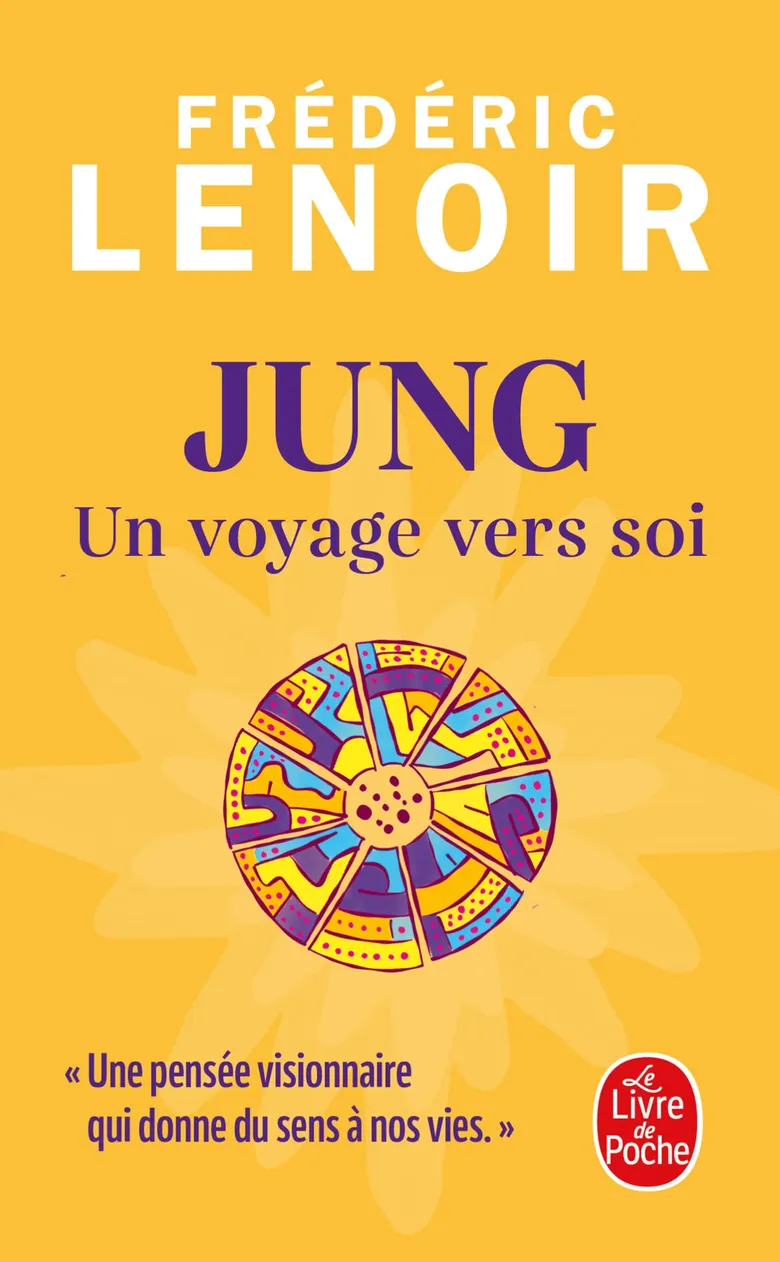
Lenoir : Jung, a journey to yourself
Book 2021

Lenoir : Jung, a journey to yourself

"Carl-Gustav Jung (1875-1961), a Swiss physician, pioneer of psychoanalysis, is one of the greatest thinkers of the 20th century. He remains quite unknown in France, while his ideas have exerted a profound influence on our contemporary culture and he has been the inventor of many revolutionary concepts, such as synchronicity, collective unconsciousness, archetypes or complexes.He is with Spinoza one of the authors w…

  • Essay
  • Self-help
  • Philosophy
🇫🇷 France
Lenoir : Just After the End of the World
Book 2021

Lenoir : Just After the End of the World

After a disaster that has upset the world, a young woman nicknamed the Vivante goes through the villages and answers questions from the survivors. This initiatory tale prolongs the world by questioning the human qualities necessary to build a new society and avoid the mistakes of the past.

  • Novel
  • Self-help
  • Philosophy
🇫🇷 France
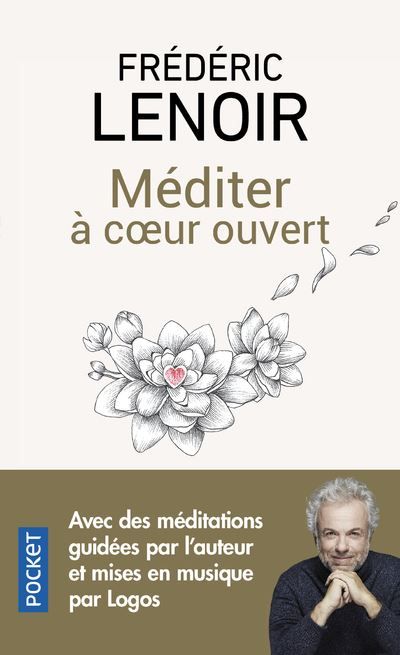
Lenoir : Meditate with open heart
Book 2018

Lenoir : Meditate with open heart

"This is the ultimate goal of the art of meditating: to be fully human by harmonising our mind, our body and our heart." Meditation is a thousand-year-old practice used both in the East by Buddhists and in the West by the ancient Greeks, and today validated by scientific research. By developing our attention, it teaches us not only to calm the agitations of our mind but also to broaden our sensory perceptions. In th…

  • Essay
  • Self-help
  • Philosophy
🇫🇷 France
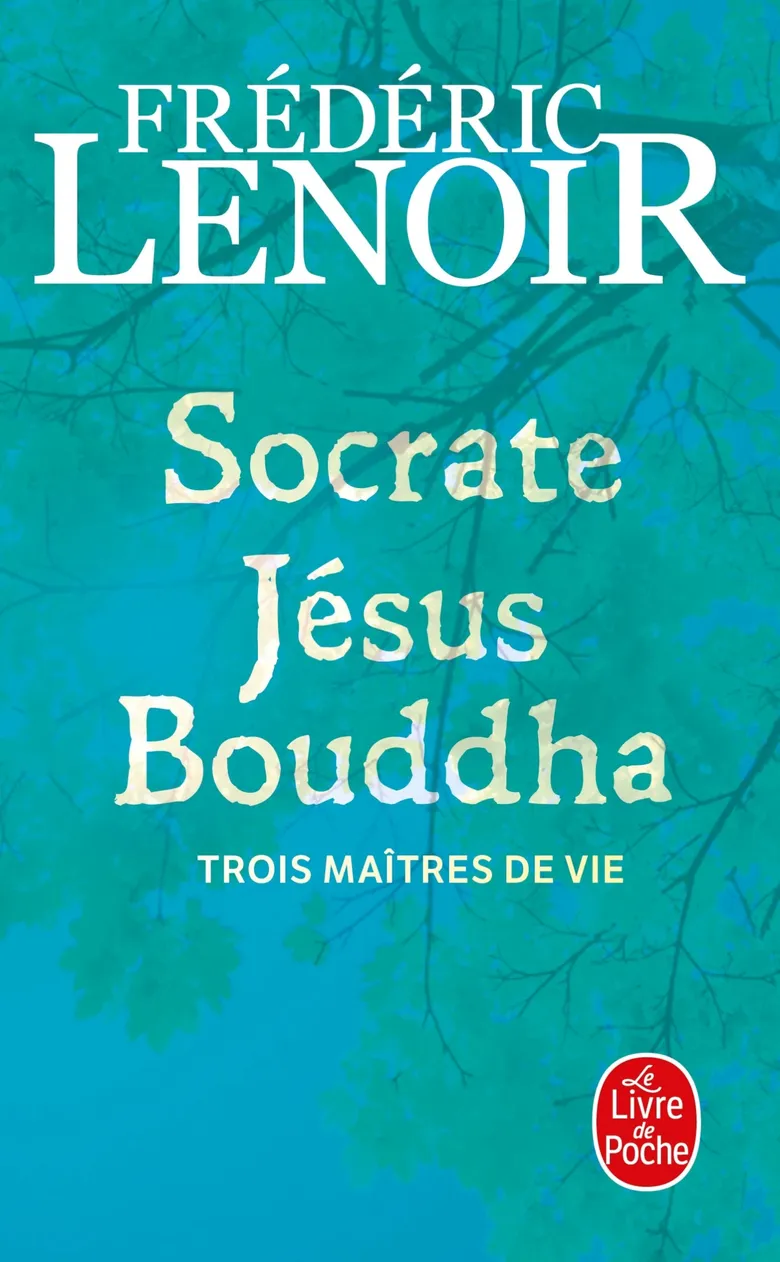
Lenoir : Socrates, Jesus, Buddha
Book 2009

Lenoir : Socrates, Jesus, Buddha

The crisis that we are experiencing is not simply economic and financial, but also philosophical and spiritual. It refers to universal questions: What makes the human being happy? What can be considered as real progress? What are the conditions for a harmonious social life?Contains a purely materialistic vision of man and the world, Socrates, Jesus and Buddha are three masters of life. A life that they never lock up…

  • Essay
  • Self-help
  • Philosophy
🇫🇷 France
Lenoir : The Dream of Marcus Aurelius
Book

Lenoir : The Dream of Marcus Aurelius

Through the constant success of the Thoughts for myself, a work that helped millions of readers to live, the figure of Roman emperor Marc Aurèle (121-180), popularized by Gladiator, Ridley Scott's cult film, challenges us: how the leader of one of the world's greatest empires was able to maintain serenity in the midst of the tumultuous wars, betrayals, epidemics or natural disasters that shook his reign for nearly t…

  • Biography
  • Self-help
  • Philosophy
🇫🇷 France
Lenoir : The Soul of the World
Book 2012

Lenoir : The Soul of the World

"Presenting the imminence of a planetary cataclysm, seven wise men from all over the world gather in a lost monastery of the Tibetan mountains to transmit to Tenzin and Natina, two teenagers, the keys to universal wisdom. Beyond the differences of their respective traditions but inspired by what the ancient philosophers called the "soul of the world" - this benevolent force that maintains the harmony of the universe…

  • Essay
  • Self-help
  • Philosophy
🇫🇷 France
Lenoir : The Spinoza Miracle
Book 2017

Lenoir : The Spinoza Miracle

Baruch Spinoza, 23 years old of the Jewish community for heresy, decides to devote his life to philosophy. His objective? To discover a real good that would "provide him for eternity the enjoyment of supreme and incessant joy." During the twenty years remaining to live, Spinoza builds a revolutionary work. How could this man, in the middle of the seventeenth century, be the forerunner of the Enlightenment and our mo…

  • Essay
  • Self-help
  • Philosophy
🇫🇷 France
Lenoir : Wisdom explained to those who seek it
Book 2018

Lenoir : Wisdom explained to those who seek it

"You undoubtedly aspire, reader friend, to a successful life. Not necessarily to succeed in life, but to lead a good and happy existence. Ever since, all over the world, men and women have been nourishing this aspiration and working to implement it. Everyone believes that what makes our life meaningful is to grow in humanity. I am convinced that this philosophical ideal of wisdom remains the object of a quest we can…

  • Essay
  • Self-help
  • Philosophy
🇫🇷 France
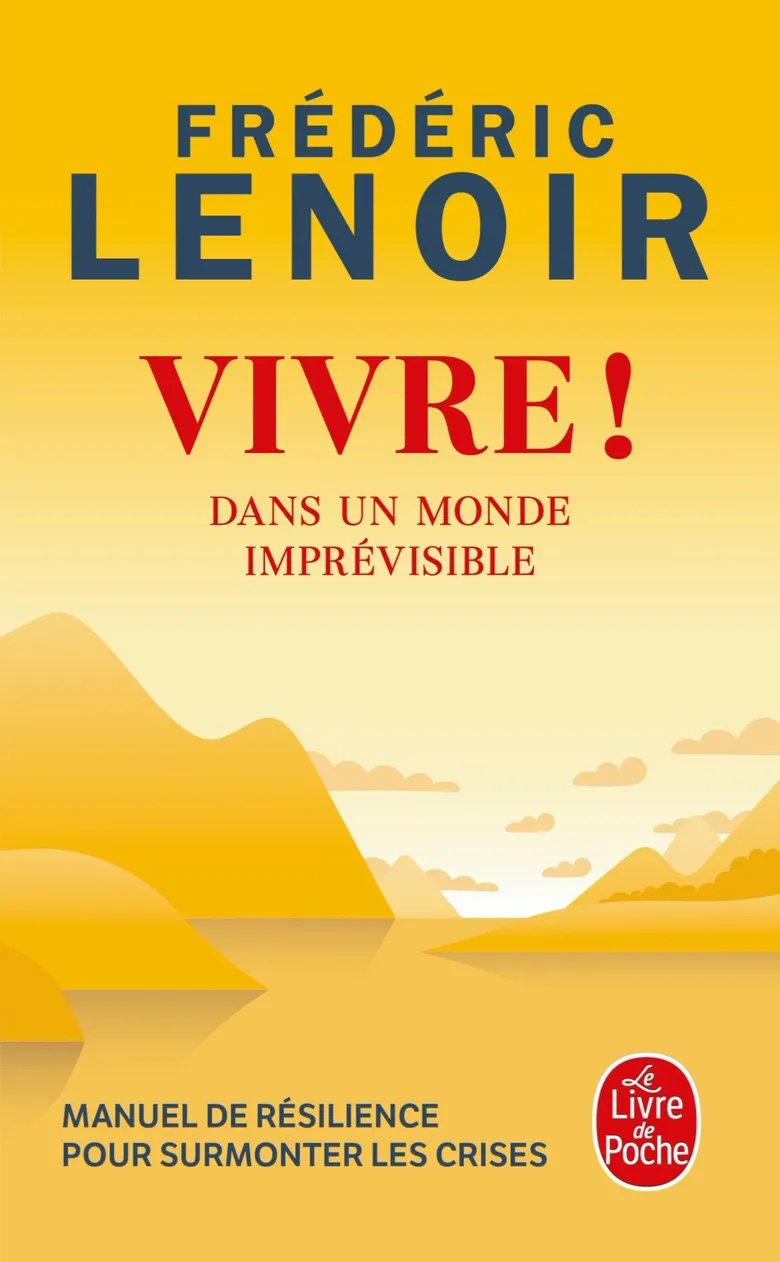
Lenoir: Living! in an unpredictable world
Book 2020

Lenoir: Living! in an unpredictable world

"It was enough to have a far-off virus for the course of the world and our lives to be upset.""I am convinced that nothing will be as before and that we must learn to develop our inner resources in order to live the best possible way in an unpredictable world. May this book written in the urgency of time bring light and comfort to all those who will read it."F. L. In a language accessible to all, Frédéric Lenoir off…

  • Essay
  • Self-help
  • Philosophy
🇫🇷 France
Lenoir: Small treatise of inner life
Book 2010

Lenoir: Small treatise of inner life

Of all my books of philosophy and spirituality, this one is certainly the most accessible, but probably also the most useful. For it is not a theoretical knowledge that I seek to convey, but a practical knowledge, the most essential one: how to lead a good, happy life, in harmony with oneself and others. What I say here with simple words and concrete examples, as in a conversation with a friend, is the fruit of thir…

  • Essay
  • Self-help
  • Philosophy
🇫🇷 France
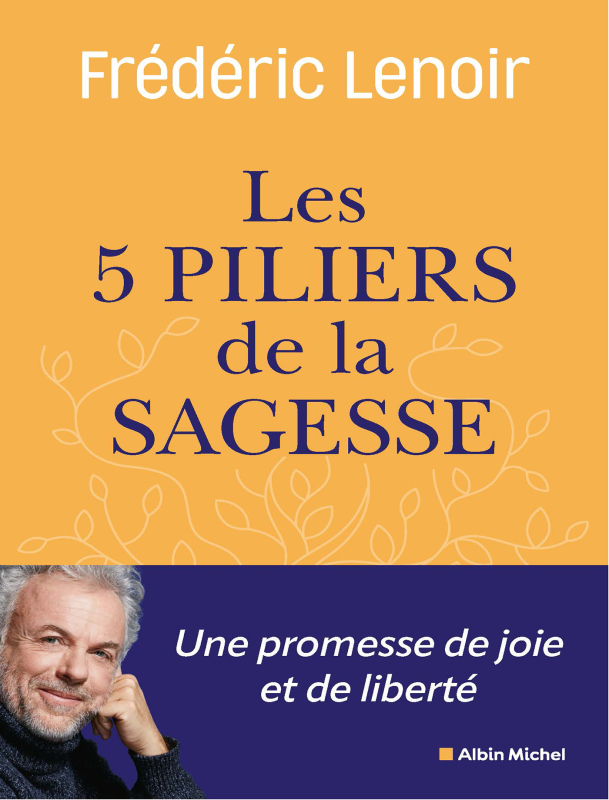
Lenoir: The Five Pillars of Wisdom
Book 2025

Lenoir: The Five Pillars of Wisdom

"There is an amazing convergence between all the great philosophical and spiritual currents of the world around fundamental qualities to develop in order to lead a good and happy life. This is what I call the 5 pillars of wisdom: knowledge, love, ethics, presence and acceptance. Beyond their cultural or metaphysical differences, the messages of Buddha, Lao-tse, Socrates, Plato, Epicury, Jesus, Epictetus, Rûmi, Monta…

  • Essay
  • Self-help
  • Philosophy
🇫🇷 France
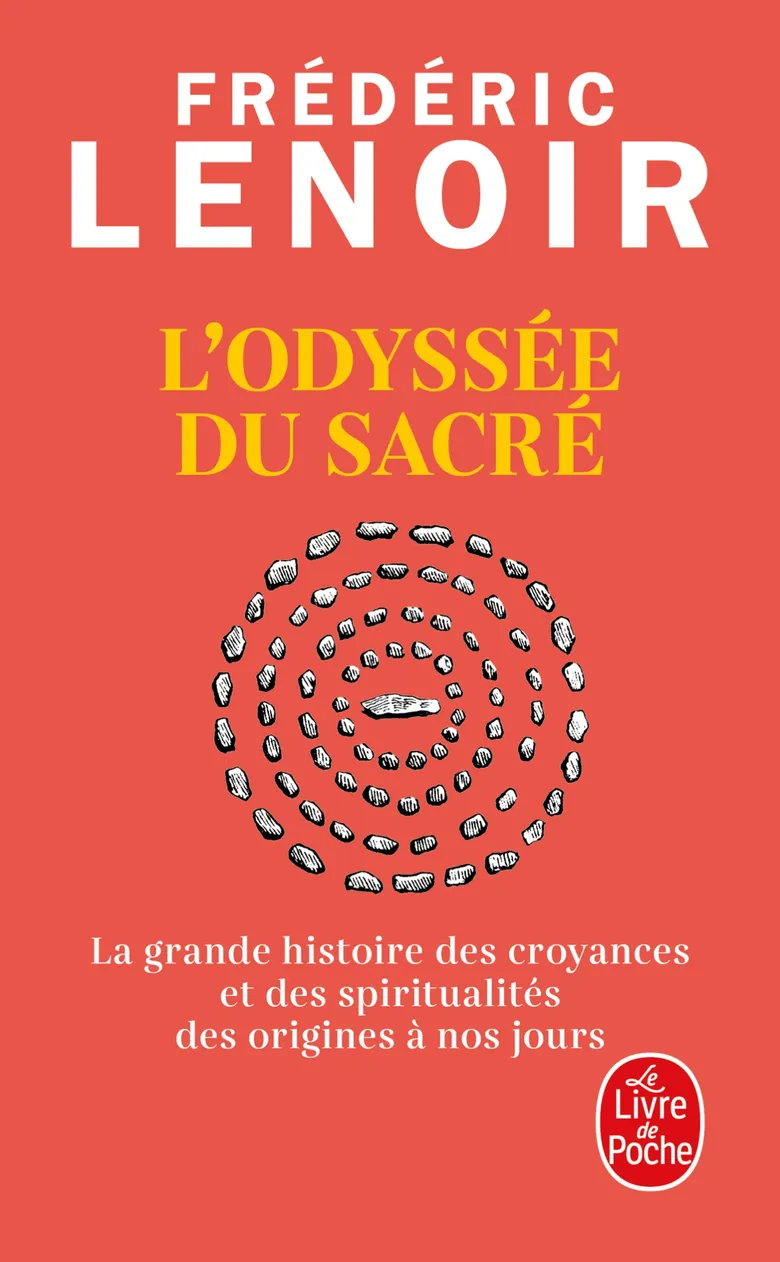
Lenoir: The Odyssey of the Sacred
Book 2023

Lenoir: The Odyssey of the Sacred

Since his appearance, Homo sapiens has felt terrified and admired in the face of Nature and wondered about his existence. From this feeling of the sacred were born all the great spiritual and religious currents of the world. Why is he the only animal that seeks to give meaning to his life, practices funeral rituals and invents great collective stories?Frédéric Lenoir tries to answer these questions and shows, over t…

  • Essay
  • Self-help
  • Philosophy
🇫🇷 France
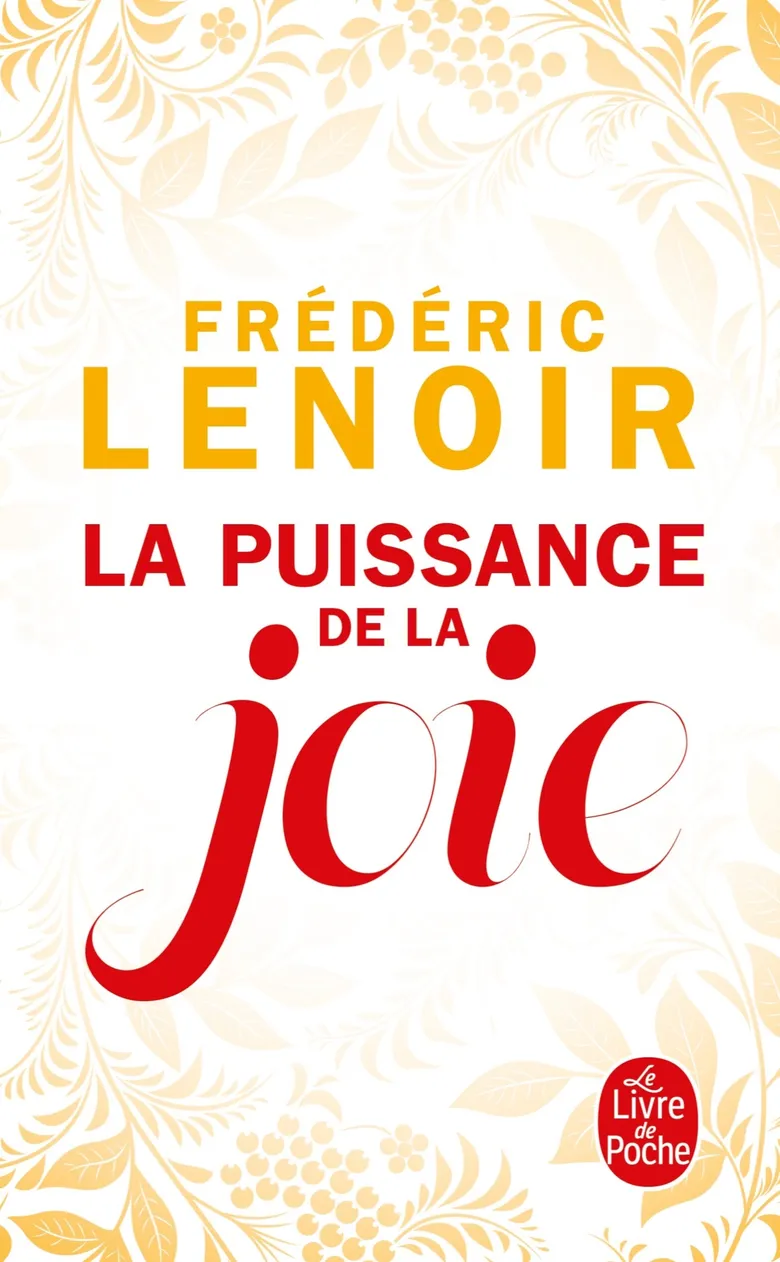
Lenoir: The Power of Joy
Book 2015

Lenoir: The Power of Joy

"Is there a more desirable experience than that of joy? More intense and deeper than pleasure, more concrete than happiness, joy is the manifestation of our vital power. Joy is not decreed, but can it be tamed? To provoke it? To cultivate it? I would like to propose here a way of self-fulfillment based on the power of joy. A way of liberation and love, to the opposite of the false happiness proposed by our narcissis…

  • Essay
  • Self-help
  • Philosophy
🇫🇷 France
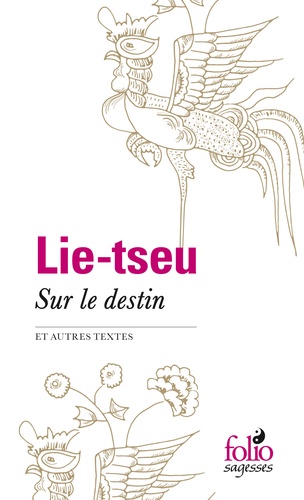
Liezi: On Destiny
Book

Liezi: On Destiny

How much of our existence depends on our will, and how much lies beyond our control? In On Destiny and Other Texts, Liezi explores the relationships between human freedom, necessity, and the natural course of events. Through anecdotes, dialogues, and parables drawn from the True Classic of the Perfect Void, he contrasts individual ambitions with the unpredictable circumstances that determine their success or failure…

  • Philosophy
🇨🇳 China
Liezi: The True Classic of Perfect Emptiness
Book

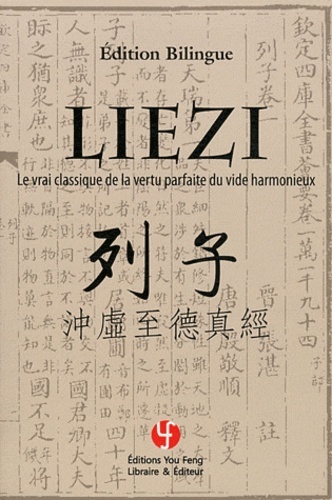
Liezi: The True Classic of Perfect Emptiness

This Taoist classic gathers parables and meditations on emptiness, spontaneity and transformations. It teaches an availability that allows to act without stiffness or attachment.

  • Philosophy
🇨🇳 China
Liezi: Treatise on the Perfect Void
Book

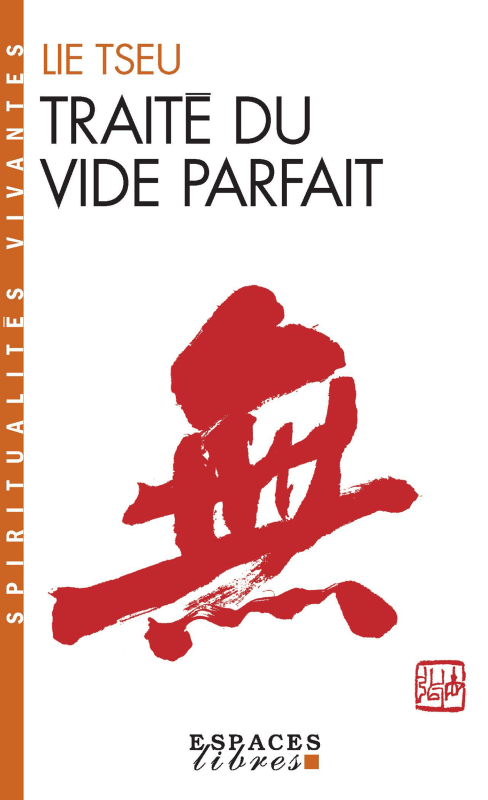
Liezi: Treatise on the Perfect Void

How can we live in harmony with a universe undergoing constant transformation? In Treatise on the Perfect Void, Liezi explores the major questions of Daoist thought through stories, dialogues, parables, and philosophical reflections. The work examines the origins of the world, the nature of the Dao, the relationships between destiny and human freedom, and the boundaries between dreams and reality. It encourages read…

  • Philosophy
🇨🇳 China
Life, Love, Laughter
Book

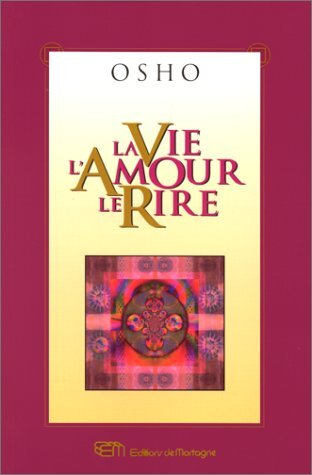
Life, Love, Laughter

"This is the substance of my teaching: love more, to the point of becoming yourself simply a source of love, and nothing else... Be responsible for the hell or paradise in which you live." (Osho)

  • Self-help
  • Philosophy
🇮🇳 India
Locke: A Letter Concerning Toleration
Book 1689

Locke: A Letter Concerning Toleration

What are the relationships that should exist between the State and the Church, or rather between the State and the Churches? To answer this question, the Letter on Tolerance takes the path of a double reflection on the nature of belief and power. Belief does not depend on will, while power, which is essentially coercive, can only influence the conduct of men in actions where they have the possibility of modifying th…

  • Philosophy
🇬🇧 United Kingdom
Locke: An Essay Concerning Human Understanding
Book 1689

Locke: An Essay Concerning Human Understanding

Published in 1689, Locke's Essay on Human Understanding completed the reconfiguration of the philosophical landscape of modernity. Philosophy now has the task no longer of increasing our knowledge of things, but of analyzing their materials - the ideas - and providing criticism. She sees in man a being dedicated to sensation, desire and anxiety, who can no longer rely on the resources of innateness or divine inspira…

  • Philosophy
🇬🇧 United Kingdom
Love
Book

Love

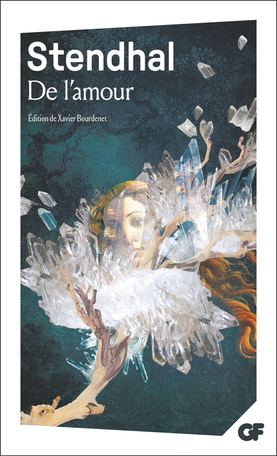
In this essay, Stendhal observes the different forms of love, their stages and their illusions. His famous theory of "crystalization" describes how imagination transforms the loved one and nourishes passion.

  • Romance
  • Essay
  • Philosophy
🇫🇷 France
Lucretius: Mind and Soul Are Closely United
Book

Lucretius: Mind and Soul Are Closely United

In this excerpt from On the Nature of Things, Lucretius defends a material conception of mind and soul. Their union with the body dispels the fear that the individual self survives death.

  • Philosophy
🇮🇹 Italy
Lucretius: On the nature of things
Book

Lucretius: On the nature of things

Lucretius sets out Epicurean physics in verse: atoms, void, the formation of worlds and the mortality of the soul. The poem seeks to free humanity from superstition and the fear of death.

  • Philosophy
🇮🇹 Italy
Lucretius: The Birth of Things
Book

Lucretius: The Birth of Things

This edition gives us to read the movement by which Lucrece explains the appearance of beings and worlds from atoms and emptiness. Poetry becomes an instrument of knowledge and deliverance.

  • Philosophy
🇮🇹 Italy
Machiavel : The Prince
Book

Machiavel : The Prince

"The very penetrating Machiavelli [...], this very wise man, of which it is evident that he was for freedom, for the defense of which he gave the most salutary advice." Spinoza (Political Treaty, V, 7) A short and fulgurant masterpiece, Le Prince (1532) became from the outset a classic book of political reflection. Opponents and supporters of the Florentine doctrine have stopped to confront each other over the cent…

  • Essay
  • Philosophy
  • Political
🇮🇹 Italy
Marcus Aurelius: Meditations
Book

Marcus Aurelius: Meditations

Roman emperor and follower of Stoic philosophy, Marcus Aurelius seeks in Meditations the means to preserve his serenity and conduct his life justly. Confronted with the responsibilities of power, military conflicts, and the uncertainty of events, he records personal reflections intended to strengthen his judgment and self-control. Written largely during the military campaigns of his reign, these notes explore the ma…

  • Philosophy
🇮🇹 Italy
Mencius: On the Usefulness of Being Good
Book

Mencius: On the Usefulness of Being Good

Mencius defends the native goodness of the human being and shows how it can be cultivated. Faced with the calculation of interest, he affirms the lasting effectiveness of benevolence and justice.

  • Philosophy
🇨🇳 China
Mill: Nature
Book

Mill: Nature

Mill criticises the idea that nature alone would provide a moral norm. Observing what exists is not enough to determine what must be: human action must be judged by its effects and values.

  • Philosophy
🇬🇧 United Kingdom
Mill: Of freedom
Book

Mill: Of freedom

Mill defends freedom of thought, expression and conduct against social and political tyranny. Under his harm principle, coercion is legitimate only to prevent harm to others.

  • Philosophy
🇬🇧 United Kingdom
Miyamoto Musashi: The Book of Five Rings
Book

Miyamoto Musashi: The Book of Five Rings

How can victory be achieved through an understanding of the fundamental principles of combat and strategy? In The Book of Five Rings, Miyamoto Musashi, the renowned Japanese swordsman, shares the teachings drawn from his experience in martial arts. Organized into five sections associated with Earth, Water, Fire, Wind, and Void, the treatise examines the foundations of strategy, sword techniques, the conduct of comba…

  • Philosophy
🇯🇵 Japan
Miyamoto Musashi: Treatise on the Five Rings, Go Rin no Sho
Book

Miyamoto Musashi: Treatise on the Five Rings, Go Rin no Sho

What principles make it possible to understand a confrontation and gain an advantage over an opponent? In Treatise on the Five Rings, also known as Go Rin no Sho, Miyamoto Musashi presents his conception of strategy based on his experience as a Japanese sword master. Divided into five books devoted to Earth, Water, Fire, Wind, and Void, the work examines the foundations of the martial way, swordsmanship, the rhythms…

  • Philosophy
🇯🇵 Japan
Monster
Manga 1994 18 Volumes

Monster

Kenzo Tenma is a brilliant Japanese neurosurgeon living in Germany whose life changes when he chooses to save a young boy instead of an influential patient. Years later, he discovers that the child he saved has become an extremely dangerous criminal. Consumed by guilt, Tenma gradually leaves his career behind and sets out to find him in order to understand what he has become and prevent further victims. His investig…

  • Drama
  • Crime
  • Thriller
🇯🇵 Japan
Montaigne : On Friendship
Book

Montaigne : On Friendship

From friendship is drawn from the Essays of Montaigne, published in 1595, posthumously, It is through the most honest introspection that the author seeks to understand humanity, by reasoning but also by an intimate understanding of his own emotions. Friendship is a meeting. When Montaigne happily tells his relationship with Estienne de La Boétie, the reader on his side experiences the encounter with an author, sinc…

  • Essay
  • Philosophy
🇫🇷 France
Montaigne : Without Beginning or End
Book

Montaigne : Without Beginning or End

"J-opens things more than I discover": Montaigne often questions and gives up concluding, because the real is never simple. This distrust of a knowledge that is too certain of him, our time is his own and finds the living expression in the essays on problems that always concern us: friendship and love, the clash of cultures, the basses of public life, pleasure...

  • Essay
  • Philosophy
🇫🇷 France
Montaigne: Essays (complete)
Book

Montaigne: Essays (complete)

In the Essays, Montaigne makes himself the subject of an exploration of the human being. Reading the Ancients, daily experience, scepticism and personal judgment make up a work in motion.

  • Educational
  • Philosophy
🇫🇷 France
Montaigne: Vanity
Book

Montaigne: Vanity

Montaigne meditates on travel, instability, desire for change and illusions of pride. The essay transforms personal experience into a free inquiry into the human condition.

  • Philosophy
🇫🇷 France
Montesquieu: Essay on taste
Book

Montesquieu: Essay on taste

Montesquieu seeks the causes of aesthetic pleasure in curiosity, order, variety and surprise. Taste appears as a living relationship between the qualities of the object and the faculties of the mind.

  • Philosophy
🇫🇷 France
Montesquieu: Persian Letters
Book 1721

Montesquieu: Persian Letters

The East and the West, the seraglio and the salons, the intrigues of the sultanas and the coquetry of the Parisians, the muftis and the pope... This is what nourishes the correspondence maintained by Usbek and Rica, Persian lords who left to discover the France of Louis XIV, with their friends who remained in Isfahan. Under the cover of a distant gaze, Montesquieu draws up in the Persian Letters (1721) an uncomprom…

  • Essay
  • Philosophy
  • Classical
🇫🇷 France
Montesquieu: Pleasures and Happiness and Other Thoughts
Book

Montesquieu: Pleasures and Happiness and Other Thoughts

This choice of thoughts reveals a Montesquieu attentive to the pleasures, affections and concrete conditions of happiness. The fragments combine moral observation, irony and art of living.

  • Philosophy
🇫🇷 France
Montesquieu: Praise of sincerity
Book

Montesquieu: Praise of sincerity

In this youth speech, Montesquieu opposes sincerity to the artifices of social life. He makes it a virtue of trust, justice and freedom in human relations.

  • Philosophy
🇫🇷 France
Montesquieu: The Rise and Fall of the Romans
Book 1734

Montesquieu: The Rise and Fall of the Romans

Writing about Rome: after Bossuet, Saint-Evremond and so many others, the company no longer had, in 1734, the merit of novelty. However, Montesquieu was able to renew this “worn material”, in the words of Voltaire who recognized in the Considerations “very fine reflections and very strong paintings”. As a true historian – and no longer as a storyteller – the writer describes ancient Rome, its power, its abuses and i…

  • Philosophy
🇫🇷 France
Montesquieu: The Spirit of the Laws
Book 1748

Montesquieu: The Spirit of the Laws

A true political summation, On the Spirit of the Laws (1748) is Montesquieu’s masterpiece. The author engages in reflection on the different governments, a survey of human societies and a comparative analysis of laws, in order to train everyone to evaluate legislative intervention. By attempting to grasp the “spirit of the laws” – or the relationships that the laws have with the climate, religion, morals, wealth an…

  • Philosophy
🇫🇷 France
Nagarjuna: Fundamental Verses of the Middle Way
Book

Nagarjuna: Fundamental Verses of the Middle Way

Nāgārjuna subjects fundamental concepts to rigorous criticism and shows that no phenomenon has an independent existence. Emptiness refers to dependent arising and opens the Middle Way.

  • Philosophy
🇮🇳 India
Nagarjuna: The Book of Fortune
Book

Nagarjuna: The Book of Fortune

Addressed in the form of advice, this text links ethical conduct, discernment and the path towards awakening. Nāgārjuna presents a wisdom that can be practised at the heart of existence.

  • Philosophy
🇮🇳 India
Nagarjuna: Verses from the Center
Book

Nagarjuna: Verses from the Center

These verses set out the Middle Way by dismantling fixed oppositions between being and non-being. They invite us to understand emptiness without turning it into another substantial doctrine.

  • Philosophy
🇮🇳 India
Naruto
Manga 1999 72 Volumes

Naruto

Naruto Uzumaki is a young ninja from the village of Konoha who dreams of becoming Hokage so that he can finally earn everyone’s recognition. Rejected since childhood because he carries Kyubi, a powerful fox demon once responsible for an attack on the village, he is determined to prove his worth despite the prejudice surrounding him. Alongside Sasuke Uchiha and Sakura Haruno, under the guidance of Kakashi Hatake, Nar…

  • Action
  • Adventure
  • Supernatural
🇯🇵 Japan
Nietzsche : Beyond Good and Evil
Book

Nietzsche : Beyond Good and Evil

"Perhaps the time is very near when we will see that the cornerstone of the sublime and unconditioned buildings that dogmatic philosophers were no longer to raise was at the bottom only popular superstition coming from an immemorial time (like the superstition of the soul which, becoming superstition to the subject and to the self, continues to this day (i) the creation of wrongs, (ii) any puncture of words, perhaps…

  • Essay
  • Philosophy
🇩🇪 Germany
Nietzsche : Daybreak
Book

Nietzsche : Daybreak

In Aurore (1881), Nietzsche continued the undertaking of radical criticism of the morals begun in Human, too human, and thus laid the foundations for a philosophical project whose last works, from Par-surpasse to Ecce homo, would be crowned. The philosopher imposes himself here as a worker of darkness, drilling the bottom of civilization to reveal the more or less noble origins of ideals, beliefs and morals, undermi…

  • Essay
  • Philosophy
🇩🇪 Germany
Nietzsche : Human, All Too Human
Book

Nietzsche : Human, All Too Human

When it was published in 1878, Human, too human, left readers perplexed: we do not recognize the author of The Birth of Tragedy. Yet, the break between the two works is not as radical as we wanted to think. Rather, it is a profound and decisive self-assertion movement that manifests itself in this new book. Freed from his past influences, Nietzsche reinvests his questions on a new mode and, in doing so, consolidates…

  • Essay
  • Philosophy
🇩🇪 Germany
Nietzsche : On the Genealogy of Morality
Book

Nietzsche : On the Genealogy of Morality

"How much blood and horror at the bottom of all the good things!" writes Nietzsche. The Genealogy of Morality applies this disacralizing principle: the moral ideal (ascetic) now has a price, payable "in the pound of flesh". "Modern" men, of "progress", have here a mirror for their prohibitions, their impotences and their misunderstandings: the mevery of democratic consensus, the morale of the flock, the sad passions…

  • Essay
  • Philosophy
🇩🇪 Germany
Nietzsche : On the Invention of Morality
Book 1887

Nietzsche : On the Invention of Morality

The "good", the "bad": these "values", which influence our thoughts, our judgments and our actions, seem obvious to us, even natural. Wrongly, Nietzsche tells us. These are in fact habits that have been instilled in us, since ancient times, by the most cruel punishments. Worse: far from being a mark of evolved humanity, they are the symptom of a civilization sick of its morals. In Nietzsche's eyes, the real culprit …

  • Essay
  • Philosophy
🇩🇪 Germany
Nietzsche : On Truth and Lies in a Nonmoral Sense
Book

Nietzsche : On Truth and Lies in a Nonmoral Sense

In parallel with the writing of his first book, The Birth of Tragedy, Nietzsche is investigating a second problem: the status of the true. The text he then wrote, From Truth and Lie in the Extra-Moral sense, leads to the most radical intellectual upheaval ever developed in philosophy: the questioning of the idea of objective truth, and the identification of illusion as the very condition of life. It is therefore the…

  • Essay
  • Philosophy
🇩🇪 Germany
Nietzsche : Second Untimely Meditation
Book

Nietzsche : Second Untimely Meditation

Nietzsche's Second Untimely Consideration is a violent polemic address against the society of his time, where he sees an era and culture dedicated to "historical illness." "We live in an era in danger of death for the major reason that it idolaters history. To get rid of this cult is to regain the pressing demand of life and to give it right, is to plead again for an artistic conception of life. Analysing the histor…

  • Essay
  • Philosophy
🇩🇪 Germany
Nietzsche : The Birth of Tragedy
Book

Nietzsche : The Birth of Tragedy

Published in 1872, The Birth of Tragedy is the birth certificate of a philosopher convinced that only confrontation with what is foreign to us gives us access to ourselves. By questioning the genesis of the ancient tragedy from the impulses of the Apollolinian and the Dionysiac, Nietzsche sheds light on the sense of pessimism inherent in presocratic Greece. This "pessimism of force", lucid as to the painful nature o…

  • Essay
  • Philosophy
🇩🇪 Germany
Nietzsche : The Gay Science
Book

Nietzsche : The Gay Science

To question the fanaticism of the truth that governs philosophy, to recognize life alone as the source of all value, independence for the supreme virtue of the philosopher, and to seek an unprecedented reconciliation of art and science: this is the meaning of gay knowledge for Nietzsche. Published in 1882, this book is republished and expanded in 1887.It implements the main themes of Nietzsche's thinking, including …

  • Philosophy
🇩🇪 Germany
Nietzsche : The Philosopher's Book
Book

Nietzsche : The Philosopher's Book

"No one now knows what a good book looks like," Nietzsche writes in The Book of the Philosopher. From this aborted project, a vast exposition of the relations of philosophy to art, science and civilization, there are studies whose fragmentary character does not shock the spirit of Nietzschean l'élan. Historical Milestones faced with the mirror of interpretation and program for the philosophy of tomorrow marry in a o…

  • Essay
  • Philosophy
🇩🇪 Germany
Nietzsche : Thus Spoke Zarathustra
Book 1998

Nietzsche : Thus Spoke Zarathustra

That a Goethe, that a Shakespeare cannot breathe for a moment in this atmosphere of passion and altitude, that Dante, near Zarathustra, be only a believer, and not someone who begins by creating the truth, a spirit that governs the world, a destiny – may the poets of Veda be priests and not even worthy to undo the Zarathustra's shoes, that is still only a litot and gives no idea of the distance, the Azurean solitude…

  • Philosophy
🇩🇪 Germany
Nietzsche : Twilight of the Idols
Book

Nietzsche : Twilight of the Idols

"The fastest and most thorough introduction to my philosophy. I do not think it is possible to give more substance in such a small space." Nietzsche thus presents the Twilight of Idols. Written in 1888, when the first testimonies of international recognition appear, this book is designed to offer the most effective way of access to the understanding of its main "philosophical heterodoxys" and the originality of its…

  • Essay
  • Philosophy
🇩🇪 Germany
Nietzsche : Untimely Meditations
Book

Nietzsche : Untimely Meditations

From this project of a life will result four writings: David Strauss, the confessor of the faith and the writer, The advantages and disadvantages of history for life, Schopenhauer educator and Richard Wagner in Bayreuth, where the philosopher denounces the evil symptoms of German culture, in which Schopenhaer and Wagner are exceptions and offer counter-models. At the beginning of the 1870s, young Nietzsche envisaged…

  • Essay
  • Philosophy
🇩🇪 Germany
Notes from an underground
Book

Notes from an underground

"I am a sick man... I am a mean man. A rather repulsive man. I think I have the liver sick. By the way, I don't understand anything about my illness and I don't know exactly what hurts me." In a "infected" room that he designates as his "hole," a former civil servant of forty years old is plunged into a state of suffering that paradoxa-ly limits to enjoyment. As opposed to the man of action, direct and spontaneous, …

  • Novel
  • Philosophy
🇷🇺 Russia
One-Punch Man
Manga 2012 35 Volumes

One-Punch Man

Saitama is a hero who has become so powerful that he can defeat almost any opponent with a single punch. After years of intense training, however, his overwhelming strength has taken away all excitement from battle. Searching for an enemy capable of giving him a real challenge, he continues his heroic activities almost out of boredom and eventually joins the Hero Association alongside Genos, a cyborg who becomes his…

  • Action
  • Comedy
  • Supernatural
🇯🇵 Japan
Paulo Coelho : Like the Flowing River
Book

Paulo Coelho : Like the Flowing River

Gathering about a hundred short texts (reflections on life, mood notes, travel anecdotes, parables or philosophical tales) published between 1998 and 2005 in which P. Coelho reveals his world as a writer.

  • Essay
  • Self-help
  • Philosophy
🇧🇷 Brazil
Paulo Coelho : Manual of the Warrior of Light
Book 1997

Paulo Coelho : Manual of the Warrior of Light

The warriors of light recognize themselves at first glance. They are in the world, they are part of the world. Often, they find that their life has no meaning. But they have not renounced to give it one. They question themselves, refuse passivity and fatalism. This is what makes them warriors of light. This short, simple and precious book offers a true synthesis of Paulo Coelho's humanist philosophy: a message of tr…

  • Novel
  • Essay
  • Self-help
🇧🇷 Brazil
Paulo Coelho : The Archer
Book

Paulo Coelho : The Archer

In the face of the exceptional archer who came to measure himself against him, Master Tetsuya gives much more than a lesson in archery and makes a wonderful demonstration of the unsuspecting powers of his art. A young boy from the village, witness to this blow of brightness, insists that he pass on his knowledge to him. The master warns: he will teach him the necessary rules, but then he will make them his own to be…

  • Short story
  • Self-help
  • Philosophy
🇧🇷 Brazil
Plato: Apology of Socrates
Book

Plato: Apology of Socrates

Athens, 399 BCE. Socrates, a citizen without wealth or political power, appears before the city tribunal. What are the alleged facts? He is accused of not recognizing the existence of traditional gods, of introducing new deities and of corrupting the youth. Faced with his judges, Socrates alone defends himself and warns the Athenians: the philosopher is a blessing to the city and the city condemns itself by putting …

  • Philosophy
🇬🇷 Greece
Plato: Crito
Book

Plato: Crito

In 399 BCE, in Athens, Socrates appeared before the city tribunal. Accused of not recognizing the existence of traditional gods, of creating new deities and of corrupting youth, he is condemned to death. We have few testimonies left of his trial, but the one that Plato gives us in the Apology of Socrates elevates to the rank of founding myth of philosophy a fact that could have remained banal in the light of history…

  • Philosophy
🇬🇷 Greece
Plato: Gorgias
Book

Plato: Gorgias

The tone of Gorgias is particularly violent, and not only with regard to rhetoric. The dialogue formulates one of the most radical critiques that have been addressed to Athenian democracy, its dominant values and its prestige politics. Indeed, Socrates attacks all aspects of this policy, from the most concrete to the most ideological. But most of the criticism targets the condition which gives Athenian democracy its…

  • Philosophy
🇬🇷 Greece
Plato: Menexenus
Book

Plato: Menexenus

Socrates recounts a funeral speech attributed to Aspasia. Through this ambiguous device, Plato questions civic rhetoric, patriotic narrative and the construction of collective memory.

  • Philosophy
🇬🇷 Greece
Plato: Meno
Book 2006

Plato: Meno

Socrates and Meno ask whether virtue can be taught. The dialogue introduces the paradox of inquiry, recollection and the distinction between knowledge and true opinion.

  • Philosophy
🇬🇷 Greece
Plato: Phaedo
Book

Plato: Phaedo

The Phaedo tells of a death, that of Socrates. But the story of these singular farewells is an opportunity to have a different discourse on this subject. Because Socrates dies after speaking, after tearing off his frightening “mask” of a witch from death, and betting on the immortality of our souls. With him, death and philosophy engage in the same work as Penelope, undoing what life has woven and freeing the soul …

  • Philosophy
🇬🇷 Greece
Plato: Phaedrus
Book

Plato: Phaedrus

How to speak, why write? This is what two Athenians are discussing, at the end of the 5th century BC, lying near a flowering chaste tree, in the shade of a plane tree under which a spring flows, on the banks of the Ilissos, a few hundred meters from the Acropolis. But how can we evoke the power of discourse without speaking of the reality which produces discourse and over which its power is exercised, the human soul…

  • Philosophy
🇬🇷 Greece
Plato: Protagoras
Book 1956

Plato: Protagoras

Socrates meets the sophist Protagoras and asks about the teaching of virtue. Their exchange confronts rhetoric, political education and unity of virtues.

  • Philosophy
🇬🇷 Greece
Plato: The Laws
Book

Plato: The Laws

The Laws are undoubtedly the last of the dialogues written by Plato. In the twelve books of this legislative sum of extraordinary ambition, the philosopher pronounces on an exorbitant number of aspects of human and civic life, produces a true political history of humanity, and recalls, with a clarity which has hardly any equivalent in the other dialogues, the general principles of his "physics" and his cosmology: th…

  • Philosophy
🇬🇷 Greece
Plato: The Myths of Plato
Book

Plato: The Myths of Plato

This anthology brings together the great mythical stories by which Plato approaches the soul, knowledge, love, the city and beyond. The myth completes the argument when reasoning touches its limits.

  • Philosophy
🇬🇷 Greece
Plato: The Republic
Book

Plato: The Republic

What do artists do? The question runs through these two texts of Plato with sovereign irony. In the Ion, Socrates pushes to his limits a rhapsode who claims to interpret Homer by art: what he believes he has mastered is only divine possession – a favor granted by the Muses, not technical acquired through work. In book Together, these founding texts outline a question that philosophy has never ceased to reopen: if ar…

  • Philosophy
🇬🇷 Greece
Plato: The Sophist
Book

Plato: The Sophist

A visitor from Elea undertakes to define the sophist through successive divisions. The dialogue confronts the problems of being, non-being, images and false discourse.

  • Philosophy
🇬🇷 Greece
Plato: The Statesman
Book

Plato: The Statesman

Plato seeks to define the true statesman and his own knowledge. Dialogue distinguishes political art from its imitations and examines the relationship between measure, law and government.

  • Philosophy
🇬🇷 Greece
Plato: The Symposium
Book

Plato: The Symposium

They lie on beds and talk about love and beauty. Their speeches follow one another, sometimes responding to each other, because there are several loves and several ways of desiring Beauty. To these men living in a time and place where the education of boys is inseparable from the sexuality which regulates the relationship between master and disciple, a foreigner, Diotima, opposes a feminine model of transmission of …

  • Philosophy
🇬🇷 Greece
Plato: The Trial of Socrates
Book

Plato: The Trial of Socrates

Through Apology, Criton and the final scene of the Phedon, this volume follows the accusation, condemnation and death of Socrates. It puts justice, fidelity to philosophy and freedom of conscience at the forefront.

  • Philosophy
🇬🇷 Greece
Plato: Theaetetus
Book

Plato: Theaetetus

Socrates questions the young Theaetetus about the nature of knowledge. Perception, true opinion and justification are examined in turn, without a final definition being reached.

  • Philosophy
🇬🇷 Greece
Plato: Timaeus
Book

Plato: Timaeus

How to talk about origins? How can we say what was the birth of the universe, that of man, that of society? From Timaeus to Critias, the answer does not vary: it is to a discourse which constitutes its object that the explanatory task falls. On the one hand, the cosmology of Timaeus which seeks the conditions for knowledge of the sensible world. On the other, the story of the war which opposed ancient Athens to Atla…

  • Philosophy
🇬🇷 Greece
Plotinus: Enneads I
Book 1997

Plotinus: Enneads I

Plotinus opened a school of philosophy in Rome and obtained the respect of his contemporaries through his virtues and his knowledge. He then obtained permission from the Emperor Gallienus to build a city to realize Plato's ideal republic, but envious people caused this project to fail. Plotinus had proposed to found eclecticism by taking as a basis the doctrine of Plato and striving to reconcile with it the other do…

  • Philosophy
🇪🇬 Egypt
Plotinus: Enneads II
Book 1998

Plotinus: Enneads II

Philosopher of the 3rd century AD, Plotinus constructed one of the most important metaphysics in Western history. His work was brought together by one of his disciples, Porphyry, who ordered the fifty-four treatises into six Enneads of nine treatises each.

  • Philosophy
🇪🇬 Egypt
Plotinus: Enneads III
Book 1999

Plotinus: Enneads III

Philosopher of the 3rd century AD, Plotinus constructed one of the most important metaphysics in Western history. His work was brought together by one of his disciples, Porphyry, who ordered the fifty-four treatises into six Enneads of nine treatises each.

  • Philosophy
🇪🇬 Egypt
Plotinus: Enneads IV
Book 2003

Plotinus: Enneads IV

The fourth Ennead brings together nine treatises devoted to the soul: its essence, its immortality, its memory, its perception, its descent into the body and the question of the unity of all souls. Plotinus specifies the links between the individual soul, the Soul of the world and the intelligible world.

  • Philosophy
  • Classical
🇪🇬 Egypt
Plotinus: Enneads V
Book 2003

Plotinus: Enneads V

The fifth Ennead explores Intelligence, intelligible realities and their relationship with the One. His nine treatises describe the procession of beings from the first principle, the nature of Ideas and the way in which the soul can rise towards intelligible beauty.

  • Philosophy
  • Classical
🇪🇬 Egypt
Plotinus: Enneads VI
Book 2003

Plotinus: Enneads VI

The sixth Ennead examines the kinds of being, the unity and omnipresence of being, numbers, freedom and the will of the One. It leads Plotinus' reflection to the Good, the supreme principle located beyond being and thought.

  • Philosophy
🇪🇬 Egypt
Pluto
Manga 2003 8 Volumes

Pluto

In a world where humans and robots coexist, Gesicht, a robotic Europol detective, investigates a series of murders targeting some of the most powerful robots on Earth as well as humans connected to them. Each crime scene bears the same strange signature, suggesting that an enemy capable of challenging the fundamental rules of robotics is at work. As his investigation progresses, Gesicht discovers that the killings a…

  • Drama
  • Crime
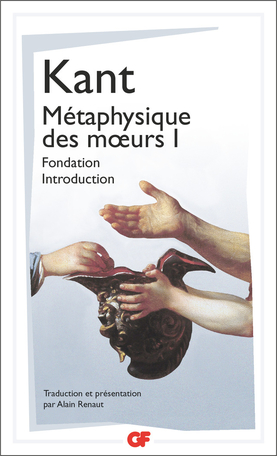
  • Mystery
🇯🇵 Japan
Rousseau: Confessions
Book 1782

Rousseau: Confessions

The Confessions of Jean-Jacques Rousseau is an autobiography covering the first fifty-three years of Rousseau's life, until 1765. The twelve books of the Confessions are divided into two distinct sets, defined by Rousseau himself: the first part consisting of books i to vi with the Preamble, written in 1765-1767, covers the years 1712-1740 (years of training, from birth in Geneva to settling in Paris at age 28) whil…

  • Biography
  • Philosophy
🇨🇭 Switzerland
Rousseau: Discourse on the Origin and Foundations of Inequality Among Men
Book 1755

Rousseau: Discourse on the Origin and Foundations of Inequality Among Men

The "Discourse on the Origin and Foundations of Inequality Among Men" is one of the greatest texts ever written, one of the most beautiful of the Enlightenment, and one of Rousseau's two great essays with "The Social Contract". For Chomsky, it is a fundamentally revolutionary text avant la lettre. Rousseau sees inequality as the origin of social ills: wars, poverty, violence of all kinds. From the persistence of ine…

  • Philosophy
🇨🇭 Switzerland
Rousseau: Discourse on the Sciences and Arts
Book 1750

Rousseau: Discourse on the Sciences and Arts

The Discourse on the Sciences and the Arts is a text by Jean-Jacques Rousseau written as part of the Dijon Academy competition of 1750. Jean-Jacques Rousseau gives voice to the Roman hero Fabricius through prosopopeia in his Discourse. Winner of the competition, Rousseau saw his essay widely commented on and owed his fame to it, well before his magnum opus The Social Contract. As required by the competition, the spe…

  • Philosophy
🇨🇭 Switzerland
Rousseau: Emile, or On Education
Book 1762

Rousseau: Emile, or On Education

The publication of L'Émile, in 1762, restored the problem of education to its central place in philosophy. From his first months until his romantic encounter, Émile is followed at each stage, through experiences which first attest to the concern to consider “the child within the child”, instead of taking him out of his age. Rousseau shows that it is possible to educate a man according to nature and how vices and ine…

  • Graphic novel
  • Philosophy
🇨🇭 Switzerland
Rousseau: Julie, or the New Heloise
Book 1761

Rousseau: Julie, or the New Heloise

“I saw the customs of my time, and I published these letters”: it is with these words that the “editor” Rousseau opens La Nouvelle Héloïse, a romantic correspondence between Julie d’Étange and her tutor Saint-Preux. On the shores of Lake Geneva, these “beautiful souls” form a small ideal society, where gentle passions and sincerity of feeling prevail, away from the evils of civilization. In line with Montesquieu's …

  • Philosophy
🇨🇭 Switzerland
Rousseau: Reveries of a Solitary Walker
Book 1782

Rousseau: Reveries of a Solitary Walker

After the "Confessions" and "Rousseau judge of Jean-Jacques", the philosopher wrote between 1776 and 1778 these "Rêveries d'un promeneur solitaire" before ending his days with René-Louis de Girardin at the Château d'Ermenonville. Sketched out day by day on playing cards before being composed and structured into ten “walks” – the last remaining unfinished – they were only published posthumously in 1782, in Geneva, by…

  • Biography
  • Philosophy
🇨🇭 Switzerland
Rousseau: The Social Contract
Book 1762

Rousseau: The Social Contract

In The Social Contract, Rousseau establishes that a “just” social organization is based on a pact guaranteeing equality and freedom between all citizens. This pact is contracted between all the participants, that is to say the exhaustive set of citizens. In the social compact, everyone gives up their natural freedom to gain civil freedom. Popular sovereignty is the fundamental principle of the social contract. The i…

  • Essay
  • Philosophy
🇨🇭 Switzerland
Sailor Moon
Manga 1991 18 Volumes

Sailor Moon

Usagi Tsukino is a clumsy and carefree middle school student whose life changes when she meets Luna, a mysterious talking cat. Luna reveals that Usagi is Sailor Moon, a guardian chosen to protect Earth from evil forces. Throughout her battles, Usagi meets other Sailor Guardians and gradually discovers the bonds connecting them to an ancient lunar kingdom. Between everyday life, friendship, love, and confrontations w…

  • Drama
  • Fantasy
  • Romance
🇯🇵 Japan
Sartre : A Plea for Intellectuals
Book

Sartre : A Plea for Intellectuals

Why re-edit this little book, published in 1972, when we are living in a time of widespread disenchantment towards intellectuals? Because it was necessary to recall the definition of the "universal intellectual" defended by Sartre. As it was often caricatured, it was necessary that we return to the source and highlight its lines of force. Jean-Paul Sartre asks three important questions here – and tries to answer the…
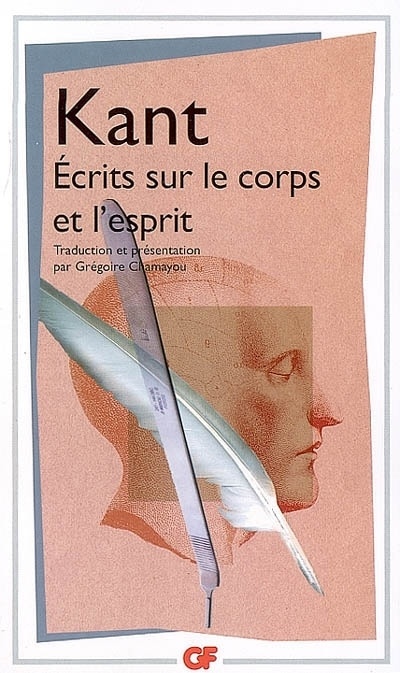
  • Essay
  • Philosophy
  • Political
🇫🇷 France
Sartre : Being and Nothingness
Book

Sartre : Being and Nothingness

"Being can only generate being and, if man is embedded in this generational process, he will only emerge from being. If he is to be able to question this process, that is to say, to question it, he must be able to hold it under his sight as a whole, that is, to put himself outside of it and thereby weaken the structure of being it. However, it is not given to the "human reality" to destroy, even temporarily, the mas…

  • Essay
  • Philosophy
🇫🇷 France
Sartre : Critique of Dialectical Reason
Book

Sartre : Critique of Dialectical Reason

In this vast survey, Jean-Paul Sartre seeks to understand how individual freedom is embedded in history and in collective structures. In critical dialogue with Marxism, he analyses praxis, rarity, groups, institutions and conflicts in order to lay the foundations for historical anthropology. The book is preceded by "Questions of method", where Sartre describes the relationship between existentialism and dialectical …

  • Philosophy
🇫🇷 France
Sartre : Existentialism Is a Humanism
Book

Sartre : Existentialism Is a Humanism

Originally, it was a worldly conference before the Club now in 1947. In this essay, Sartre defines his conception of existentialist philosophy. After distinguishing two existentialist currents, one Christian, the other atheist, of which Sartre himself claims to be, from a basic definition: "existence precedes essence".

  • Essay
  • Philosophy
🇫🇷 France
Schopenhauer: Aesthetics and metaphysics
Book

Schopenhauer: Aesthetics and metaphysics

These texts show how the aesthetic experience temporarily suspends the will and opens up a disinterested knowledge of the world. Thus the art occupies a decisive place in the metaphysics of Schopenhauer.

  • Philosophy
🇩🇪 Germany
Schopenhauer: Genius
Book

Schopenhauer: Genius

Schopenhauer describes genius as an exceptional capacity for objective contemplation. Temporarily freed from the interests of the will, it grasps essential forms and makes them perceptible through art.

  • Philosophy
🇩🇪 Germany
Schopenhauer: Philosophy and Science
Book

Schopenhauer: Philosophy and Science

Schopenhauer specifies the respective fields of philosophy and science. To the sciences that explain the relationships between phenomena, he opposes philosophical questioning of their profound meaning.

  • Philosophy
🇩🇪 Germany
Schopenhauer: The Art of Always Being Right
Book

Schopenhauer: The Art of Always Being Right

Schopenhauer lists the stratagems used to prevail in an argument regardless of truth. This eristic dialectic helps readers recognise and counter tactics employed in bad faith.

  • Philosophy
🇩🇪 Germany
Schopenhauer: The Art of Commanding Respect
Book

Schopenhauer: The Art of Commanding Respect

Schopenhauer analyses the feeling of honor and the conduct intended to preserve the esteem of others. His critical examination reveals the contradictions and excesses that the social logic of reputation leads.

  • Philosophy
🇩🇪 Germany
Schopenhauer: The Art of Growing Old
Book

Schopenhauer: The Art of Growing Old

This choice of texts brings together the reflections of Schopenhauer on age, time and the transformation of desires. Aging can bring distance, lucidity and freedom to the illusions of youth.

  • Philosophy
🇩🇪 Germany
Semiotics and Language Philosophy
Book

Semiotics and Language Philosophy

Umberto Eco studies the relationship between signs, concepts and systems of representation. Looking back at the notions of code, dictionary, encyclopedia, metaphor and interpretation, he shows how semiotic dialogue with the philosophy of language.

  • Essay
  • Philosophy
🇮🇹 Italy
Seneca: Benefits
Book

Seneca: Benefits

Seneca is a Roman Stoic philosopher who wrote Benefits, a seven-book treatise dedicated to Aebutius Liberalis and published around 54 AD. JC This text offers an in-depth analysis of the ethical notions of gratitude, ingratitude and benefit, aimed at defining how to properly grant, receive and return social favors. Benefit lies in the intention and act of giving, not in the material value of the object. Seneca ma…

  • Philosophy
🇪🇸 Spain
Seneca: Letters to Lucilius
Book

Seneca: Letters to Lucilius

Seneca, a Latin philosopher born in Cordoba, lived between the 1st century BC and the 1st century AD. He studied rhetoric and philosophy in Rome but was forced into exile in 41 BC. On his return to Rome, he became the tutor of the young Nero and composed an excessively biting satire of his society. In these letters he addresses his old friend Lucilius. Of modest origin, Lucilius rose, through merit, to the rank of k…

  • Philosophy
🇪🇸 Spain
Seneca: Medea
Book

Seneca: Medea

Abandoned by Jason, Medea transforms her pain into vengeance. The tragedy of Seneca explores the fury, the power of the word and the destruction produced by an unmeasured passion.

  • Philosophy
🇪🇸 Spain
Seneca: On Anger
Book

Seneca: On Anger

Why does anger have such destructive power over individuals and societies? In On Anger, Seneca undertakes a philosophical analysis of this passion, its origins, and its consequences. Addressing his brother Novatus, the Stoic thinker examines how the feeling of having suffered an injustice can develop into a desire for revenge, ultimately causing individuals to lose control of their judgment. He challenges the idea t…

  • Philosophy
🇪🇸 Spain
Seneca: On providence
Book

Seneca: On providence

“You ask me, Lucilius, why, if the world is governed by a Providence, good people experience so much evil. The answer would more easily find its place in the body of a treatise where we would demonstrate that this Providence presides over all things and that a God dwells in our midst. »

  • Philosophy
🇪🇸 Spain
Seneca: On the Constancy of the Wise
Book

Seneca: On the Constancy of the Wise

How can we preserve our inner freedom when confronted with injustice, humiliation, and insults? In On the Constancy of the Wise, Seneca addresses his friend Serenus to defend one of the fundamental principles of Stoicism: a truly wise person cannot be deprived of virtue by external attacks. Drawing on historical examples, particularly that of Cato the Younger, he distinguishes material harm from moral injury and arg…

  • Philosophy
🇪🇸 Spain
Seneca: On the Happy Life
Book

Seneca: On the Happy Life

What constitutes a truly happy life, and how can happiness be achieved? In On the Happy Life, Seneca addresses his brother Gallio to examine different conceptions of happiness and defend the moral ideal of Stoicism. He criticizes the tendency to follow popular opinion, pursue pleasure, and make personal satisfaction depend on wealth or external circumstances. Against these uncertain aspirations, he advocates a life …

  • Philosophy
🇪🇸 Spain
Seneca: On the Shortness of Life
Book

Seneca: On the Shortness of Life

Why do people complain of having too little time while devoting so much of it to pursuits of little real importance? In On the Shortness of Life, Seneca addresses Paulinus to examine how individuals spend their lives. The Stoic philosopher defends a paradoxical thesis: life is not necessarily too short, but people make it so by wasting the years they have been given. He criticizes ambition, the pursuit of wealth, ex…

  • Philosophy
🇪🇸 Spain
Seneca: On the tranquility of the soul
Book

Seneca: On the tranquility of the soul

On the Tranquility of the Soul is a Stoic philosophical dialogue by Seneca addressed to his friend Serenus, who seeks to overcome persistent inner turmoil. The work explores ways to achieve inner peace (tranquillitas or euthymia) by identifying and healing the causes of anxiety, such as misdirected desires, vain ambition and dispersion of the mind. Seneca, playing the role of the doctor of the soul, offers thera…

  • Philosophy
🇪🇸 Spain
Shantideva: Living as a Hero for Awakening
Book

Shantideva: Living as a Hero for Awakening

Shantideva describes the commitment of the bodhisattva who puts his existence at the service of awakening all beings. Patience, generosity, vigilance and wisdom become concrete exercises.

  • Philosophy
🇮🇳 India
Simone De Beauvoir : The Second Sex
Book 1968

Simone De Beauvoir : The Second Sex

"We will start by discussing the views taken on women by biology, psychoanalysis, historical materialism. We will then try to show positively how "female reality" has been formed, why women have been defined as the Other and what the consequences have been from the point of view of men. Then we will describe from the point of view of women the world as it is proposed to them; and we will be able to understand what d…

  • Philosophy
🇫🇷 France
Slam Dunk
Manga 1990 31 Volumes

Slam Dunk

Hanamichi Sakuragi is an impulsive and hot-tempered high school student with little interest in sports until he meets Haruko Akagi, a girl who loves basketball. Hoping to impress her, he joins the Shohoku High School team despite having no experience at all. Gifted with exceptional physical abilities, Sakuragi gradually discovers the demands of basketball, learns how to play as part of a team, and faces increasingly…

  • Comedy
  • Drama
  • Sports
🇯🇵 Japan
Soul Eater
Manga 2003 25 Volumes

Soul Eater

In Death City, the DWMA trains fighters capable of battling witches, monsters, and corrupted souls. Students fight in pairs: Meisters wield partners who can transform into weapons. Maka Albarn teams up with Soul Eater Evans and aims to turn him into a Death Scythe by collecting the required souls. Alongside Black☆Star, Tsubaki, Death the Kid, Liz, and Patty, they face increasingly dangerous enemies while a threat co…

  • Action
  • Adventure
  • Comedy
🇯🇵 Japan
Speech on the positive spirit
Book

Speech on the positive spirit

Auguste Comte describes the principles of positive spirit, based on observation of facts, the search for laws and the rejection of absolute explanations. It traces the stages of human thought and presents positivism as a method for reorganizing science, society and education.

  • Essay
  • Philosophy
🇫🇷 France
Speech on the whole of positivism
Book

Speech on the whole of positivism

"Augustus Count is the inventor of a new system, the "positivism" and a new science, the "sociology". But the heart of his philosophy consists in subordinating the constructions of reason to the movements of the court, in order to eliminate the conception of divinity in favour of that of humanity. In short, well before Nietzsche, Count took note of the death of God and he tried to avoid the anarchy of his time by es…

  • Essay
  • Philosophy
🇫🇷 France
Spinoza: Ethics
Book

Spinoza: Ethics

The starting point of Spinoza's reflection is his own experience: he knows, through observation, that he has a body, and he is aware of its affects. But, if this is indeed a kind of knowledge, it is an incomplete and painful knowledge: to be conscious is, for the human being, if not always to suffer, at least to suffer, to be constrained, overwhelmed. According to Spinoza, it is important to have an idea of one's o…

  • Philosophy
🇳🇱 Netherlands
Spinoza: Political Treatise
Book

Spinoza: Political Treatise

The Political Treatise draws all the conclusions from The Ethics: after having addressed individuality, Spinoza attacks the life of man in society. It traces the genesis of the political constitution of a group. It shows how the right to preserve one's life takes precedence over the right to live according to one's will. Everyone must cede to others the power to govern them. And this other must ensure the safety and…

  • Philosophy
🇳🇱 Netherlands
Spinoza: Principles of Descartes' Philosophy
Book

Spinoza: Principles of Descartes' Philosophy

Descartes' Principles of Philosophy (Renati Descartes Principiorum philosophiae pars I et II, more geometrico demonstratae) is the only work that Baruch Spinoza published during his lifetime, under his own name, in Amsterdam in 1663 (editor J. Rieuwertsz). Written at the request of a student, it takes up the Principles of Philosophy of Descartes (1644) by exposing them according to geometric order (more geometri…

  • Philosophy
🇳🇱 Netherlands
Spinoza: Short treatise
Book

Spinoza: Short treatise

Long neglected, even mistreated, the Short Treaty has acquired, since the work of Filippo Mignini, the status of the first formulation of Spinoza's system. But for this very reason, it still too often remains in the shadow of Ethics. The Short Treatise deserves to be read (and reread) for itself, and not only with a view to understanding the genesis of Ethics. This is the main goal pursued by the contributions of th…

  • Philosophy
🇳🇱 Netherlands
Spinoza: Theological-political treatise
Book

Spinoza: Theological-political treatise

“I am currently composing a treatise on the way in which I view Scripture, and my reasons for undertaking it are the following: 1° The prejudices of theologians; I know in fact that it is these prejudices which are especially opposed to men being able to apply their minds to philosophy; I therefore consider it useful to expose these prejudices and to rid thoughtful minds of them. 2° The opinion that the vulgar have…

  • Philosophy
🇳🇱 Netherlands
Spinoza: Treatise on the Reform of the Understanding
Book

Spinoza: Treatise on the Reform of the Understanding

“After experience had taught me that everything that frequently happens in common life is vain and futile, I saw that everything which was for me a cause or object of fear had in itself nothing good or bad, except to the extent that the soul was agitated by it, I finally decided to seek if there was something which was a true good, capable of being communicated and by which alone, all other things having been reject…

  • Philosophy
🇳🇱 Netherlands
Sun Tzu: The Art of Peace
Book

Sun Tzu: The Art of Peace

Philip Dunn re-reads Sun Tzu's strategic principles to seek balance beyond conflict. The commentary moves the art of defeating towards a practice of lucidity, prevention and harmony.

  • Philosophy
🇨🇳 China
Sun Tzu: The Art of War
Book 1910

Sun Tzu: The Art of War

Sun Tzu analyses strategy, intelligence, preparation and adaptation to circumstances. The most accomplished victory is achieved with economies of strength, avoiding unnecessary confrontation.

  • Philosophy
🇨🇳 China
Tao Te Ching: The Book of the Way and Its Virtue
Book 2025

Tao Te Ching: The Book of the Way and Its Virtue

This Taoist classic presents the Way as the elusive principle from which beings arise. It recommends simplicity, withdrawal and non-action in order to recover a power attuned to the natural course of things.

  • Poetry
  • Philosophy
🇨🇳 China · Print
Tao Te Ching: The Way and its Virtue
Book 1967

Tao Te Ching: The Way and its Virtue

The Tao-Tê-king meditates on the Way, virtue, non-action and fruitfulness of the void. Its paradoxical formulas invite a flexible action, stripped of dominating will.

  • Poetry
  • Philosophy
🇨🇳 China · Print
The book of nothing: Quintessence of Zen
Book

The book of nothing: Quintessence of Zen

Osho comments here the Hsin Sin Ming, a collection of poems about the True Faith, written at the end of the sixth century by Master Sosan. It is the oldest text of the Chinese Ch'an. If, from the world of mystics, I had to save only two books, one of them would be that of Sosan. It contains the quintessence, the very soul of Zen. Sosan is not a scholar, he is a wise one. His words are pure gold. Do not just listen t…

  • Self-help
  • Philosophy
🇮🇳 India
The Limitations of Interpretation
Book

The Limitations of Interpretation

Umberto Eco seeks to determine how far interpretation can go without becoming arbitrary. From literature, semiotics and philosophical debates, he distinguishes the reader's freedom from the constraints posed by the text and criticizes readings that claim to be able to mean everything.

  • Essay
  • Philosophy
🇮🇹 Italy
The Quiet Consciousness
Book

The Quiet Consciousness

Through two short treatises of morality, Plutarch examines ways to preserve a calm conscience in the face of regrets, passions and setbacks of existence. He defends an inner discipline based on the judgment, the measure and the thoughtful use of memory.

  • Essay
  • Philosophy
🇬🇷 Greece
Theogonia
Book

Theogonia

In Theogonia, Hesiode tells of the birth of the world, the divine generations and the accession of Zeus to power. This great poem of ancient Greece organizes the filiations, confrontations and alliances of the gods in order to give an intelligible form to the cosmos.

  • Poetry
  • Philosophy
🇬🇷 Greece
Tokyo Ghoul
Manga 2011 14 Volumes

Tokyo Ghoul

Ken Kaneki is a quiet college student whose life changes completely after an encounter leaves him critically injured. Saved through an organ transplant, he wakes up to discover that he has become half-ghoul, a creature that must feed on human flesh to survive. Unable to return to a normal life, Kaneki is gradually introduced to the hidden world of ghouls and learns to exist between two societies that fear and fight …

  • Action
  • Horror
  • Supernatural
🇯🇵 Japan
Tokyo Ghoul:re
Manga 2014 16 Volumes

Tokyo Ghoul:re

Two years after the events of Tokyo Ghoul, Haise Sasaki works for the CCG and leads the Quinx Squad, a unit made up of investigators capable of using abilities similar to those of ghouls. Suffering from severe memory loss, he remains unaware of much of his own past and the true nature of his identity. As he confronts various ghoul organizations and takes part in CCG operations, buried memories gradually begin to res…

  • Action
  • Drama
  • Horror
🇯🇵 Japan
Tolstoy: What is art?
Book

Tolstoy: What is art?

This somewhat forgotten book by Léon Tolstoy is presented by Michel Meyer as a forerunner of modern aesthetics. According to him, Tolstoy asks the essential question of aesthetics: how can art be defined if it is not identified with beauty, which alone cannot be used as a basis for the theory of art? "Tolstoy sought to understand the meaning of art and not to study its effect... He showed by his reflection that one …

  • Essay
  • Philosophy
🇷🇺 Russia
Vagabond
Manga 1998 37 Volumes

Vagabond

At the end of the 16th century, Takezo Shinmen is a violent and impulsive young man who dreams of becoming the greatest fighter in Japan. After surviving the Battle of Sekigahara, he begins a long journey that leads him to question his understanding of strength, honor, and victory. Under the name Miyamoto Musashi, he faces many opponents, refines his swordsmanship, and searches for the true meaning of being invincib…

  • Action
  • Adventure
  • Drama
🇯🇵 Japan
Vasubandhu : Five treatises on the mind only
Book

Vasubandhu : Five treatises on the mind only

These five major texts present the yogācāra analysis of consciousness, representations and experience. Vasubandhu shows how mental constructions shape the lived world and can be transformed.

  • Philosophy
🇮🇳 India
Vertus of women
Book

Vertus of women

In this unsung treatise from his moral works, Plutarch gives a vibrant praise to women at a time when they were confined to the role of wives and mothers, and reduced to silence. Written at the beginning of the 2nd century AD, Vertus of women completes in a way the famous parallel Lives, since he reports the memorable acts of twenty-seven women who have illustrated themselves, individually or collectively, by their …

  • Essay
  • Philosophy
🇬🇷 Greece
Vinland Saga
Manga 2005 29 Volumes

Vinland Saga

At the beginning of the 11th century, Thorfinn is a young Icelander raised on stories of sailors and warriors. After his father is killed by the mercenary leader Askeladd, he reluctantly joins his band with a single goal: to become strong enough to defeat him in a duel and avenge his family. Caught in the wars between kingdoms and Viking armies, Thorfinn grows up surrounded by violence, conquest, and political ambit…

  • Action
  • Adventure
  • Drama
🇯🇵 Japan
Voltaire: Candide
Book 1759

Voltaire: Candide

In our time, Candide is Voltaire's most famous work. It was not always this way. Even for mortals like Voltaire, less condemned to oblivion than the rest of us, we don't really choose our destiny. That’s how it is, we spend our lives making mistakes, we fight against chimeras, we are deceived, flouted, betrayed, we hope, we are disappointed, and we end our lives by returning to the starting point. That way, we proba…

  • Philosophy
🇫🇷 France
Voltaire: Philosophical Dictionary
Book 1764

Voltaire: Philosophical Dictionary

On February 28, 1766, the Chevalier de La Barre, an eighteen-year-old young man accused of having kept his hat on and singing impious songs as a procession passed, was condemned to have his tongue cut out, his hand cut off, and to be burned slowly. On his pyre, as a symbol, a copy of the Philosophical Dictionary is also burned. This shows the role of Voltaire and his “diabolical Dictionary” in the fight of the Enlig…

  • Philosophy
🇫🇷 France
Voltaire: Philosophical Letters
Book 1734

Voltaire: Philosophical Letters

Compared to the work of Diderot, Montesquieu and Rousseau, the philosophical work of Voltaire does not seem to carry much weight. We know Voltaire as a storyteller, poet, playwright, historian, politician... what about Voltaire as a philosopher? The texts brought together in this volume, from his first polemical work – the famous Philosophical Letters – to his latest writings on God, less known, invite us to discove…

  • Philosophy
🇫🇷 France
Voltaire: Questions on the Encyclopedia
Book 1770

Voltaire: Questions on the Encyclopedia

Voltaire "undertook to bring together, in the form of a dictionary, all the ideas, all the views which offered themselves to him on the various objects of his reflections, that is to say on the almost complete universality of human knowledge. In this collection, modestly entitled Questions à des amateurs sur l'Encyclopédie, he speaks in turn about theology and grammar, physics and literature; he discusses sometimes …

  • Philosophy
🇫🇷 France
Voltaire: The Ignorant Philosopher
Book 1766

Voltaire: The Ignorant Philosopher

Voltaire was 72 years old in 1766 when The Ignorant Philosopher was published, a mischievous invitation to a journey around the world of philosophy. Mocking Descartes, Spinoza and Leibniz – the will is no more free than it is blue or square, he opposes the first –, praising the analyzes of Pierre Bayle and John Locke, Voltaire criticizes above all the systematic spirit of philosophers, which lies in wait for the fai…

  • Philosophy
🇫🇷 France
Voltaire: Treatise on Tolerance
Book 1763

Voltaire: Treatise on Tolerance

A philosophical essay published in 1763 then completed in 1765, the “Treatise on Tolerance” is based on the death sentence in 1762 of the Protestant Jean Calas. Unjustly accused of having killed his son who wanted to convert to Catholicism, he was tried and condemned without evidence by thirteen judges in Toulouse. Denouncing the fanatical religious character which animated this trial, Voltaire first exposes the sit…

  • Philosophy
🇫🇷 France
Women, love and freedom
Book

Women, love and freedom

Osho examines the conditioning that has shaped women's place and love relationships. He invites us to think about autonomy, intimacy and inner freedom outside of imposed roles and possession relationships.

  • Self-help
  • Philosophy
🇮🇳 India
Works and Days
Book

Works and Days

The works and days of Hesiode / translated from Greek to French [by Charles-Auguste Salmon] Date of original edition: 1863 This book is part of a policy of heritage conservation of the works of French literature put in place with the BNF. HACHETTE BOOK and the BNF thus offer a catalogue of titles unavailable, since the BNF has digitized these works and HACHETTE BOOK printing them on demand. Some of these works refle…

  • Poetry
  • Philosophy
🇬🇷 Greece
Zhuangzi: Aphorisms and Parables
Book

Zhuangzi: Aphorisms and Parables

How can we live freely in a world undergoing constant transformation? In Aphorisms and Parables, a collection of selected texts from the writings attributed to Zhuangzi, the Daoist philosopher explores the relationships between human beings, nature, and change. Through brief reflections, dialogues, and often humorous stories, he questions intellectual certainties, social conventions, and judgments that claim to dist…

  • Philosophy
🇨🇳 China
Zhuangzi: Supreme Joy and Other Texts
Book

Zhuangzi: Supreme Joy and Other Texts

What constitutes true joy, and how can we achieve a life in harmony with the world? In Supreme Joy and Other Texts, a selection of passages from the Zhuangzi, the philosopher explores the relationships between happiness, nature, and the transformations of life. Through philosophical stories, dialogues, and paradoxical situations, he challenges conventional ideas about pleasure, success, and suffering. The Daoist thi…

  • Philosophy
🇨🇳 China
Zhuangzi: The Butterfly Dream
Book

Zhuangzi: The Butterfly Dream

How can we distinguish dreams from reality, and how far can we trust our certainties? In The Butterfly Dream, Zhuangzi explores the major questions of Daoist philosophy through thirty-three chapters composed of anecdotes, dialogues, parables, and aphorisms. The work takes its title from a story in which the philosopher dreams that he is a butterfly, only to question, upon awakening, the boundary between these two fo…

  • Philosophy