The starting point of Spinoza's reflection is his own experience: he knows, through observation, that he has a body, and he is aware of its affects. But, if this is indeed a kind of knowledge, it is an incomplete and painful knowledge: to be conscious is, for the human being, if not always to suffer, at least to suffer, to be constrained, overwhelmed. According to Spinoza, it is important to have an idea of one's own being - and of the accidents of which one's life is composed - comparable to that which a mathematician has of a figure and the properties which constitute it. This is why he writes his Ethics “following geometric order”. Passion will then be followed by action, by an external and compelling necessity, a necessity in accordance with one's will which has become reason. But, to achieve this goal, adequate knowledge of the relationships that human beings have with the universe is essential. Ethics, in a word, claims to raise us from consciousness to knowledge of ourselves, and this knowledge begins with that of God.
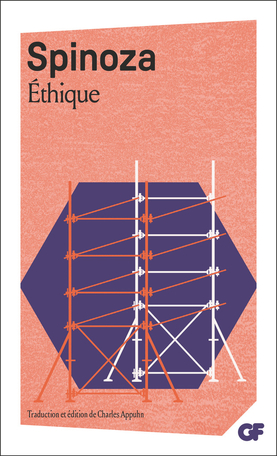
Book
Philosophy
Spinoza: Ethics
Ethics
- BoD - Books on Demand Publisher
Details
- Type
- Book
- Original title
- Ethics
- Genres
- Philosophy
- ISBN
- 9782322556052
Synopsis