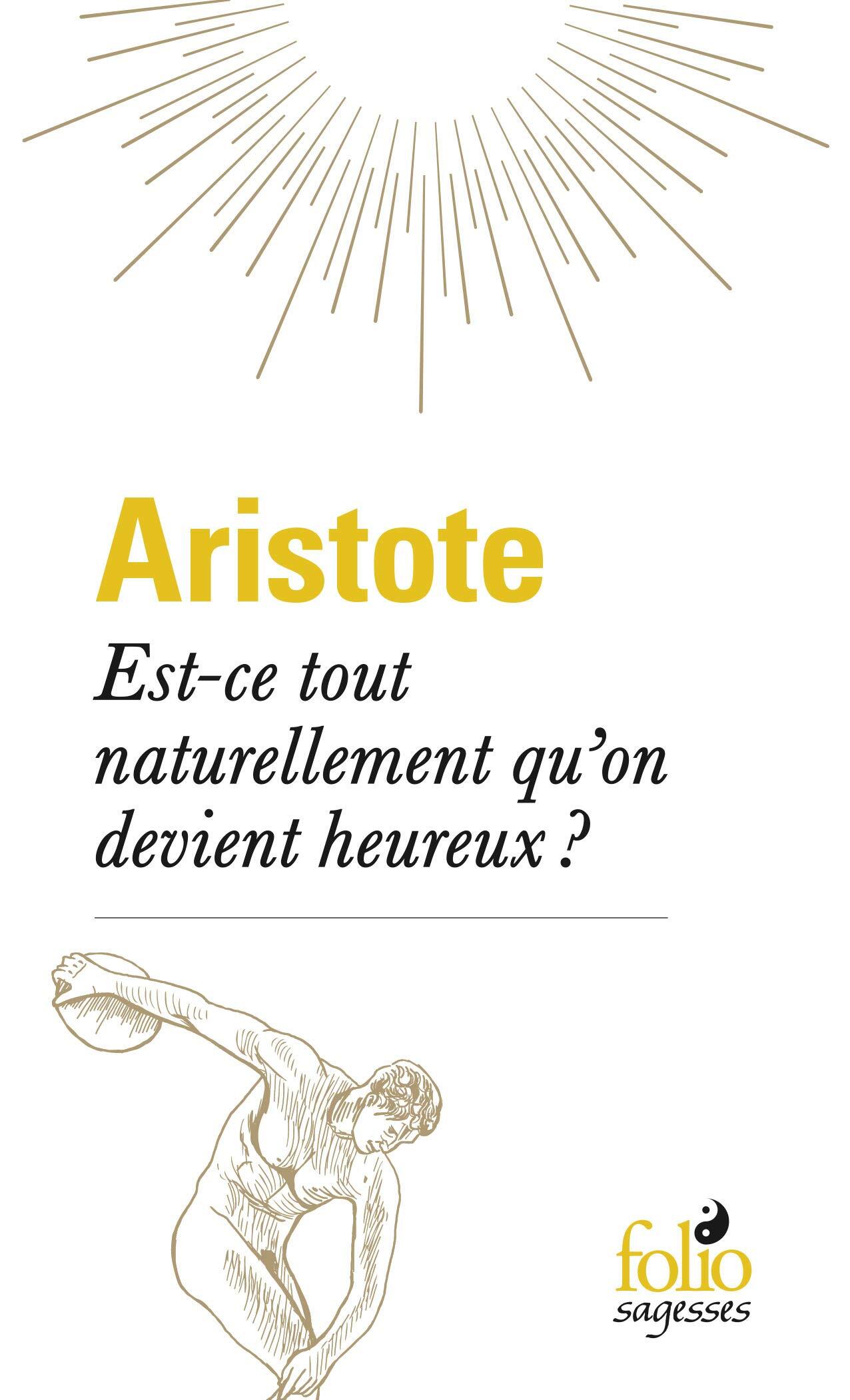
Is happiness a natural disposition, the result of learning, or something achieved through our actions? In Does Happiness Come Naturally?, a selection of Aristotle's writings invites readers to examine the conditions of a truly fulfilling life. The philosopher explores the roles of virtue, pleasure, knowledge, and fortune in the pursuit of happiness. He distinguishes temporary satisfactions from a life directed toward the good and gives particular importance to human relationships, especially friendship. By investigating the connections between individual conduct, reason, and communal life, this collection introduces the foundations of Aristotle's conception of happiness.
Details
- Type
- Book
- Original language
- Greek
- Genres
- Philosophy
- ISBN
- 9782072779817
- Information verified on
- 14 octobre 2026
Synopsis
Aristotle: Does Happiness Come Naturally?

Overview
Overview
In Does Happiness Come Naturally?, several writings by Aristotle are brought together around a central question in his moral philosophy: how can human beings achieve happiness? Drawing primarily on the Eudemian Ethics, this selection introduces Aristotelian thought through the themes of the good life, virtue, and human relationships. Happiness emerges as a pursuit involving the whole of human existence rather than a simple succession of pleasurable moments.
Aristotle begins by examining the possible origins of happiness. Is it bestowed by nature, attained through education, acquired through practice, or dependent on favorable circumstances? This question makes it possible to distinguish between personal dispositions, individual development, and factors beyond human control. The philosopher thus seeks to determine whether happiness is something one possesses or a way of living that develops through action.
This investigation leads to the concept of eudaimonia, commonly translated as "happiness" or "flourishing." For Aristotle, a happy life cannot be reduced to wealth, honors, or immediate pleasures. It requires activity in accordance with virtue, through which human beings fully exercise their capacities. Reason, habits, and moral conduct therefore contribute to the fulfillment of a life considered as a whole.
The collection also gives particular importance to friendship. Aristotle does not regard happiness as an exclusively individual achievement: relationships with others contribute to the quality of human existence and the formation of communities. He examines different forms of friendship, based particularly on utility, pleasure, or appreciation of another person's moral qualities. This analysis establishes a connection between personal happiness, reciprocity, and the demands of communal life.
Through these reflections, the selection highlights a conception of happiness grounded in human activity rather than the mere possession of goods. It also shows that the pursuit of a fulfilling life cannot be entirely separated from questions concerning other people, justice, and the relationships that make collective existence possible.
Key Takeaways
One of the work's fundamental questions concerns the origins of happiness. Aristotle examines several possibilities: nature, education, practice, fortune, or divine favor. This inquiry helps explain why happiness cannot simply be understood as a quality passively received or an advantage depending entirely on circumstances.
The distinction between possessing the means to happiness and actually living happily is another essential point. Wealth, honors, and favorable conditions may contribute to human existence, but they are not sufficient to give a life its value. Happiness rests on activity and the exercise of virtue rather than the accumulation of external goods.
Friendship also occupies an important position. Aristotle distinguishes relationships maintained for their usefulness, those based on pleasure, and those founded on mutual recognition of moral qualities. This last form involves a more enduring relationship in which each person also seeks the good of the other.
Finally, the investigation into happiness possesses a social and political dimension. Human beings do not develop their lives independently of every community. Friendship, justice, and reciprocity contribute to the conditions of a fulfilling existence, connecting the individual pursuit of happiness with the organization of human relationships.
Conclusion
With Does Happiness Come Naturally?, Aristotle's moral philosophy is approached through two closely related questions: the conditions of happiness and the role of human relationships in achieving it. The selection emphasizes that a happy life depends neither exclusively on nature nor simply on fortune, but involves activity, virtue, and the exercise of human capacities.
By bringing together reflections on happiness and friendship, this collection provides access to an essential dimension of Aristotelian ethics: individual flourishing must also be understood through relationships with others and participation in communal life.
Good to Know
- Does Happiness Come Naturally? is a selection of Aristotle's writings rather than an independent treatise originally bearing this title.
- The French edition, Est-ce tout naturellement qu’on devient heureux ?, is published by Gallimard in the Folio Sagesses collection. Its texts are drawn from Aristotle's Œuvres, published in the Bibliothèque de la Pléiade.
- The translation from ancient Greek and introductory material are by Richard Bodéüs, with annotations by Louise Rodrigue.
- The selection draws primarily on the Eudemian Ethics, placing particular emphasis on reflections concerning happiness and discussions of friendship.
- The Greek concept of eudaimonia refers to happiness understood as the fulfillment of a life, rather than merely a temporary state of satisfaction or well-being.