































Presentation
Éditions Gallimard holds an exceptional place in the history of French literature and modern publishing. Founded in Paris in 1911 as an extension of La Nouvelle Revue française (NRF), the house gradually established itself as one of the principal centres for the publication, discovery and preservation of twentieth-century literary works. Its history is inseparable from that of numerous writers, but also from the evolution of the novel, poetry, literary criticism and contemporary thought.
The project originated with Gaston Gallimard, André Gide and Jean Schlumberger, united by an editorial ambition based on literary excellence and independence of judgement. The creation of a publishing house extended the work of the NRF, a journal founded in 1909 that quickly became an important forum for literary creation and criticism. This close relationship between a journal, its writers and a publisher was one of Gallimard's defining characteristics from the outset. It allowed the house to establish its earliest relationships with authors through genuine literary dialogue rather than a succession of isolated publications.
Over the course of the century, Gallimard supported major figures such as Marcel Proust, Paul Valéry, André Malraux, Antoine de Saint-Exupéry, Albert Camus, Jean-Paul Sartre, Simone de Beauvoir, Raymond Queneau, Marguerite Yourcenar, Romain Gary, Michel Tournier, Patrick Modiano and J. M. G. Le Clézio. International literature also occupies an essential place, with authors such as William Faulkner, Ernest Hemingway, Franz Kafka, James Joyce, Jorge Luis Borges and Milan Kundera. This diversity makes its catalogue an exceptionally rich reflection of the literary and intellectual developments of the modern era.
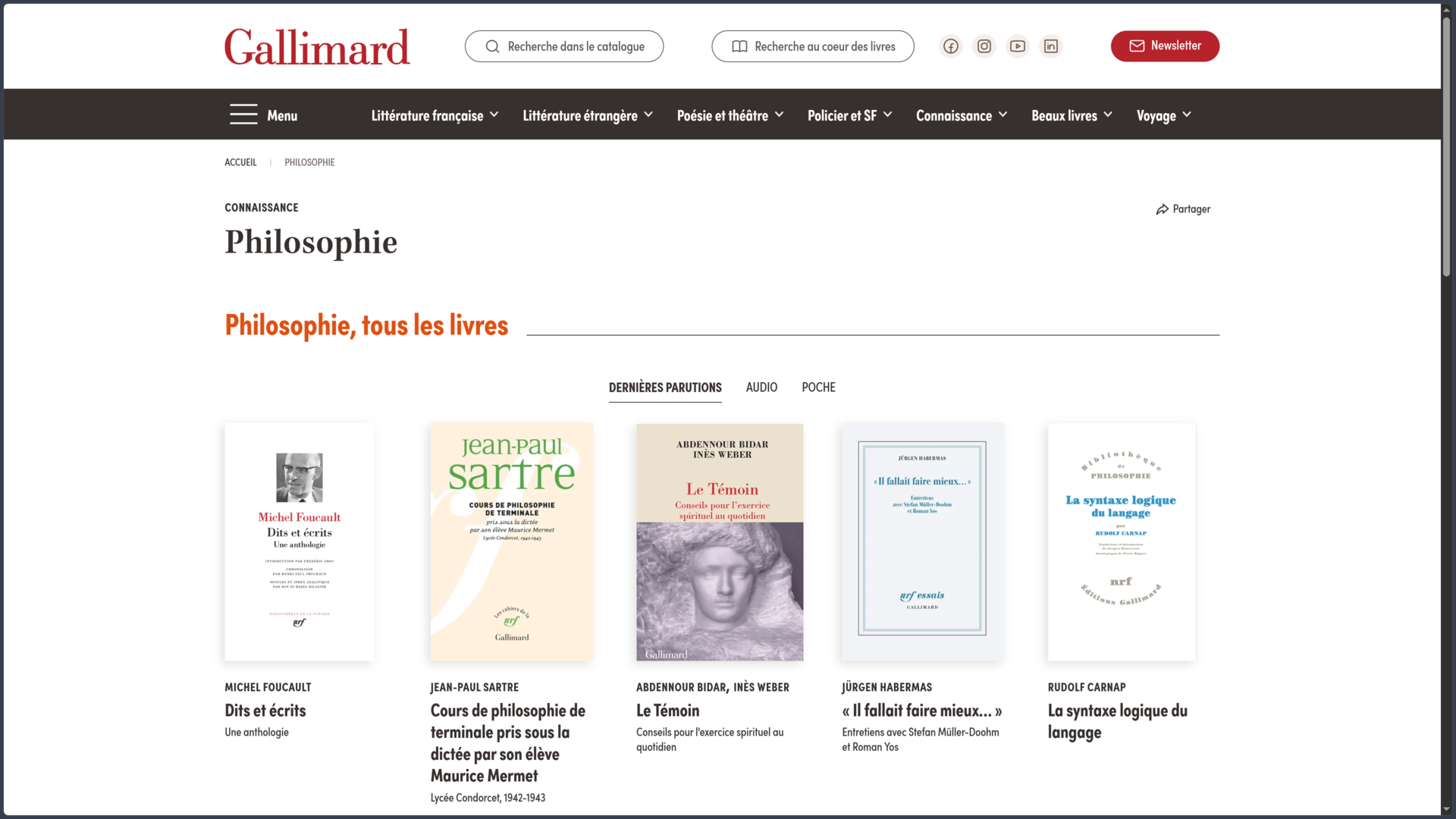
Although literary creation remains its central focus, Gallimard is not limited to fiction. The house publishes essays, philosophy, history, humanities, poetry, theatre and nonfiction exploring major social questions. Thinkers such as Michel Foucault, Claude Lévi-Strauss, Hannah Arendt, Pierre Bourdieu and Jacques Derrida, represented in different areas of its catalogue, demonstrate its involvement in major intellectual debates. Gallimard has thus contributed to the dissemination of ideas that profoundly transformed the understanding of history, societies and philosophical thought.
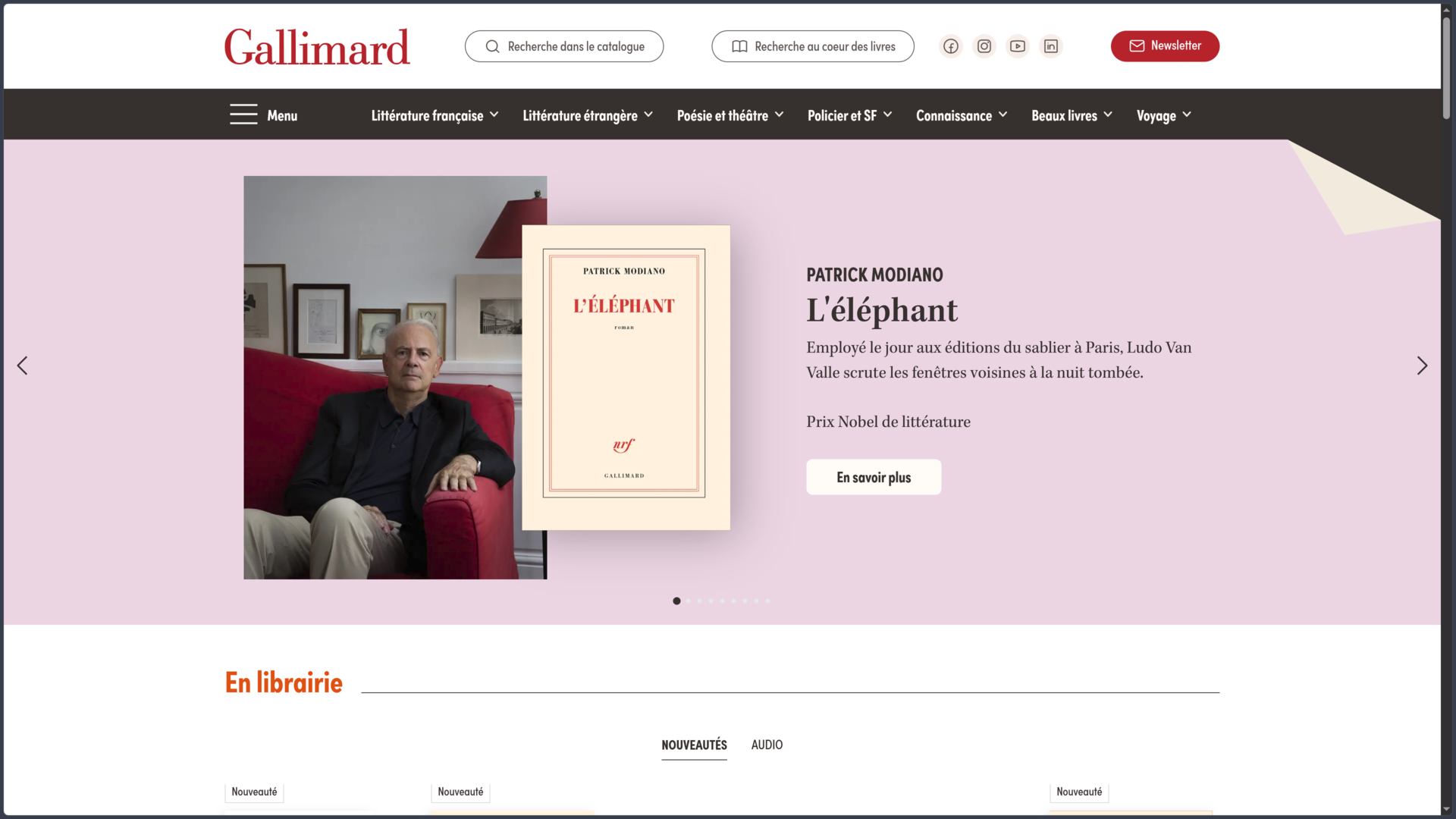
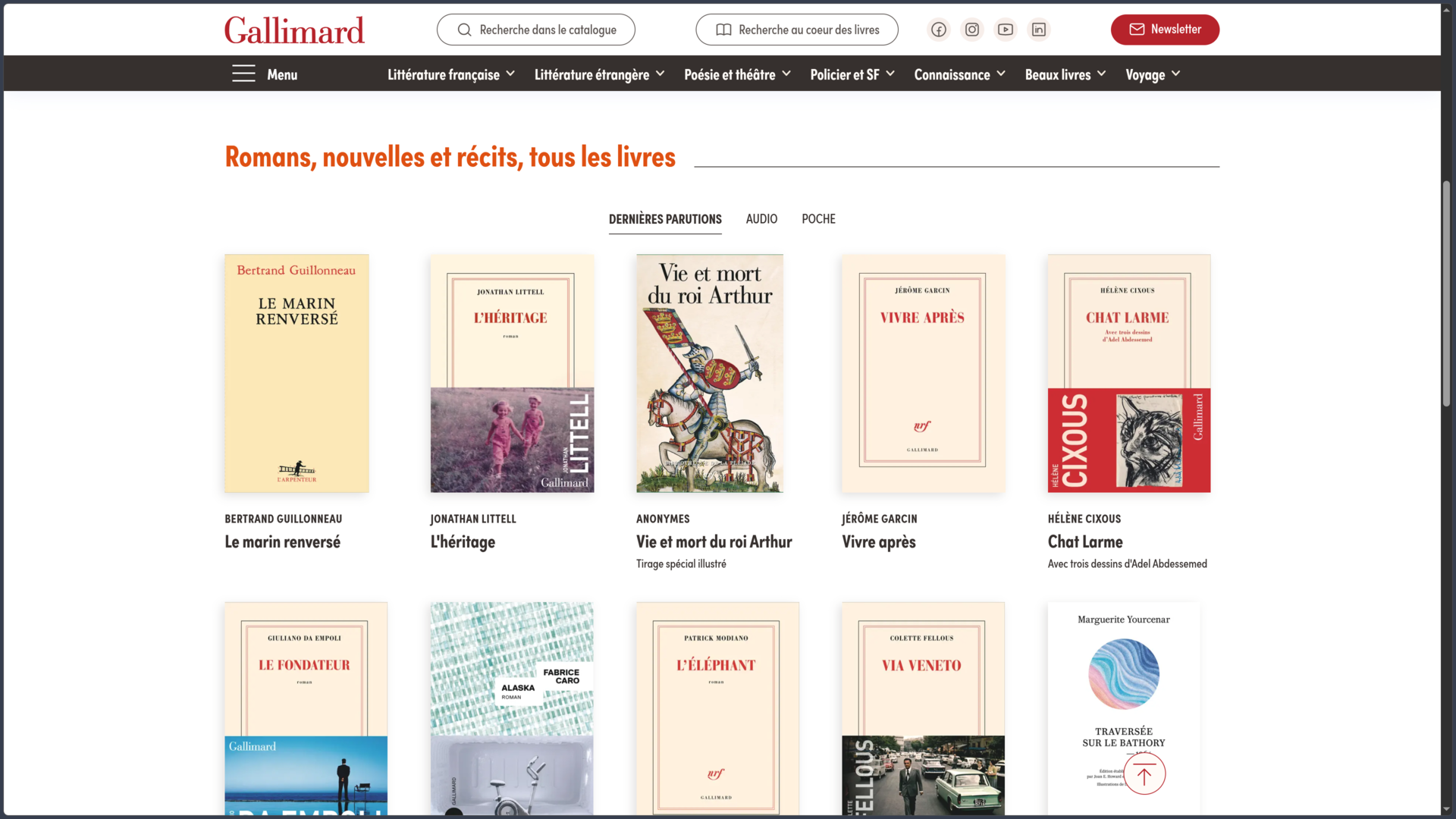
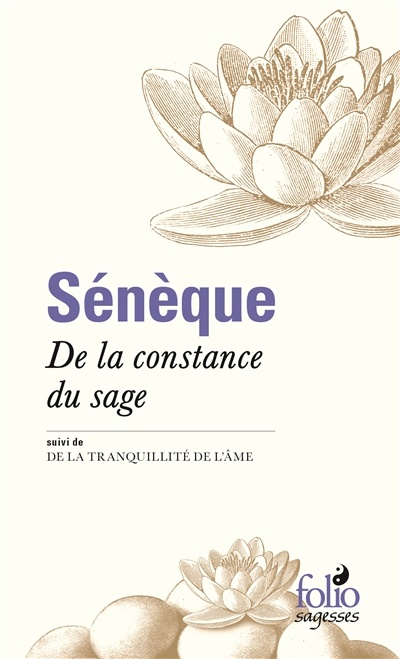
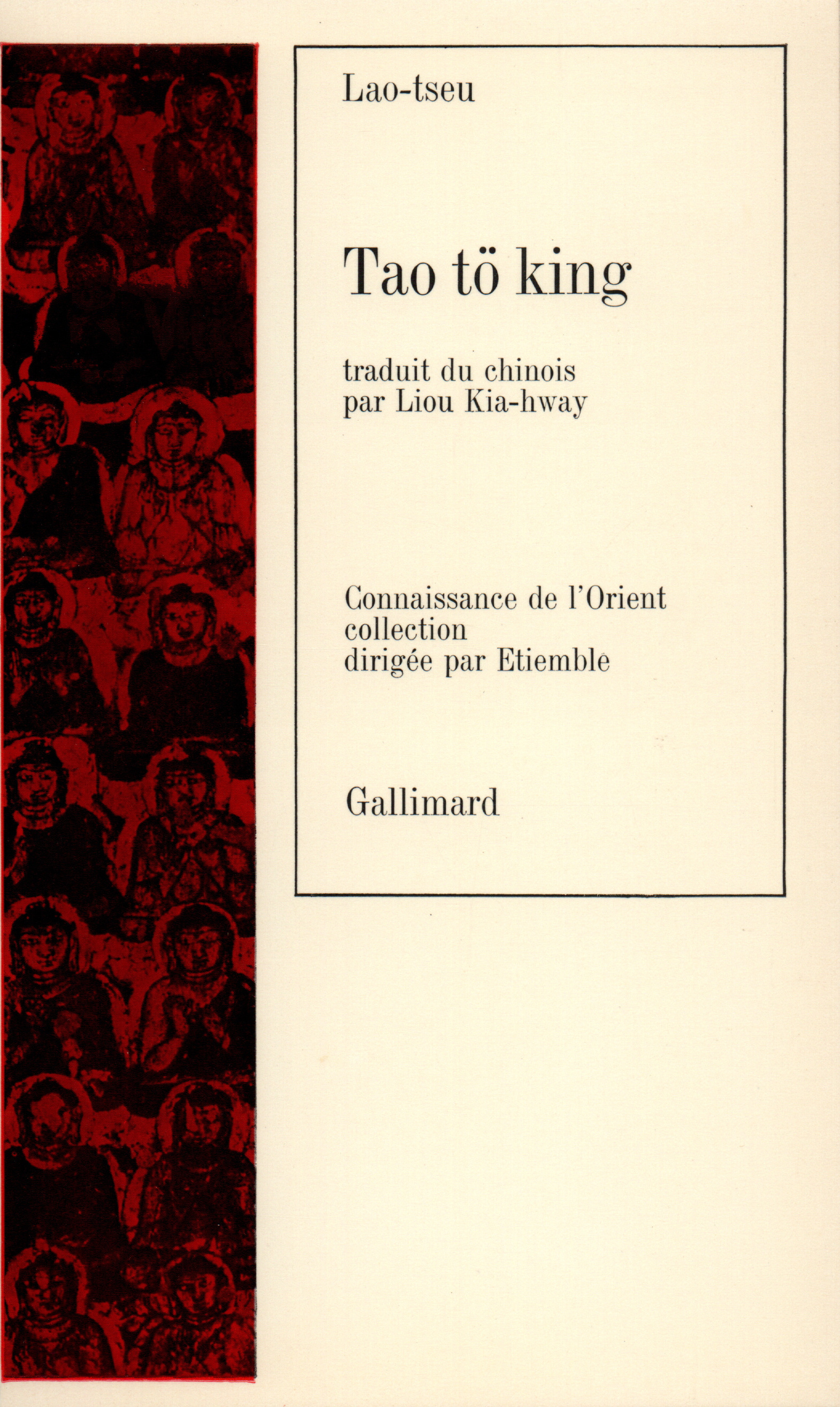
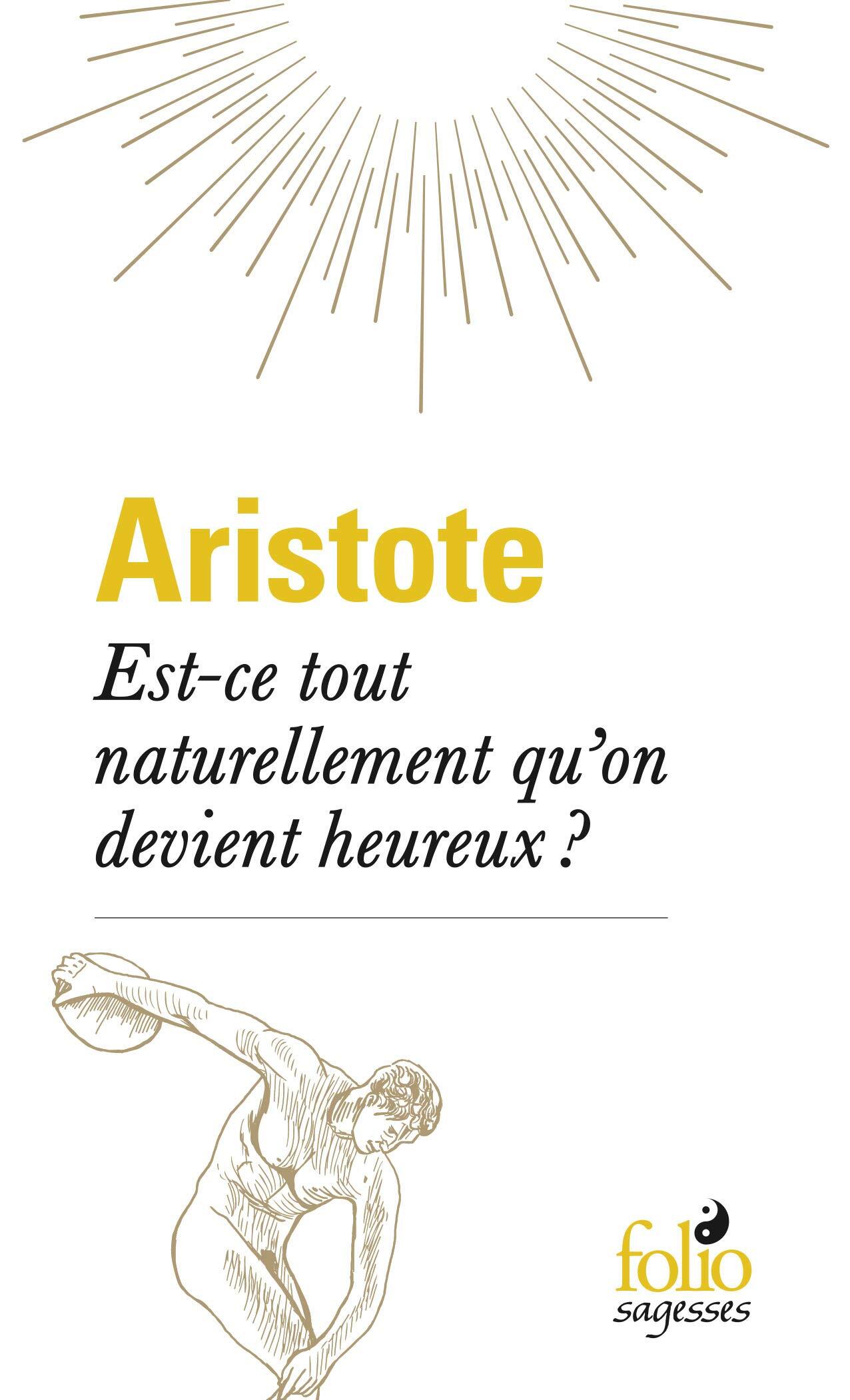
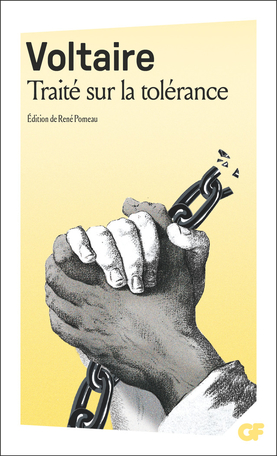
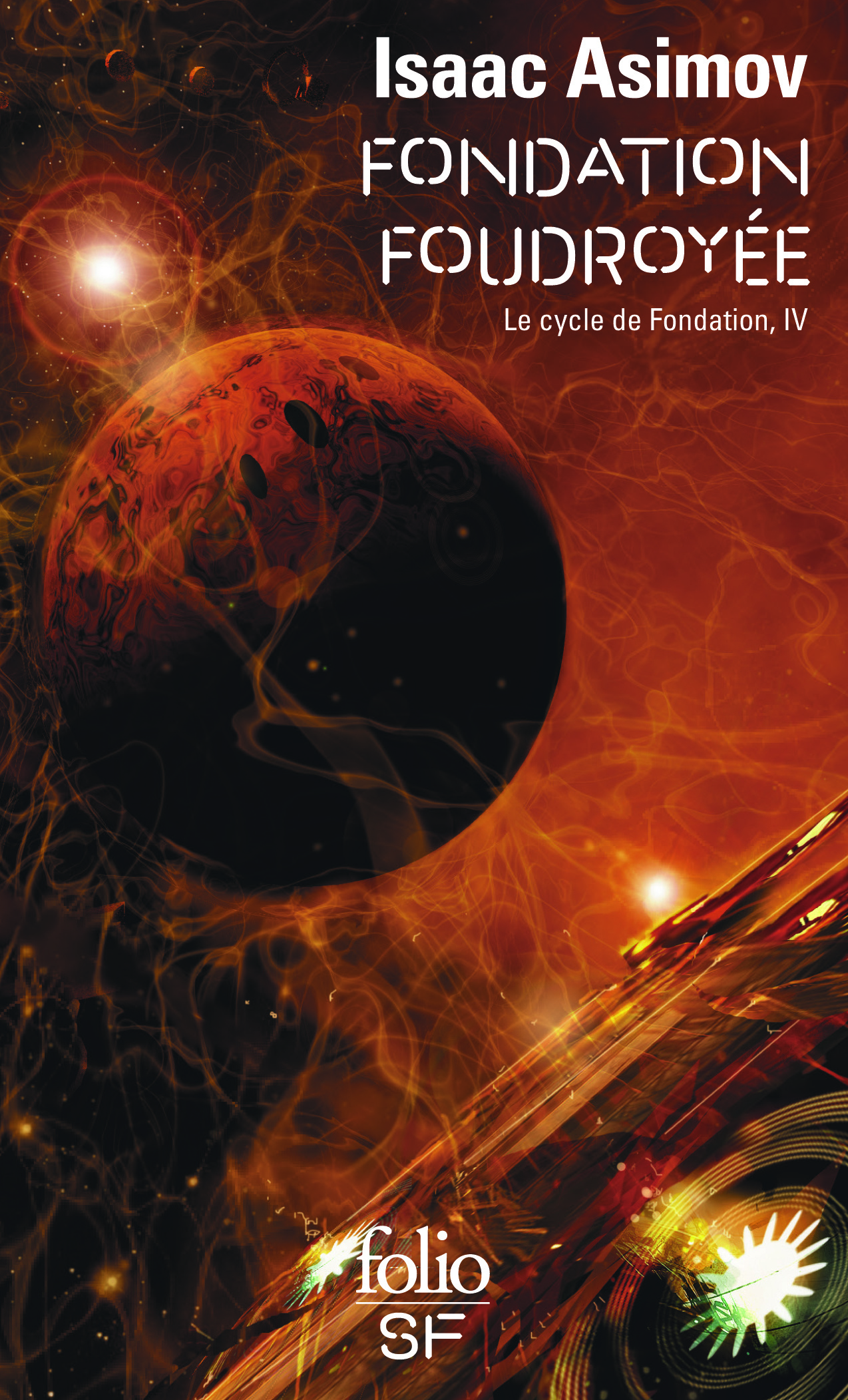
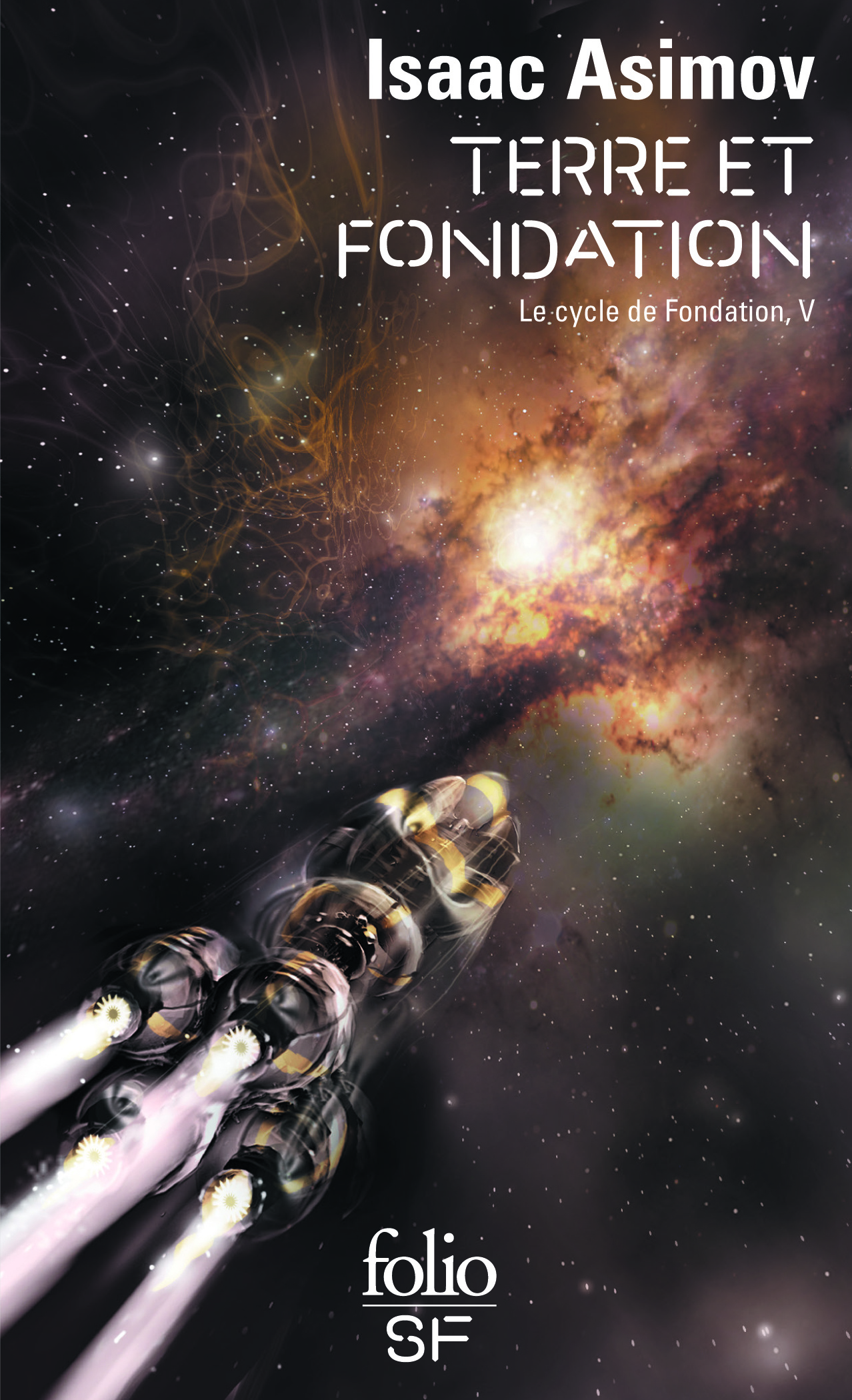
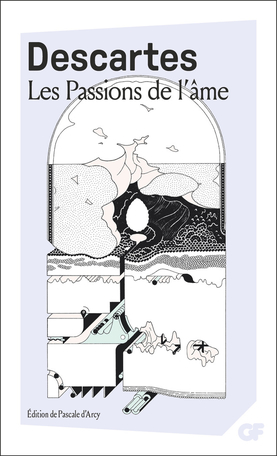
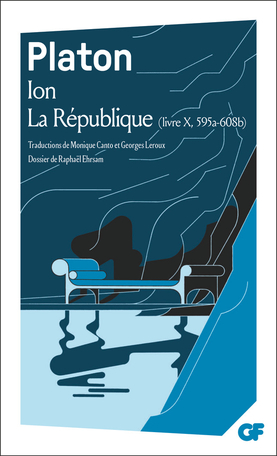
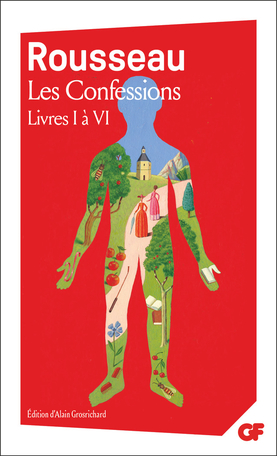
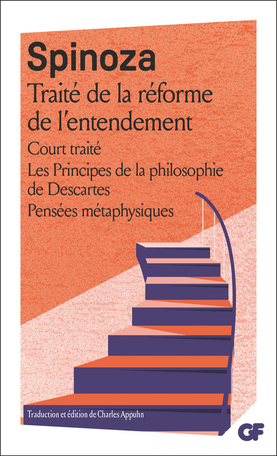
The house's influence also rests on its publishing collections, several of which have acquired a cultural identity extending well beyond their commercial purpose. The Blanche collection, recognisable by its cream-coloured covers framed by red and black lines, has been associated with general literature since the beginning. The Bibliothèque de la Pléiade offers scholarly, bound editions of major works from the literary heritage. Série noire transformed the reception of crime fiction from 1945 onwards, while Folio, launched in 1972, enabled successive generations of readers to discover an extensive literary backlist in accessible formats.
These collections are complemented by Poésie/Gallimard, L'Imaginaire, Quarto, humanities collections and publications for younger readers. The development of Gallimard Jeunesse, beginning in 1972, opened up another essential field, encompassing picture books, novels and educational works. This activity gradually developed into a subsidiary with its own publishing identity, while maintaining close ties to the literary heritage of the original house.
Gallimard is also a family business whose history spans several generations. After Gaston Gallimard, his son Claude Gallimard played a decisive role in diversifying operations and developing paperback publishing. Antoine Gallimard subsequently oversaw the transformation of the business into a major publishing group. Through the holding company Madrigall, the group now brings together various publishers and imprints, including Flammarion, Casterman, Denoël, Mercure de France and Éditions de Minuit. Each nevertheless retains its own history, which must not be confused with that of Éditions Gallimard itself.
Gallimard's identity therefore rests on a distinctive relationship between creativity, literary heritage and continuity. The house does more than publish new releases: it supports writers, builds catalogues, keeps works available and contributes to their transmission. This conception of publishing, combining the discovery of contemporary writing with the preservation of literary heritage, explains much of its influence on French and international culture.
History
1909: La Nouvelle Revue française, the beginning of a literary venture
The history of Éditions Gallimard begins before its official foundation, with the creation of La Nouvelle Revue française, generally known by its initials NRF.
After an initial attempt in late 1908, the journal began publication in earnest in February 1909, under the impetus of a group of writers centred on André Gide, including Jean Schlumberger, Jacques Copeau, Henri Ghéon, André Ruyters and Marcel Drouin. Their ambition was to create a forum for literary creativity and criticism that would not be subordinate to any single aesthetic movement or imposed political allegiance.
The NRF placed particular importance on the quality of writing, critical reading and the discovery of new voices. Fiction, poetry, theatre and essays appeared alongside analyses that contributed to debates within French intellectual life.
The journal quickly became a meeting place for writers, critics and future publishers. Its influence rested not only on the texts it published, but also on the lasting relationships it established between authors. This literary community formed the foundation from which Éditions de la NRF would emerge.
1911: Gaston Gallimard establishes Éditions de la NRF
On 31 May 1911, Gaston Gallimard, André Gide and Jean Schlumberger concluded the agreement that established Éditions de la Nouvelle Revue française. The new organisation made it possible to extend the journal's activities into book publishing.
Gaston Gallimard, born in Paris in 1881, provided the financial means necessary for the business and took responsibility for its management. Gide and Schlumberger contributed to its literary direction. This distribution of responsibilities established a relationship between editorial work, the choices of writers and the economic requirements of a publishing house.
The first books appeared in June 1911. They notably included L'Otage by Paul Claudel, Isabelle by André Gide and La Mère et l'enfant by Charles-Louis Philippe. The house also published Éloges by Saint-John Perse, then writing under the name Saintleger Leger.
These publications announced an ambitious literary policy that gave considerable importance to works whose value could not be measured solely by their immediate commercial success. The objective was to build a coherent catalogue around writers capable of renewing literary forms and ideas.
1913–1919: The rejection of Proust and the first major recognition
One of the most famous episodes in French publishing history concerns the initial rejection of Marcel Proust.
In 1912, the writer submitted to the NRF the manuscript that would become Du côté de chez Swann, the first volume of À la recherche du temps perdu. The text was rejected, partly because the literary decision-makers had not yet recognised the full originality of the work. Proust eventually published the novel at his own expense through Bernard Grasset in 1913.
Those responsible for the NRF gradually became aware of the work's importance. Gaston Gallimard and his colleagues sought to renew their relationship with the writer, whose books would soon become essential to the house's catalogue.
The First World War, however, interrupted part of the publishing activity and disrupted relationships between authors. The journal ceased publication in 1914, while several contributors were mobilised or dispersed.
At the end of the conflict, contact with Proust was re-established. In 1919, Gallimard published À l'ombre des jeunes filles en fleurs, the second part of À la recherche du temps perdu. The novel received the Prix Goncourt, the young house's first major award of this kind.
This episode became emblematic of Gallimard's history. It illustrated both the limitations of editorial judgement and the possibility of recognising a mistake and subsequently supporting a major literary work over the long term.
1919–1925: Librairie Gallimard becomes independent
In 1919, Éditions de la NRF adopted the name Librairie Gallimard. This transformation marked a new stage in the organisation of the company.
The publishing house gradually moved beyond the collective structure of the journal. Gaston Gallimard developed a fully fledged commercial organisation capable of managing a growing catalogue, supporting authors and sustaining a variety of publishing projects.
The NRF remained an essential forum for literary creation and criticism. Under the direction of Jacques Rivière, followed by Jean Paulhan, it retained considerable influence over intellectual life. But the publishing house now had ambitions extending beyond the authors associated with the journal.
Gallimard set about building a lasting catalogue around writers such as Paul Valéry, Roger Martin du Gard, André Gide, Marcel Proust and Jules Romains. Correspondence, editorial committees and personal relationships played a central role in this approach.
The company also developed its distribution and promotional capabilities. These changes allowed it to participate increasingly in French literary life, particularly through literary prizes, the publication of ambitious works and the creation of recognisable collections.
The 1920s: The Blanche collection and the rise to literary prominence
Throughout the 1920s, Gallimard gradually became one of France's most influential publishers.
The Blanche collection, descended from the earliest NRF publications, established itself as a major home for literary creation. Its understated and instantly recognisable graphic design was based on a light-coloured cover bordered by red and black lines. This visual identity helped turn the collection into a mark of recognition for readers and booksellers.
The house published works by Paul Valéry, Roger Martin du Gard, André Gide, Jean Giraudoux, Joseph Kessel and other important writers. It supported long-term literary projects, particularly major novel cycles requiring several years of writing and publication.
This period also saw the development of international literature. Gallimard helped introduce French readers to European and American writers, supporting the opening of the French literary world to innovations emerging in other languages.
A long-term commitment to authors became a defining characteristic of the company. Gallimard sought to maintain relationships with writers and develop their bodies of work over time, rather than focusing exclusively on individual commercial successes.
This strategy contributed to the house's growth while intensifying its competition with other major publishers, particularly Bernard Grasset, with whom Gaston Gallimard maintained a lasting rivalry.
1928–1939: Malraux, Saint-Exupéry and the major works of the interwar years
During the late 1920s and throughout the 1930s, Gallimard's catalogue welcomed several works that would leave a lasting mark on French literature.
André Malraux notably published La Voie royale in 1930 and La Condition humaine in 1933. The latter novel, devoted to the Chinese revolution and questions of commitment, death and fraternity, received the Prix Goncourt.
Antoine de Saint-Exupéry also contributed to this period with Vol de nuit in 1931, which received the Prix Femina, followed by Terre des hommes in 1939. His writing combined the experience of aviation, reflections on human responsibility and a highly distinctive poetic dimension.
Gallimard also supported writers who renewed the novel, poetry and the essay. The published works reflected several of the period's major concerns: social transformation, political upheaval, war and the relationship between individuals and collective life.
The house also published politically engaged texts that fuelled intellectual debate. André Gide, in particular, published Retour de l'U.R.S.S. in 1936, a critical account of the Soviet experience that provoked considerable reactions.
Gallimard thus emerged as a central participant in interwar literary and intellectual life, capable of publishing works whose significance extended far beyond their commercial success.
1931–1933: The Bibliothèque de la Pléiade joins Gallimard
One of the most important events in the house's history was the integration of the Bibliothèque de la Pléiade.
The collection had been established in 1931 by publisher Jacques Schiffrin, who wanted to offer major literary works in elegant, compact, durable bound volumes. The texts were printed on thin paper, making it possible to bring together a considerable amount of material in a manageable format.
The first volumes notably included Baudelaire, Racine, Voltaire, Edgar Allan Poe and Stendhal. The collection was based on an original ambition: combining the physical quality of a prestigious edition with rigorous selection and presentation of texts.
In 1933, encouraged by André Gide, the collection joined Éditions Gallimard. Jacques Schiffrin continued to direct it and helped develop its identity.
The Pléiade gradually transformed Gallimard's relationship with literary heritage. The house was no longer solely a publisher of contemporary writers: it also became a major participant in critical editing and the preservation of literary classics.
It remains important to remember that Jacques Schiffrin founded the Bibliothèque de la Pléiade, not Gaston Gallimard. Its integration in 1933 represented a new stage in the history of an already existing collection.
1940–1944: The Occupation and the contradictions of a major publishing house
The Second World War represents one of the most complex periods in Gallimard's history.
Following the French defeat in 1940, Gaston Gallimard returned to Paris and had to negotiate with the German authorities, who exercised considerable control over the publishing industry. The house sought to preserve its existence and economic autonomy in a context marked by censorship, publishing bans and paper shortages.
One of the most controversial compromises concerned La Nouvelle Revue française, whose editorship was entrusted to Pierre Drieu la Rochelle, a writer committed to Collaboration. The journal resumed publication in December 1940 with a stance favourable to the occupying authorities, profoundly breaking with certain principles of its history. It eventually ceased publication in 1943.
The period was also marked by the dismissal of Jacques Schiffrin in 1940, in the context of the antisemitic measures imposed by the Vichy regime. The founder of the Pléiade was forced to leave the house and subsequently went into exile in the United States, where he helped establish Pantheon Books. This episode represented a major rupture in the collection's history and remains one of the most painful decisions in Gallimard's past.
At the same time, several members of the house participated in clandestine intellectual activities. Jean Paulhan, notably, played a role in literary Resistance networks and in the creation of the underground Lettres françaises.
Despite the restrictions and contradictions of this period, Gallimard published fundamental works, including L'Étranger and Le Mythe de Sisyphe by Albert Camus in 1942, and L'Être et le Néant by Jean-Paul Sartre in 1943.
Gallimard's history under the Occupation cannot therefore be presented as a straightforward narrative of either resistance or collaboration. It combined compromises with the authorities, discriminatory decisions and the involvement of certain writers and employees in the Resistance. These contradictions are essential to understanding its history.
1945: The birth of Série noire and the transformation of crime fiction
Following the Liberation, Gallimard entered a period of reconstruction and editorial development.
In July 1945, the house launched Série noire, under the direction of Marcel Duhamel. The collection's name was suggested by Jacques Prévert, while its initial graphic identity was designed by Germaine Gibard.
The first titles were two novels by Peter Cheyney, La Môme vert-de-gris and Cet homme est dangereux. Their publication marked the introduction to a broad French readership of a form of Anglo-American crime fiction distinct from the traditional detective mystery.
Série noire favoured narratives in which violence, crime, corruption and social relationships occupied a central place. Writers such as Raymond Chandler, Dashiell Hammett, Horace McCoy, Jim Thompson and Chester Himes helped define its identity, while French authors gradually began to renew the genre.
The collection also established a particularly recognisable graphic world, with dark covers and the use of yellow. It quickly became a cultural reference, to the point that its name eventually entered everyday French usage to describe a particular kind of crime fiction.
Série noire therefore contributed to the recognition of noir fiction as a literary form capable of depicting the contradictions and violence of society.
1945–1953: Camus, Sartre, Beauvoir and postwar intellectual debates
The postwar period saw Gallimard consolidate its position at the heart of French intellectual life.
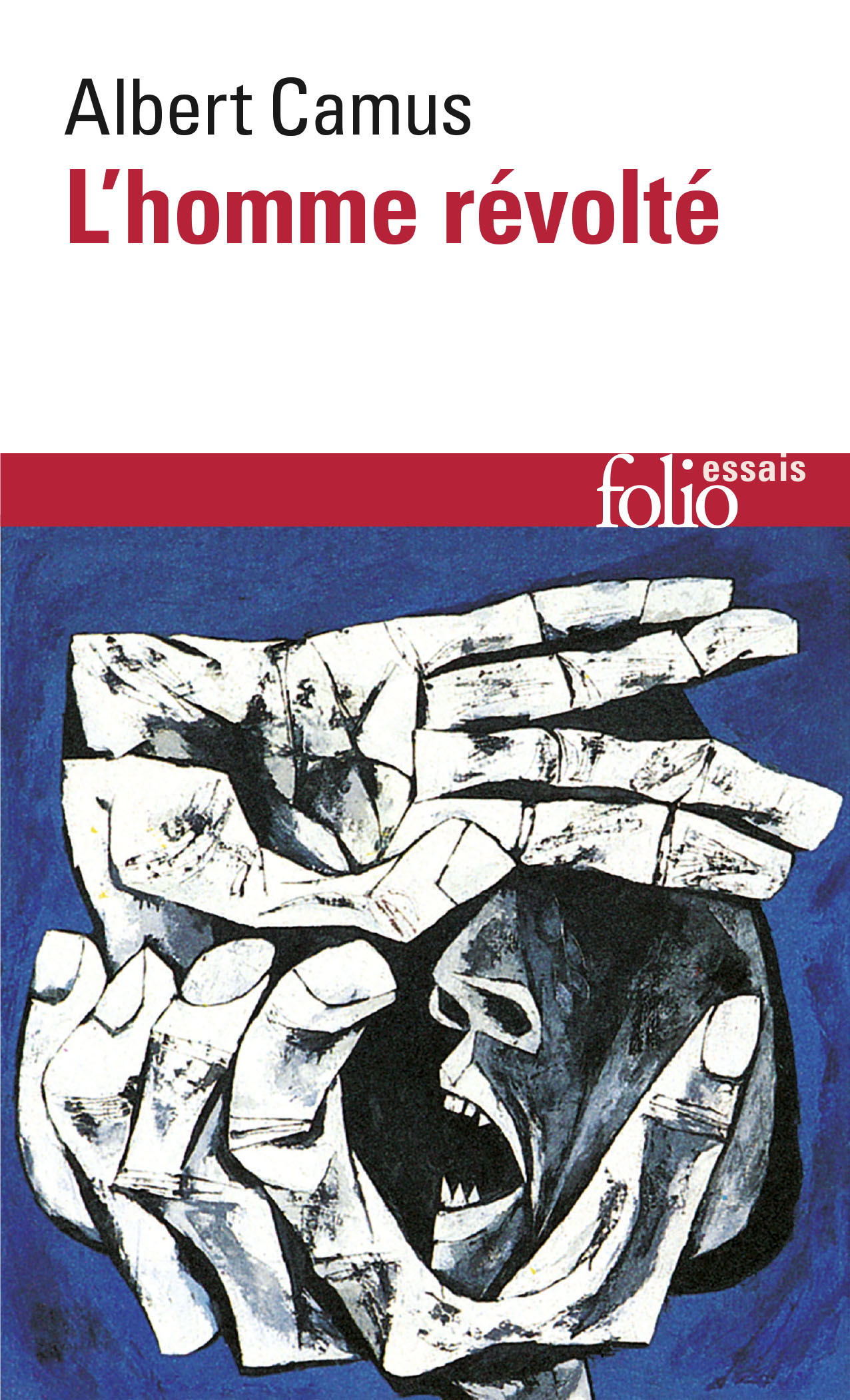
The house notably supported Albert Camus, who published La Peste in 1947 and L'Homme révolté in 1951. His works examined the human condition, political violence, justice and individual responsibility.
Jean-Paul Sartre also occupied an important place in the catalogue through his novels, plays and philosophical writings. His existentialist thought fuelled the intellectual debates of the period, while Simone de Beauvoir published Le Deuxième Sexe in 1949, a foundational work of modern feminist thought.
These publications demonstrated a transformation in the cultural role of publishers. Books were no longer simply contributions to literary life: they also became interventions in philosophical, political and social debates.
At the same time, Gallimard continued publishing international writers and enriching its literary backlist. Works by American, European and Latin American authors helped broaden the cultural references available to French readers.
The NRF, interrupted during the Occupation, resumed publication in 1953, under the direction of Jean Paulhan and Marcel Arland. This revival renewed the critical tradition that had accompanied the foundation of the publishing house.
The 1950s: The Pléiade, Saint-Exupéry and the creation of a literary heritage
During the 1950s, Gallimard greatly expanded its efforts to develop and preserve its literary backlist.
The Bibliothèque de la Pléiade continued growing through new editions of major French and international works. Its volumes increasingly incorporated critical studies, timelines, textual variants and documents necessary to understanding the texts.
The house also helped disseminate Le Petit Prince by Antoine de Saint-Exupéry in France, publishing the French edition in 1946, after the book had first appeared in the United States in 1943. The work became one of the most widely circulated French texts internationally and an enduring symbol of literature accessible to multiple generations.
Editorial activity was also strengthened by writers working within the house itself. Authors such as Raymond Queneau helped develop collections and intellectual projects, notably the Encyclopédie de la Pléiade, launched in the 1950s.
The republication of existing works became increasingly important. Gallimard sought to keep its catalogue available, particularly by taking advantage of the growth of paperback publishing and partnerships with distribution companies.
This attention to the backlist became a decisive element of its economic and cultural model: older books continued to circulate alongside new releases, sometimes several decades after their initial publication.
1960–1971: Poetry, philosophy and the expansion of the humanities
The 1960s brought significant diversification to Gallimard's catalogue.
In 1962, the Idées collection was launched to make essays and intellectual works available in paperback. It helped bring philosophy, history and humanities publications to a broader readership.
The development of the humanities accelerated with the arrival of Pierre Nora, who was entrusted with expanding this field from 1966. He helped establish the Bibliothèque des sciences humaines, followed by the Bibliothèque des histoires in 1971.
These collections published works that accompanied the renewal of historiography, sociology and social thought. Publications by researchers and thinkers such as Michel Foucault, Pierre Bourdieu, Jacques Le Goff and Georges Duby contributed to their influence.
The house also developed collections devoted to psychology and psychoanalysis, notably Connaissance de l'inconscient, directed by Jean-Bertrand Pontalis.
In 1966, the creation of Poésie/Gallimard represented another major step. The collection offered poetry in affordable formats, bringing major figures from the literary heritage into dialogue with modern voices.
Together, these initiatives reinforced Gallimard's identity as a publisher of both literature and ideas, capable of disseminating creative works alongside research that transformed how the world was understood.
1972: Folio transforms the distribution of Gallimard's catalogue
The launch of Folio in 1972 was one of the most important publishing decisions in Gallimard's history.
Under the impetus of Claude Gallimard, the house established its own major paperback collection, notably following the breakdown of its distribution relationship with Hachette's Le Livre de poche.
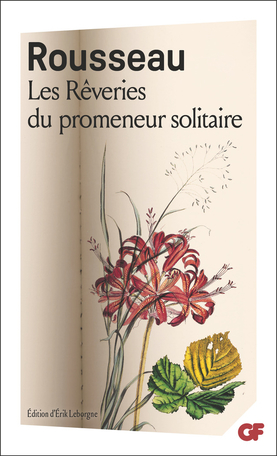
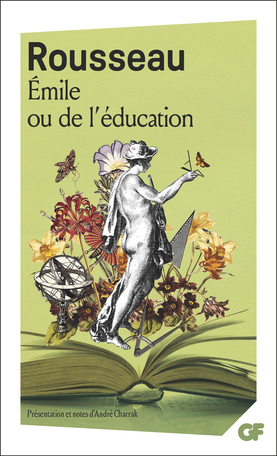
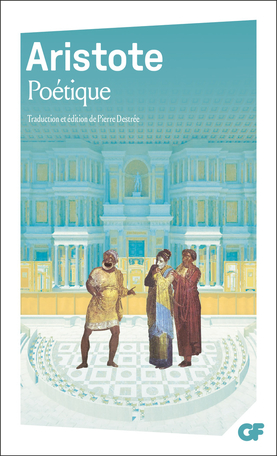
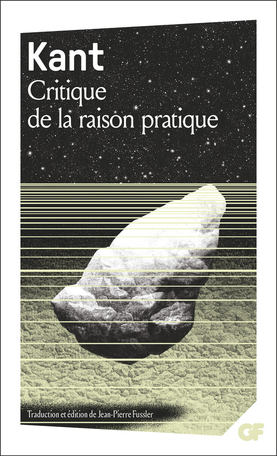
The graphic design was entrusted to Robert Massin, a major figure in French typography and graphic design. The collection adopted a white cover, generally featuring a central illustration and an immediately recognisable layout.
Folio made it possible to republish numerous works from Gallimard's catalogue in affordable formats. Novels by Proust, Camus, Sartre, Saint-Exupéry, Modiano and other writers became more accessible to a broad audience, particularly students and younger readers.
The collection was more than a simple republishing initiative. It gradually developed its own identity, based on editorial selection, graphic consistency and a wide range of French and international authors.
Over the years, Folio expanded into several specialised series, devoted notably to classics, essays, history, theatre, crime fiction and science fiction.
This organisation enabled Gallimard to make its literary backlist available to successive generations while building one of the best-known imprints in French publishing.
1972–1986: Gallimard Jeunesse and innovation through illustration
The year 1972 also marked the development of a publishing sector devoted to children, under the impetus of Pierre Marchand.
The project was based on a conviction: children's literature deserved an ambitious editorial policy grounded in the quality of writing, illustrations and book production.
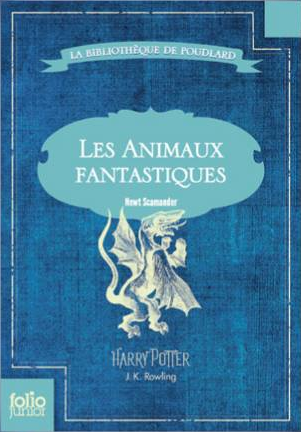
The earliest collections included classics adapted for younger readers, notably through 1000 Soleils. But it was the creation of Folio Junior in 1977 that transformed the sector over the long term.
The collection offered a genuine paperback literature for children and teenagers, with works by Claude Roy, Michel Tournier, Roald Dahl and numerous French and international writers. It helped establish children's and young adult fiction as literature in its own right.
In the early 1980s, new collections appeared for different age groups. Folio Benjamin, Folio Cadet and several nonfiction series offered formats and approaches adapted to children's earliest reading experiences.
In 1986, the creation of Découvertes Gallimard represented a major innovation in illustrated nonfiction. The collection combined concise writing, archives, photographs, illustrations and documentary material within particularly carefully designed books.
Initially associated with children's publishing, Découvertes Gallimard quickly reached a broader readership. Its international success demonstrated that a nonfiction work could combine documentary rigour, visual pleasure and accessibility.
During the 1990s, Gallimard Jeunesse became an autonomous publishing structure within the group, while retaining the historical connections linking its catalogue to the original publishing house.
1975–1986: The renewal of fiction and the multiplication of collections
Following Gaston Gallimard's death in 1975, the house continued developing under the leadership of Claude Gallimard.
The creation of new collections accompanied the diversification of the catalogue. In 1977, L'Imaginaire was established to bring distinctive literary works back into circulation, particularly those that had become marginalised or difficult to find. The collection favoured texts that resisted conventional classification and encouraged the rediscovery of important writers.
Gallimard also supported contemporary authors whose works questioned narrative forms and social representations.
In 1970, Michel Tournier received the Prix Goncourt for Le Roi des Aulnes, a novel offering a mythical and symbolic reinterpretation of European history. Patrick Modiano, published by Gallimard from La Place de l'Étoile in 1968, developed a body of work devoted to memory, identity and the traces of the Occupation. He received the Prix Goncourt in 1978 for Rue des boutiques obscures.
In 1980, Marguerite Yourcenar became the first woman elected to the Académie française. Her career and the place of her works, notably Mémoires d'Hadrien and L'Œuvre au noir, reflected the enduring relationship between Gallimard and several essential figures of literature.
The house also supported the renewal of French noir fiction. Série noire gradually welcomed authors such as Jean-Patrick Manchette, Didier Daeninckx, Thierry Jonquet and Daniel Pennac, who introduced new social and political approaches to the genre.
The 1980s–1990s: History, criticism and international literature
During the 1980s, Gallimard reinforced its role in disseminating humanities research and critical thought.
The publication of Les Lieux de mémoire, a major collective undertaking directed by Pierre Nora and developed between 1984 and 1992, represented a significant moment in French historiography. The work examined the symbols, institutions, events and representations through which collective memory is constructed.
This project illustrated Gallimard's ability to support complex intellectual undertakings involving numerous researchers and requiring several years of preparation.
The house also published the journal Le Débat, established in 1980 by Pierre Nora and Marcel Gauchet, which became a forum for intellectual discussion devoted to history, politics and social transformation.
International literature remained another cornerstone. Publications by writers from Europe, North America, Latin America and other regions considerably enriched the catalogue.
Gallimard notably contributed to the recognition in France of writers such as Milan Kundera, whose novels explore the relationships between individual existence, history and politics, and Jorge Luis Borges, whose work questions the boundaries between fiction, philosophy and imagination.
This international openness continued a longstanding tradition within the house, which regarded translation as an essential dimension of literary renewal.
1995: Quarto, a new way of transmitting literary works
In 1995, Gallimard launched the Quarto collection, designed to bring together substantial literary and intellectual works in accessible, extensively documented volumes.
The collection assembled complete or selected writings by an author, accompanied by biographical material, illustrations and contextual information.
Quarto occupied a distinctive position between traditional paperback editions and the scholarly volumes of the Bibliothèque de la Pléiade. It allowed readers to discover an author through the continuity of their work without necessarily having to consult several separate books.
The collection gradually welcomed writers and thinkers from a variety of traditions, including fiction, poetry, memoirs, history, philosophy and international literature.
Its development reflected a constant principle in Gallimard's publishing policy: inventing formats that enable previously published works to encounter new readers.
1998–2010: New generations of readers and major contemporary successes
At the end of the twentieth century and the beginning of the twenty-first, Gallimard continued renewing its catalogue while expanding its operations within a larger family-owned group.
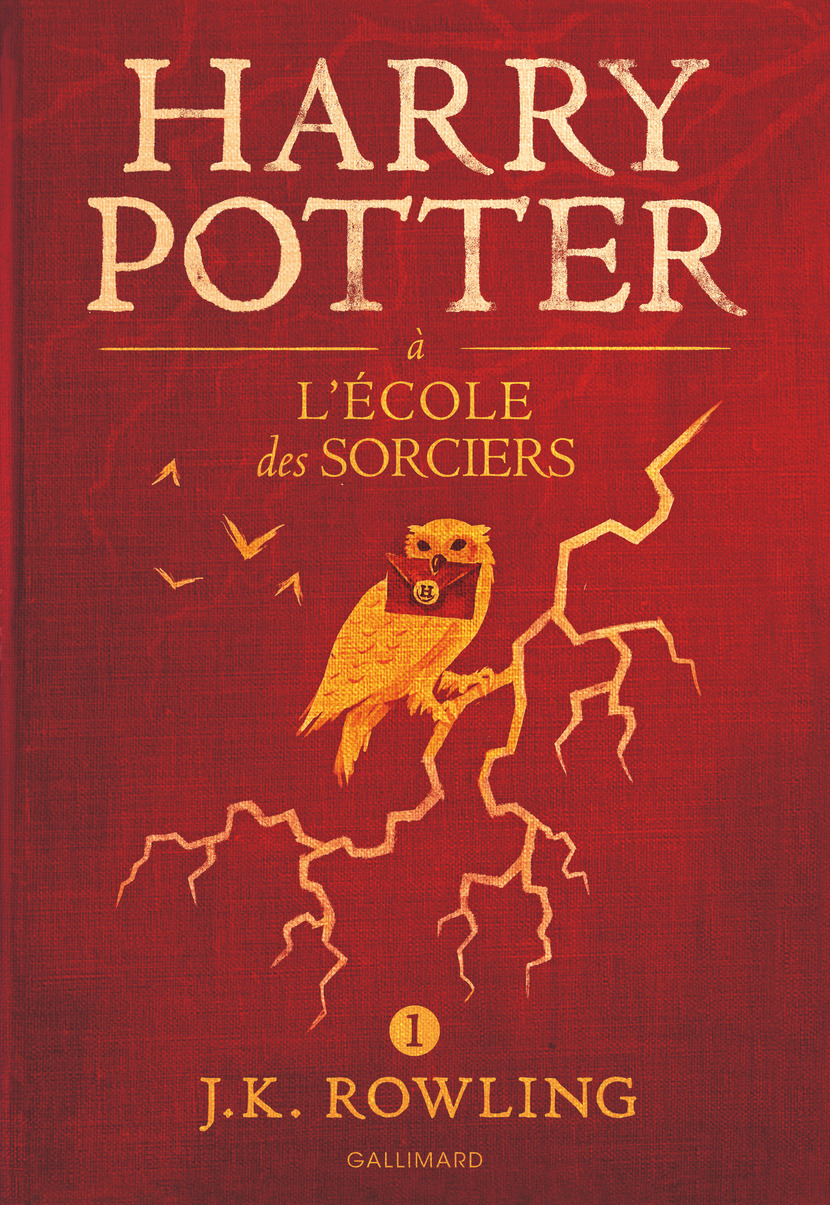
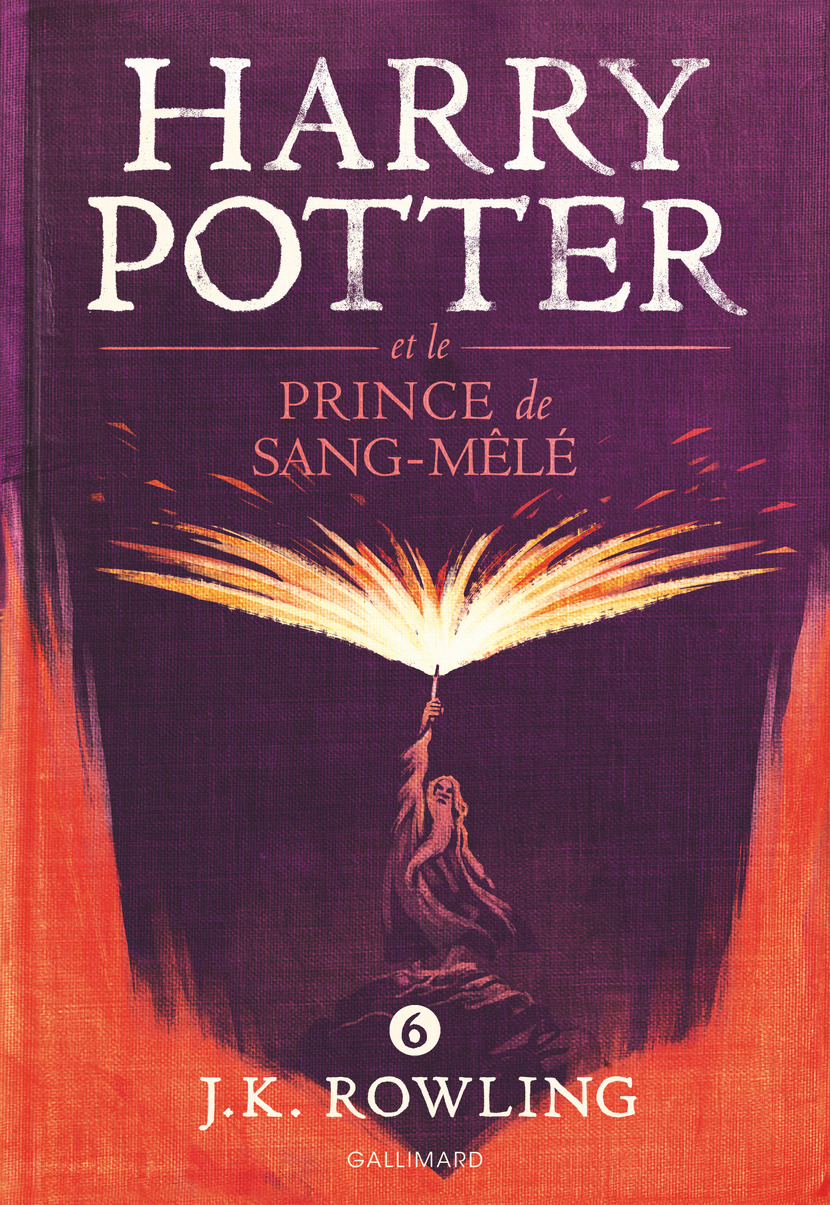
The growth of Gallimard Jeunesse was particularly marked by the French publication of J. K. Rowling's Harry Potter series, beginning in 1998. This international success considerably expanded the subsidiary's readership and strengthened its position in children's literature.
The historic publishing house nevertheless retained a separate identity, primarily associated with general literature, essays and major heritage collections.
In contemporary literature, Gallimard notably published Les Bienveillantes by Jonathan Littell in 2006. The novel, devoted to the Second World War and the destruction of European Jews, provoked substantial debate and received the Prix Goncourt.
The house also supported works by writers such as J. M. G. Le Clézio, Patrick Modiano, Annie Ernaux, Pierre Michon, Emmanuel Carrère and Marie NDiaye, whose approaches reflected the diversity of contemporary writing.
Several of these writers achieved major international recognition. Le Clézio received the Nobel Prize in Literature in 2008, while Patrick Modiano would be honoured in 2014 and Annie Ernaux in 2022.
These distinctions confirmed the importance of Gallimard's catalogue in contemporary French literature, although they should not obscure the varied publishing careers of the authors concerned.
2011–2012: From Gallimard's centenary to the formation of Madrigall
In 2011, Gallimard celebrated its centenary. The anniversary was marked by several publications and cultural events, including a major exhibition organised by the Bibliothèque nationale de France.
The celebrations provided an opportunity to revisit the house's archives, writers' correspondence, editorial choices and the evolution of its collections. They highlighted Gallimard's role in shaping a substantial part of twentieth-century French literary heritage.
At the same time, the house continued its economic development under the leadership of Antoine Gallimard, the founder's grandson.
In 2012, the family-owned group made a major acquisition by purchasing Flammarion from the Italian group RCS MediaGroup. The transaction led to the formation of a large publishing organisation around the holding company Madrigall.
The group gradually brought together several historic publishing houses, distribution operations and bookshops. This structure made it possible to share certain economic functions while maintaining several distinct editorial identities.
It is essential to distinguish this expansion of the group from the history of Gallimard itself. Books published by Flammarion, Casterman, Arthaud or other integrated companies did not automatically become publications of Éditions Gallimard.
2014–2022: International recognition and editorial renewal
The 2010s and early 2020s brought further literary recognition.
In 2014, Patrick Modiano received the Nobel Prize in Literature, honouring a body of work that had explored memories, uncertain identities and the traces left by history for several decades.
In 2020, Hervé Le Tellier received the Prix Goncourt for L'Anomalie, a novel combining narrative experimentation, philosophical questioning and scientific imagination. Its success demonstrated Gallimard's ability to support contemporary works that renewed the novel's forms while reaching a broad readership.
In 2022, Annie Ernaux also received the Nobel Prize in Literature, for writing in which personal experience becomes a means of examining social relationships, memory and women's lives.
At the same time, Gallimard developed new forms of intellectual intervention. In 2019, the Tracts collection was launched to publish short essays devoted to major social questions. In a contemporary form, it revived a tradition of interventionist writing already present in the history of the NRF.
At group level, Madrigall acquired Éditions de Minuit in 2021, strengthening its collection of historic literary publishing houses. This integration did not erase the distinct identity of Éditions de Minuit, whose history is notably associated with the Resistance and the Nouveau Roman.
Since 2023: Literary heritage, creativity and changes in publishing
Gallimard continues its activity in an industry facing numerous transformations: changing reading habits, the development of digital publishing, shifts in distribution and growing competition for the visibility of new releases.
The house continues to place considerable importance on literary creation. In 2024, Kamel Daoud received the Prix Goncourt for Houris, published in the Blanche collection. The novel, devoted to the wounds of the Algerian Civil War and the memory of violence, illustrates the place of historical and political questions in contemporary literature published by Gallimard.
The heritage collections remain another essential field. The Pléiade, Folio, Poésie/Gallimard and Quarto continue their work of literary transmission, while essays and nonfiction publications engage with contemporary debates.
Within Madrigall, the house belongs to a family organisation in which several generations participate in management responsibilities. The group also operates distribution, logistics and bookselling activities that help sustain the circulation of its catalogues.
These developments show that Gallimard's history cannot be reduced to a succession of prestigious authors or literary awards. It is rooted in the continuous work of publishing, preserving literary heritage and renewing the practices of the book trade.
More than a century after its foundation, the house remains associated with a demanding conception of publishing: discovering writers, supporting their works and ensuring that literary heritage survives beyond the period in which it was created.
What Sets It Apart
A publishing house born from a literary journal
Gallimard's first distinctive characteristic lies in its origins within La Nouvelle Revue française.
The NRF was not simply a promotional vehicle intended to showcase books. It was a forum for literary creation, criticism and the exchange of ideas, where writers participated directly in defining an editorial policy.
This organisation profoundly shaped the publishing house. Gallimard developed from a network of authors, readers and critics in which intellectual exchange was as important as commercial considerations.
The relationship between the journal and the publishing house encouraged the emergence of an editorial culture based on careful manuscript reading, discussion of literary works and long-term support for writers.
Even after achieving economic independence, Gallimard retained this heritage, which helps explain its role in French literary life.
A long-term commitment to authors
One of Gallimard's greatest historical strengths has been its determination to build lasting relationships with writers.
This policy does not mean that the house has always retained every author or avoided mistakes. The initial rejection of Marcel Proust, on the contrary, illustrates the limitations of editorial judgement.
Nevertheless, Gallimard has often sought to support a body of work over time, from its earliest publications through later editions and collected writings.
This approach has allowed writers such as Albert Camus, Patrick Modiano, J. M. G. Le Clézio and Annie Ernaux to develop catalogues whose individual works continue to engage with one another across the decades.
Rather than merely accepting a manuscript, the house helps establish the conditions through which an author's work can be read, discussed, republished and transmitted.
The Blanche collection: A literary and graphic identity
The Blanche collection occupies a fundamental place in Gallimard's identity.
Its understated cover, combining a cream background, recognisable typography and red and black lines, has become one of the most famous graphic signatures in French publishing.
This presentation is much more than an aesthetic choice. It gives prominence to the author's name and the title without attempting to confine the work within a particular visual interpretation.
The collection's graphic continuity also makes it possible to associate writers from different generations with the same publishing tradition. Books by Proust, Camus, Modiano and contemporary authors are visually part of a recognisable whole.
This consistency has helped make Blanche a symbol of French general literature, recognised in bookshops and libraries alike.
The Bibliothèque de la Pléiade: Publishing as the preservation of literary heritage
The Bibliothèque de la Pléiade represents one of Gallimard's most important literary heritage projects.
Founded by Jacques Schiffrin before its integration into the house, it is based on a demanding conception of publishing: presenting major works in lasting volumes accompanied by thorough critical and philological scholarship.
Texts undergo research, comparison between editions, the selection of variants and editorial preparation by specialists. Volumes may include timelines, explanatory notices, notes, bibliographies and documents that help place the works in context.
The physical production of the books also contributes to this identity. Thin Bible paper, flexible leather bindings and compact formats allow extensive works to be brought together in volumes designed to last.
The Pléiade is therefore much more than a prestigious collection. It is an undertaking in literary transmission that helps renew the reading of classics and reflects the evolution of scholarship about their authors.
Série noire: Giving noir fiction a distinctive literary identity
Through Série noire, Gallimard played a major role in the recognition of crime fiction.
From 1945 onwards, the collection introduced French readers to narratives that differed from traditional detective stories centred solely on solving a mystery.
Noir novels presented characters confronted by violence, power relationships, corruption and social contradictions. They explored urban environments, institutions and marginalised lives, often through direct and inventive language.
Under Marcel Duhamel and his successors, the collection developed an immediately recognisable editorial and graphic identity. It also supported the emergence of French writers who renewed the genre from the 1970s onwards.
Its influence extended far beyond publishing. Numerous novels from Série noire were adapted for cinema, while the collection's name entered everyday French language as a term for darker crime narratives.
The collection demonstrated that literature long considered popular entertainment could become a major space for narrative innovation and social criticism.
Folio: Making an extensive literary heritage accessible
The creation of Folio was one of Gallimard's principal initiatives in broadening access to literature.
Its importance lies first in the richness of the catalogue. Readers can discover classics, contemporary novels, international literature, essays and plays in formats suited to everyday use.
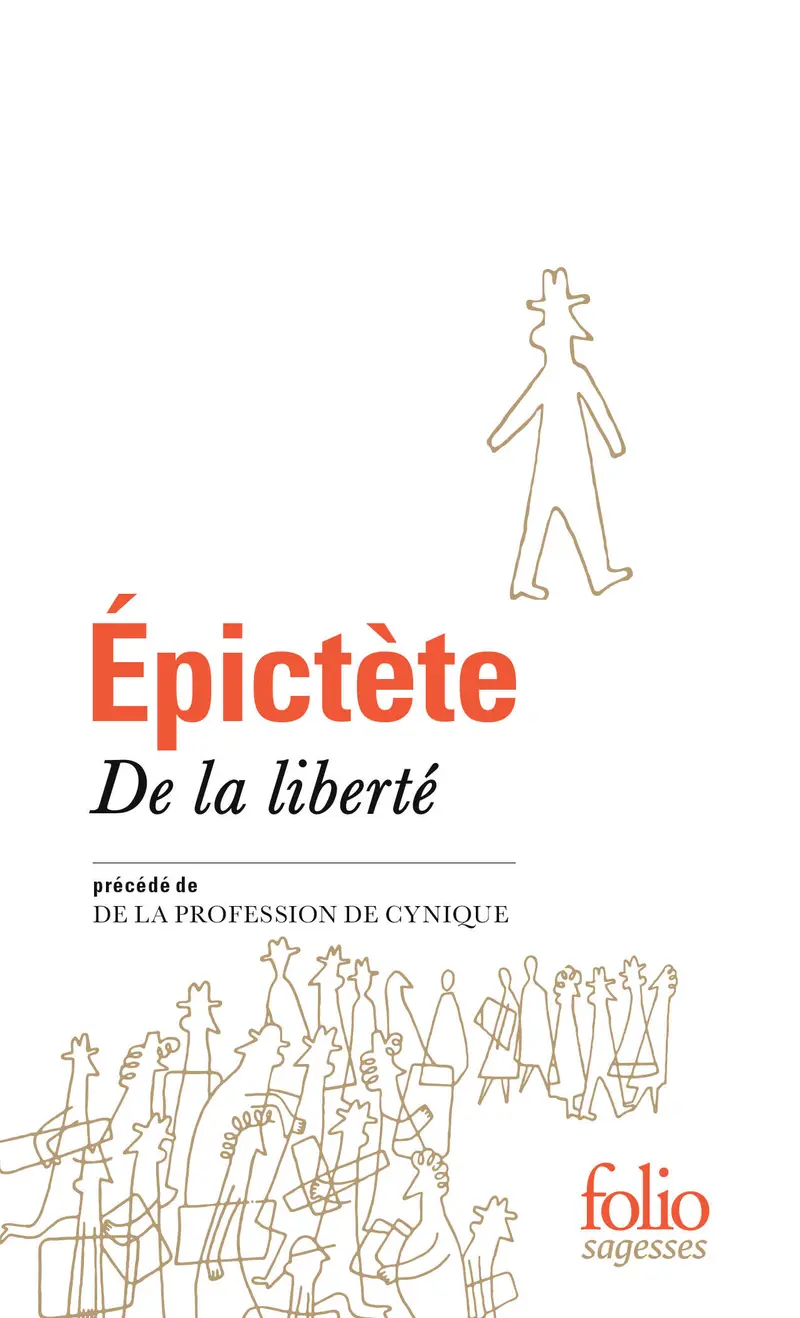
Folio also possesses a graphic identity that contributes to its recognition. Its understated covers and consistent presentation bring together very different works under a common publishing brand.
Specialised series such as Folio classique, Folio essais, Folio histoire, Folio policier and Folio SF extend this approach across different genres and disciplines.
The collection illustrates a major characteristic of Gallimard's publishing model: a book is not conceived solely for its initial release. It can have several publishing lives, reach new readers and remain available for decades.
A central place in the humanities and intellectual thought
Gallimard should not be defined solely by its role in the French novel.
Its collections devoted to philosophy, history, psychoanalysis and the humanities have played an essential role in its intellectual development.
The Bibliothèque des sciences humaines, the Bibliothèque des histoires, Connaissance de l'inconscient and the various essay collections accompanied major transformations in contemporary thought.
Pierre Nora's work on history and memory, publications by Michel Foucault, and the reflections of Jean-Bertrand Pontalis demonstrate this openness to different intellectual approaches.
The house also facilitated the circulation of international research, contributing to exchanges between scholarly and philosophical traditions.
This activity shows that Gallimard participates not only in literary creation but also in the ways a society reflects upon its history, institutions and representations.
Poetry as an enduring publishing field
The importance accorded to poetry is another remarkable dimension of Gallimard.
From the beginnings of the NRF, the house maintained close relationships with poets such as Paul Valéry and Saint-John Perse. Poetry was not treated as a marginal field, but as one of the essential forms of literary creation.
The Poésie/Gallimard collection, established in 1966, enabled poetic works to circulate in affordable editions while placing particular importance on their presentation and critical commentary.
It publishes both major figures from the literary heritage and modern and contemporary poets. This policy helps keep works available that might otherwise have a more limited presence in bookshops.
Poetry therefore occupies a place consistent with Gallimard's founding heritage, rooted in the diversity of literary forms and the transmission of writing.
The importance of graphic design and book production
Gallimard's identity is also inseparable from considerable attention to the physical form of books.
The understated design of the Blanche collection, the refinement of the Pléiade volumes, Série noire's black-and-yellow identity and Folio's covers reflect different conceptions of the book, adapted to particular uses and readerships.
The work of Robert Massin, notably, illustrates the importance given to graphic design and typography in establishing the house's publishing identity.
This attention is not limited to covers. It also concerns format selection, page layout, paper, typesetting and physical production.
Gallimard has therefore helped demonstrate that a collection can possess a strong visual identity without imposing a uniform illustrative style on every work.
Gallimard Jeunesse: Transmitting literature and knowledge differently
The development of Gallimard Jeunesse marked the group's expansion into a field in which graphic creation, education and reading practices play an essential role.
Under Pierre Marchand, children's collections were conceived as genuine publishing projects capable of combining literary quality with the pleasure of discovery.
Folio Junior contributed to renewing the place of fiction in children's and teenagers' reading, while nonfiction collections developed approaches based on illustration and the exploration of knowledge.
Découvertes Gallimard is a particularly striking example of this approach. The collection combines concise texts with abundant visual material in books where graphic design directly supports understanding.
This orientation helped establish illustrated nonfiction as a field of creative publishing in its own right.
Gallimard Jeunesse, however, must be distinguished as a recognisable publishing entity from the general literary publications of the historic house.
An international outlook that enriches French literature
From its earliest decades, Gallimard has attached major importance to translation and international literature.
The publication of writers such as William Faulkner, Ernest Hemingway, Franz Kafka, Jorge Luis Borges and Milan Kundera enabled French readers to discover works that renewed narrative forms and representations of the world.
This openness involves more than importing international successes. It requires selection, translation, presentation and editorial support.
International literature collections therefore contribute to the circulation of ideas and literary forms between countries.
Translation also plays an important role in the house's literary heritage, notably through new editions of classics and critical scholarship published in the Pléiade and other collections.
This international dimension helps explain why Gallimard's history extends beyond the boundaries of French publishing.
A balance between literary heritage and contemporary creation
Perhaps Gallimard's most enduring characteristic is its ability to bring together two different publishing timescales.
On one side, the house publishes new works and supports contemporary writers. On the other, it maintains an older catalogue whose books continue to be edited, studied and passed on.
These activities require different skills. Discovering a writer demands attention to manuscripts, new literary forms and social change. Preserving a literary backlist requires republication, translation, critical scholarship and a policy of keeping titles available.
Gallimard has built much of its identity on the complementary nature of these activities.
The Blanche, Folio, Quarto and Pléiade collections illustrate the movement between the different publishing lives of a work: original publication, paperback edition, collected writings and scholarly heritage edition.
This continuity contributes to Gallimard's distinctive position within French publishing, where the house remains both an active participant in contemporary creation and a guardian of a substantial part of literary memory.
Did You Know?
-
Founded in 1911: Éditions de la Nouvelle Revue française was established on 31 May 1911 by Gaston Gallimard, André Gide and Jean Schlumberger. The NRF journal, from which the publishing house emerged, had existed since 1909.
-
Three first publications: The initial books published in June 1911 included L'Otage by Paul Claudel, Isabelle by André Gide and La Mère et l'enfant by Charles-Louis Philippe.
-
A famous editorial mistake: Marcel Proust's manuscript of Du côté de chez Swann was initially rejected by the NRF. Published by Grasset in 1913, the first volume of À la recherche du temps perdu was subsequently taken over by Gallimard, which published the continuation of the work.
-
A landmark first Prix Goncourt: Marcel Proust's À l'ombre des jeunes filles en fleurs received the Prix Goncourt in 1919, helping establish the young publishing house's literary reputation.
-
The Pléiade was not founded by Gallimard: The Bibliothèque de la Pléiade was established in 1931 by Jacques Schiffrin, before joining Gallimard in 1933. Its founder directed the collection until his dismissal in 1940, in the context of antisemitic measures during the Occupation.
-
An emblematic Parisian headquarters: The publishing house is located at 5, rue Gaston-Gallimard, in Paris's 7th arrondissement. The street was previously called rue Sébastien-Bottin, before being renamed on the occasion of the publisher's centenary in 2011.
-
A collection whose name entered common usage: Established in 1945, Série noire became so influential that its name is widely used in French to describe a dark form of crime fiction, beyond Gallimard's own publications.
-
Marcel Duhamel's role: The first director of Série noire, he helped introduce numerous Anglo-American crime writers to France. The collection celebrated its 80th anniversary in 2025.
-
Folio and Robert Massin: Launched in 1972, the Folio collection owes its historic graphic identity to typographer and graphic designer Robert Massin, also known for his experiments with the relationship between text, typography and visual expression.
-
The major heritage collections: The Pléiade, Folio, Poésie/Gallimard, L'Imaginaire and Quarto serve complementary purposes: scholarly editing, paperback distribution, the transmission of poetry, literary rediscovery and the collection of major works.
-
A remarkable record of literary prizes: Gallimard has published numerous Prix Goncourt-winning novels, including À l'ombre des jeunes filles en fleurs by Marcel Proust (1919), La Condition humaine by André Malraux (1933), Le Roi des Aulnes by Michel Tournier (1970), Rue des boutiques obscures by Patrick Modiano (1978), Les Bienveillantes by Jonathan Littell (2006), L'Anomalie by Hervé Le Tellier (2020) and Houris by Kamel Daoud (2024).
-
A remarkable presence among Nobel laureates: Several writers associated with Gallimard's catalogue have received the Nobel Prize in Literature, including André Gide (1947), Albert Camus (1957), Jean-Paul Sartre (1964, who declined the prize), Claude Simon (1985), J. M. G. Le Clézio (2008), Patrick Modiano (2014) and Annie Ernaux (2022).
-
The special case of The Little Prince: Antoine de Saint-Exupéry's Le Petit Prince was first published in New York in 1943, before appearing in France through Gallimard in 1946. Its first publication anywhere in the world should therefore not be confused with its French edition.
-
A publishing house and a group are not the same entity: Éditions Gallimard refers to the historic publishing house founded in 1911. Madrigall refers to the family-owned group that also includes other publishers, notably Flammarion, Casterman, Denoël, Mercure de France and Éditions de Minuit. Their publications must not automatically be attributed to Gallimard.
-
Continuity across generations: Gaston Gallimard, Claude Gallimard and Antoine Gallimard represent three major generations in the history of the publishing house and the group that developed around it.