Do birth, wealth, and power make one human being superior to another? In Three Discourses on the Condition of the Great, Blaise Pascal examines the foundations of social hierarchies and the duties of those who occupy privileged positions. Through three lessons addressed to a young aristocrat, he argues that distinctions of rank rest on human conventions rather than natural superiority. He contrasts established greatness, associated with offices and titles, with natural greatness, grounded in personal qualities. His reflections also explore the relationships between power, desire, and justice, emphasizing the responsibilities of rulers toward those who depend on them. Pascal thus develops an analysis of authority, pride, and the limits of social greatness.
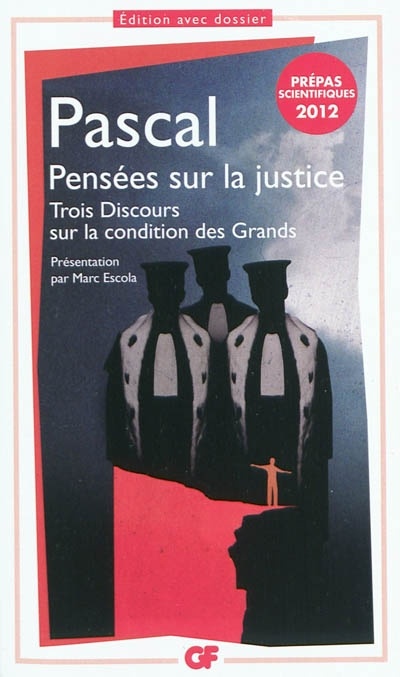
Blaise Pascal: Three Discourses on the Condition of the Great
- Books on Demand GmbH Publisher
- Flammarion Publisher
- Gallimard Publisher
- Mille et une nuits Publisher
- Blaise Pascal Author
Does being born into power make someone superior, or does true greatness depend on personal qualities?
Details
- Type
- Book
- Original language
- French
- Genres
- Philosophy
- ISBN
- 9782322144150
- Information verified on
- 14 octobre 2026
Synopsis
Blaise Pascal: Three Discourses on the Condition of the Great
Overview
Overview
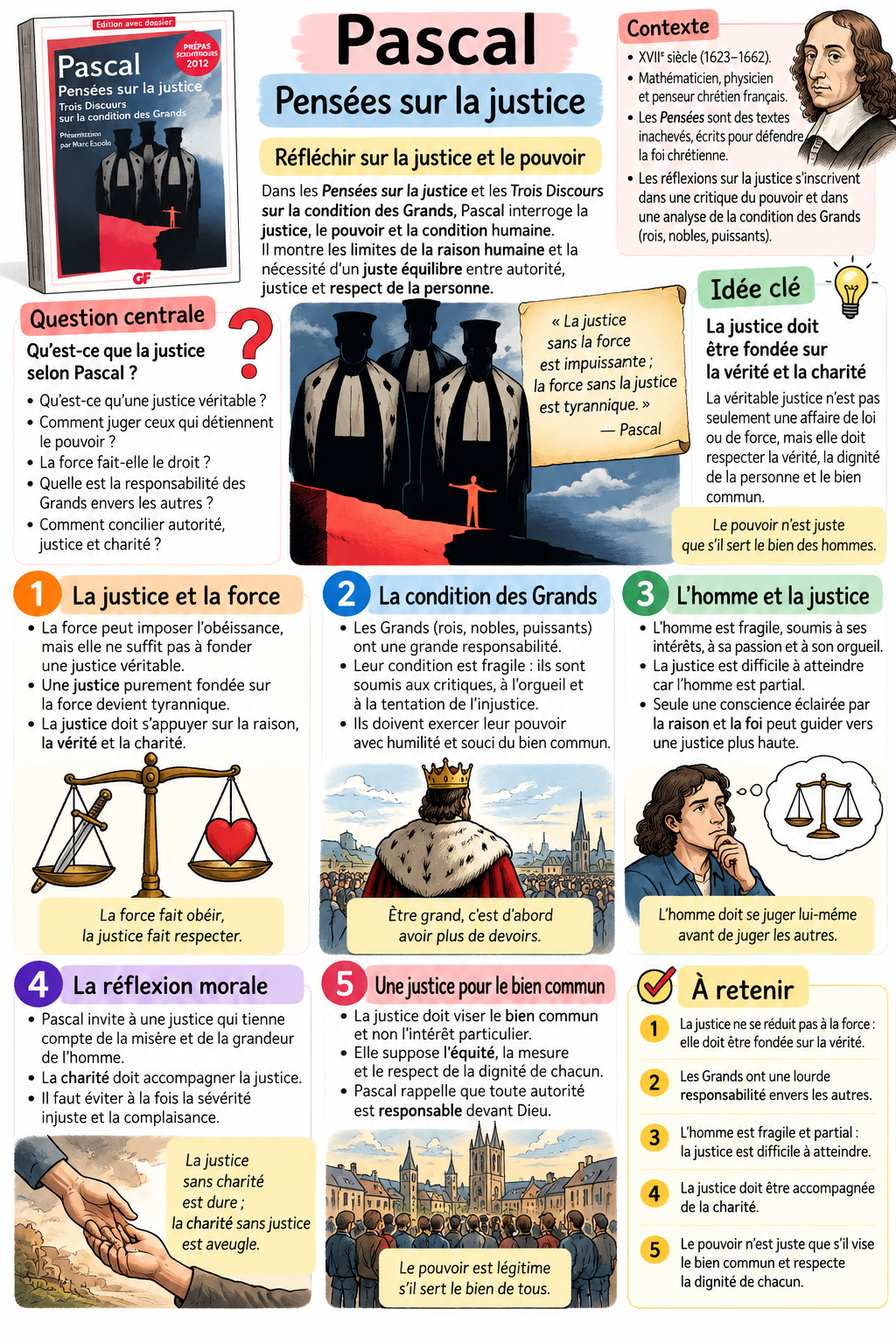
In Three Discourses on the Condition of the Great, Blaise Pascal examines social privilege, the legitimacy of power, and the responsibilities attached to positions of authority. These teachings, addressed to a young aristocrat, seek to clarify the true nature of his social condition. Pascal does not simply challenge the existence of hierarchies: he investigates their foundations and the mistakes made by those who confuse their rank with personal superiority.
The first discourse begins with a symbolic story: a man stranded on an island is mistaken for a missing king and receives the honors reserved for the sovereign. Although he outwardly accepts this position, he knows that it does not reflect his true nature. Pascal uses this situation to show that birth, titles, and wealth depend largely on chance circumstances and conventions established by society. He therefore encourages the powerful to maintain a double awareness: outwardly respecting the customs associated with their position while inwardly recognizing their natural equality with other human beings.
The second discourse develops this distinction by identifying two forms of greatness. Established greatness arises from institutions and human decisions: it includes titles, dignities, and social positions. Natural greatness, by contrast, rests on genuine qualities such as intelligence, knowledge, virtue, or particular personal abilities. Pascal argues that these two forms of greatness call for different expressions of respect. A title may justify the courtesies prescribed by social convention, but it is not sufficient to deserve moral or intellectual esteem.
The third discourse examines the relationships between powerful individuals and those surrounding them. Pascal describes the great lord as a "king of concupiscence," an expression referring to authority founded on the possession of goods that others desire. People seek the favor of the powerful because they control resources capable of satisfying their needs and ambitions. This situation creates obligations: those who hold power should not abuse it but should seek to answer legitimate requests and relieve the needs of those who depend on them.
Finally, the investigation takes on a moral and religious dimension. For Pascal, the benevolent exercise of power is preferable to tyranny, but it does not yet represent the highest form of greatness. He distinguishes the realm of human interests from that of Christian charity, toward which an existence should be directed if it is not to remain confined to the advantages of birth and social power.
Key Takeaways
One of the fundamental ideas of Three Discourses on the Condition of the Great is that social position does not prove natural superiority. Distinctions of birth and fortune depend on historical circumstances, laws, and human conventions. Pascal therefore encourages a distinction between power legitimately exercised within a social order and the personal worth of the individual who holds it.
The distinction between established greatness and natural greatness occupies a central place. The former entitles individuals to the forms of respect prescribed by customs and institutions; the latter may justify genuine esteem. Confusing these two forms of recognition leads people to demand admiration that social rank alone cannot warrant.
Pascal also develops an investigation into justice and the limits of authority. He acknowledges the role of institutions in organizing society but emphasizes that the privileges they grant authorize neither arrogance nor violence. Those in power must understand that their position does not entitle them to every form of respect or to exercise arbitrary domination over others.
Finally, the concept of concupiscence provides a way of analyzing relationships of dependence between individuals. Power rests partly on control over resources desired by others. Pascal thus emphasizes the need to distinguish material advantages and relationships based on self-interest from genuine moral greatness, which he associates with charity.
Conclusion
With Three Discourses on the Condition of the Great, Blaise Pascal develops a reflection on the relationships between power, social hierarchy, and human dignity. By showing that privileges derive from institutions rather than natural superiority, he distinguishes the obligations attached to rank from the qualities that justify genuine esteem.
These discourses occupy a distinctive place in Pascal's political and moral thought. They extend his analyses of pride, justice, and human conventions while emphasizing the responsibilities of those who exercise authority over others. Their Christian dimension ultimately places this investigation within a broader inquiry into true greatness and the purposes of human existence.
Good to Know
- Three Discourses on the Condition of the Great brings together three teachings by Blaise Pascal addressed to a young man of noble birth, traditionally identified as the future Duke of Chevreuse, Charles-Honoré d'Albert.
- The text was recounted by Pierre Nicole, an associate of Pascal, from his recollection of these teachings. It is therefore not a verbatim transcript in which every formulation can be attributed with certainty to Pascal's original words.
- The distinction between established greatness and natural greatness separates honors attached to institutions from the esteem deserved by personal qualities.
- The expression "king of concupiscence" appears in the third discourse. It describes a form of power exercised over others through the goods and advantages they wish to obtain.
- The discourses are closely connected to the Pensées, particularly through their reflections on justice, custom, pride, the human condition, and the relationships between different orders of greatness.