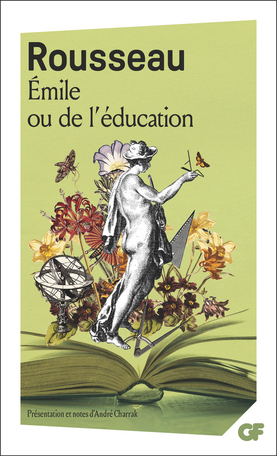
The publication of L'Émile, in 1762, restored the problem of education to its central place in philosophy. From his first months until his romantic encounter, Émile is followed at each stage, through experiences which first attest to the concern to consider “the child within the child”, instead of taking him out of his age. Rousseau shows that it is possible to educate a man according to nature and how vices and inequality now characterize the human condition: a double issue which constitutes his “theory of man”. The incomparable richness of this master book is also due to the tensions that run through it. Rousseau rejects original sin but he must account for the evil and suffering that this dogma forbade us to ignore; he criticizes the philosophers of his time but he pushes their empiricist method to its limits; he proclaims: “I hate books”, but he provides the fairest and most educated panorama of 18th century culture, facing the Encyclopedia and, in part, against it. Published together, Émile and the Social Contract were condemned in Paris and then in Geneva: the force of the educational treatise did not escape the censors, even if Rousseau claimed to deliver only “the reveries of a visionary”. Because the very form of fiction tears the work from the circumstances: no more than its readers of the Enlightenment, we are sheltered from its lessons.
Book
1762
Graphic novel
Philosophy
Rousseau: Emile, or On Education
Émile ou De l'éducation
- UNIVERS POCHE Publisher
- Jean-Jacques Rousseau Author
Details
- Type
- Book
- Release
- 1762
- Original title
- Émile ou De l'éducation
- Genres
- Graphic novel, Philosophy
- ISBN
- 9782823881257
Synopsis