“The moral law is holy (inviolable). Man is undoubtedly very far from holiness, but the humanity in his person must be holy for him. In all of creation, whatever one wants, and whatever one has power over, can also be used simply as a means; man alone, and with him every reasonable creature, is end in himself. He is, in fact, thanks to the autonomy of his freedom, the subject of the moral law, which is holy. It is precisely because of this freedom that all will, even the will specific to each person and directed towards itself, is limited by the condition of agreement with the autonomy of the reasonable being, namely not to subject it to any intention which would not be possible according to a law which could find its source in the very subject who suffers, and therefore never to use it simply as a means, but at the same time in itself as an end. This condition, rightly, imposes itself, for us, even on the divine will in relation to reasonable beings in the world, as far as it concerns its creatures, because it rests on the personality of these, by which alone they are ends in themselves. » Kant
Book
1788
Philosophy
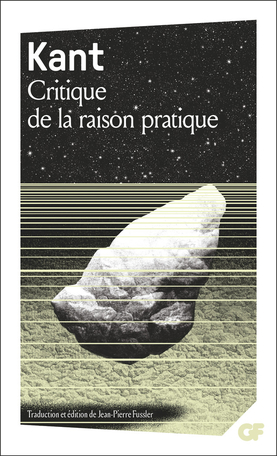
Kant: Critique of Practical Reason
Kritik der praktischen Vernunft
- Immanuel Kant Author
Details
- Type
- Book
- Release
- 1788
- Original title
- Kritik der praktischen Vernunft
- Genres
- Philosophy
- ISBN
- 9780270276893
Synopsis