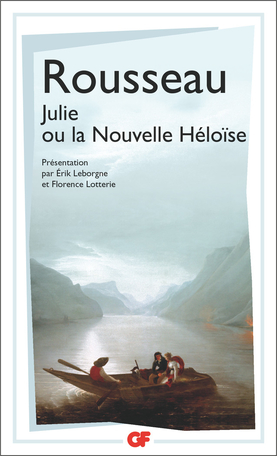
“I saw the customs of my time, and I published these letters”: it is with these words that the “editor” Rousseau opens La Nouvelle Héloïse, a romantic correspondence between Julie d’Étange and her tutor Saint-Preux. On the shores of Lake Geneva, these “beautiful souls” form a small ideal society, where gentle passions and sincerity of feeling prevail, away from the evils of civilization. In line with Montesquieu's Persian Letters, Rousseau sees his work as a laboratory of new ideas, which focuses the questions of his time on man and his passions. Romance novel, elegiac song, but also experimental fiction at the crossroads of anthropology and politics: La Nouvelle Héloïse, the greatest bookstore success of its time, brilliantly celebrates the marriage of the novel and philosophy in the 18th century.
Book
1761
Philosophy
Rousseau: Julie, or the New Heloise
Julie ou La Nouvelle Héloïse
- Arvensa editions Publisher
- Jean-Jacques Rousseau Author
Details
- Type
- Book
- Release
- 1761
- Original title
- Julie ou La Nouvelle Héloïse
- Genres
- Philosophy
- ISBN
- 9791027300006
Synopsis