What gives human beings their greatness when they remain so fragile before the immensity of the universe? In Man Is a Thinking Reed, a selection of fragments from the Pensées, Blaise Pascal explores the contradictions of the human condition. Capable of reasoning, acquiring knowledge, and becoming aware of their own existence, human beings nevertheless remain subject to error, passion, and death. Pascal examines this tension between greatness and wretchedness while questioning the illusions that distract individuals from recognizing their true condition. Through themes of vanity, diversion, happiness, and faith, he develops a reflection on humanity's place in the world and the limits of reason. Thought thus emerges as the foundation of human dignity, but also as the means through which people recognize their vulnerability.
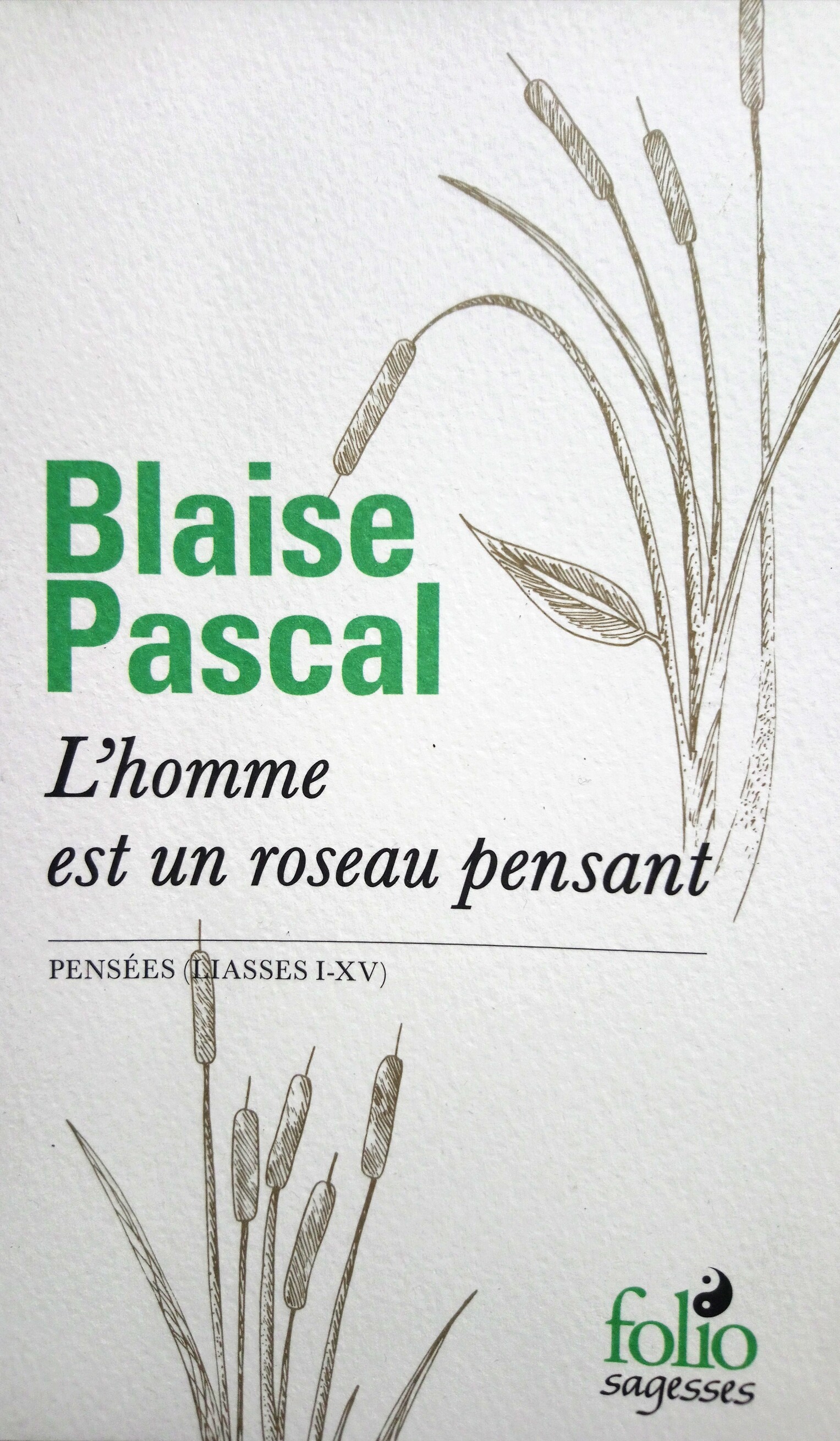
Blaise Pascal: Man Is a Thinking Reed
- Gallimard Publisher
- Blaise Pascal Author
Fragile before the immensity of the universe, human beings nevertheless find their greatness in the capacity to think.
Details
- Type
- Book
- Original language
- French
- Genres
- Philosophy
- ISBN
- 9782070469123
- Information verified on
- 14 octobre 2026
Synopsis
Blaise Pascal: Man Is a Thinking Reed
Overview
Overview
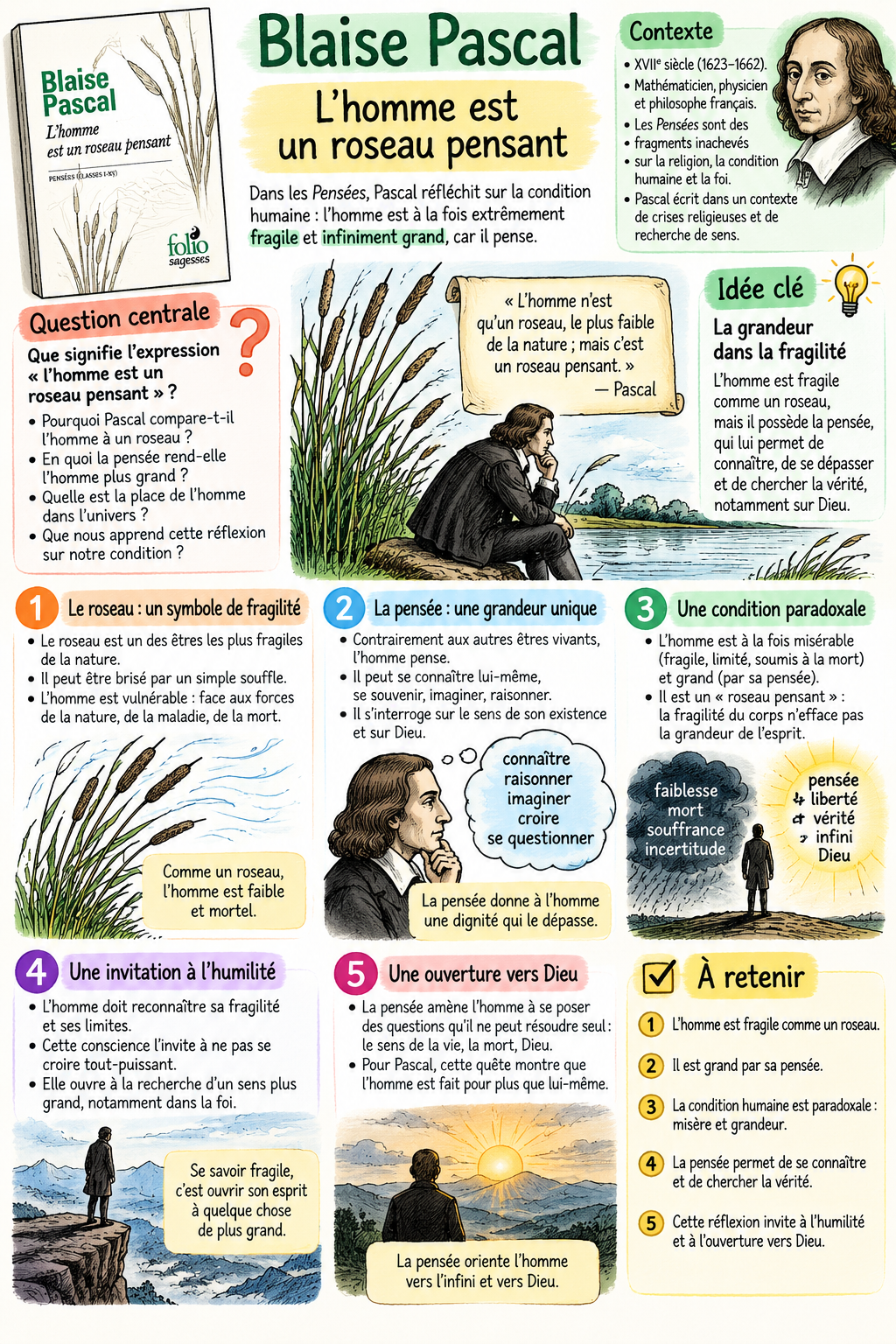
In Man Is a Thinking Reed, Blaise Pascal examines the human condition through a selection of fragments from his Pensées. The book brings together the first fifteen thematic sections of this unfinished philosophical and religious project. Its title draws on one of Pascal's most famous images: that of a physically fragile being, comparable to a reed that nature can easily break, yet whose capacity for thought grants a distinctive dignity.
At the heart of this investigation lies the paradox of human greatness and wretchedness. Human beings possess reason, can reflect upon themselves, and seek to understand the world around them. Yet they remain vulnerable, limited in their knowledge, and unable to exercise complete control over their existence. Pascal emphasizes that awareness of these limitations already constitutes a form of greatness: unlike the material realities surrounding them, human beings can recognize their own weakness and reflect on their condition.
This contradiction also appears in the relationships between vanity, desire, and the pursuit of happiness. Pascal observes that individuals pursue honors, wealth, distractions, or social recognition without necessarily achieving lasting satisfaction. They frequently seek to escape boredom and troubling questions about existence by multiplying their activities. Pascal calls this diversion (divertissement): not merely leisure or entertainment, but more broadly anything that distracts human beings from confronting themselves.
The work also explores the limits of human reason. Pascal acknowledges its power in the pursuit of truth but emphasizes that it cannot resolve every question concerning existence, morality, and human destiny. The contradictions between human aspirations and the realities of human life lead him to confront different philosophical perspectives, particularly those that celebrate human greatness and those that emphasize human weakness.
This inquiry forms part of a Christian apologetic project. For Pascal, understanding the human condition gradually leads to questions concerning God, faith, and the limits of purely human explanations. The fragments are therefore more than a meditation on the fragility of existence: they contribute to a broader investigation into the search for truth and the place of religion in understanding humanity.
Key Takeaways
One of the essential ideas of Man Is a Thinking Reed lies in the contrast between physical fragility and intellectual dignity. Human beings occupy an insignificant place within the immensity of the universe and remain exposed to suffering and death. Yet their ability to recognize this situation grants them a greatness that depends neither on physical strength nor on material power.
The concept of diversion is another fundamental element. Pascal shows how human activities can become ways of avoiding boredom, solitude, and awareness of mortality. This constant pursuit of distractions reveals the difficulty of remaining alone with oneself and examining the true conditions of happiness.
The relationship between reason and self-knowledge also occupies an important place. Pascal regards thought as essential to human dignity, but refuses to treat reason as an unlimited power. Recognizing its limits becomes necessary for understanding the contradictions of existence and the questions that demonstration cannot definitively answer.
Finally, the work establishes a connection between the human condition and spiritual inquiry. Greatness and wretchedness are not merely psychological characteristics: they contribute to Pascal's Christian understanding of human nature. This religious dimension gives the fragments a purpose extending beyond the description of human behavior alone.
Conclusion
With Man Is a Thinking Reed, Blaise Pascal develops a meditation on the fragility of existence and the distinctive place of thought within the human condition. By confronting the greatness of the mind with the limitations of the body, reason, and human aspirations, he highlights the contradictions shaping our relationship with the world and ourselves.
This selection from the Pensées introduces several major themes of Pascal's philosophy: self-awareness, vanity, diversion, the pursuit of happiness, and the relationships between reason and faith. It reflects an investigation in which understanding human nature constitutes an essential step toward a deeper examination of existence and human destiny.
Good to Know
- Man Is a Thinking Reed is an English rendering of the French editorial title L’Homme est un roseau pensant, rather than an independent treatise originally written under this name. It is a selection of fragments from the Pensées, published by Gallimard in the Folio Sagesses collection.
- This edition brings together sections I to XV of the Pensées, in a volume edited by Michel Le Guern. It particularly emphasizes reflections on vanity, human wretchedness, greatness, diversion, and the pursuit of the highest good.
- The Pensées consist of materials intended for an apology of the Christian religion that Pascal never completed. Published after his death, these fragments have been arranged differently by successive editors.
- The image of the "thinking reed" illustrates the central paradox of the human condition: human beings are physically vulnerable, yet possess the ability to understand their own fragility.
- The numbering and arrangement of fragments vary between editions of the Pensées, particularly those prepared by Brunschvicg, Lafuma, Sellier, and Le Guern. These differences should be considered when locating or citing a specific passage.