The Discourse on the Sciences and the Arts is a text by Jean-Jacques Rousseau written as part of the Dijon Academy competition of 1750. Jean-Jacques Rousseau gives voice to the Roman hero Fabricius through prosopopeia in his Discourse. Winner of the competition, Rousseau saw his essay widely commented on and owed his fame to it, well before his magnum opus The Social Contract. As required by the competition, the speech answered a question: it was then a question of determining “Whether the re-establishment of sciences and arts has contributed to purifying morals”. A fierce critic of the practices of his time, the author presents in two parts a diatribe against the sciences and the arts, which far from purifying morals distance men from virtue. Against uncertain and useless knowledge, Rousseau values ignorance and virtuous simplicity. He attacks the refinement and refinement of men accustomed to the sciences and the arts, and opposes to them an image of vigorous and warlike men. According to Rousseau, the sciences and the arts have only corrupted morals and camouflaged the yoke of tyrants by occupying men with futilities and making them forget their servitude.
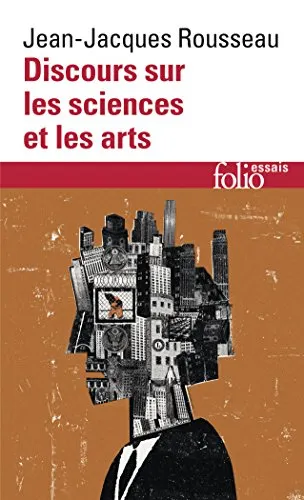
Book
1750
Philosophy
Rousseau: Discourse on the Sciences and Arts
Discours sur les sciences et les arts
- Jean-Jacques Rousseau Author
Details
- Type
- Book
- Release
- 1750
- Original title
- Discours sur les sciences et les arts
- Genres
- Philosophy
- ISBN
- 9781508577102
Synopsis