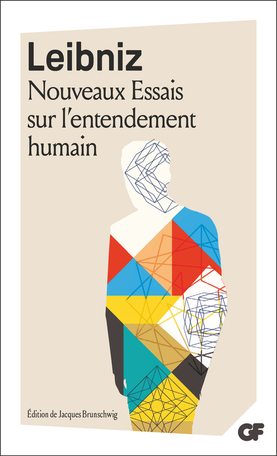
The imaginary dialogue of Théophile and Philathèle in the New Essays on Human Understanding (1765) is the substitute for a dialogue that never took place: that of Leibniz with Locke. In this work published posthumously, the philosopher of the monad makes the alternating voices of empiricism and rationalism heard. The fundamental question that Locke asks himself is that of the powers of knowledge: the wisdom of man is not to seek to know himself as God knows him, and to stick to what is given to him, in the unique mode of observation. Leibniz, for his part, believes in a knowledge of the soul drawn from sources other than experience. According to him, Locke's ideas are the fruit of the useless mutilation that the mind inflicts on itself when it makes what appears the norm of what is. Reintegrate this mutilated knowledge into total knowledge, restore the properties that observation discovers their intelligible rooting: such is Leibniz's ambition in this capital work on the question of human knowledge.
Book
Philosophy
Leibniz: New essays on human understanding
New Essays on Human Understanding
- Collection XIX Publisher
Details
- Type
- Book
- Original title
- New Essays on Human Understanding
- Genres
- Philosophy
- ISBN
- 9782346140398
Synopsis