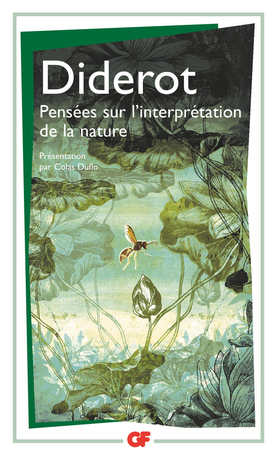
The Thoughts on the Interpretation of Nature are an emblematic work of the spirit of the Enlightenment. Written in the margins of the publication of the Encyclopaedia in 1753, they measure the epistemological and metaphysical upheavals that accompany the birth of the new experimental sciences of life and earth. The discovery of fossils and the analysis of the layers that make up the earth's globe, for example, contradict the story of Genesis. To account for the sciences of his time while escaping the censorship that had already led him to be imprisoned a few years earlier, Diderot therefore resorts to a writing often masked, allusive and indirect. This edition reproduces in Appendix the texts to which Diderot constantly invites the reader to refer: the "First Speech" and the "History of the donkey", extracts from the Natural History of Buffon, as well as the Essai on the formation of the organized bodies of Maupertuis.
Book
Philosophy
Diderot : Thoughts on the Interpretation of Nature
- Flammarion Publisher
- Denis Diderot Author
Details
- Type
- Book
- Genres
- Philosophy
Synopsis