Why do people complain of having too little time while devoting so much of it to pursuits of little real importance? In On the Shortness of Life, Seneca addresses Paulinus to examine how individuals spend their lives. The Stoic philosopher defends a paradoxical thesis: life is not necessarily too short, but people make it so by wasting the years they have been given. He criticizes ambition, the pursuit of wealth, excessive pleasures, and constant busyness, all of which distract the mind from what truly matters. By contrast, he presents philosophy, wisdom, and the practice of virtue as ways of reclaiming one's time. Drawing on psychological observations and examples from Roman society, Seneca invites readers to distinguish between merely existing and truly living.
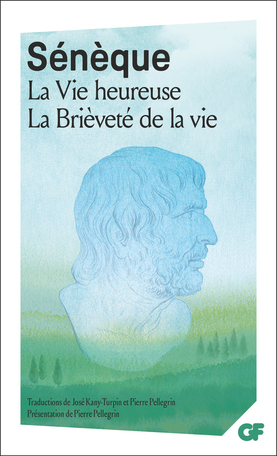
Seneca: On the Shortness of Life
On the Shortness of Life
- BoD - Books on Demand Publisher
- Les Belles Lettres Publisher
- RIVAGES Publisher
- Mille et une nuits Publisher
- Hatier Publisher
- Sénèque Author
Is life really too short, or have we forgotten how to spend our time?
Details
- Type
- Book
- Original title
- On the Shortness of Life
- Genres
- Philosophy
- ISBN
- 9782322428137
Synopsis
Seneca: On the Shortness of Life
Glossary terms: Chapter, Character, Critique, Desire, Dialogue, Existence, Exterior / EXT., Habit, Observation, Paradox, Part, Philosophy, Portrait, Reflection, Social recognition, Stoicism, Text, Thesis, Title, Treatise, Typesetting, Work
Overview
Overview
In On the Shortness of Life, Seneca develops a reflection on time, wisdom, and the way human beings conduct their lives. Addressed to Paulinus, a figure generally identified as a senior official responsible for Rome's grain supply, this short treatise belongs to the philosophical tradition of Roman Stoicism. Seneca begins with a universal complaint: people believe that nature has granted them too little time to accomplish everything they desire. Yet he reverses this claim, arguing that the problem lies less in the length of our lives than in how we use them. Life can be long enough for great achievements, provided we do not allow it to be consumed by activities without genuine value.
Much of the work is devoted to criticizing constant busyness and unproductive pursuits. Seneca observes that many individuals spend their days seeking wealth, honors, social recognition, or fleeting pleasures. Others become absorbed in their obligations, political ambitions, or desire to satisfy the expectations of others. The philosopher does not indiscriminately condemn every form of activity, but questions the loss of autonomy that occurs when an entire existence is subordinated to external concerns. Through a series of portraits drawn from Roman society, he demonstrates that the most influential or busiest people are not necessarily those who live most fully.
This criticism is accompanied by a reflection on the irreplaceable value of time. Seneca highlights a paradox: people jealously protect their material possessions, yet willingly surrender hours and years that they can never recover. Unlike money, lost time cannot be replaced. The philosopher also condemns the habit of postponing life until later, as though the future were guaranteed. Some people wait for retirement, success, or more favorable circumstances before beginning to live according to their deepest aspirations. Yet death may arrive before these plans can be fulfilled. It is therefore essential to recognize the value of the present without waiting for every external condition to be satisfied.
Seneca develops this argument further by distinguishing the past, the present, and the future. The past belongs to those who can examine their lives without regret or shame, while the future remains uncertain and the present constantly slips away. For the wise person, memory can become a source of wealth: it makes it possible to revisit lived experiences and draw lessons from them. Engaging with philosophers also offers a means of symbolically extending one's existence. By studying the works of great thinkers, individuals can benefit from insights developed long before their birth and incorporate into their own lives experience accumulated over centuries. Philosophy thus extends the reach of human time beyond its individual duration.
The work concludes with a defense of philosophical leisure, known to the Romans as otium. This does not mean laziness or inactivity, but time freed from fruitless concerns and devoted to study, reflection, and moral development. Seneca encourages Paulinus to withdraw from overwhelming public duties in order to regain the freedom necessary for wisdom. This invitation reveals a fundamental aspect of Stoicism: the value of a life depends neither on the number of years lived nor on the importance of the offices held, but on the quality of judgment and action. True wealth consists in consciously possessing one's time and using it in accordance with virtue.
Key Takeaways
Life is not necessarily too short: it is often poorly spent. Seneca challenges the idea that a lack of time is responsible for human dissatisfaction. He argues that distractions, excessive ambitions, and obligations accepted without reflection reduce the portion of life devoted to what possesses genuine value.
Constant busyness should not be confused with a fulfilled life. People absorbed in their affairs may lose control over their days and become dependent on circumstances or the opinions of others. Seneca contrasts this dispersion with a way of life based on deliberate choices that preserve time for what truly matters.
The present should be lived without depending entirely on an uncertain future. Constantly postponing one's plans and happiness assumes that enough time will always remain to fulfill them. Seneca urges individuals to recognize the fragility of this expectation and to give moral significance to the actions they undertake now.
Philosophy makes it possible to broaden and deepen existence. Reading, meditation, and the study of wise thinkers offer a different relationship with time. They allow individuals to learn from the past, clarify present decisions, and develop an inner freedom that does not depend exclusively on external events.
True leisure is an activity of the mind. Philosophical otium does not simply mean taking a break from work, but dedicating time to the pursuit of wisdom. By cultivating judgment and virtue, individuals learn to distinguish what genuinely deserves their attention from what merely fills their days.
Conclusion
With On the Shortness of Life, Seneca offers a reflection on the value of time and the illusions that distract human beings from a fully conscious existence. By criticizing excessive ambition, scattered attention, and the habit of postponing life, he shows that wisdom first requires a transformation in our relationship with everyday activities.
The treatise occupies an important place in Stoic moral philosophy. It combines observations of human behavior with a demanding conception of inner freedom, in which time is measured not only in years but through the actions, knowledge, and virtues that give it meaning. For Seneca, learning how to live also means learning not to waste one's existence.
Good to Know
- The work's Latin title is De brevitate vitae, also transmitted as Ad Paulinum de brevitate vitae, which identifies its addressee. The treatise belongs to Seneca's collection of Dialogues, although it takes the form of a continuous argument rather than a conversation between several characters.
- The text is generally dated to around AD 49, although its precise date of composition remains debated. This period corresponds to Seneca's return to Rome following his exile in Corsica.
- Paulinus is generally identified as an official associated with the annona, the administration responsible for Rome's grain supply. His public responsibilities help explain the particular significance of Seneca's concluding invitation to devote more time to philosophy.
- The treatise is divided into twenty chapters. Seneca progressively develops his criticism of wasted time, his analysis of people consumed by their occupations, and his defense of a life devoted to wisdom.
- The concept of otium occupies an important place in Roman thought. For Seneca, it refers particularly to learned leisure devoted to philosophy, distinct from idleness or the mere pursuit of entertainment.
- The bilingual edition published by Les Belles Lettres, in the Collection des universités de France (Budé), brings together On the Happy Life and On the Shortness of Life. The Latin text was established and translated by Abel Bourgery, with introductions devoted to the composition and transmission of both treatises.
- On the Shortness of Life belongs to Seneca's broader reflections on virtue, happiness, and the use of one's life, themes also developed in On the Happy Life, On Tranquility of Mind, and the Letters to Lucilius.
Link graph
Open in the full graphLoading the graph…
Only the strongest links are shown.