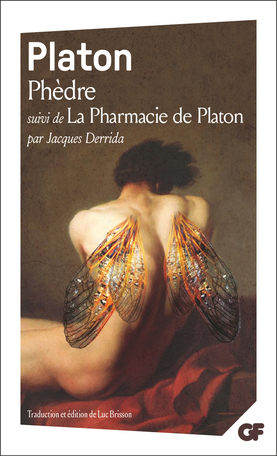
How to speak, why write? This is what two Athenians are discussing, at the end of the 5th century BC, lying near a flowering chaste tree, in the shade of a plane tree under which a spring flows, on the banks of the Ilissos, a few hundred meters from the Acropolis. But how can we evoke the power of discourse without speaking of the reality which produces discourse and over which its power is exercised, the human soul, the residue of this principle which moves the celestial bodies and even the universe in its entirety?
The Phaedrus is one of Plato's great dialogues: it is both extraordinarily diverse in its content, since it deals with death, love, rhetoric and writing, and in its form because we find dialogues, speeches, descriptions, myths and prayers. Plato's literary art developed remarkably there.