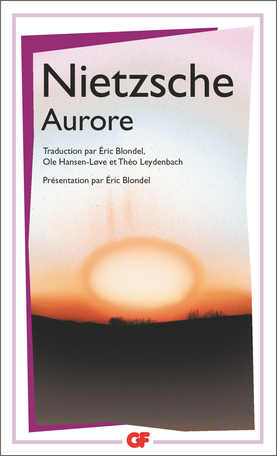
In Aurore (1881), Nietzsche continued the undertaking of radical criticism of the morals begun in Human, too human, and thus laid the foundations for a philosophical project whose last works, from Par-surpasse to Ecce homo, would be crowned. The philosopher imposes himself here as a worker of darkness, drilling the bottom of civilization to reveal the more or less noble origins of ideals, beliefs and morals, undermine the foundations of morality and cause our certainty to waver. Praising the liberation of thought, he calls for the affirmation of new values. And he shows us, through this series of fragments placed under the sign of the beautiful mood, that astonishment and scepticism are in principle of any philosophy: "A book like this is not made to be read in one single hold or in a loud voice, but to be consulted, especially on a walk or on a journey. We must be able to constantly put our nose on it, then raise it up, and find nothing unusual around us."
Book
Essay
Philosophy
Nietzsche : Daybreak
- Flammarion Publisher
- Gallimard Publisher
- Friedrich Nietzsche Author
Details
- Type
- Book
- Genres
- Essay, Philosophy
- ISBN
- 9782070325115
Synopsis