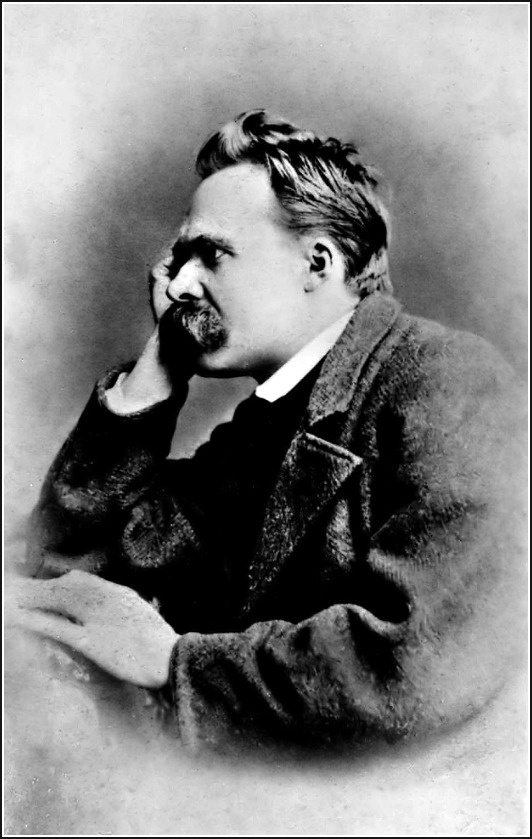
Friedrich Nietzsche
Details
- Roles
- Author
Referenced works
Referenced works (13)
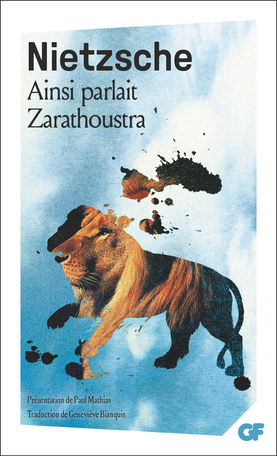
Nietzsche : Thus Spoke Zarathustra
Author
That a Goethe, that a Shakespeare cannot breathe for a moment in this atmosphere of passion and altitude, that Dante, near Zarathustra, be only a believer, and not someone who begins by creating the truth, a spirit that governs the world, a destiny – may the poets of Veda be priests and not even worthy to undo the Zarathustra's shoes, that is still only a litot and gives no idea of the distance, the Azurean solitude…
- Philosophy
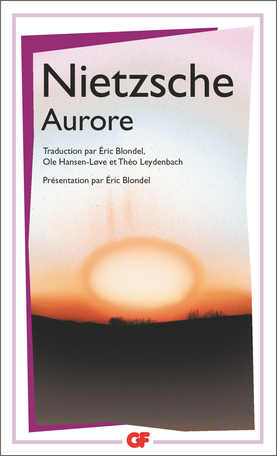
Nietzsche : Daybreak
Author
In Aurore (1881), Nietzsche continued the undertaking of radical criticism of the morals begun in Human, too human, and thus laid the foundations for a philosophical project whose last works, from Par-surpasse to Ecce homo, would be crowned. The philosopher imposes himself here as a worker of darkness, drilling the bottom of civilization to reveal the more or less noble origins of ideals, beliefs and morals, undermi…
- Essay
- Philosophy
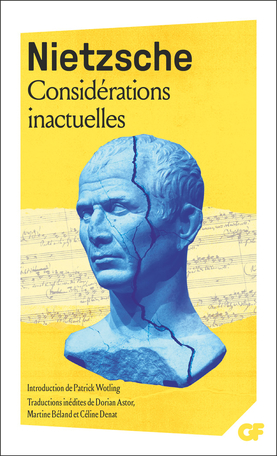
Nietzsche : Untimely Meditations
Author
From this project of a life will result four writings: David Strauss, the confessor of the faith and the writer, The advantages and disadvantages of history for life, Schopenhauer educator and Richard Wagner in Bayreuth, where the philosopher denounces the evil symptoms of German culture, in which Schopenhaer and Wagner are exceptions and offer counter-models. At the beginning of the 1870s, young Nietzsche envisaged…
- Essay
- Philosophy
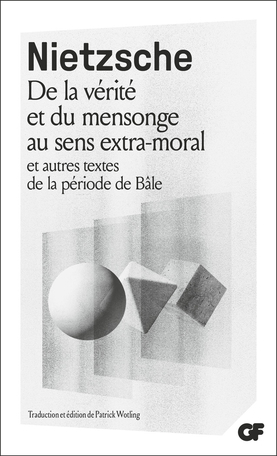
Nietzsche : On Truth and Lies in a Nonmoral Sense
Author
In parallel with the writing of his first book, The Birth of Tragedy, Nietzsche is investigating a second problem: the status of the true. The text he then wrote, From Truth and Lie in the Extra-Moral sense, leads to the most radical intellectual upheaval ever developed in philosophy: the questioning of the idea of objective truth, and the identification of illusion as the very condition of life. It is therefore the…
- Essay
- Philosophy
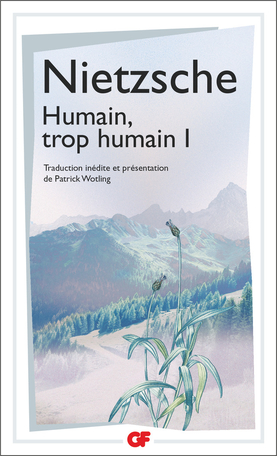
Nietzsche : Human, All Too Human
Author
When it was published in 1878, Human, too human, left readers perplexed: we do not recognize the author of The Birth of Tragedy. Yet, the break between the two works is not as radical as we wanted to think. Rather, it is a profound and decisive self-assertion movement that manifests itself in this new book. Freed from his past influences, Nietzsche reinvests his questions on a new mode and, in doing so, consolidates…
- Essay
- Philosophy
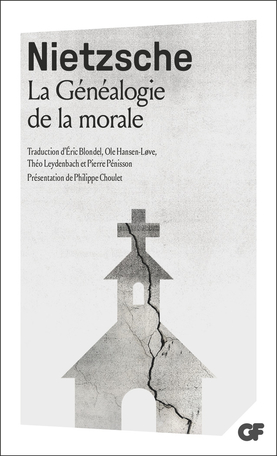
Nietzsche : On the Genealogy of Morality
Author
"How much blood and horror at the bottom of all the good things!" writes Nietzsche. The Genealogy of Morality applies this disacralizing principle: the moral ideal (ascetic) now has a price, payable "in the pound of flesh". "Modern" men, of "progress", have here a mirror for their prohibitions, their impotences and their misunderstandings: the mevery of democratic consensus, the morale of the flock, the sad passions…
- Essay
- Philosophy
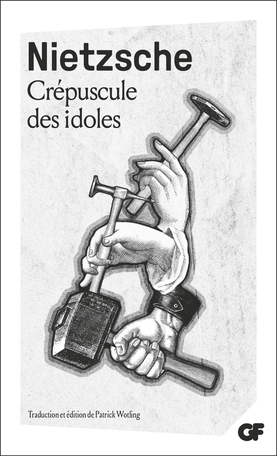
Nietzsche : Twilight of the Idols
Author
"The fastest and most thorough introduction to my philosophy. I do not think it is possible to give more substance in such a small space." Nietzsche thus presents the Twilight of Idols. Written in 1888, when the first testimonies of international recognition appear, this book is designed to offer the most effective way of access to the understanding of its main "philosophical heterodoxys" and the originality of its…
- Essay
- Philosophy

Nietzsche : The Gay Science
Author
To question the fanaticism of the truth that governs philosophy, to recognize life alone as the source of all value, independence for the supreme virtue of the philosopher, and to seek an unprecedented reconciliation of art and science: this is the meaning of gay knowledge for Nietzsche. Published in 1882, this book is republished and expanded in 1887.It implements the main themes of Nietzsche's thinking, including …
- Philosophy

Nietzsche : The Philosopher's Book
Author
"No one now knows what a good book looks like," Nietzsche writes in The Book of the Philosopher. From this aborted project, a vast exposition of the relations of philosophy to art, science and civilization, there are studies whose fragmentary character does not shock the spirit of Nietzschean l'élan. Historical Milestones faced with the mirror of interpretation and program for the philosophy of tomorrow marry in a o…
- Essay
- Philosophy
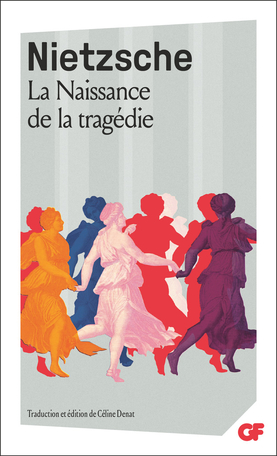
Nietzsche : The Birth of Tragedy
Author
Published in 1872, The Birth of Tragedy is the birth certificate of a philosopher convinced that only confrontation with what is foreign to us gives us access to ourselves. By questioning the genesis of the ancient tragedy from the impulses of the Apollolinian and the Dionysiac, Nietzsche sheds light on the sense of pessimism inherent in presocratic Greece. This "pessimism of force", lucid as to the painful nature o…
- Essay
- Philosophy
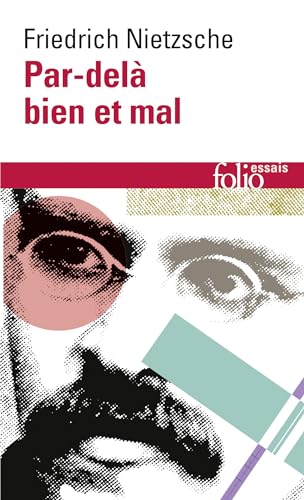
Nietzsche : Beyond Good and Evil
Author
"Perhaps the time is very near when we will see that the cornerstone of the sublime and unconditioned buildings that dogmatic philosophers were no longer to raise was at the bottom only popular superstition coming from an immemorial time (like the superstition of the soul which, becoming superstition to the subject and to the self, continues to this day (i) the creation of wrongs, (ii) any puncture of words, perhaps…
- Essay
- Philosophy
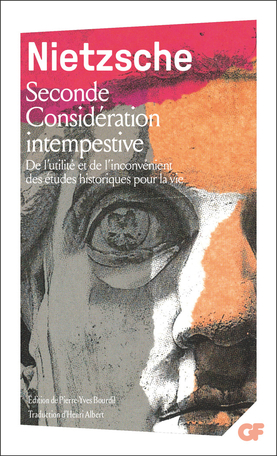
Nietzsche : Second Untimely Meditation
Author
Nietzsche's Second Untimely Consideration is a violent polemic address against the society of his time, where he sees an era and culture dedicated to "historical illness." "We live in an era in danger of death for the major reason that it idolaters history. To get rid of this cult is to regain the pressing demand of life and to give it right, is to plead again for an artistic conception of life. Analysing the histor…
- Essay
- Philosophy
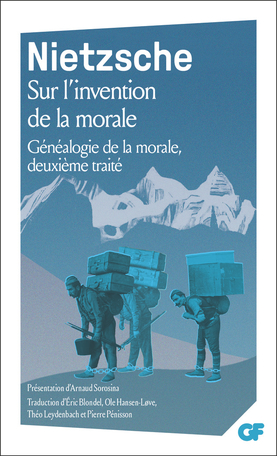
Nietzsche : On the Invention of Morality
Author
The "good", the "bad": these "values", which influence our thoughts, our judgments and our actions, seem obvious to us, even natural. Wrongly, Nietzsche tells us. These are in fact habits that have been instilled in us, since ancient times, by the most cruel punishments. Worse: far from being a mark of evolved humanity, they are the symptom of a civilization sick of its morals. In Nietzsche's eyes, the real culprit …
- Essay
- Philosophy
Information may change.