How can we be certain that we know the truth when our senses, reasoning, and beliefs may deceive us? In Meditations on First Philosophy, René Descartes seeks to establish solid foundations for knowledge by subjecting his former certainties to methodical doubt. He examines the reasons for questioning sensory perceptions and received opinions until he discovers a first truth that cannot be denied: the existence of the person who thinks. This certainty, at the heart of the famous cogito, becomes the starting point for reconstructing knowledge. Across six successive meditations, Descartes continues his investigation into the nature of the mind, the existence of God, the criteria of truth, and the reality of the material world. The work thus presents the foundations of his metaphysics and explores the conditions that make knowledge genuinely certain.
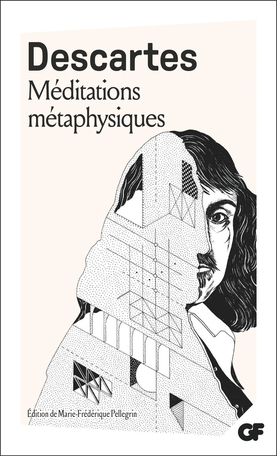
Descartes: Meditations on First Philosophy
Meditations on First Philosophy
- Larousse Publisher
- PUF Publisher
- Flammarion Publisher
- Hachette Livre Publisher
- Nathan Publisher
- René Descartes Author
When everything can be doubted, what remains absolutely certain?
Details
- Type
- Book
- Original title
- Meditations on First Philosophy
- Genres
- Philosophy
- ISBN
- 9782035912534
Synopsis
Descartes: Meditations on First Philosophy
Glossary terms: Argument, Belief, Book, Cartesian dualism, Certainty, Conclusion, Difficulty, Discourse, Essence, Existence, Exterior / EXT., Hypothesis, Knowledge, Leading tone, Metaphysics, Methodical doubt, Objection, Perception, Philosophy, Proof, Proposition, Reflection, Stakes, Story, Subject matter, Title, Treatise, Understanding, Verse line, Work
Overview
Overview
In Meditations on First Philosophy, René Descartes undertakes to reconstruct the foundations of knowledge by searching for truths that cannot be called into question. The work adopts a distinctive form: an intellectual journey narrated in the first person, inviting readers to follow each stage of the reasoning. Organized into six successive meditations, it does not merely present philosophical conclusions but seeks to demonstrate how the mind can progress from doubt to certainty. This approach constitutes one of the principal developments of Cartesian metaphysics.
The First Meditation establishes the reasons for doubting received knowledge. Descartes observes that the senses can sometimes deceive us and that nothing immediately guarantees a distinction between certain experiences of waking life and those of dreams. He extends this questioning to the hypothesis of an evil demon, a fictional being capable of deceiving him even about his most apparently obvious judgments. This deliberate and radical doubt does not express a desire to abandon truth permanently. Its purpose is to set aside insufficiently justified beliefs in order to discover a certainty capable of withstanding every objection.
The Second Meditation leads to the discovery of the cogito, the first truth that escapes doubt. Even if all his perceptions were illusions and a powerful being were attempting to deceive him, Descartes could not deny his own existence at the moment he thinks. The proposition "I am, I exist" is therefore necessarily true whenever he conceives it. This certainty allows him to identify himself as a thinking thing, capable of doubting, understanding, willing, and imagining. Through the famous example of a piece of wax, whose sensory properties change without preventing us from recognizing the same object, Descartes also emphasizes that knowledge of bodies depends on the judgment of the understanding rather than on the senses alone.
The Third and Fourth Meditations examine the conditions of truth and the causes of error. Descartes first attempts to establish the existence of God from the idea of an infinite and perfect being. In his argument, divine perfection implies that God cannot be a deceiver, which helps guarantee the truth of what the mind perceives clearly and distinctly. He then investigates the origin of human error: while our capacity for understanding is limited, our will can extend its judgments beyond what we adequately comprehend. Error therefore arises when we affirm or deny something without possessing clear knowledge of it.
The Fifth Meditation develops the investigation into the essences of material things and the existence of God. Descartes examines mathematical properties that can be known independently of whether the objects possessing them actually exist. He also presents another argument for God's existence, based on the idea of a supremely perfect being. The Sixth Meditation then addresses the existence of the material world and the real distinction between mind and body. Descartes maintains that the mind, whose nature consists in thinking, is distinct from the body, which is characterized by extension. Nevertheless, he recognizes their intimate union in human experience, particularly through sensations and bodily needs.
Taken together, the Meditations develop a philosophical progression from doubt to the reconstruction of knowledge. The search for certainty does not end with the discovery of the thinking subject: it leads to an examination of the guarantees of truth, the nature of the mind, and the conditions under which the existence of the external world can be established. Descartes also submits his arguments to discussion by various scholars and philosophers through the Objections and Replies associated with the work. These exchanges help clarify both the implications of his approach and the difficulties raised by his conception of knowledge.
Key Takeaways
Methodical doubt makes it possible to search for certain foundations. Descartes decides to question temporarily everything that might be false, including sensory perceptions and some apparently self-evident intellectual judgments. This approach does not aim to prove that all knowledge is impossible, but to identify truths sufficiently secure to serve as a starting point for philosophy.
The cogito constitutes the first certainty. A person who doubts cannot deny their own existence at the moment they are thinking. This discovery allows Descartes to affirm the existence of the thinking subject independently of any knowledge of the external world. It also establishes a distinction between immediate knowledge of the mind and knowledge of material objects.
Clarity and distinctness become criteria of truth. Descartes seeks to demonstrate that ideas properly grasped by the understanding can provide certain knowledge. Within his system, proving the existence of a perfect and non-deceiving God plays an essential role in guaranteeing the reliability of these intellectual perceptions. Error arises particularly when the will makes judgments that exceed what the understanding clearly comprehends.
Mind and body are conceived as two distinct realities. The mind is defined by thought, while the body belongs to the realm of extended things. This distinction establishes Cartesian dualism while raising the question of how mind and body are united in human experience. Sensations show, in particular, that human beings do not relate to their bodies merely as external objects.
The six meditations form a progressive argument. Each meditation develops a difficulty left unresolved by the preceding ones. Doubt, the discovery of the thinking subject, the existence of God, the explanation of error, and the recognition of the material world all contribute to the same undertaking: establishing the conditions of genuinely certain knowledge.
Conclusion
With Meditations on First Philosophy, René Descartes develops a philosophical approach grounded in the radical examination of beliefs and the search for indubitable principles. The discovery of the thinking subject, the analysis of the criteria of truth, and the distinction between mind and body constitute essential stages in a reflection intended to reconstruct the foundations of knowledge.
The work occupies a major place in the history of modern philosophy. It transforms questions concerning knowledge, consciousness, and reality while generating debates about proofs of God's existence, the relationship between thought and matter, and the validity of Cartesian arguments. Its structure as a series of meditations makes the pursuit of truth an intellectual experience that readers are invited to undertake for themselves.
Good to Know
- Meditations on First Philosophy was originally published in Latin in 1641, under the title Meditationes de prima philosophia. A French translation, produced by the Duke of Luynes and reviewed by Descartes, appeared in 1647.
- The work consists of six meditations, addressing doubt, the nature of the human mind, the existence of God, truth and falsity, the essence of material things, and the distinction between mind and body.
- The statement "I think, therefore I am" appears notably in Discourse on the Method. In the Second Meditation, Descartes expresses his first certainty more directly through the proposition "I am, I exist" (Ego sum, ego existo).
- The evil demon is a philosophical hypothesis used to push doubt to its most radical extent. It does not constitute a claim by Descartes that such a deceptive being actually exists.
- The Objections and Replies accompanied the early editions of the treatise. Thinkers such as Thomas Hobbes, Antoine Arnauld, and Pierre Gassendi participated in these discussions by subjecting Descartes' arguments to criticism.
- The work has appeared in numerous French editions, including those published by Larousse, PUF, Flammarion, Hachette Livre, and Nathan. Some contain only the six meditations, while others also include objections, replies, and philosophical commentaries.
Link graph
Open in the full graphLoading the graph…
Only the strongest links are shown.