What values guided the conduct of the samurai, and how did their legacy shape Japanese culture? In The Samurai Code, Inazō Nitobe presents bushidō, the 'way of the warrior,' as a set of moral principles grounded in justice, courage, benevolence, politeness, sincerity, honor, and loyalty. Through a reflection on the history of Japanese warriors, their education, and their traditions, he examines the ethical demands that governed their behavior, both in combat and in everyday life. The author compares these values with Western chivalric traditions and explores their roots in Confucianism, Buddhism, and Shinto. He also addresses self-control, attitudes toward death, the sense of duty, and the importance of family. Written to introduce Japanese moral thought to an international readership, this essay offers an interpretation of bushidō and its influence on Japan's cultural identity.
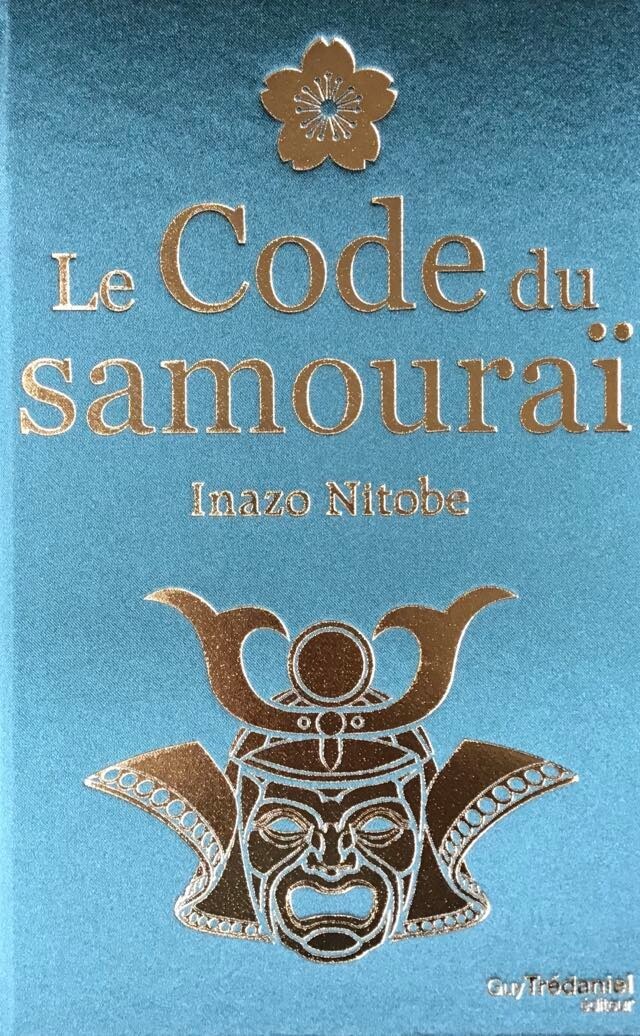
Inazō Nitobe: The Samurai Code
- Synchronique éditions Publisher
- Inazō Nitobe Author
Beyond the sword, what values defined a samurai's honor?
Details
- Type
- Book
- Original language
- English
- Genres
- Philosophy
- ISBN
- 9782382390368
- Information verified on
- October 14, 2026
Synopsis
Inazō Nitobe: The Samurai Code
Glossary terms: Author, Book, Consciousness, Description, Dimension, Ensemble, Essay, Ethics, Hardcover, Inheritance, Inheritance, Interpretation, Introduction, Martial arts, Presentation, Publisher, Reflection, Reputation, Responsibility, Samurai (侍), Set, Set, Simile, Stamina, Story, Symbol, Text, Title, Work
Overview
Overview
In The Samurai Code, Inazō Nitobe sets out to explain the moral principles that shaped the ideal of the Japanese warrior. Originally published in English under the title Bushido: The Soul of Japan, this essay addresses a Western audience to whom the author wishes to introduce an ethical tradition rooted in Japanese history. Nitobe, himself descended from a samurai family, presents bushidō, literally the "way of the warrior," as a set of values transmitted through education, customs, and social practices rather than as a single, formally established legal code. The work therefore examines how an ideal of conduct developed within the warrior class and came to exert an influence beyond its original social environment.
To explain the development of this moral tradition, Nitobe identifies several religious and philosophical influences. According to his interpretation, Buddhism contributes emotional discipline, acceptance of adversity, and detachment in the face of death. Shinto fosters respect for ancestors, a sense of belonging, and fidelity to commitments. Confucianism provides a framework for understanding duty, hierarchical relationships, and virtuous conduct. The author therefore does not present bushidō as a doctrine originating from a single school of thought, but as the result of diverse influences gradually incorporated into the culture of Japanese warriors.
At the heart of the work are seven fundamental virtues: justice, courage, benevolence, politeness, sincerity, honor, and loyalty. Justice, or rectitude, refers to the ability to choose and accomplish what is morally right. Courage is not limited to physical fearlessness: it must be guided by discernment and placed in the service of a legitimate cause. Benevolence tempers strength and reminds warriors of their responsibilities toward others. Politeness expresses respect and consideration, while sincerity establishes the value of one's word. Honor concerns personal dignity and moral reputation, whereas loyalty defines the duties owed to those to whom the samurai is bound by commitment.
This conception of virtue is accompanied by a reflection on samurai education and discipline. Nitobe describes an ideal of training that combines martial skills with self-control, endurance, and mastery of emotions. Courage must be accompanied by restraint, and strength by an awareness of responsibility. The sword consequently assumes a significance beyond its function as a weapon: it becomes a symbol of the warrior's status and obligations. The author also examines practices of ritual suicide and the redress of wrongdoing, particularly seppuku, which he places within historical conceptions of honor and responsibility. These customs illustrate a moral framework in which reputation and fidelity to duty could be regarded as more important than the preservation of life.
Throughout the book, Nitobe draws comparisons between the samurai and European chivalry. He uses Western historical, literary, and philosophical references to make Japanese values understandable to his readers. This comparative approach also reflects his position as an intellectual educated in several cultural traditions and committed to encouraging mutual understanding. The essay nevertheless belongs to the context of modern Japan, at a time when the former samurai class had disappeared as a distinct social order. Bushidō emerges as a moral legacy whose continued relevance and cultural significance the author seeks to explain.
This perspective also requires distinguishing Nitobe's ideal from the historical diversity of the samurai. The behavior and values of Japanese warriors varied across periods, regions, and intellectual traditions. The book should therefore not be understood as a universally enforced set of rules followed by every samurai, but as a philosophical and cultural interpretation of warrior ethics. In this respect, it occupies an important place in the international dissemination of bushidō and in the modern understanding of the concept.
Key Takeaways
Bushidō is presented as a moral tradition rather than a single written code. Nitobe describes a set of principles transmitted through the education and customs of the warrior class. Ideally, samurai conduct combined military competence with a commitment to rectitude and personal responsibility.
Seven virtues structure the samurai ideal. Justice, courage, benevolence, politeness, sincerity, honor, and loyalty form the main foundations of the analysis. These qualities are interconnected: courage must be guided by justice, while strength should be tempered by benevolence and self-control.
Bushidō draws upon several spiritual and philosophical traditions. Nitobe emphasizes the contributions of Buddhism, Shinto, and Confucianism. Their influence helps explain the warrior's relationship with death, duty, social relationships, and inner discipline.
Honor and loyalty occupy a central place in the warrior's conduct. Honor concerns dignity and reputation, while loyalty defines obligations toward a lord or authority. These principles can create tensions between fidelity to commitments, personal conscience, and the preservation of life.
Samurai education extends beyond the mastery of weapons. Discipline, restraint, endurance, and the ability to face adversity are essential dimensions of the ideal described by Nitobe. The sword thus represents a moral responsibility as much as an instrument of combat.
The work offers a modern interpretation of Japan's warrior heritage. By comparing bushidō with Western chivalry, Nitobe seeks to make this tradition understandable beyond Japan. His analysis nevertheless reflects a particular historical context and should not be confused with a comprehensive account of all historical samurai practices.
Conclusion
With The Samurai Code, Inazō Nitobe presents bushidō as an ethical tradition in which honor, justice, courage, and loyalty guide the warrior's existence. By examining its philosophical origins, moral demands, and expressions in social life, he shows how an ideal associated with the samurai class acquired a broader cultural significance.
The work stands at the intersection of Japanese history, moral philosophy, and comparative cultural studies. It reflects both a desire to introduce Japanese values to the West and an examination of how those values were transmitted within a changing society. Its conception of bushidō remains that of a particular author and historical period, distinct from the diversity of actual warrior traditions.
Good to Know
- Inazō Nitobe (1862–1933) was a Japanese intellectual, academic, and diplomat descended from a samurai family. He notably served as Under-Secretary-General of the League of Nations, contributing to international intellectual and diplomatic exchanges.
- The text was written directly in English and published under the title Bushido: The Soul of Japan, around the turn of the twentieth century. Nitobe notably sought to explain the foundations of Japanese moral education to Western readers.
- Synchronique éditions publishes the work under the expanded French title Bushidō : Le Code du samouraï – L'Âme du Japon. The publisher offers several presentations of the text, including hardcover editions and more compact formats.
- The seven virtues emphasized by Nitobe are justice, courage, benevolence, politeness, sincerity, honor, and loyalty. The book also contains discussions of education, self-control, the sword, and practices associated with honor.
- The Japanese term bushidō (武士道) combines bushi, meaning warrior, and dō, meaning way or path. Its usage and interpretations have evolved throughout history: it does not designate a uniform set of regulations followed identically by every samurai.
- Nitobe was a Christian, and his comparative approach notably reflects his familiarity with Western intellectual traditions. This background helps explain certain parallels drawn between samurai ethics, chivalric values, and European conceptions of virtue.
- Historians today distinguish between the ethical traditions of Japanese warriors and their reinterpretation in the modern era. The historical significance of Nitobe's book remains a subject of debate: it is both an account of values found in earlier texts and a testimony to the modern representation of bushidō.
- The deluxe edition published by Synchronique éditions includes an introduction and notes by Alexander Bennett, a historian specializing in Japanese martial arts, as well as an illustrated section intended to place the text within its cultural context.
Link graph
Open in the full graphLoading the graph…
Only the strongest links are shown.