How can we become virtuous individuals and build a society founded on respect and harmony? In The Analects, the teachings attributed to Confucius explore the principles that should guide human conduct, social relationships, and the exercise of political authority. Through conversations with his disciples, observations, and brief reflections, the Chinese philosopher emphasizes benevolence, righteousness, learning, and respect for ritual propriety. He presents moral development as a continuous effort to cultivate personal qualities and act with discernment toward others. His thought thus connects individual education with harmony within the family and society, making exemplary conduct and virtue the foundations of a fulfilled life and just government.
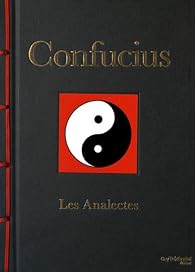
Confucius: The Analects
- Pocket Publisher
- Confucius Author
How can we become better people and contribute, through our actions, to a more just and harmonious society?
Details
- Type
- Book
- Original language
- Chinese
- Genres
- Philosophy
- ISBN
- 9782813213730
- Information verified on
- 14 octobre 2026
Synopsis
Confucius: The Analects
Overview
Overview
The Analects, also known as the Conversations of Confucius, brings together teachings, conversations, and reflections attributed to the Chinese philosopher and transmitted by his disciples and their successors. Rather than taking the form of a systematic philosophical treatise, the work consists of brief sayings, dialogues, and observations concerning human conduct, education, politics, and social relationships. These exchanges reveal a conception of philosophy in which the pursuit of wisdom remains closely connected to the way people live.
At the center of this thought stands the virtue of humaneness, expressed by the Chinese term ren (仁). Often translated as "benevolence" or "humaneness," this concept describes a moral disposition expressed through consideration for others, generosity, sincerity, and respect. For Confucius, becoming virtuous does not simply mean understanding abstract principles, but putting them into practice in ordinary situations. The quality of human relationships therefore depends on each person's ability to recognize their responsibilities and exercise sound judgment in their behavior.
This moral requirement is accompanied by a reflection on rituals and standards of conduct, expressed by the term li (禮). Rituals concern not only religious ceremonies or official traditions but also the customs, attitudes, and expressions of respect that organize collective life. Confucius considers them essential for developing self-control and expressing moral values through actions. Their practice must nevertheless retain an inner significance, since outward observance of rules is not sufficient to make someone virtuous.
Education and personal cultivation also occupy a fundamental place. Confucius presents learning as a continuous process combining the study of ancient teachings, reflection, and experience. This education aims to develop judgment, recognize mistakes, and encourage moral progress. Its ideal is embodied in the figure of the junzi (君子), often translated as "exemplary person" or "gentleman." Rather than defining excellence solely through birth or social rank, this ideal places particular importance on qualities developed through effort, integrity, and conduct.
The Analects also attach considerable importance to family and social relationships. Respect for parents, or filial piety (xiao), constitutes one of the foundations of moral education. This concern for the family extends to relationships between friends, teachers, disciples, rulers, and subjects. Confucius emphasizes reciprocal obligations and the need for individuals to act according to the responsibilities associated with their position. Social harmony thus emerges from just conduct rather than mere submission to authority.
Finally, the work develops a conception of government founded on virtue and exemplary leadership. Confucius maintains that rulers should inspire trust through their behavior, sense of justice, and concern for the people. Laws and punishments alone are insufficient to establish a morally balanced society: government must also rely on education, respect for commitments, and the character of those exercising authority. This reflection directly connects personal improvement with political responsibility, making virtue an essential condition of social order.
Key Takeaways
One of the fundamental concepts of The Analects is ren, generally translated as "humaneness" or "benevolence." It describes a moral disposition that encourages individuals to treat others with consideration, respect, and sincerity. This virtue is not merely a feeling: it must be expressed through behavior, decisions, and everyday relationships.
Li, or respect for rituals and proper conduct, plays an essential role in moral education. Standards of behavior help express respect, control desires, and preserve harmony in human relationships. Confucius nevertheless emphasizes that outward practices must be accompanied by genuine intention if they are to possess true moral value.
The figure of the junzi, the exemplary person, represents the ideal toward which philosophical education strives. This individual's qualities rest on integrity, self-control, faithfulness to commitments, and the pursuit of what is right, expressed particularly by the term yi (義). A person's worth therefore depends more on character and actions than on privilege or wealth.
The Analects also emphasize learning and personal self-examination. Studying, reflecting, acknowledging mistakes, and observing the qualities of others all contribute to moral progress. Knowledge is not simply an accumulation of information: it should help develop judgment and transform conduct.
Finally, the virtue of the ruler constitutes a foundation of good government. Confucius places particular importance on exemplary conduct, trust, and respect for the people. Political authority therefore depends not only on coercion but also on the ability of those who govern to inspire just behavior.
Conclusion
With The Analects, the teachings of Confucius present a conception of wisdom grounded in moral cultivation, the quality of human relationships, and the responsible exercise of authority. Benevolence, respect for rituals, learning, and the pursuit of righteousness appear as complementary dimensions of a single endeavor: improving one's conduct in order to contribute to the harmony of society.
The work occupies a fundamental place in the history of Chinese philosophy and the development of the Confucian tradition. Its composition of dialogues and sayings conveys a philosophy attentive to concrete situations, in which wisdom is measured not only by acquired knowledge but also by the way that knowledge guides actions and relationships with others.
Good to Know
- The Analects are known in Chinese as Lúnyǔ (論語 / 论语), a title commonly understood as referring to collected sayings or discussions. The work is also published in English as The Sayings of Confucius.
- Confucius did not personally write the work in its surviving form. The text emerged through the gradual compilation of traditions, conversations, and teachings transmitted by his disciples and their successors.
- The traditional text is divided into twenty books, containing passages of varying lengths. It does not follow a strictly linear philosophical argument and repeatedly returns to important moral questions.
- The concepts of ren (humaneness), li (ritual propriety), yi (righteousness), xiao (filial piety), and junzi (exemplary person) are essential for understanding the philosophy presented in the work.
- The Analects form part of the Four Books of the Confucian tradition, alongside The Great Learning, The Doctrine of the Mean, and Mencius. This collection played a major role in classical Chinese education.
- Translations can differ considerably, particularly because Chinese philosophical concepts do not always have exact English equivalents. Choices between terms such as "humaneness," "benevolence," "ritual propriety," or "gentleman" can therefore influence the interpretation of individual passages.