














Overview
Founded in 1986 by the five Guillemot brothers, Ubisoft Entertainment is a French video game publisher that has also become one of the industry’s largest international development networks. The company was created in Brittany around software and game publishing and distribution before gradually building its own studios and properties.
This dual origin still largely explains how it operates. Ubisoft is not simply a publisher responsible for financing and marketing productions from external teams. The group owns numerous studios, directly develops a large part of its catalogue, coordinates productions across several locations and simultaneously handles their publishing and distribution.
It is therefore necessary to distinguish Ubisoft Entertainment as a company and publisher from the individual studios that make its games. Ubisoft Montréal, Ubisoft Québec, Ubisoft Paris, Massive Entertainment, Ubisoft Montpellier, Ubisoft Toronto and Ubisoft Mainz have their own teams and responsibilities. A work published by Ubisoft can be led by one of these studios while involving several other teams in the network through co-development.
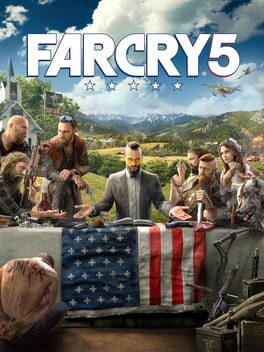
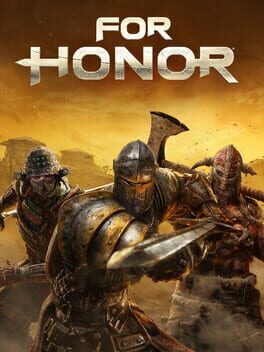
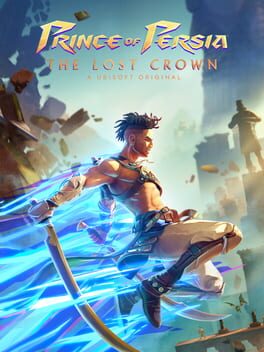
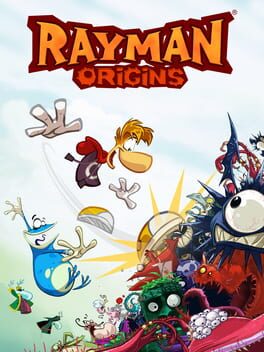
This organization has allowed the group to build or develop a particularly broad catalogue. Rayman was its first major international success in the 1990s. Acquisitions and partnerships later added series such as Tom Clancy’s Rainbow Six, Ghost Recon, Prince of Persia, The Settlers and Might & Magic. Internal creation simultaneously produced Assassin’s Creed, Just Dance, Watch Dogs, The Crew, For Honor, Rabbids and The Division, while Far Cry became one of its main franchises after its first installment.
Over the years, Ubisoft developed a production method based on collaboration between studios. Major projects no longer necessarily correspond to the isolated work of a single team: one studio can lead the design while others handle certain regions of the game, systems, technologies, content or adaptations.
This organization particularly accompanies the rise of open worlds, which became a major component of the catalogue with Assassin’s Creed, Far Cry, Watch Dogs, The Division and certain licensed productions. Ubisoft also develops experiences designed to evolve over time, notably with Rainbow Six Siege, For Honor, The Crew and its various online activities.
In 2025 and 2026, however, the group undertakes one of the most important organizational transformations in its history. Vantage Studios becomes a subsidiary dedicated to Assassin’s Creed, Far Cry and Rainbow Six, while Ubisoft gradually restructures the rest of its portfolio around five specialized Creative Houses and a Creative Network providing shared development capabilities.
This organization changes the way franchises are managed but does not replace Ubisoft Entertainment. The group remains the parent entity, defines overall strategy, controls Vantage Studios and retains a much broader collection of brands, studios, technologies and publishing activities.
History
1986: beginning with publishing and distribution
Ubisoft was founded on March 28, 1986 by the five brothers Christian, Claude, Gérard, Michel and Yves Guillemot.
The family was then working in Brittany and identified the rapid growth of the software and video game market as a new opportunity.
The company began primarily as a publishing and distribution business.
It notably imported and marketed productions from other companies in France while quickly beginning to finance and develop its own games.
This commercial activity made it possible to establish its first relationships with distributors, manufacturers and developers while gradually financing a more creative ambition.
Zombi, developed by a small internal team, was among the company’s early productions.
In 1988, Yves Guillemot became Ubisoft’s chief executive officer.
The emerging model already combined two dimensions that would remain linked: having an international marketing capability and using this infrastructure to progressively support more internal creation.
The 1990s: Rayman and the construction of an international network
At the beginning of the 1990s, Ubisoft accelerated its expansion.
Distribution subsidiaries were established in several important markets, notably the United Kingdom, Germany and the United States.
At the same time, the group invested more heavily in its own creative teams.
Ubisoft Paris, opened in 1992, became its first major development studio.
Other locations gradually followed across Europe and then the rest of the world.
The production that truly transformed the company’s creative image was Rayman.
Created at Ubisoft Montpellier and launched in 1995, the game became the first major international success developed by Ubisoft.
The character allowed the group to demonstrate that it could create a recognizable property, develop it across several platforms and evolve it beyond a single production.
This success came as Ubisoft further accelerated its international expansion.
In 1996, the company was listed on the Paris Stock Exchange.
The capital and growth that followed facilitated the opening of new studios and the construction of a broader development network.
Ubisoft Montréal, created in 1997, would notably become one of the most important centers in this system.
Ubisoft thus gradually evolved from a French publisher with internal teams into an international organization capable of producing several games simultaneously for different markets.
2000-2001: acquisitions broaden the catalogue
Growth did not rely solely on opening new studios.
Ubisoft also began acquiring companies and properties capable of broadening its catalogue.
In 2000, the group acquired Red Storm Entertainment, an American studio co-founded by writer Tom Clancy and already known for Tom Clancy’s Rainbow Six.
The integration of Red Storm gave Ubisoft an important presence in tactical games and helped establish productions carrying the Tom Clancy name permanently within its catalogue.
Ghost Recon appeared in 2001 and developed this direction toward squad-based military operations.
During the same period, Ubisoft acquired Blue Byte, the German studio behind The Settlers and Battle Isle.
The acquisition of The Learning Company’s games division simultaneously brought rights linked to several properties, including Prince of Persia, Chessmaster and Myst.
These operations profoundly changed the scale of the publisher.
Ubisoft no longer had to create every new property from scratch.
The group could now evolve already established series by connecting them with its studio network.
Splinter Cell and Prince of Persia: moving properties between studios
At the beginning of the 2000s, Ubisoft began demonstrating what its international organization could bring to its franchises.
Tom Clancy’s Splinter Cell, developed mainly by Ubisoft Montréal and released in 2002, extended the Tom Clancy universe into stealth.
The project linked a shared publishing property with the expertise of a specific studio.
A year later, Prince of Persia: The Sands of Time reinvented an older property through a production also developed in Montréal.
These games helped establish a method that would become fundamental.
Ubisoft can own or operate a brand at group level, while its creative evolution can be entrusted to a particular team before other studios contribute to sequels, adaptations or new installments.
The publisher therefore began to function as a network in which properties could move between several production centers.
Far Cry and Assassin’s Creed: open worlds become central
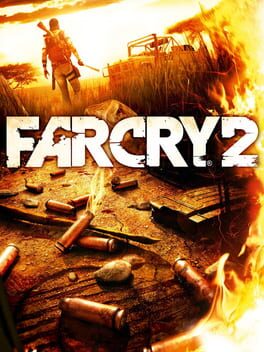
In 2004, Ubisoft published the first Far Cry, developed by Crytek.
The franchise was subsequently developed by Ubisoft studios and gradually became one of the pillars of the catalogue.
But the most important transformation came from a project that originally emerged from ideas developed around Prince of Persia.
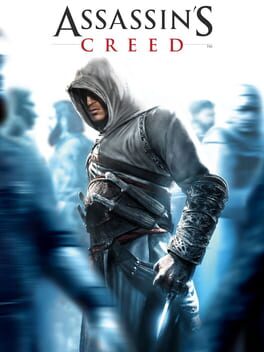
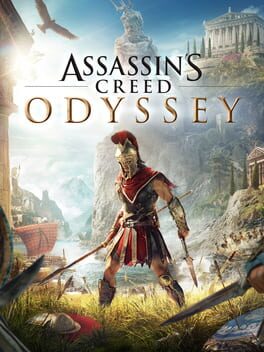
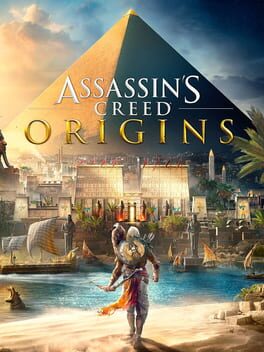
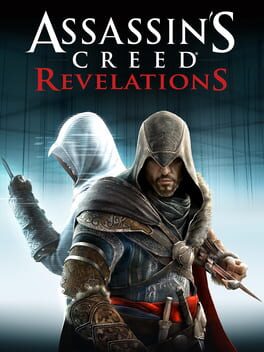
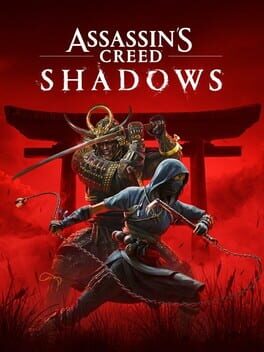
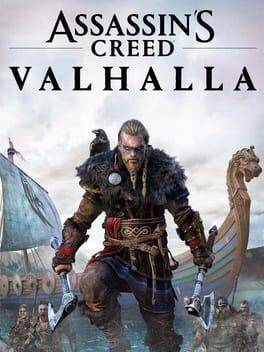
In 2007, Ubisoft released Assassin’s Creed.
Developed mainly by Ubisoft Montréal, the game combined open historical cities, vertical movement, stealth and conflict between Assassins and Templars.
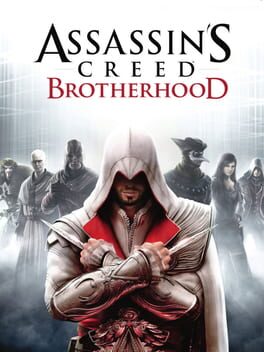
The series quickly became one of the company’s most important properties.
Its development also accelerated the use of the international network.
Several studios began contributing to successive installments, while some teams eventually led their own productions.
This organization made it possible to increase the scale of the worlds, produce content more quickly and maintain a regular presence for the franchise.
Assassin’s Creed therefore strongly contributed to defining Ubisoft’s image as a publisher of large open-world action-adventure games.
Just Dance, Rabbids and an identity broader than action-adventure
Ubisoft’s identity is not limited, however, to open worlds or productions aimed at the traditional AAA audience.
The Rabbids, which appeared in the Rayman universe, gradually developed their own presence.
In 2009, Just Dance achieved major success on Wii.
The concept directly used the console’s motion detection and addressed a much broader audience than series such as Assassin’s Creed or Splinter Cell.
This success highlights an important characteristic of the group: the size of its network allows it to occupy several categories simultaneously.
Ubisoft can publish family games, rhythm games, strategy, racing, tactical action or massive open-world adventures without building its entire identity around a single genre.
The 2010s: new properties and networked production
During the 2010s, Ubisoft continued developing new series.
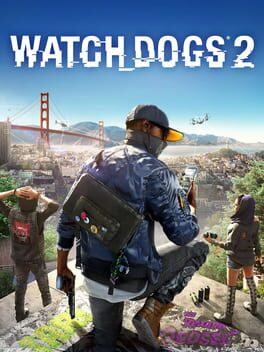
Watch Dogs appeared in 2014 with an open world centered on a connected city and the hacking of its infrastructure.
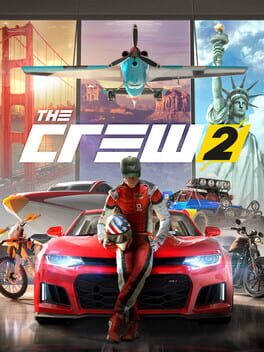
The Crew transferred part of the open-world logic to driving.
The Division combined an urban environment, action, progression and online play.
For Honor built a close-combat system around different warrior cultures.
At the same time, existing franchises continued to evolve.
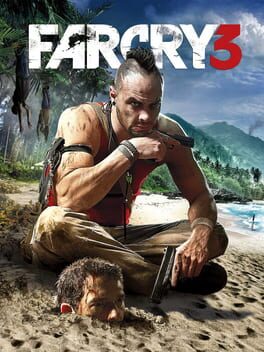
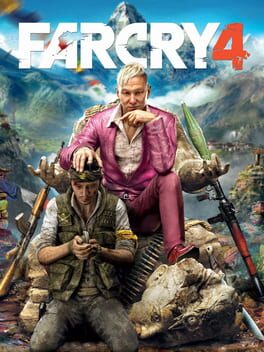
Far Cry developed a succession of large open environments.
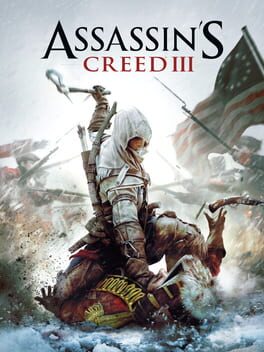
Assassin’s Creed gradually changed its structure until it incorporated more RPG elements.
The multiplication of these projects strengthened co-development between studios.
The credits of a major Ubisoft game could now bring together many teams located in several countries.
A lead studio generally retained direction of the project, but a significant part of production could be distributed across the network.
This structure became one of the main methods used by Ubisoft to build games whose scale, content and technical requirements increased substantially.
Rainbow Six Siege: learning to evolve a game for years
In 2015, Ubisoft released Tom Clancy’s Rainbow Six Siege.
The game gradually became a major example of the company’s transformation toward productions supported over the long term.
Rather than quickly replacing the game with a traditional sequel, Ubisoft developed seasons, operators, maps, balance changes, competitions and successive updates.
This approach transformed the relationship between development and publishing.
Launch no longer necessarily represented the end of the main production cycle.
A team could continue working for many years on the same experience, analyze player behavior and regularly redirect its content.
For Honor, The Crew and other productions also adopted long-term support models.
Ubisoft therefore developed two major skills in parallel: producing adventures mainly centered on a solo experience and operating games capable of maintaining a community over time.
2018: preserving the group’s independence
The second half of the 2010s was also marked by an important question of corporate control.
Vivendi gradually increased its stake in Ubisoft and became its largest external shareholder, raising fears of a takeover of the group.
In March 2018, Ubisoft and Vivendi finally reached an agreement providing for the sale of all shares held by Vivendi.
The operation notably brought Tencent and Ontario Teachers’ Pension Plan into the capital as long-term investors, while Guillemot Brothers SE also strengthened its position.
For Ubisoft, this transaction allowed it to preserve its strategic independence under the control of its historic leadership.
The partnership with Tencent simultaneously opened new possibilities for distributing Ubisoft franchises in China.
More difficult years for the historic model in the 2020s
At the beginning of the 2020s, Ubisoft retained a major catalogue but also faced rising development costs, complex production schedules and an increasingly competitive AAA market.
Several productions experienced delays or particularly long development cycles.
The group began reviewing its portfolio and looking for an organization that would give more responsibility to the teams directly in charge of the franchises.
This period did not eliminate Ubisoft’s major historic principles — internal development, major properties and international collaboration — but it called into question how a network that had become very large should be managed.
The transformation took concrete form in 2025.
2025: creating Vantage Studios with Tencent as a minority partner
In March 2025, Ubisoft announced the creation of a new subsidiary dedicated to three of its main franchises: Assassin’s Creed, Far Cry and Tom Clancy’s Rainbow Six.
Tencent agreed to invest €1.16 billion in it.
The new organization officially became operational under the name Vantage Studios on October 1, 2025.
It brought together teams working on these franchises across several studios, notably Montréal, Québec, Sherbrooke, Saguenay, Barcelona and Sofia.
Vantage is led by Charlie Guillemot and Christophe Derennes.
In November 2025, the investment was finalized.
Tencent obtained a 26.32% economic stake, while Vantage Studios remained exclusively controlled and consolidated by Ubisoft.
The subsidiary was given responsibility for developing and growing Assassin’s Creed, Far Cry and Rainbow Six, with the objective of giving greater autonomy to teams close to these brands.
This creation therefore did not constitute a sale of these three franchises or the disappearance of Ubisoft Entertainment.
It introduced an additional organizational level within the group.
2026: rebuilding Ubisoft around five Creative Houses
In January 2026, Ubisoft announced a much broader transformation of its operating model.
The group decided to progressively organize its creative activities around five Creative Houses.
Vantage Studios forms the first of these entities.
The others bring together different families of brands according to their genres and audiences.
One Creative House notably groups Ghost Recon, Splinter Cell and The Division.
Another brings together Live experiences such as The Crew, For Honor and Riders Republic.
Another group notably includes Anno, Prince of Persia, Rayman, Might & Magic and Beyond Good & Evil.
A final structure focuses more heavily on casual and mobile productions, including Just Dance.
Alongside these entities is a Creative Network made up of studios capable of providing expertise and production capacity to different projects, as well as shared technical and operational services.
The change seeks to move creative, commercial and financial responsibility closer to the teams responsible for each group of franchises.
Ubisoft Entertainment simultaneously retains overall vision, strategy and capital allocation.
Forty years after its creation, the group thus returns to one of its oldest challenges: finding an organization capable of preserving the advantages of an international network while allowing creative teams to make decisions quickly around their own games.
What sets it apart
A publisher that became a network of creators itself
Ubisoft began as a publisher and distributor before gradually building a vast internal development network.
This history explains its particular structure.
A large share of the games it publishes come from companies directly belonging to the group.
The publisher and the developers are nevertheless not interchangeable.
Ubisoft Montréal can lead one project, Ubisoft Québec another, and several additional studios can participate in each of them, while Ubisoft Entertainment retains publishing responsibility at group level.
This ability to make several teams work around the same catalogue has become one of the main foundations of its model.
Co-development as an industrial method
Ubisoft has pushed the principle of distributed development particularly far.
Major projects can bring together teams located in North America, Europe and Asia.
This organization makes it possible to mobilize different specialties and increase production capacity without concentrating all development in a single studio.
It also requires significant coordination.
Creative direction, technology, narrative, level design, animation or the production of certain parts of a world can be distributed across several teams.
The identity of a Ubisoft game therefore often results from the work of a lead studio surrounded by a much broader network.
The creation of the Creative Network in 2026 further formalizes this historic organization.
Building worlds that function as game systems
Open worlds occupy a particularly important place in Ubisoft’s evolution.
Assassin’s Creed, Far Cry, Watch Dogs and various other productions are built around spaces the player can explore relatively freely.
Their interest does not come only from their size.
Ubisoft gradually developed a design language based on navigation, exploration, stealth, side activities, progression systems and interactions between several mechanics within the same environment.
These principles vary significantly from one series to another, but constitute expertise shared by several studios within the group.
This specialization is important enough that Ubisoft still presents open-world adventure experiences as one of the main pillars of its strategy in 2026.
Evolving a franchise across different studios
Ubisoft also has a relatively flexible way of distributing its properties.
A series is not necessarily permanently attached to a single team.
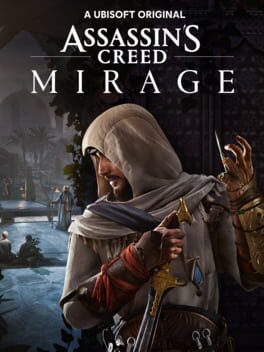
Assassin’s Creed is historically associated with Montréal, but Ubisoft Québec has led several major installments and numerous other studios contribute to the franchise.
Far Cry, Tom Clancy’s and Prince of Persia have also moved between different teams depending on the period and project.
This organization allows a property to benefit from different sensibilities while remaining connected to a shared publishing framework.
It also explains why the distinction between publisher, lead studio and supporting studios remains essential when documenting a Ubisoft work.
Combining solo games with experiences supported over time
Ubisoft has not completely transformed into a games-as-a-service publisher.
A significant part of its catalogue remains based on adventures designed primarily around solo play.
But the group has simultaneously developed strong expertise in experiences supported over several years.
Rainbow Six Siege is its most enduring example.
For Honor, The Crew and several other productions also use updates, seasons, events and additional content to extend their activity.
This coexistence explains Ubisoft’s current strategy, which seeks to maintain both major open-world adventures and Games-as-a-Service experiences capable of building lasting communities.
Reorganizing brands without dismantling the publisher
The creation of Vantage Studios and the Creative Houses could create the impression that Ubisoft is gradually separating itself from its franchises.
The current structure instead corresponds to a decentralization of their management.
Ubisoft Entertainment remains above these entities.
Vantage Studios notably keeps Assassin’s Creed, Far Cry and Rainbow Six within a subsidiary controlled by Ubisoft despite Tencent’s minority investment.
The other Creative Houses also have more direct responsibility for their brands.
This organization therefore seeks to preserve the power of the network — technologies, studios, expertise and shared services — while avoiding every creative decision having to systematically move back through a central structure.
For a group built over forty years through the accumulation of studios, franchises and expertise, this reorganization represents a major evolution of its historic model rather than a complete change of identity.
Good to know
- Ubisoft Entertainment was founded on March 28, 1986 in France by the five brothers Christian, Claude, Gérard, Michel and Yves Guillemot.
- The company began primarily in software and game publishing and distribution, before gradually developing its own creative network.
- Ubisoft Paris, opened in 1992, was the first major development studio created by the group.
- Rayman, launched in 1995 and created at Ubisoft Montpellier, was the first major international success developed by Ubisoft.
- Ubisoft was listed on the Paris Stock Exchange in 1996 and then accelerated the international expansion of its studio network.
- The acquisition of Red Storm Entertainment in 2000 permanently integrated Tom Clancy productions into Ubisoft’s catalogue, while Blue Byte joined the group in 2001.
- Assassin’s Creed, launched in 2007, became one of Ubisoft’s main internally created properties and a central element of its open-world expertise.
- Ubisoft historically combines publishing and internal development, but works should be linked to the studios that actually developed them rather than to the publisher alone.
- Vantage Studios became operational on October 1, 2025 and took responsibility for the development and growth of Assassin’s Creed, Far Cry and Rainbow Six.
- Since November 2025, Tencent has held 26.32% of Vantage Studios, which remains exclusively controlled and consolidated by Ubisoft.
- In 2026, Ubisoft is reorganizing its activities around five Creative Houses, supported by a Creative Network and shared services.
- Ubisoft Entertainment SA remains the group’s parent entity and publisher, responsible for overall vision, strategy and capital allocation despite the increasing decentralization of its franchises.