Presentation
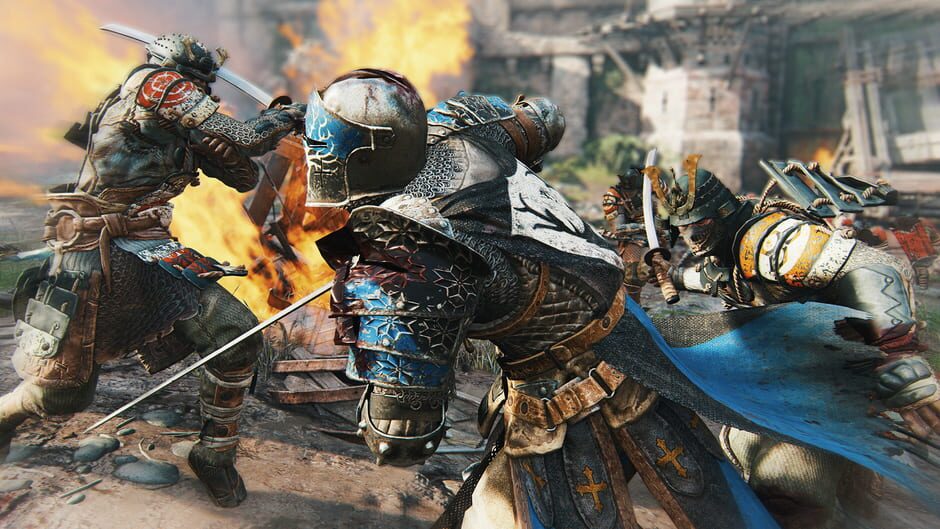
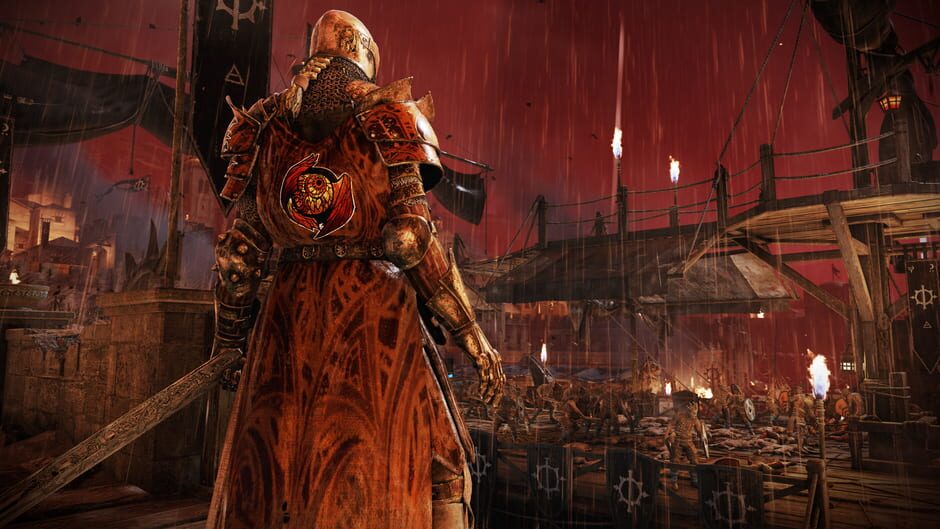
The defining feature of For Honor is its Art of Battle system. When a player locks onto an opponent, combat revolves around three main directions: left, right and top. The guard can be oriented in one of these directions to block a corresponding attack, while strikes themselves can also come from those different sides.
The principle is immediately understandable, but it quickly opens into much greater depth. Attacking does not simply mean choosing a direction. Players must observe the opponent’s guard, vary their timing, use light or heavy attacks, feint, provoke a reaction and then exploit the opening they create.
Parrying reinforces this logic. Responding to an attack at the correct moment can interrupt the opponent’s offense and create an opportunity to counter. Dodges, guard breaks and different properties attached to specific moves gradually expand this dialogue. A duel therefore becomes less a race to deal damage than a constant attempt to understand what the other player intends to do.
This mutual reading lies at the heart of the experience. Two experienced opponents may remain at close range for several moments without truly attacking, each trying to provoke a mistake. A heavy attack can be feinted to trigger an early parry attempt; an overly defensive player can become vulnerable to a guard break; a habit noticed during the first few seconds may be exploited several exchanges later.
Each hero uses these principles differently. Some wield long weapons that control distance, while others favor mobility, pressure, grabs or heavier attacks. Choosing a fighter is therefore not merely an aesthetic preference: it changes the rhythm of the duel and the way the player attempts to gain an advantage.
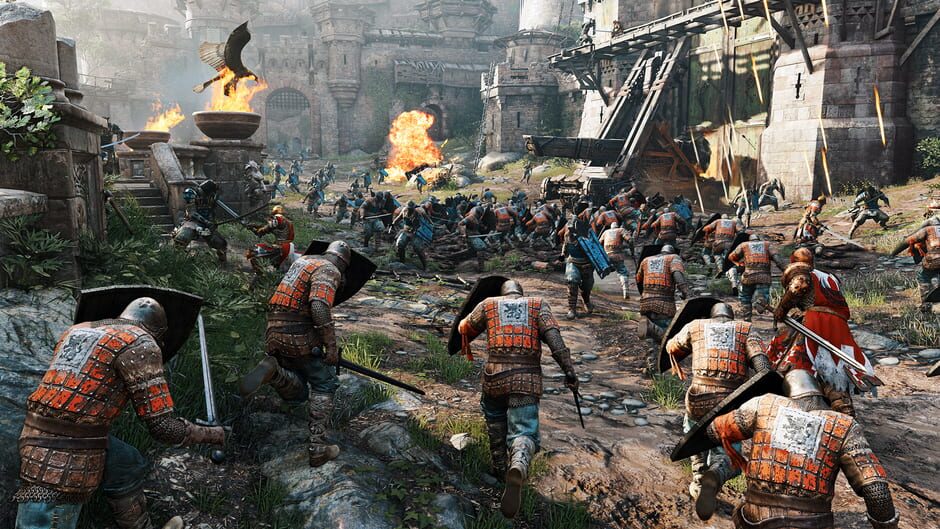
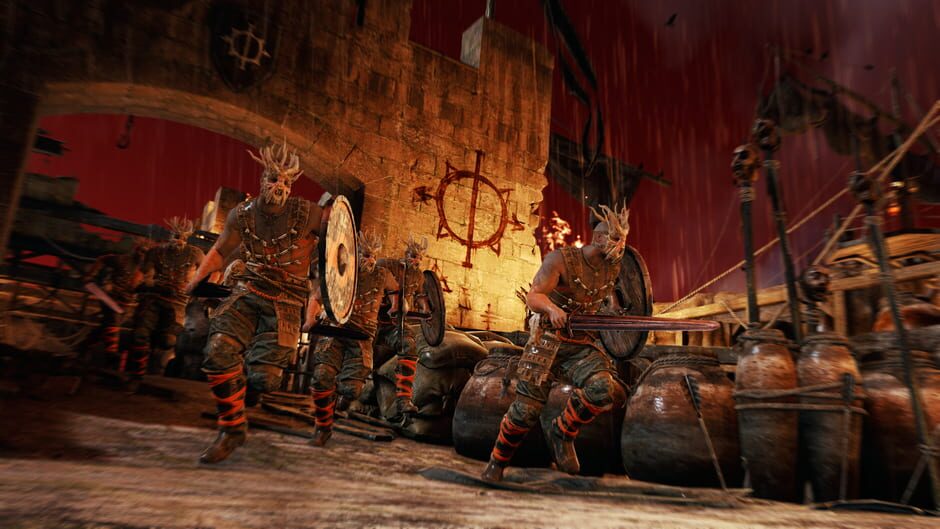
Battles involving several players radically alter this logic. In a duel, all attention can remain focused on a single opponent. In the middle of a team fight, players must monitor several directions, choose their target carefully and avoid being surrounded. A technique that works effectively in one-on-one combat can become dangerous the moment a second enemy intervenes.
The Revenge system partly responds to this pressure. When a fighter is attacked by several opponents, they can temporarily gain the means to resist more effectively and potentially reverse the situation. It does not automatically make a player invincible, but it forces groups to think about how they coordinate their attacks.
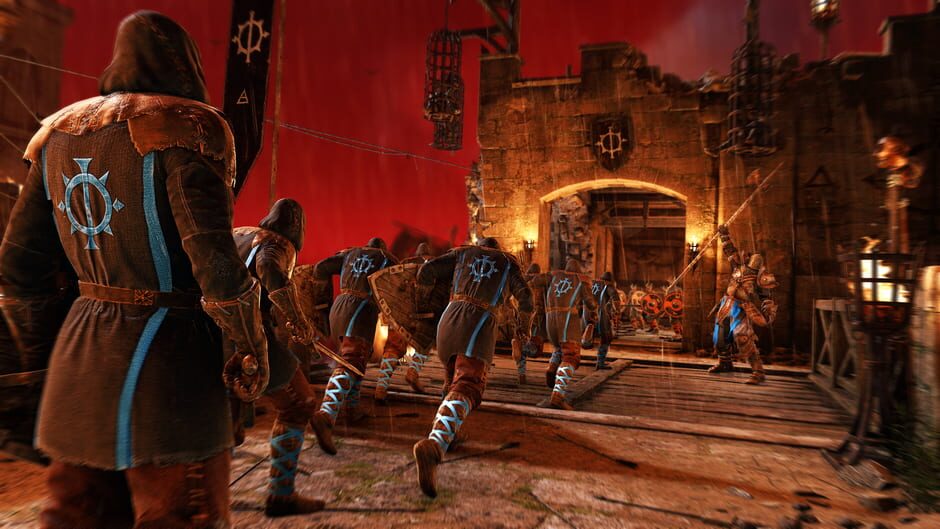
The multiplayer modes explore different scales of combat. Duel completely isolates two players and directly tests individual mastery. Brawl pits two teams of two fighters against each other. Dominion places two groups around capture zones, soldiers and objectives, giving greater importance to movement, coordination and choosing when to engage.
Dominion particularly illustrates the dual identity of For Honor. A player can win several duels and still lose the match if objectives are ignored, while a coordinated team can control the battlefield without seeking every possible confrontation. Mechanical mastery remains essential, but it sometimes has to give way to reading the broader tactical situation.
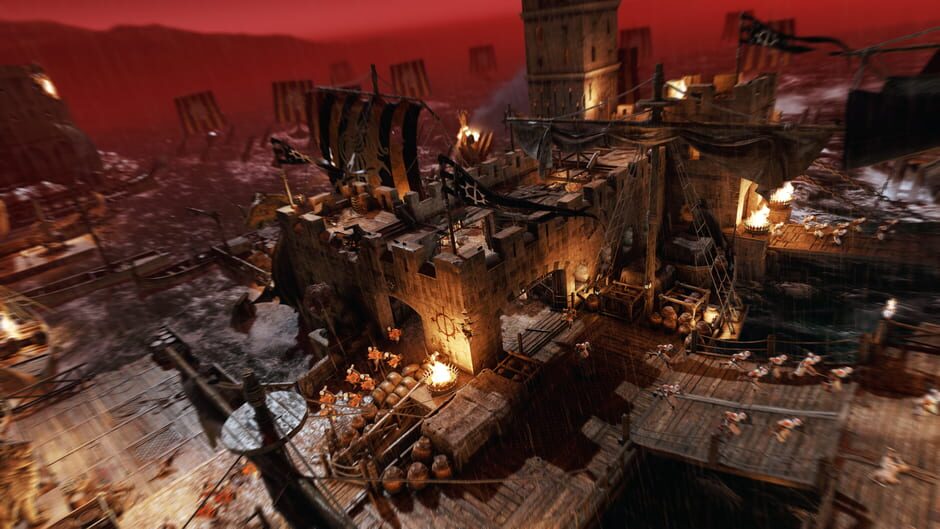
The environment also plays a role. Walls, ledges, bridges and other elements can change the outcome of an encounter. Some attacks can push an opponent toward a dangerous position, adding a spatial dimension to a system already centered on reading the opposing fighter.
Progression allows heroes to be customized and their appearance developed, while team modes also use different abilities suited to larger battles. Yet equipment cannot easily replace fundamental skill. Understanding a hero’s attacks, knowing their chains and recognizing an opponent’s habits matter far more than simply accumulating power.
This level of demand also explains why For Honor can initially feel difficult to learn. Its vocabulary sits somewhere between an action game and a fighting game. The opening hours require unusual habits: not attacking constantly, accepting the need to wait, recognizing a feint, understanding parry timing and knowing when to disengage.
Once this language is learned, the game changes character. Animations are no longer only spectacular: they become information. A stance, a movement or the beginning of an attack can be enough to trigger an almost instinctive response.
What to remember
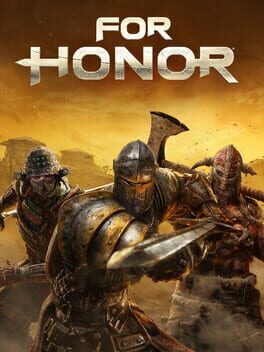
- An action game focused on close-quarters combat between warriors inspired notably by Knights, Vikings and Samurai.
- An Art of Battle system built around three directions of guard and attack.
- Encounters where feints, parries, dodges, guard breaks and anticipation play essential roles.
- Heroes with their own weapons, movements and combat styles.
- Modes ranging from individual duels to objective-based team battles.
- An important difference between mastering one opponent face-to-face and managing the chaos of group combat.
- An experience whose depth relies more on learning the system and reading other players than on equipment progression alone.
Conclusion
For Honor has an idea strong enough for almost the entire game to be built around it: giving weight to the direction of a blade.
That choice transforms a system that could have relied on rapid combinations into a genuine psychological confrontation. As the level of play rises, the question becomes less “which attack should I use?” and more “what does my opponent think I am about to do?”
This depth comes at a price. Early encounters can be brutal, and the gap between a player who merely knows the controls and one who truly understands feints, timings and hero-specific properties is considerable. Group fights can also destroy the precision of a duel within seconds when several opponents focus their attacks on the same target.
But that tension is also part of the game’s identity. For Honor does not attempt to faithfully reproduce a historical martial art or simulate every detail of medieval combat. Instead, it builds an accessible grammar from very physical elements — guard direction, weapon reach, the impact of a strike — and then asks players to explore all of their consequences.
A successful duel eventually begins to resemble a particularly aggressive conversation. Every attack asks a question, every parry provides an answer, and every feint tries to make the opponent believe in something that will never happen.
It is this ability to turn a few seconds of face-to-face combat into an exercise in reading and anticipation that allows For Honor to occupy such a distinctive place between action game, tactical melee and fighting game.
Good to know
- For Honor was primarily developed by Ubisoft Montreal and published by Ubisoft.
- The game was released on February 14, 2017.
- The original conflict mainly revolves around three factions: the Knights, Vikings and Samurai.
- The main combat system is officially called Art of Battle and is built notably around guarding, attacking, guard breaks, parries and feints.
- The campaign allows players to successively control warriors from the three original factions and develops the conflict orchestrated by Apollyon.
- The roster was later expanded with additional warriors and groups, including the Wu Lin and later the Outlanders.
- Multiplayer offers different forms of combat, from one-on-one Duel to team-based modes such as Dominion.