Presentation
Developed primarily by Ubisoft Montreal and published by Ubisoft, Watch Dogs was released in 2014 under the creative direction of Jonathan Morin, with Dominic Guay serving as Senior Producer. The game introduced a new open-world action-adventure franchise built around a central idea: turning the digital infrastructure of a city into a genuine gameplay system.
The game takes place in a representation of Chicago connected through ctOS, or Central Operating System. This fictional infrastructure centralizes a large amount of urban information and services under the control of the Blume corporation. Surveillance cameras, traffic lights, bridges, communications and different devices therefore become accessible to a hacker capable of entering the network.
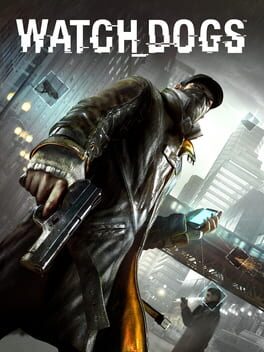
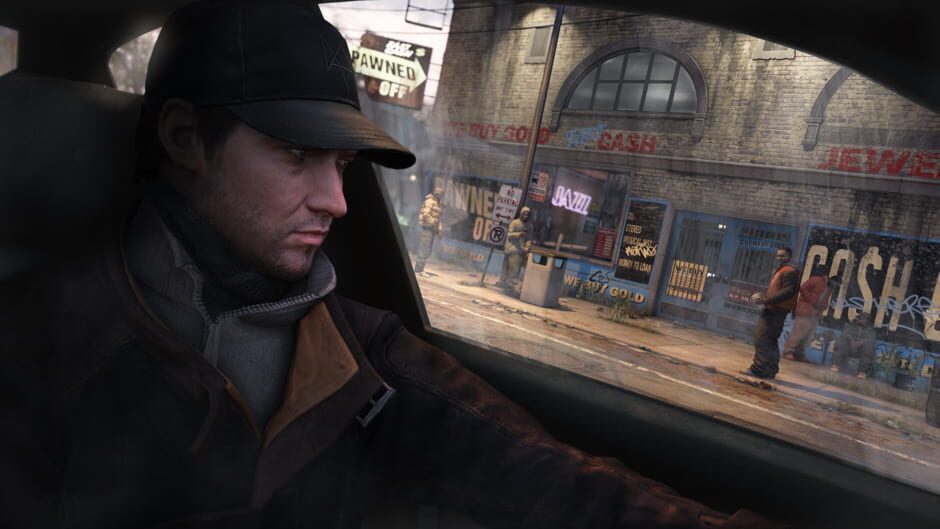
Players control Aiden Pearce, whose smartphone acts as his main interface with this connected city. Simply observing a passerby can reveal an identity, personal information or certain financial data, while elements of the environment can be hacked directly from the surrounding world.
This ability gives hacking a much broader role than simply opening doors. Aiden can hijack surveillance cameras to observe an area remotely, alter traffic lights to disrupt vehicles, raise certain bridges or activate devices capable of blocking a road. The urban network effectively becomes a permanent extension of his equipment.
Missions combine this system with conventional third-person action. Aiden carries firearms, can move between cover positions and use different tools when an infiltration develops into direct combat. Enemy locations can often be observed before entering them, allowing players to prepare an approach or reduce risk through the network.
Stealth particularly benefits from control of the camera system. Players can move virtually from one device to another, observe guards, locate objectives and remotely activate parts of the environment. Several situations can therefore be partially resolved without immediately placing Aiden inside the monitored area.
The game also features a skill system that develops different aspects of the character. Hacking, combat, crafting and driving can be progressively improved, unlocking additional ways to manipulate ctOS or manage action sequences. This progression accompanies the gradual introduction of new tools throughout the campaign.
Driving also plays an important role in the open world. Cars, motorcycles and other vehicles are used to cross Chicago and regularly become part of pursuits. Hacking remains available during these sequences: changing traffic lights, raising a bridge or triggering a road obstacle can interrupt a pursuer without forcing Aiden to leave his vehicle.
The Profiler gives the city's population a distinctive identity. By observing inhabitants, Aiden can access short pieces of personal information generated for them and sometimes discover activities, communications or situations that can lead to intervention. The open world is therefore not limited to objectives marked on the map, as the network continually provides information about people around the player.
Watch Dogs also introduces multiplayer systems integrated directly into the open world. Certain activities allow another player to enter the session and attempt to hack Aiden or follow him without being identified. The player must then locate the intruder among the population and prevent the operation from being completed, temporarily turning the city and its inhabitants into a search area.
The game finally uses hacking to support its narrative themes. ctOS brings convenience and efficiency to Chicago, but simultaneously concentrates enormous amounts of personal information and surveillance capability. Aiden exploits many of the same vulnerabilities as the criminals he pursues, maintaining a constant ambiguity between protection, control and intrusion.
Watch Dogs therefore establishes a formula in which the city is more than a space to travel through. Its computer network, traffic, surveillance systems and inhabitants directly participate in gameplay. This design would become the foundation of the series, even though Watch Dogs 2 and Watch Dogs: Legion would later significantly change its characters, tone and range of hacking possibilities.
What to remember
- Aiden Pearce, a hacker and clandestine vigilante whose investigation into a family tragedy forms the center of the story.
- An open-world representation of Chicago controlled through ctOS, a network centralizing surveillance, communications, transportation and urban infrastructure.
- Hacking as the primary mechanic, allowing players to use cameras, traffic lights, bridges and various devices directly through Aiden's smartphone.
- A combination of stealth, third-person combat and driving, with many situations that can be prepared or altered remotely through the network.
- The Profiler, allowing players to analyze inhabitants and access personal information to reinforce the idea of a constantly connected and monitored population.
- Multiplayer features integrated into the open world, particularly online hacking invasions in which another player can discreetly enter the session.
Conclusion
Watch Dogs builds its identity around a simple change to the traditional functioning of an open world: the city is no longer composed only of roads, buildings and vehicles, but also of a network the player can access almost constantly. Aiden's smartphone therefore becomes as important as his weapons or transportation.
This mechanic is particularly effective when it connects several systems. Hacking a camera provides information about a location, controlling equipment can assist an infiltration and manipulating traffic can transform a pursuit. Hacking therefore does not exist as an isolated activity but as a tool capable of affecting different phases of play.
Chicago directly supports this design. ctOS justifies the presence of interconnected cameras and devices, while the Profiler turns inhabitants into constant sources of information. The city therefore functions simultaneously as a physical environment and an enormous database.
Aiden's journey gives this technology a darker dimension. He uses surveillance and access to data to find the people responsible for Lena's death, yet the same methods allow him to spy on almost anyone. The game consequently places players in a position where the tools used to confront abuse themselves depend on an extraordinary capacity for intrusion.
By combining open-world design, hacking, surveillance, driving and third-person action, Watch Dogs established the foundations of a franchise centered on the power of connected technology in 2014. Later installments would considerably expand the concept, but the first game already defines its essential principle: in a city connected entirely to a network, information can become a weapon as important as a gun.
Good to know
- Watch Dogs was developed primarily by Ubisoft Montreal and published by Ubisoft.
- Jonathan Morin is credited as Creative Director and Dominic Guay as Senior Producer.
- The game was released worldwide on May 27, 2014 for PlayStation 3, PlayStation 4, Xbox 360, Xbox One and Windows.
- A Wii U version was released later in 2014, several months after the other editions.
- Aiden can use his smartphone to access Chicago's ctOS, including surveillance cameras, personal information and various pieces of urban infrastructure.
- The narrative expansion Bad Blood allows players to control Raymond Kenney, known as T-Bone, in a separate campaign taking place after the main story.
- Watch Dogs is the first installment in the franchise, followed by Watch Dogs 2 in 2016 and Watch Dogs: Legion in 2020.
```