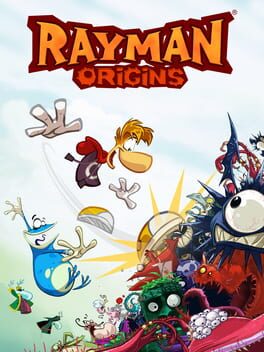
The Glade of Dreams is invaded by nightmarish creatures, and the Electoons that help maintain its balance are captured. Rayman sets out to rescue them alongside Globox and the Teensies. Their journey takes them through the different regions of the Glade, where they must free the imprisoned Electoons and push back the creatures that increasingly threaten the Bubble Dreamer's world.
Video game
2011
Action
Adventure
Comedy
Fantasy
Platformer
Rayman Origins
- Ubisoft Entertainment Publisher
- Ubisoft Montpellier Developer
Rayman returns to 2D in an adventure where every level seems to come alive beneath the artist's hand.
Details
- Type
- Video game
- Release
- 2011-11-15
- Genres
- Action, Adventure, Comedy, Fantasy, Platformer
- Platforms
- PlayStation 3, PC, Xbox 360, Mac, Nintendo Wii, Nintendo 3DS
- Engine
- UbiArt Framework
- Game modes
- Single player, Multiplayer, Co-operative
Synopsis
Rayman Origins



Trailer
Watch the trailer
Overview
Presentation
Rayman Origins brings the series back to a two-dimensional platforming formula centered on running, jumping, exploration and the search for hidden passages. Rayman travels through the Glade of Dreams alongside Globox and the Teensies in a succession of levels built around very different environments, with a rhythm that alternates between platforming sequences, combat, chases and exploration.
The character's abilities expand gradually throughout the adventure. Rayman can notably learn to attack, glide, swim underwater and run along walls, opening up new movement possibilities and allowing the levels to become progressively more complex. These powers are not used only to overcome obstacles: they change the way each course is approached and make it possible to reach areas that were previously inaccessible.
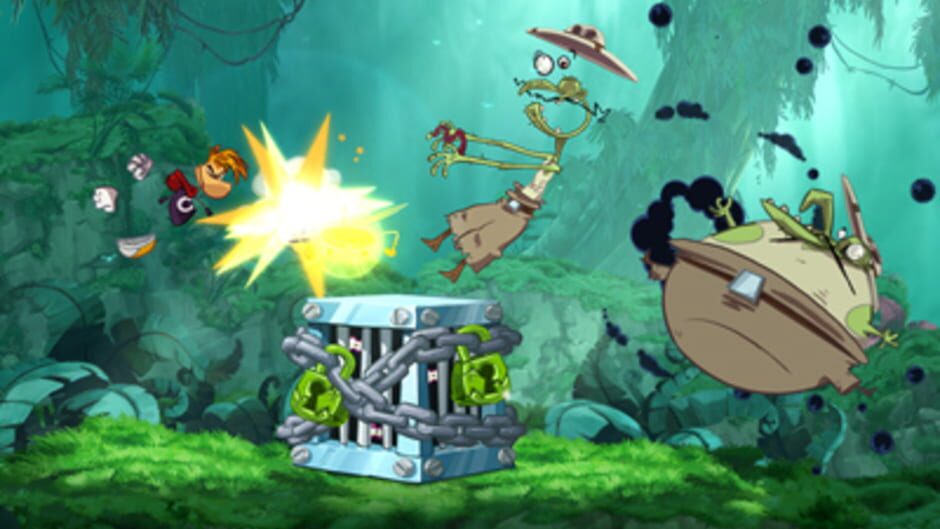
The Electoons play a central role in progression. Some are locked inside cages hidden throughout the levels, while others are obtained by completing different objectives. Freeing them gradually opens access to new parts of the adventure. This structure encourages players not simply to reach the exit, but to observe the environments, search for secret passages and return to improve their performance.
The Lums form the other major part of the game's collection system. Scattered throughout the levels, they reward exploration and precise movement. Some sections require players to chain actions together quickly in order to collect as many as possible, adding a sense of rhythm to courses already designed around momentum and movement.
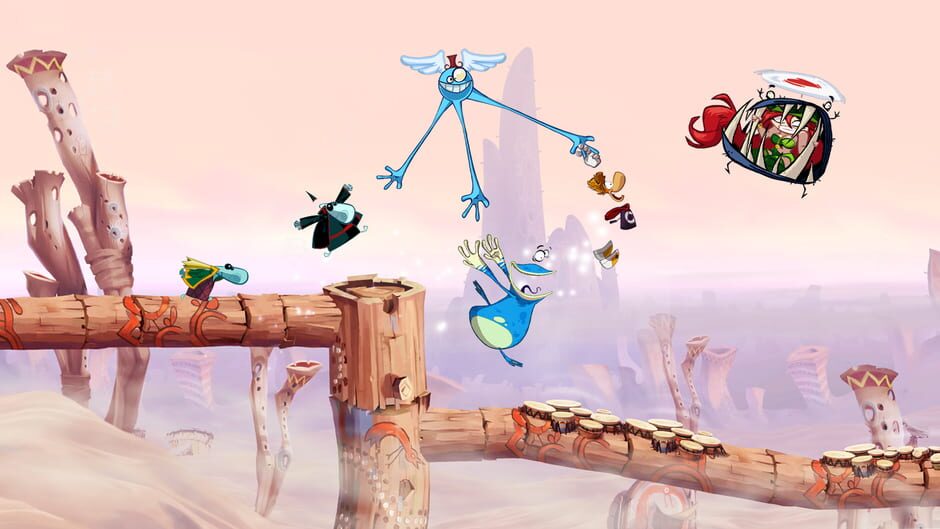
The adventure can be played alone or in local co-op with up to four players. Rayman, Globox and the Teensies then share the same screen and travel through the levels together. Cooperation allows players to progress as a group, but the game deliberately keeps a lively and flexible structure in which players can also get in each other's way, hit one another or improvise their way through obstacles. This flexibility allows the same levels to work both solo and with several players.
The visual direction is one of the title's defining features. Rayman Origins uses the UbiArt Framework, a technology designed to integrate and animate two-dimensional artwork. Environments, characters and animations therefore adopt an appearance close to animated illustration, with highly colorful worlds whose visual identity directly supports the mechanics of each region.
Key points
- A 2D platformer centered on movement, exploration and precision.
- Abilities acquired progressively, including attacking, gliding, swimming and wall-running.
- Electoons structure progression and encourage exploration of the levels.
- Lums reward collecting, observation and efficient movement.
- Numerous secret passages and optional objectives complement the main path.
- The entire adventure can be played solo or in local co-op for up to four players.
- A visual identity built entirely around 2D artwork and the UbiArt Framework.
- More than 60 levels spread across the different environments of the Glade of Dreams.
Conclusion
Rayman Origins returns to the two-dimensional platforming foundations associated with the early years of the series while building its own rhythm around a much more mobile character. The abilities gained throughout the adventure, the search for Electoons and the collection of Lums give each level several objectives without distracting from the experience's central element: movement.
Local co-op expands this formula without changing its fundamental structure, while the UbiArt Framework gives the environments and characters a visual continuity particularly well suited to motion. The game therefore combines platforming, exploration and collecting in an adventure designed both for straightforward progression and for searching out secrets and improving each run.
Good to know
Rayman Origins was developed by Ubisoft Montpellier and published by Ubisoft.
The game first appeared in 2011 before being adapted to several other platforms. It is available notably on PC, Mac, PlayStation 3, PlayStation Vita, Xbox 360, Wii and Nintendo 3DS.
It uses the UbiArt Framework, an engine developed by Ubisoft Montpellier to integrate and animate two-dimensional visual elements.
The game includes a single-player mode as well as local co-op for up to four players.
Rayman Origins was followed by Rayman Legends, which expands on several of its platforming principles and its graphical technology.