Presentation
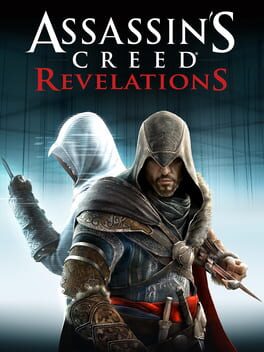
Assassin’s Creed Revelations finds Ezio at a very different point in his life from the previous two games.
He no longer needs to become an Assassin.
He has been one for decades.
In Constantinople, Ezio arrives as an experienced man whose reputation extends far beyond Italy. Yusuf Tazim and the Ottoman Assassins are not meeting a novice who needs training, but a Mentor capable of passing on part of his experience.
This position naturally changes the tone of the adventure.
Assassin’s Creed II followed a young man whose life was suddenly shattered. Brotherhood showed that same man building an organization around himself. Revelations is more interested in what remains once those battles have been fought.
Ezio is now searching for answers.
Constantinople gives this final stage a very different setting from Florence or Rome.
The city connects Europe and Asia around the Bosporus. Densely built districts, markets, mosques, ports and broad avenues create a particularly lively urban space where Byzantine and Ottoman architecture meet.
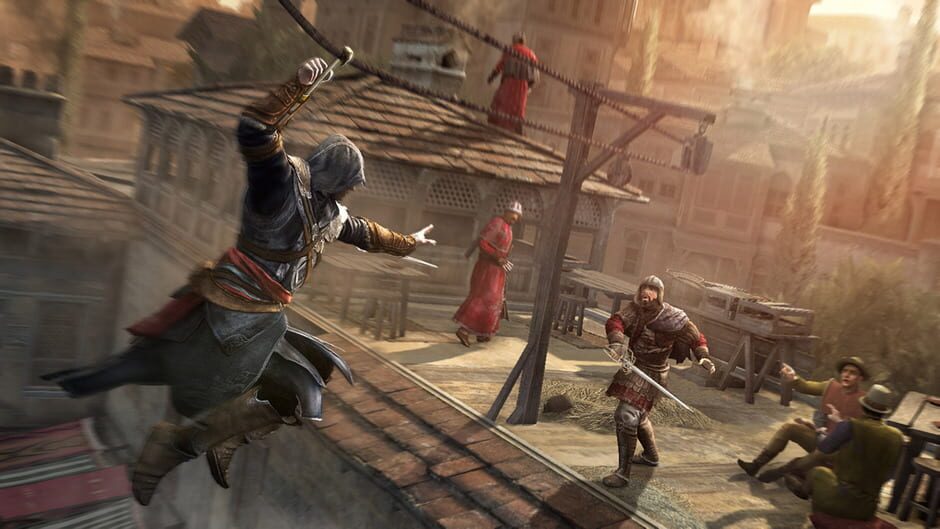
Parkour retains the foundations established by the previous games, but a new weapon noticeably changes movement: the Hookblade.
Mounted on Ezio’s wrist, it extends his reach while climbing and allows him to cross certain obstacles more quickly. It can also be used on the ziplines stretched above the streets, turning them into shortcuts across the different districts.
This improvement suits the character well.
Ezio is older, but the game does not attempt to make him slower. The Hookblade instead compensates for certain distances and gives his movement a different fluidity from his years in Italy.
It also plays a role in combat, where it can be used to manipulate certain opponents or make transitions easier during a fight.
At the same time, the arsenal gains a much more developed bomb system.
Ezio collects different components that can be assembled to create devices suited to a variety of situations. Some bombs produce lethal explosions, while others create smoke, attract attention or temporarily incapacitate enemies.
The idea is therefore not simply to carry several predefined types of grenades. The player chooses a casing, an effect and different components to prepare the tool that best fits their approach.
This customization can be used to open an infiltration route, distract a patrol or directly create chaos.
Social stealth remains present.
Ezio can still blend with civilians and take advantage of crowd movement. Romani groups notably replace some of the functions previously performed by courtesans, while thieves and other allies can still help divert attention.
Eagle Sense also evolves Eagle Vision.
Ezio can analyze his surroundings more precisely, identify certain clues and anticipate the routes of characters he is following. This reading of the environment can help him choose a position for an ambush or understand the direction a target is taking.
The Brotherhood system introduced in Brotherhood returns in a form adapted to Constantinople.
Ezio can recruit new Assassins, send them on different missions and help them progress. Some recruits can later receive greater responsibilities and take charge of Brotherhood dens.
These dens play an important role in controlling the city.
Several districts initially remain under Templar influence. As in Rome with the Borgia Towers, Ezio can attack their positions and return the area to the Assassins.
The Templars, however, can also attempt to retake a den.
The game then introduces defensive sequences in which Ezio organizes his Assassins, positions different units and uses barricades to repel several waves of enemies.
This defensive dimension is quite far removed from the series’ usual structure and does not dominate the entire adventure. It nevertheless expresses an idea consistent with Ezio’s status: a Mentor no longer fights every battle personally, but must also organize those who fight under his command.
The Masyaf keys bring a much more distinctive narrative structure.
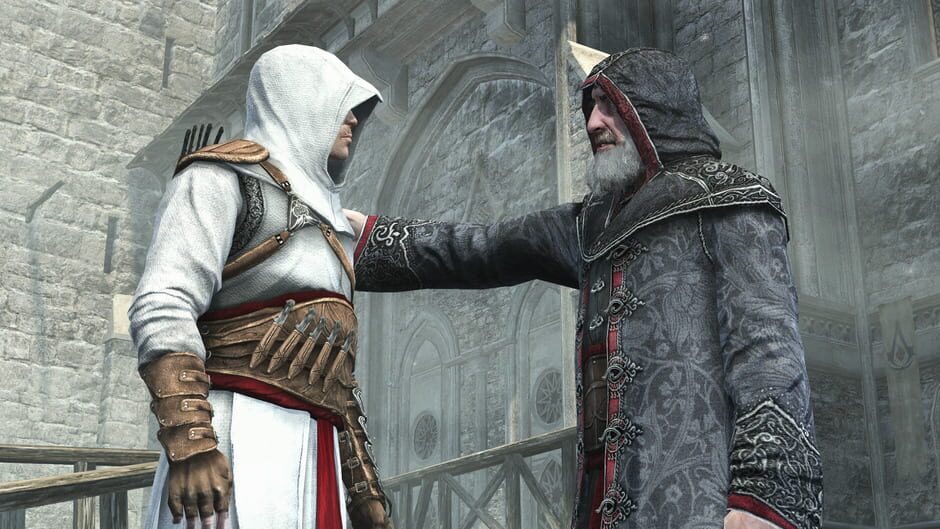
When Ezio discovers one, he gains access to a memory of Altaïr.
The player then temporarily leaves Constantinople and returns to the protagonist of the first Assassin’s Creed at different periods of his life. These sequences do not form another complete campaign: they select particular moments that reveal how Altaïr evolved after the events of 1191.
The effect is especially significant because Ezio never actually meets Altaïr.
Three centuries separate them.
Yet the first Assassin of the series gradually becomes a presence within the second man’s journey. Ezio discovers his choices, his losses, his responsibilities and the way his understanding of the Creed changed with age.
A kind of dialogue emerges even though the two men can never truly speak to one another.
This is where Revelations finds its strongest identity.
The search for the keys works like an archaeological adventure, but the true treasure is the memory of a man who had confronted similar questions about power, loyalty and the Brotherhood long before Ezio.
Constantinople simultaneously has its own story.
The Byzantine Templars seek to take advantage of the tensions within the Ottoman Empire, while Ezio grows closer to Prince Süleyman and tries to understand which forces are moving around the imperial succession.
The game therefore combines his personal search with a political conflict without making that conflict the sole reason for his journey.
Sofia Sartor adds another dimension.
Her relationship with Ezio allows the game to show a man beginning to imagine something beyond the war between Assassins and Templars. After spending most of his life serving the Brotherhood, the Mentor finally seems to wonder whether there might be a place for a life not defined entirely by the Creed.
Desmond is going through a comparable crisis inside the Animus.
After the events of Brotherhood, his mind becomes isolated within a particular part of the simulation. His sequences abandon traditional parkour for abstract environments built around platforms and autobiographical fragments.
These sections sharply alter the rhythm of the adventure, but their purpose is clear: while Ezio is trying to understand Altaïr, Desmond must understand his own journey.
Revelations therefore constructs its story around three men separated by centuries.
Altaïr looks back at what his life has left behind.
Ezio tries to understand what he should still pursue.
Desmond attempts to understand how the lives he has experienced can help him return to his own.
What to remember
- The final main game centered on Ezio Auditore, now an experienced Mentor searching for the secrets left behind by Altaïr.
- Constantinople at the beginning of the 16th century as the main setting, amid tensions between the Ottoman Assassins and Byzantine Templars.
- Five keys required to access Altaïr’s secret library in Masyaf, each also providing access to one of his memories.
- The Hookblade, which enriches parkour, makes climbing easier and allows Ezio to use the many ziplines spread across the city.
- A crafting system used to create different bombs for infiltration, distraction, enemy control or direct attacks.
- The return of Assassin recruitment and progression, complemented by the capture and defense of dens throughout Constantinople.
- A narrative that brings together the journeys of Altaïr, Ezio and Desmond and gives the game the role of a conclusion to the series’ first major era.
Conclusion
Assassin’s Creed Revelations is not really trying to give Ezio another rise to greatness.
It gives him an exit.
After Florence, Venice and Rome, after the Pazzi, the Borgias and decades spent serving the Brotherhood, the character could continue almost indefinitely. He masters his weapons, possesses the authority of a Mentor and remains capable of crossing a city with an ease few Assassins could match.
But the question is no longer whether he can continue.
It is why he would.
Altaïr’s memories give weight to that question. The hero of the first game stops being merely a foundational figure referenced by later generations. Ezio sees what an entire life devoted to the Creed can demand from the person living it.
Ageing therefore becomes part of the story rather than merely a change in appearance.
Not every system in Revelations is equally successful. Den defense fits awkwardly with the traditional rhythm of the series, bomb crafting provides more possibilities than the adventure ever truly requires, and the overall formula remains very close to Brotherhood.
Constantinople, the Hookblade and Altaïr’s memories nevertheless give the game enough character to avoid feeling like a simple third Italian chapter moved eastward.
Above all, the game understands that its main responsibility is no longer to make Ezio greater.
It is to end his journey.
Since Assassin’s Creed II, the player has seen him as a son, brother, lover, Assassin and then Mentor. Revelations adds something more difficult to that progression: the ability to look at a lifetime’s work and decide that it can be left to those who come next.
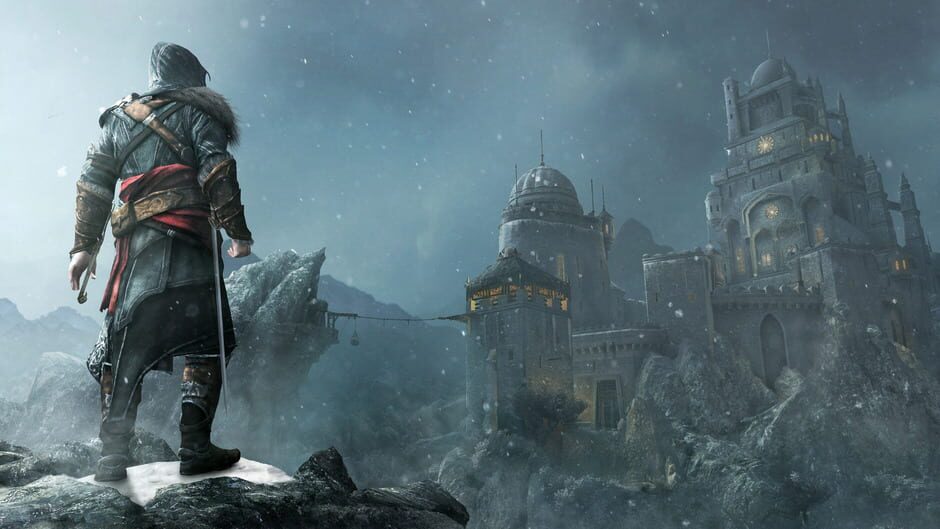
Ezio traveled to Masyaf in search of the answers left behind by Altaïr.
What he gradually discovers may be more important.
Even for an Assassin, knowing when to continue the search is only one part of wisdom.
The other is knowing when it can finally end.
Good to know
- Assassin’s Creed Revelations was developed primarily by Ubisoft Montreal and published by Ubisoft.
- The game was released in 2011 on PlayStation 3, Xbox 360 and PC.
- Ezio’s main story takes place primarily in Constantinople in 1511 and 1512, at the heart of the Ottoman Empire.
- Ezio searches for five keys that can open a secret library built by Altaïr in Masyaf; each key also preserves one of the former Mentor’s memories.
- Yusuf Tazim leads the Ottoman Brotherhood encountered by Ezio and notably introduces him to the Hookblade.
- The bomb system allows different components to be assembled to create offensive, tactical or diversionary effects.
- Revelations is the final main video game chapter of the Ezio trilogy after Assassin’s Creed II and Assassin’s Creed Brotherhood.