Presentation
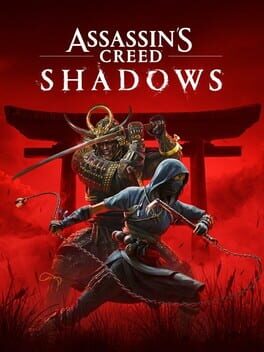
Assassin’s Creed Shadows builds almost its entire identity around its two protagonists.
Naoe and Yasuke travel through the same world, pursue some of the same objectives and take part in a shared story.
Yet they do not play the same way.
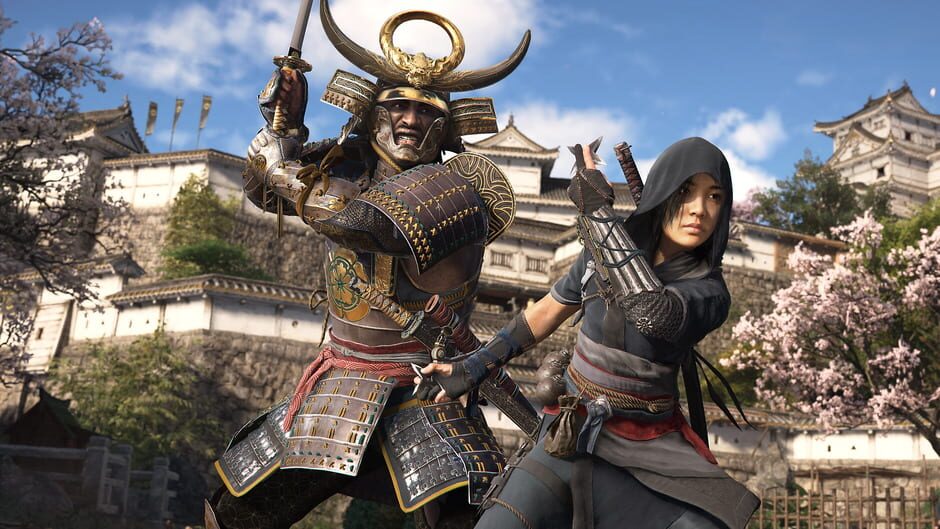
Naoe represents the shinobi and Assassin side of the adventure.
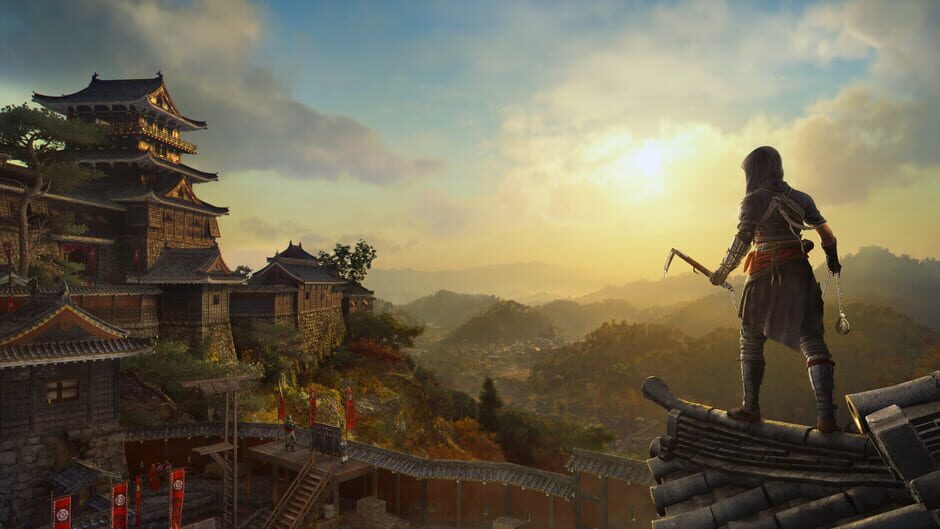
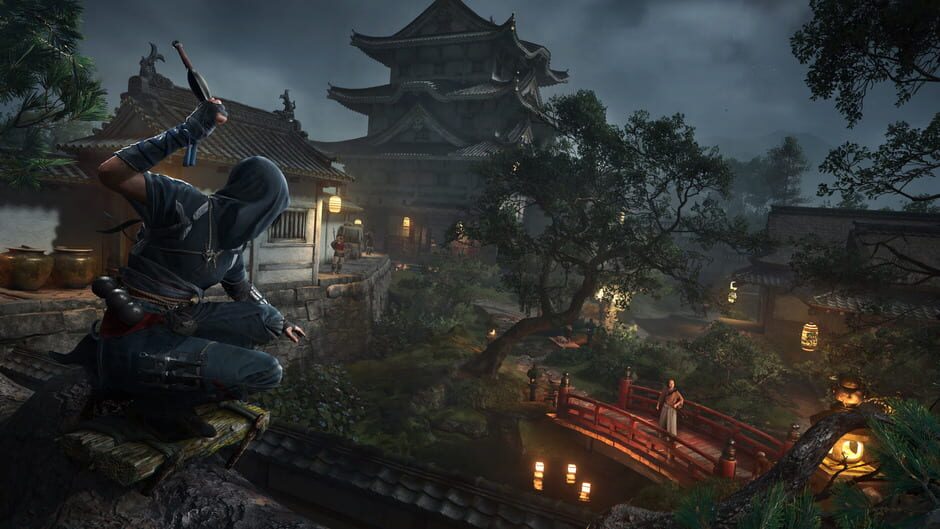
Fast, light and highly mobile, she possesses the more developed parkour abilities of the pair. She can quickly climb buildings, use a grappling hook to reach certain heights, swing across spaces or create new infiltration routes.
Her movement encourages the player to observe a location before entering it.
Castles and fortifications can be approached from rooftops, walls or more discreet openings. Verticality therefore regains a central role, but it is accompanied by something new for the series: darkness itself can become cover.
Naoe can use dark areas to significantly reduce the risk of detection.
Light is therefore no longer purely visual. A lantern may expose a position; destroying it can create the darkness needed to cross a passage. The time of day and the placement of light sources directly influence certain infiltrations.
She can also crouch or lie completely flat on the ground.
This allows her to reduce visibility, move behind low obstacles or even slip beneath certain structures. Sound matters as well: running close to a guard or moving carelessly through an interior can attract attention.
The result makes stealth depend more heavily on immediate observation of the environment.
Naoe has Eagle Vision for this purpose, but Shadows no longer relies on an eagle companion capable of flying over a fortress and identifying all of its inhabitants from a distance.
Instead, both characters use an observation function that allows them to locate objectives, enemies and important elements from their own position.
This change requires the player to move closer to the locations they are trying to understand.
Naoe’s arsenal supports this approach.
Kunai, shuriken, smoke bombs and other tools can neutralize a guard, create a diversion or help her escape a dangerous situation. The Hidden Blade naturally returns to a central role in assassinations.
Its effectiveness does not make Naoe invulnerable once she is discovered.
She can fight directly and use several weapons, but her lighter build requires more movement, dodging and precision against enemies capable of resisting her attacks.
Yasuke offers almost the opposite approach.
His physical presence immediately changes the way a location can be approached.
Where Naoe might search for an opening in a palisade or silently reach a rooftop, Yasuke can enter a confrontation with much greater force.
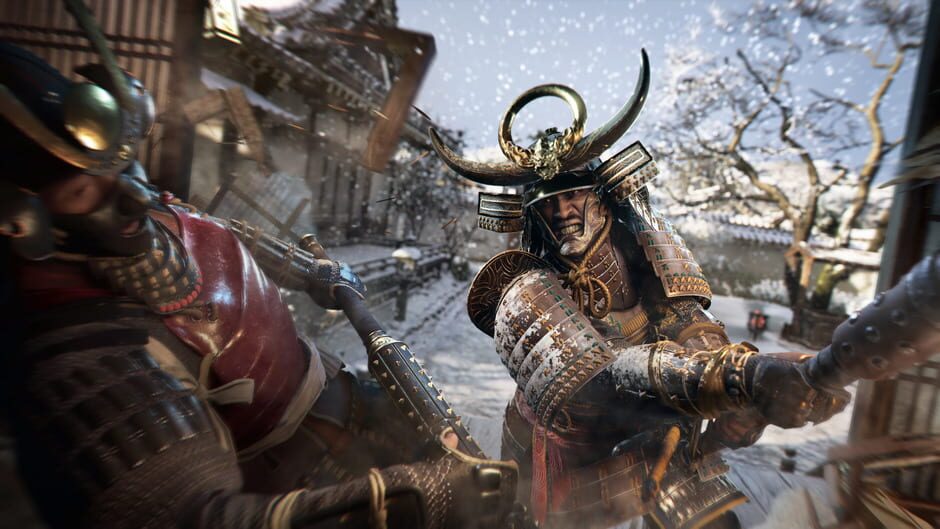
His arsenal includes weapons such as katana, kanabō, naginata and ranged weapons. His attacks emphasize impact, posture and the ability to break through enemy defenses.
He can block attacks that Naoe is more likely to dodge or deflect and is better suited to enduring direct confrontation.
Combat, however, is not simply about attacking until a health bar is empty.
Enemies possess guards and openings that must be learned and exploited. Dodges, parries, charged attacks and specific abilities determine the rhythm of combat, with enough differences between the two characters to noticeably alter the approach.
Yasuke is not completely incapable of stealth.
A bow can eliminate certain enemies from a distance and a cautious approach remains possible. He does not, however, possess the mobility or full range of tools that allow Naoe to turn an entire fortress into a stealth playground.
This contrast is the strength of the pair.
When the game allows the player to choose a protagonist, the same mission can produce two very different interpretations.
Naoe often looks for a way to avoid starting a fight.
Yasuke may look for a way to win it.
The Japan around them also takes part in this adaptation.
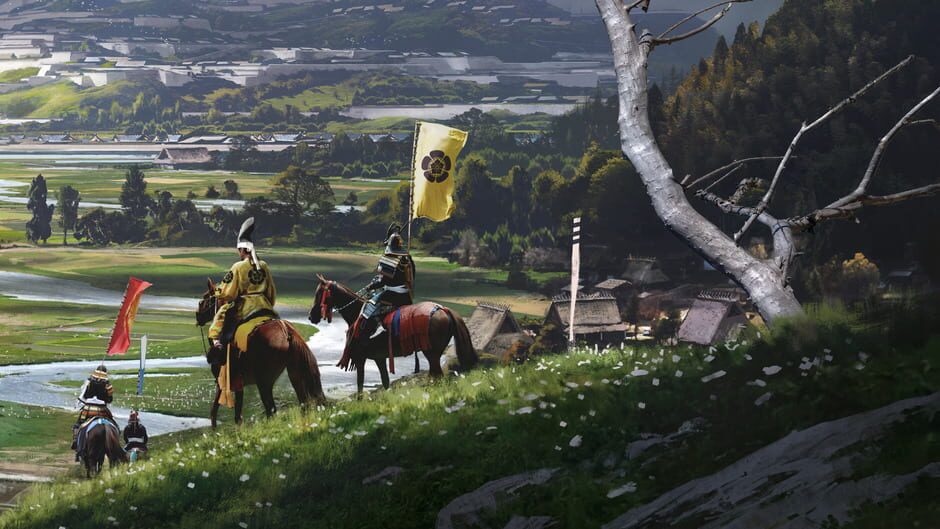
Shadows offers an open world made up of fortified cities, countryside, mountains, temples, shrines, ports and villages. Roads cross several provinces inspired by central Japan at a time when castles and regional powers played an essential role in the organization of the territory.
The seasons change over time.
They do more than alter the colors of the landscape. Vegetation, snow and other environmental elements can modify opportunities for concealment and movement. A location visited under different conditions therefore does not always offer exactly the same possibilities.
Exploration also relies more heavily on information.
The map does not immediately display every activity with absolute precision. Some objectives must be located through clues, observation or the scout network developed during the adventure.
These scouts can narrow down a target’s search area and help recover certain resources identified within enemy territory.
This logic suits Naoe particularly well.
Finding someone can become a small geographical investigation: a province, a type of building, a position relative to a known landmark. The player must combine these clues rather than simply following a marker that immediately appears on the map.
Synchronization points remain present, but their purpose also changes. They are mainly used to observe the surrounding area and identify several points of interest rather than automatically reveal an entire sector filled with icons.
Between missions, Naoe and Yasuke have access to a hideout.
Located in an isolated valley, it serves as the base for the league they gradually build. The player can freely place different buildings, paths, decorations and vegetation.
This customization also has a practical purpose.
The forge, dojo, stables, study and other structures improve certain systems involving equipment, scouts, allies or opportunities available in the world.
Characters recruited during the adventure also come to live there.
Some can occasionally support Naoe or Yasuke with their own abilities, while their presence gradually transforms the hideout into a small community.
This construction contrasts with the many fortresses crossed during the adventure.
On one side, the Japan of Shadows shows strongholds to infiltrate or attack.
On the other, it allows the player to build one that gradually becomes their own.
What to remember
- An entry set in late 16th-century Japan during the final decades of the Sengoku period.
- Two complementary protagonists: Naoe, a shinobi Assassin from Iga, and Yasuke, an African samurai serving Oda Nobunaga.
- Highly developed stealth for Naoe, built around parkour, the grappling hook, the Hidden Blade, tools and the dynamic use of darkness.
- A much more direct style for Yasuke, who can wield different heavy weapons and withstand direct combat more effectively.
- An open world whose environments evolve with weather and seasons, potentially changing opportunities for movement and concealment.
- Exploration built more heavily around intelligence, observation and the use of a scout network to locate certain targets.
- A customizable hideout that gradually becomes the center of a new league of allies and supports several progression systems.
Conclusion
Assassin’s Creed Shadows could have treated Naoe and Yasuke as two different appearances placed over the same character.
Instead, it makes their differences immediately tangible.
In front of a fortress, Naoe looks at the shadows, the heights and the routes no one is watching.
Yasuke looks at the men guarding the gate.
This contrast gives the game a particular flexibility without erasing either character’s identity. Naoe brings back a form of stealth directly connected to the Assassin legacy, while Yasuke embraces more openly the action-RPG side developed by several recent entries in the series.
The world works especially well when it allows these two approaches to coexist.
Castles provide complex spaces to observe, seasons sometimes change the conditions of approach, and the search for information helps prevent every objective from becoming little more than an icon located a few hundred meters away.
Not everything escapes the scale of its open world.
Some activities use similar structures, gear progression remains very present, and not every objective takes equal advantage of the differences between the two protagonists.
But Shadows recaptures something essential when Naoe enters a fortress at nightfall.
Extinguishing a light, waiting for a guard to pass, slipping beneath a structure and then using the grappling hook to disappear onto a rooftop gives the environment a role far beyond that of simple scenery.
Yasuke, meanwhile, reminds the player that another answer remains possible.
The game therefore does not constantly ask the player to choose between the “old” and “new” Assassin’s Creed.
It places both tendencies side by side.
One blade searches for the place no one is watching.
The other advances where everyone can see it.
Good to know
- Assassin’s Creed Shadows was developed primarily by Ubisoft Quebec and published by Ubisoft.
- The game was released on March 20, 2025.
- The adventure takes place in Japan during the late Sengoku period, also associated with the Azuchi-Momoyama period.
- Naoe is a shinobi from Iga and the daughter of Fujibayashi Nagato within the game’s fiction.
- Yasuke is inspired by a historical figure of African origin who served the daimyo Oda Nobunaga.
- Naoe and Yasuke have their own abilities, equipment and progression in order to preserve two distinct playstyles.
- Shadows notably introduces a true use of dark areas as spaces for concealment as well as a highly customizable hideout.