Presentation
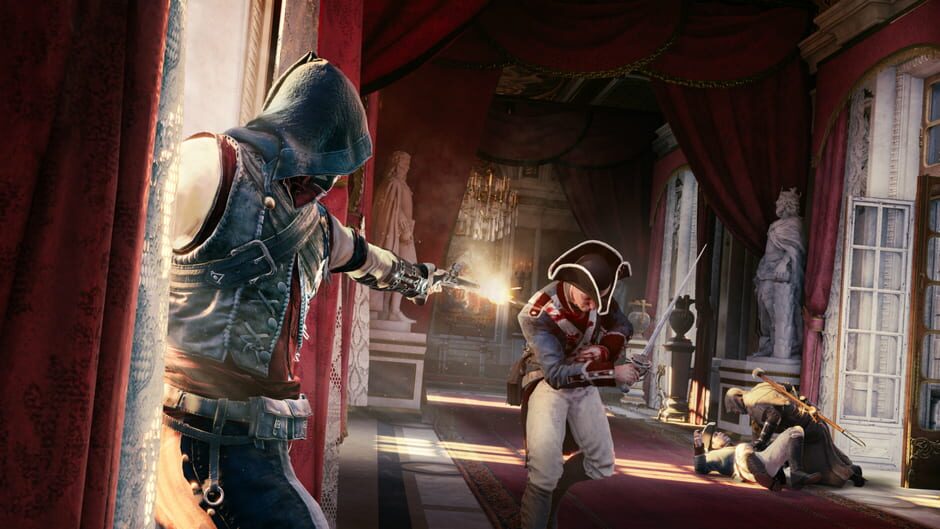
With Assassin's Creed Unity, Ubisoft Montreal refocuses much of the experience on the historical foundations of the series: moving through a dense city, observing a target, preparing an approach and disappearing after the assassination. Paris becomes the true playground of this installment, with lively streets, numerous accessible buildings and monuments recreated on a scale that reinforces the feeling of moving through the heart of a monumental capital.
Parkour undergoes a significant evolution. Arno benefits from more fluid movements and a dedicated control for descending, allowing players to move across façades and rooftops with greater continuity. The verticality of Paris therefore becomes an essential part of exploration: entering through a window, reaching a balcony or searching for a route from above directly influences the way missions can be approached.
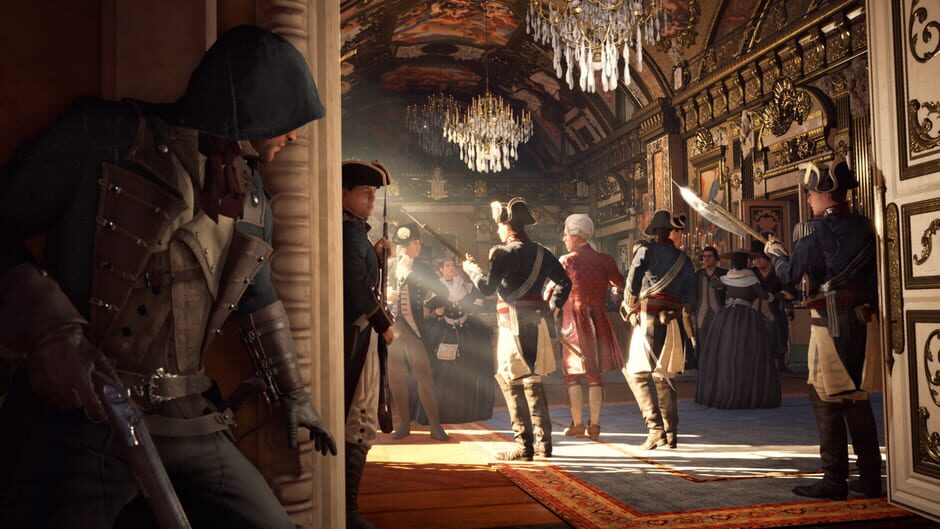
Assassinations also aim to provide greater freedom in preparation. Several main missions feature relatively open areas where players can observe the surroundings, identify different entrances and sometimes create opportunities before reaching the target. This structure brings Unity closer to the idea of an Assassin who studies the environment rather than a fighter who systematically advances from one confrontation to another.
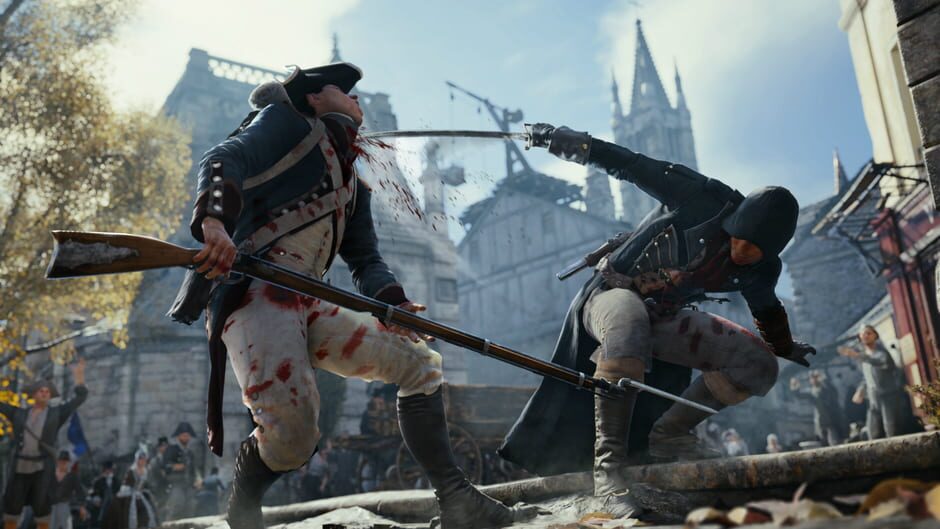
Stealth notably benefits from a proper cover system and a greater emphasis on movement inside buildings. Combat remains possible but can quickly become dangerous against several opponents. This vulnerability encourages players to avoid certain confrontations and strengthens the distinction between a discreet approach and a direct attack.
The installment also introduces cooperative missions in which several Assassins can complete certain objectives together in Paris. They remain separate from Arno's main story but extend the idea of a Brotherhood acting collectively throughout the city.
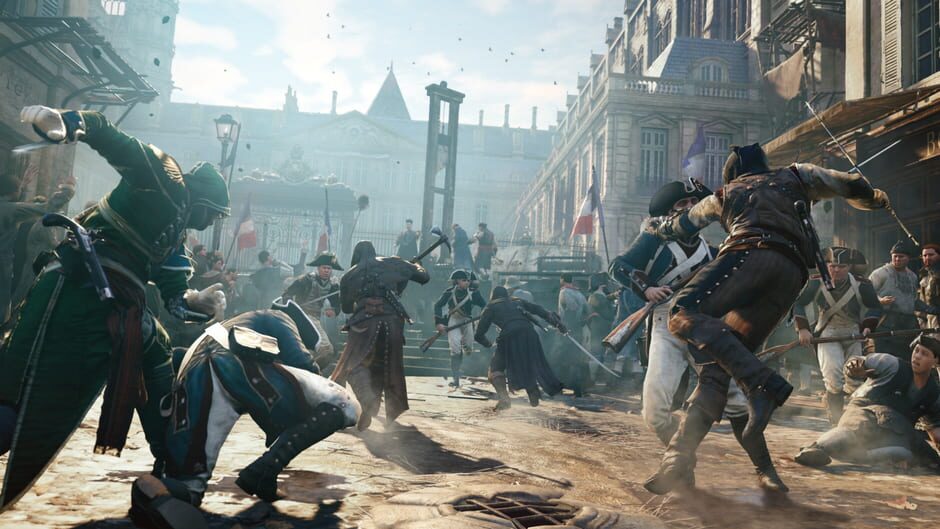
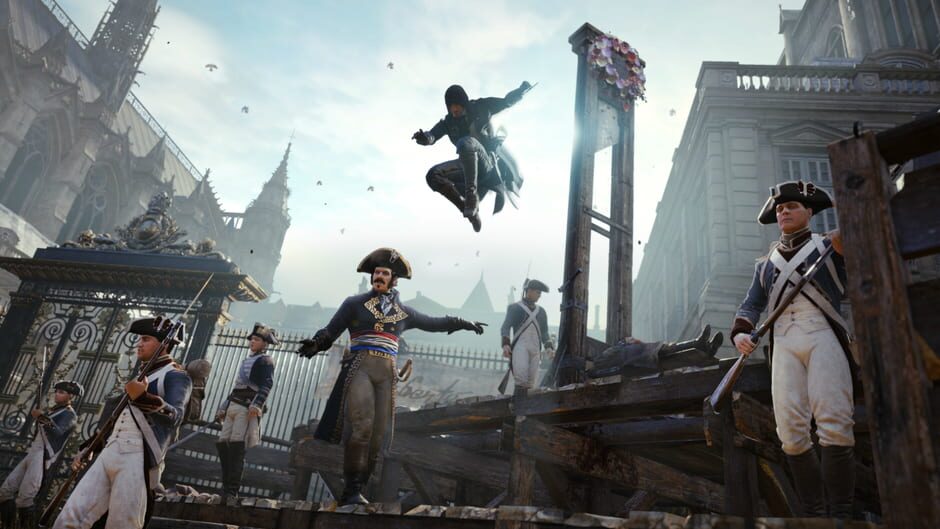
Finally, the French Revolution is more than a simple backdrop. Crowds, public executions, political tensions and urban transformations give Paris a constant sense of unrest. Historical events surround Arno's story without always becoming its central focus: Unity is less about telling the story of the Revolution itself than following a man trying to find his place in a world where old certainties are disappearing.
What to remember
- An open-world adventure set mainly in Paris during the French Revolution.
- Arno Dorian, an Assassin whose journey is shaped by guilt, revenge and his relationship with the Templar Élise de la Serre.
- A significantly reworked parkour system designed to better exploit the verticality and architectural density of Paris.
- Assassination missions offering more opportunities for observation, infiltration and different approaches.
- More dangerous combat that encourages a genuine Assassin mindset rather than systematically fighting every enemy.
- Cooperative missions allowing several players to act together in certain activities.
Conclusion
Assassin's Creed Unity above all seeks to recapture the original fantasy of the series: being an Assassin in the middle of an immense city. Paris is not simply a succession of famous monuments, but an environment designed to be read vertically, crossed over rooftops, infiltrated through windows and exploited during assassinations.
This ambition produces some of the episode's most interesting ideas. Downward parkour, interior environments and missions offering several possible approaches reinforce the importance of movement and preparation. In return, the controls can sometimes lack precision, and the very density of the city makes certain movements less predictable than they should be.
Arno, meanwhile, gives the story a more intimate tone. The French Revolution represents an enormous historical upheaval, but his journey remains largely driven by guilt, his feelings for Élise and his desire to repair what he sees as his own mistakes. This focus can make historical events feel somewhat secondary at times, but it also allows the Revolution to be experienced through a deeply personal perspective.
In retrospect, Unity therefore occupies a distinctive place within the series. Its exceptionally dense Paris, its work on parkour and its desire to restore freedom to assassinations represent a very clear vision of what Assassin's Creed can be when the city, stealth and movement are once again placed at the heart of the experience.
Good to know
- Assassin's Creed Unity was primarily developed by Ubisoft Montreal.
- The game was released in 2014.
- Its main story takes place in Paris during the French Revolution and begins in the context of the year 1789.
- Arno Dorian is the main protagonist of the adventure.
- Élise de la Serre belongs to the Templars, placing her relationship with Arno at the heart of his personal conflict.
- Unity is the first main installment in the series to include cooperative missions allowing several players to embody Assassins within the same environment.