Presentation
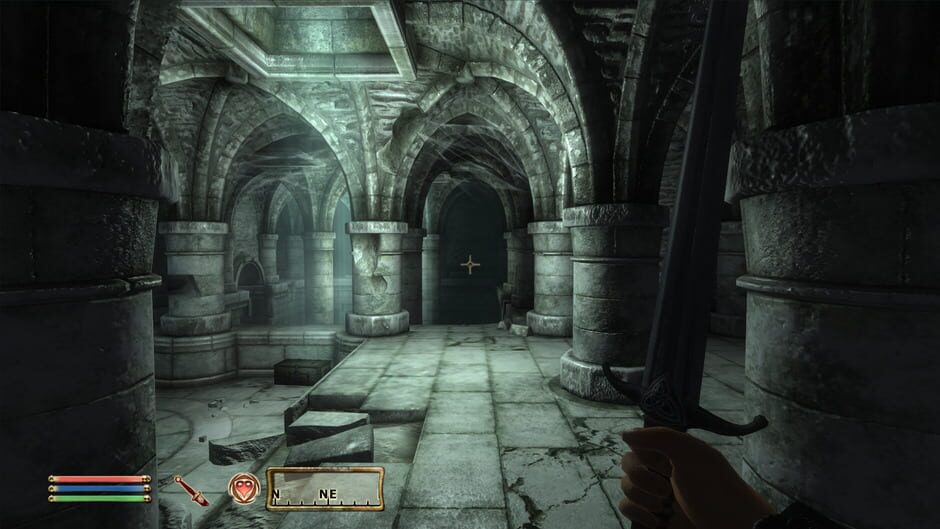
The Elder Scrolls IV: Oblivion preserves the freedom of Morrowind while offering a province that is more immediately accessible. Almost all of Cyrodiil can be explored after leaving the Imperial City sewers, and the main quest does not impose a continuous path. Players can abandon it for dozens of hours to explore a ruin, join a guild or simply follow a road toward an unfamiliar city.
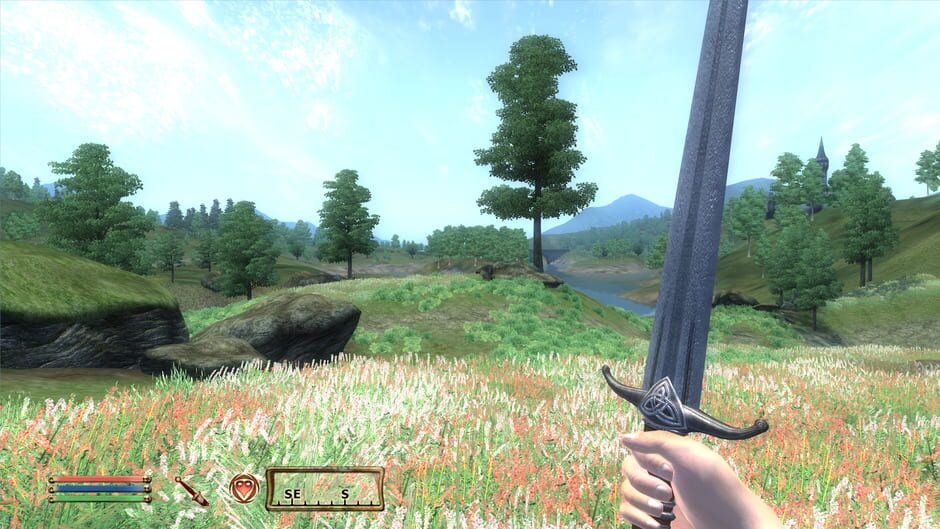
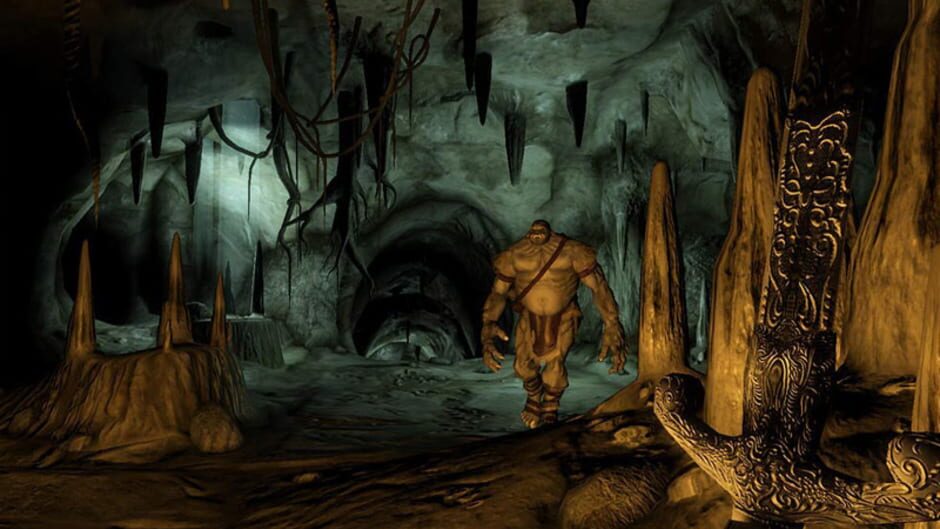
The province is organized around the Imperial City and several major settlements such as Anvil, Bravil, Bruma, Cheydinhal, Chorrol, Kvatch, Leyawiin and Skingrad. Between them lie forests, mountains, lakes and countryside dotted with forts, caves, mines, Ayleid ruins, Daedric shrines and many other locations. This greener and relatively traditional landscape strongly contrasts with the strangeness of Vvardenfell in Morrowind.
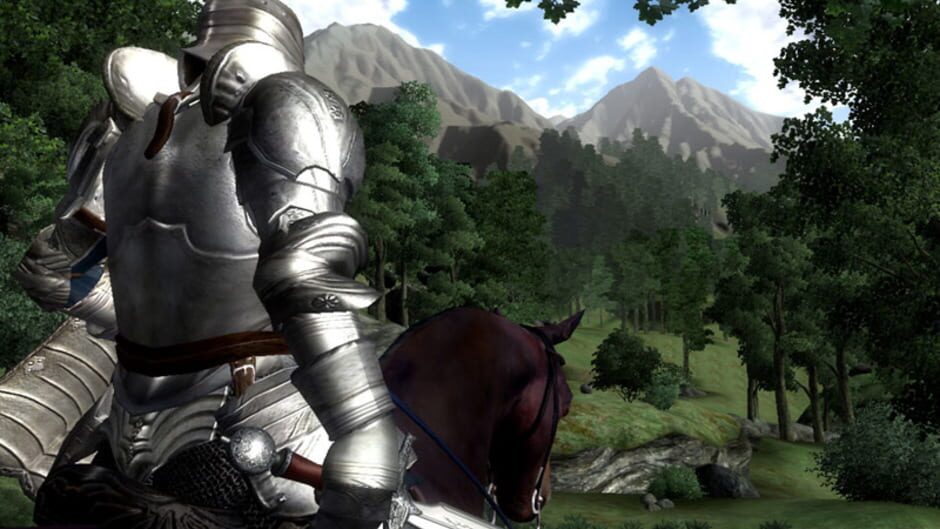
The player character remains highly customizable. Players choose their race, sex, birthsign and class, or create a custom class by selecting specializations, attributes and major skills. Heavily armored warriors, mages, thieves, archers and hybrid characters can therefore follow the same adventures through very different approaches.
The original progression system is based on skill use. Running, fighting, lockpicking, casting spells and practicing different disciplines gradually improve the corresponding abilities. Overall character level increases when the major skills selected for the class advance sufficiently, requiring more thought about character construction than in Skyrim.
This system has an important particularity: much of the world also evolves with the player’s level. Enemies, equipment and rewards can change as progression continues. This level scaling allows Cyrodiil to be explored with considerable freedom, but it can also weaken the feeling of becoming more powerful when formerly modest opponents are replaced by significantly more dangerous variants.
Combat takes place in real time and can be played in first or third person. Swords, maces, axes, bows, shields and different schools of magic can be combined according to the character build. Fatigue, defense, resistances and equipment quality remain important, while higher skill levels progressively unlock new abilities.
Magic plays a considerable role. Destruction, Restoration, Illusion, Conjuration, Alteration and Mysticism provide offensive, defensive and utility tools. Access to the Arcane University also allows the player to go further with spell creation and enchanting, giving specialized characters considerable room for customization.
Alchemy extends this freedom. Plants, food and other ingredients found throughout the world contain several effects that can be combined to create potions and poisons. Like many of Oblivion’s systems, it rewards regular practice rather than following a completely predetermined progression path.
Oblivion Gates are the most visible manifestation of the crisis. These portals transport the player into parts of the Daedric realm dominated by volcanic landscapes, towers and hostile creatures. Reaching the Sigil Stone at the top of a tower usually closes the Gate and also provides an item that can be used to enchant equipment.
Their appearance gives the main quest a spectacular scale, but their structure can also become repetitive when the player decides to close a large number of them. They nevertheless remain central to the visual identity of the game: the contrast between the bright landscapes of Cyrodiil and the red, hostile regions of Oblivion makes the Daedric invasion immediately tangible.
The different factions function almost like parallel campaigns. The Fighters Guild develops a storyline around contracts and a rival organization, while the Mages Guild accompanies the character’s progression toward the Arcane University and confronts the threat of necromancers. The Imperial City Arena offers an independent progression built around successive fights.
The Thieves Guild and Dark Brotherhood have even more distinctive identities. The former builds its missions around theft, infiltration and the mysterious Gray Fox. The latter turns the character into an assassin and offers several contracts with some freedom in how targets are eliminated. These questlines contribute strongly to Oblivion’s reputation because they sometimes create situations more memorable than the main campaign.
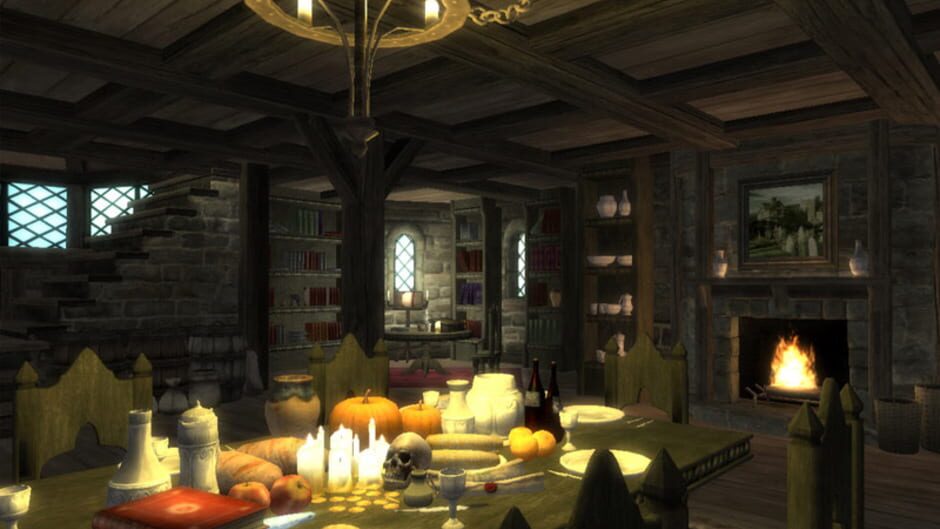
The world also attempts to give its inhabitants routines. Characters move between different activities, sleep, eat, work and speak to each other according to their schedules. The system sometimes produces awkward behavior or conversations that became famous for their strangeness, but it contributes to the impression that characters have lives beyond simply giving quests.
Persuasion itself uses a small conversation system that allows players to influence an NPC’s disposition through admiration, jokes, boasting or intimidation. Bribery, reputation, personality and social skills can also affect how inhabitants react to the player character.
This freedom comes with several rigidities typical of its era. Combat animations are simple, some dungeons rely on very similar layouts, level scaling can create strange situations and the original interface was heavily designed around console use. These limitations do not prevent the combination of world, systems and quests from producing a wide variety of experiences.
Two major expansions later extend the adventure. Knights of the Nine develops a quest centered on an ancient knightly order and the Relics of the Crusader. Shivering Isles opens a new territory belonging to Sheogorath, the Daedric Prince of Madness, with its own story, environments and creatures. By its scale and artistic identity, this second expansion is almost an adventure of its own.
What to remember
- An open-world RPG set in Cyrodiil, the Imperial province at the heart of Tamriel.
- A political and supernatural crisis triggered by the assassination of Uriel Septim VII and the opening of Oblivion Gates.
- Martin Septim, the Emperor’s last heir, becomes essential to preventing Mehrunes Dagon’s invasion.
- Extensive character creation through races, birthsigns, classes, skills, magic and equipment.
- Progression based on practicing skills, combined in the original game with significant level scaling for enemies and loot.
- Several major factions with their own questlines: Fighters Guild, Mages Guild, Thieves Guild, Dark Brotherhood and Arena.
- Dozens of dungeons, ruins, caves, shrines and Oblivion Gates spread throughout a freely explorable province.
- Two major expansions, Knights of the Nine and especially Shivering Isles, which greatly expand the original adventure.
Conclusion
The Elder Scrolls IV: Oblivion occupies a distinctive position between two approaches to Bethesda RPG design. It still preserves many systems inherited from Morrowind, including classes, attributes and progression closely tied to skills, while making its world much easier to navigate and understand.
Cyrodiil plays an essential role in this evolution. Roads, cities, markers and fast travel make exploration more immediate without preventing the player from completely abandoning the main quest. This freedom creates a structure where becoming an assassin for the Dark Brotherhood, champion of the Arena or Arch-Mage can become just as important as saving the Empire.
Its best quests use this flexibility rather than simply relying on the size of the world. Several missions from the Dark Brotherhood, Thieves Guild and Daedric shrines place the player in specific situations with their own rules, giving Cyrodiil a personality that endless caves and forts cannot always provide on their own.
Some systems have aged considerably. Progression through major skills can encourage unintuitive optimization, level scaling sometimes weakens the feeling of power, and character behavior can abruptly shift from immersive to absurd. These imperfections nevertheless belong to a game whose ambition was precisely to let many systems operate simultaneously within the same world.
Oblivion therefore became a decisive step in the model Bethesda would later develop with Fallout 3 and Skyrim. It simplifies some traditions of classic RPG design without yet abandoning classes and several complex mechanics, while giving increasing importance to free exploration, side quests and encounters discovered simply by leaving the main road.
Good to know
- The Elder Scrolls IV: Oblivion was developed by Bethesda Game Studios.
- The original game was released in March 2006 for PC and Xbox 360; a PlayStation 3 version followed in 2007.
- It is the fourth numbered main entry in The Elder Scrolls, after Morrowind and before Skyrim.
- The adventure takes place mainly in the Imperial province of Cyrodiil during the Oblivion Crisis.
- Patrick Stewart voices Emperor Uriel Septim VII in the English version, while Sean Bean voices Martin Septim.
- Knights of the Nine and Shivering Isles are the two main narrative expansions.
- The Game of the Year Edition includes the original game, Knights of the Nine and Shivering Isles.
- The Elder Scrolls IV: Oblivion Remastered is a separate version released in 2025, developed collaboratively by Bethesda Game Studios and Virtuos with redesigned visuals and several gameplay modernizations.