
Presentation
Saying Bethesda can mean several things.
For some players, the name immediately evokes The Elder Scrolls or Fallout. For others, it appears before DOOM, Dishonored, Wolfenstein, or Quake. This ambiguity comes directly from the company's history.
Bethesda Softworks is the historical publisher. Bethesda Game Studios is the development studio today associated notably with The Elder Scrolls, Fallout, and Starfield. Above both sits ZeniMax Media, the parent company created in 1999 and integrated into Microsoft since 2021.
This distinction already suffices to understand a large part of the sheet.
Founded in 1986 in the United States, Bethesda Softworks began in a much more compact organization, where development and publishing were less clearly separated. With The Elder Scrolls, the name Bethesda first became associated with a particular way of building vast RPGs.
Then the scale changes.
The creation of ZeniMax gradually brought together several studios with very different cultures. id Software brought DOOM and Quake. Arkane Studios developed Dishonored and Prey. MachineGames took over Wolfenstein. ZeniMax Online Studios turned Tamriel into a persistent world with The Elder Scrolls Online.
Bethesda Softworks then became something other than a name associated with a single type of game.
It became an editorial banner able to make several voices coexist.
This transformation explains why two almost opposite productions like DOOM and Dishonored 2 can share the same publisher without having to share the same gameplay philosophy.
Since the acquisition of ZeniMax by Microsoft in March 2021, Bethesda belongs to the Xbox ecosystem. But this new ownership does not erase the structure that already existed: several studios, several franchises, and an editorial brand serving as a public meeting point.
The history of Bethesda Softworks is therefore above all that of a change of role.
A name once directly associated with making games has become the editorial layer of a much larger network.
History
1986-1999: from developer-publisher to an established brand
Bethesda Softworks was founded in 1986.
At that time, the name Bethesda corresponded much more directly to the team that developed and published its own productions. This origin explains why the public still sometimes uses "Bethesda" to indifferently designate the publisher and the development studio.
The great turning point came with The Elder Scrolls: Arena in 1994 then Daggerfall in 1996.
The series durably established Bethesda in the open RPG and gave birth to a world, Tamriel, able to host several games, regions, and eras.
This continuity became an important heritage.
Bethesda learned very early that a property can exceed a single product and become a universe in which several generations of players will return.
1999: ZeniMax changes the structure
In 1999, ZeniMax Media was created as parent company.
Bethesda Softworks kept its name and public visibility, but the organization could now expand beyond a single creative core.
The distinction between development and publishing progressively became clearer.
The team that would become Bethesda Game Studios notably continued The Elder Scrolls, while Bethesda Softworks took an increasingly large editorial role.
This transformation is essential.
The name Bethesda can now appear on a game developed by another team without that team ceasing to be identifiable as the main author.
Morrowind and the relationship with Xbox
The Elder Scrolls III: Morrowind was released in 2002 and represented an important step in Bethesda's history.
The game also arrived on the original Xbox, at a time when RPGs of this scope were still strongly associated with PC.
This release considerably broadened the potential audience for the series and built a lasting relationship with the Microsoft ecosystem well before any acquisition.
For Bethesda Softworks, the episode above all showed that a universe historically associated with PC can keep its complexity by moving to console.
The commercial and technical relationship with Xbox thus preceded the future ownership relationship by almost twenty years.
Becoming a true publishing house
During the 2000s and 2010s, ZeniMax grew with several studios possessing their own cultures.
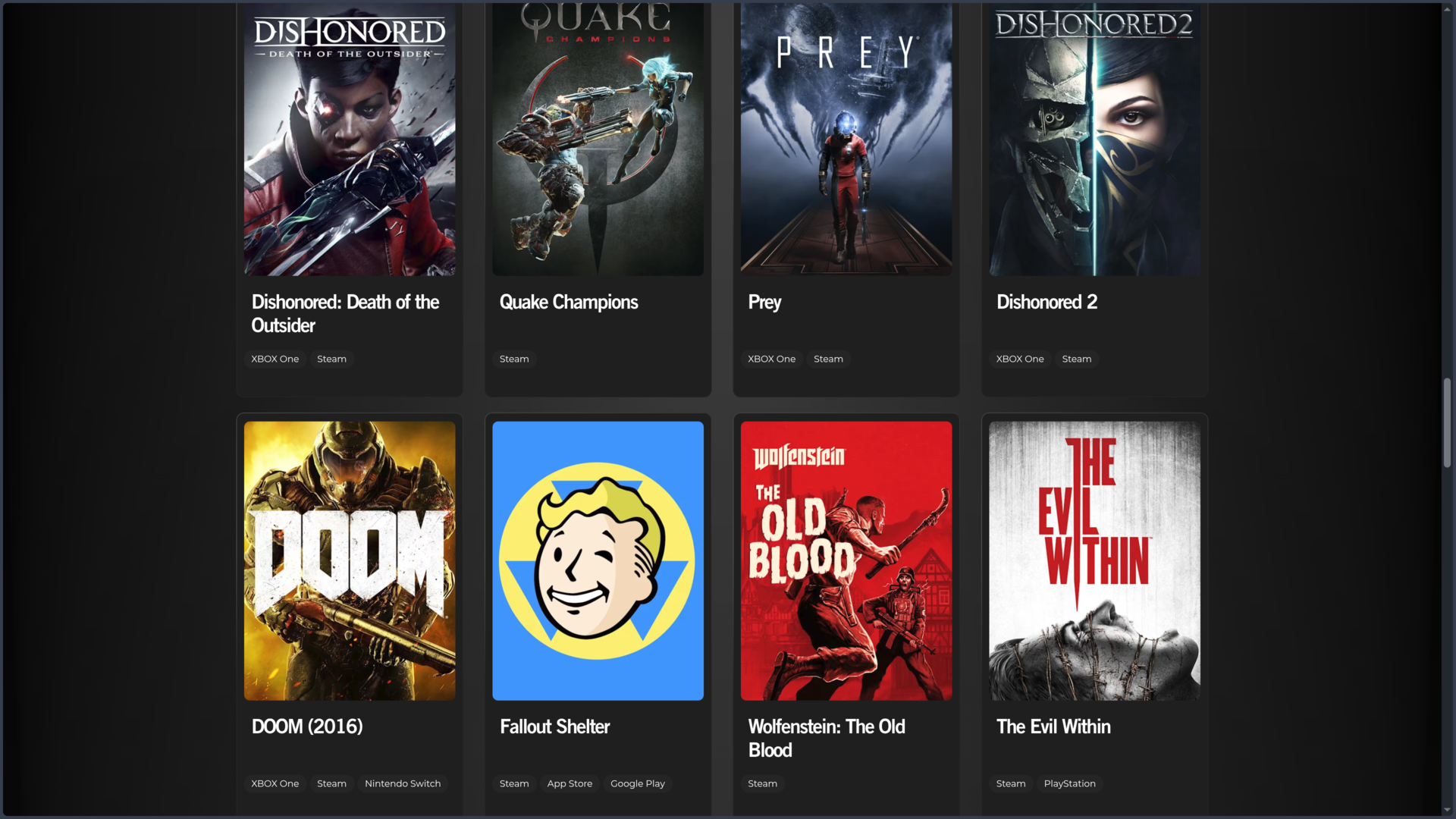
id Software brought a historical FPS tradition with DOOM and Quake.
Arkane Studios built games around systems, exploration, and freedom of approach.
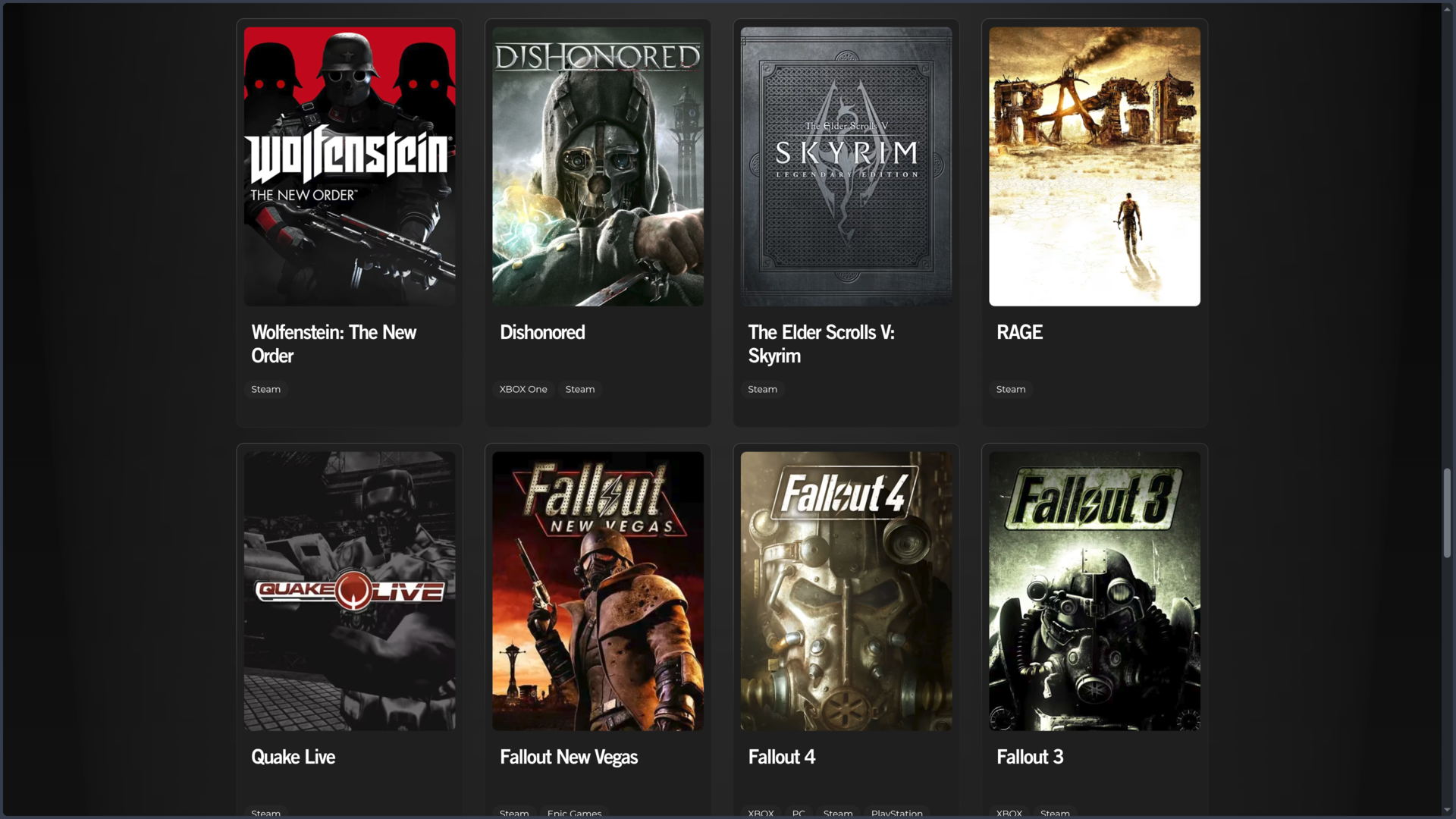
MachineGames developed a new Wolfenstein era with strong attention to storytelling.
ZeniMax Online Studios turned The Elder Scrolls Online into a persistent world meant to live for many years.
Bethesda Softworks then became the meeting point between these productions.
Its function was no longer to impose a common aesthetic on them.
It consisted rather of publishing studios distinct enough for their own names to keep mattering.
2016: DOOM and Dishonored show what Bethesda has become
The year 2016 particularly sums up this transformation.
DOOM, developed by id Software, relies on extremely fast and aggressive action.
Dishonored 2, developed by Arkane, favors observation, stealth, powers, and the possibility of solving a situation in many ways.
The philosophies seem almost opposite.
The same publisher can nonetheless accompany both.
This is probably the simplest demonstration of Bethesda Softworks' editorial maturity: the coherence of the catalog no longer comes from the resemblance of the games, but from the coexistence of strong studio cultures.
Properties designed to last
The other great characteristic of the Bethesda catalog is longevity.
The Elder Scrolls, Fallout, DOOM, Wolfenstein, or Quake span several generations of hardware and audience.
Such longevity changes the publisher's role.
It is no longer enough to succeed on the next launch. One must maintain communities, make old games accessible, produce new installments, and decide how a franchise can continue without losing all its memory.
Modding particularly extends this logic around Bethesda Game Studios productions.
Tools and services like Creations let some works continue to evolve long after release thanks to players.
This culture does not uniformly concern the whole Bethesda catalog, but it strongly contributes to the general identity of the ecosystem.
2021: Microsoft buys ZeniMax
On March 9, 2021, Microsoft finalized the acquisition of ZeniMax Media.
Bethesda Softworks therefore joined the Xbox ecosystem with Bethesda Game Studios, id Software, Arkane, MachineGames, ZeniMax Online Studios, and the group's other teams.
The transaction is immense, but it does not erase the different identities.
Bethesda Softworks continues to exist as an editorial banner.
The studios keep their names.
The change of ownership thus adds an extra level to an already complex architecture rather than replacing it.
Today: a banner within an even larger whole
Since its integration into Microsoft, Bethesda has continued to publish productions from several studios and according to platform strategies that can vary from project to project.
This situation recalls an essential distinction:
owner, publisher, studio, and platform are not the same thing.
Microsoft owns ZeniMax.
ZeniMax is the parent company of Bethesda Softworks.
Bethesda Softworks publishes the works of different studios.
And these studios keep their own creative culture.
Understanding this architecture avoids asking Bethesda Softworks for a "gameplay touch" that a publisher of this nature precisely has no reason to possess.
What Sets It Apart
A common house rather than a common aesthetic
It would be hard to find a single aesthetic linking DOOM, Dishonored, The Elder Scrolls, Fallout, and Wolfenstein.
Their rhythms, systems, and universes are too different.
This absence of uniformity is not a weakness.
It precisely defines Bethesda Softworks as a publisher.
Its value comes from its ability to make several creative identities coexist without asking each to become a variation of Bethesda Game Studios.
A name that connects several levels without confusing them
Bethesda Softworks has a historical peculiarity: its name remains extremely close to that of Bethesda Game Studios.
The confusion is therefore understandable.
But it masks the real role of the publisher.
The Elder Scrolls and a large part of Fallout are strongly associated with Bethesda Game Studios.
DOOM belongs to the culture of id Software.
Dishonored to that of Arkane.
Modern Wolfenstein to MachineGames.
The Bethesda banner links these works.
It does not replace their main authors.
Keeping worlds alive across generations
Bethesda Softworks works with several properties whose history goes far beyond a single console cycle.
This depth turns the catalog into an active heritage.
An old franchise must be able to return, be reinterpreted, reach new audiences, and sometimes live under several forms.
The editorial work then becomes as much a matter of continuity as of launch.
This is particularly visible with The Elder Scrolls and Fallout, but the same question arises with DOOM, Quake, or Wolfenstein.
Letting the studios speak with their own voice
The diversity of the catalog only has value if the studios remain recognizable.
Sharing an organization can bring resources, visibility, and publishing power.
But a publisher would lose part of its portfolio's interest if it forced all its teams to speak the same way.
Bethesda Softworks is therefore most interesting when it acts as a common house rather than a single voice.
Its success is not about making id Software, Arkane, or MachineGames more alike.
It is about letting several creative cultures exist under the same banner.
Good to Know
- Bethesda Softworks was founded in 1986 in the United States.
- Bethesda Softworks and Bethesda Game Studios are two distinct entities: the former is the historical publisher, the latter a development studio.
- ZeniMax Media was created in 1999 and became the parent company of Bethesda Softworks.
- The Elder Scrolls: Arena appeared in 1994 and inaugurated one of the great historical properties associated with the Bethesda name.
- Morrowind also released on the original Xbox in 2002, building an ancient relationship between Bethesda and Microsoft.
- Bethesda Softworks now publishes productions developed by several distinct studios, notably Bethesda Game Studios, id Software, Arkane, MachineGames, and ZeniMax Online Studios.
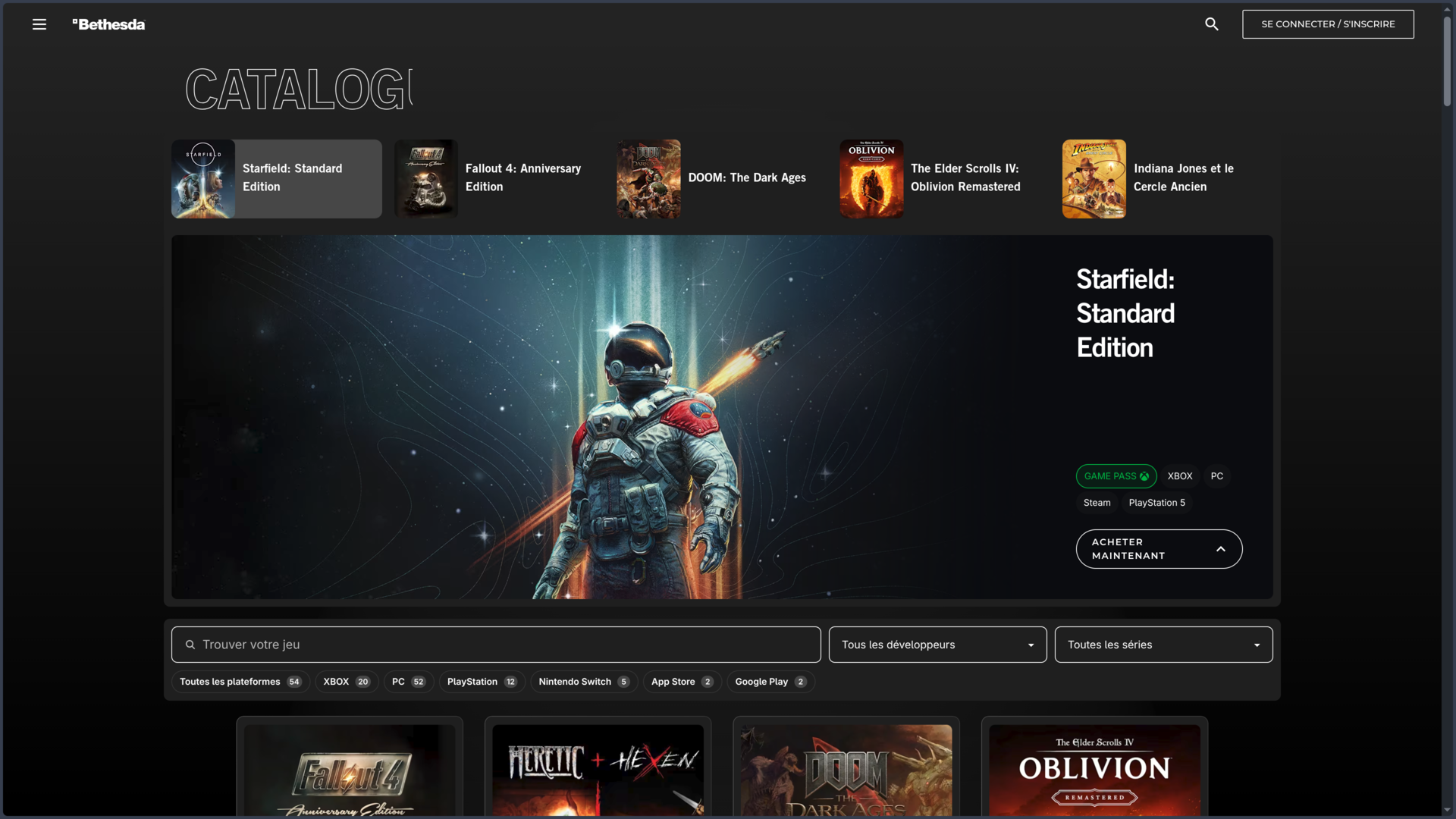
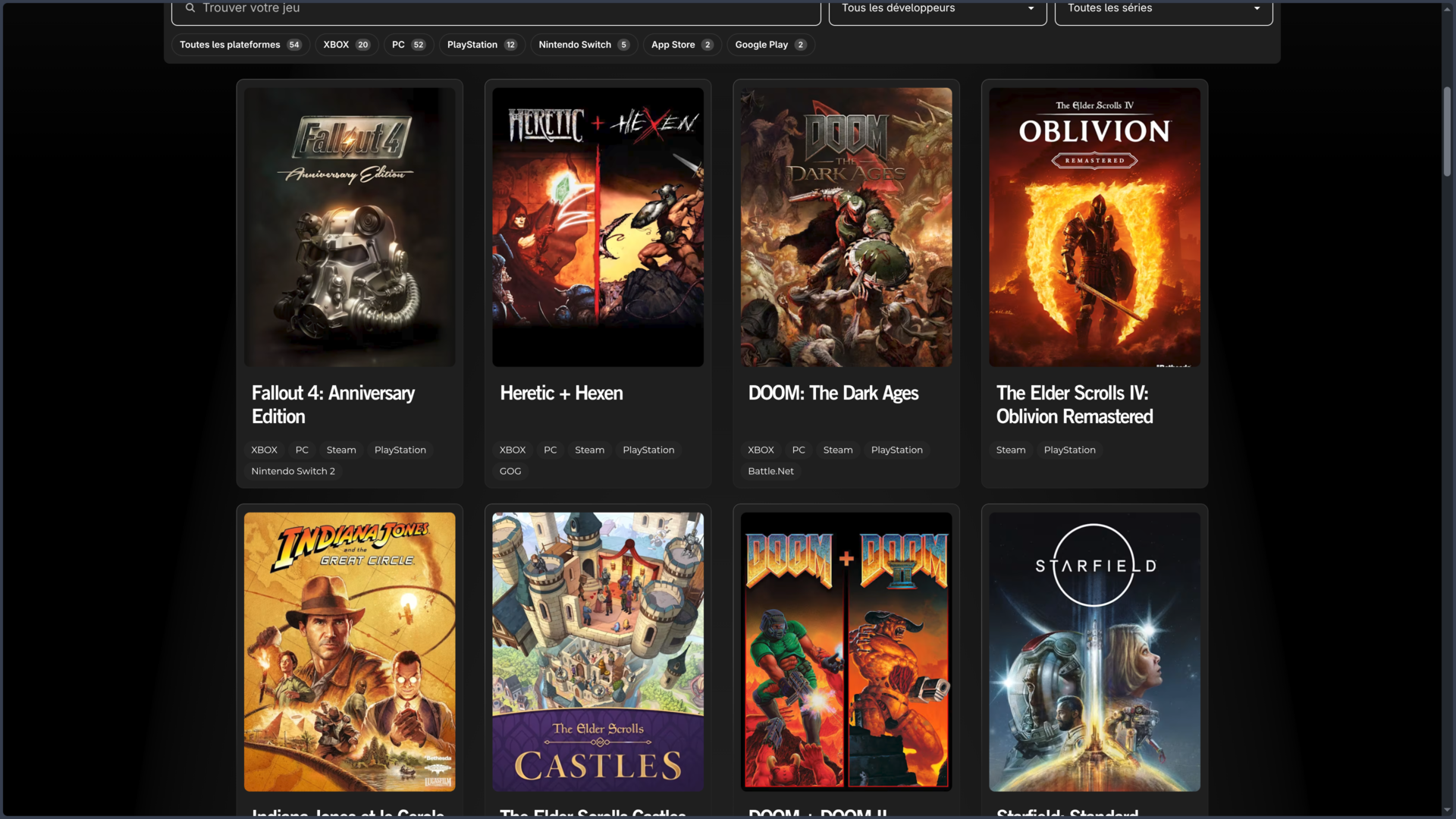
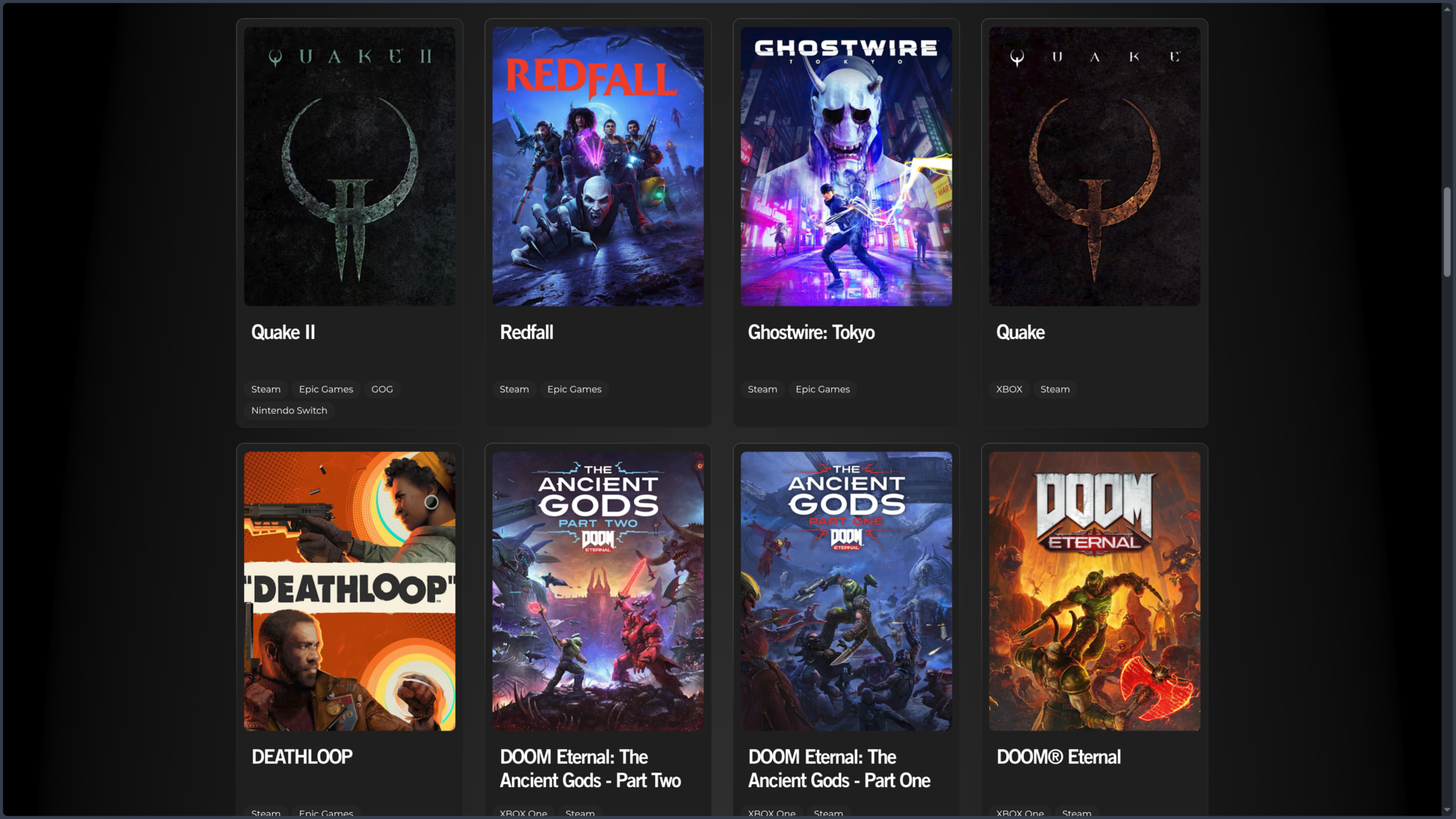
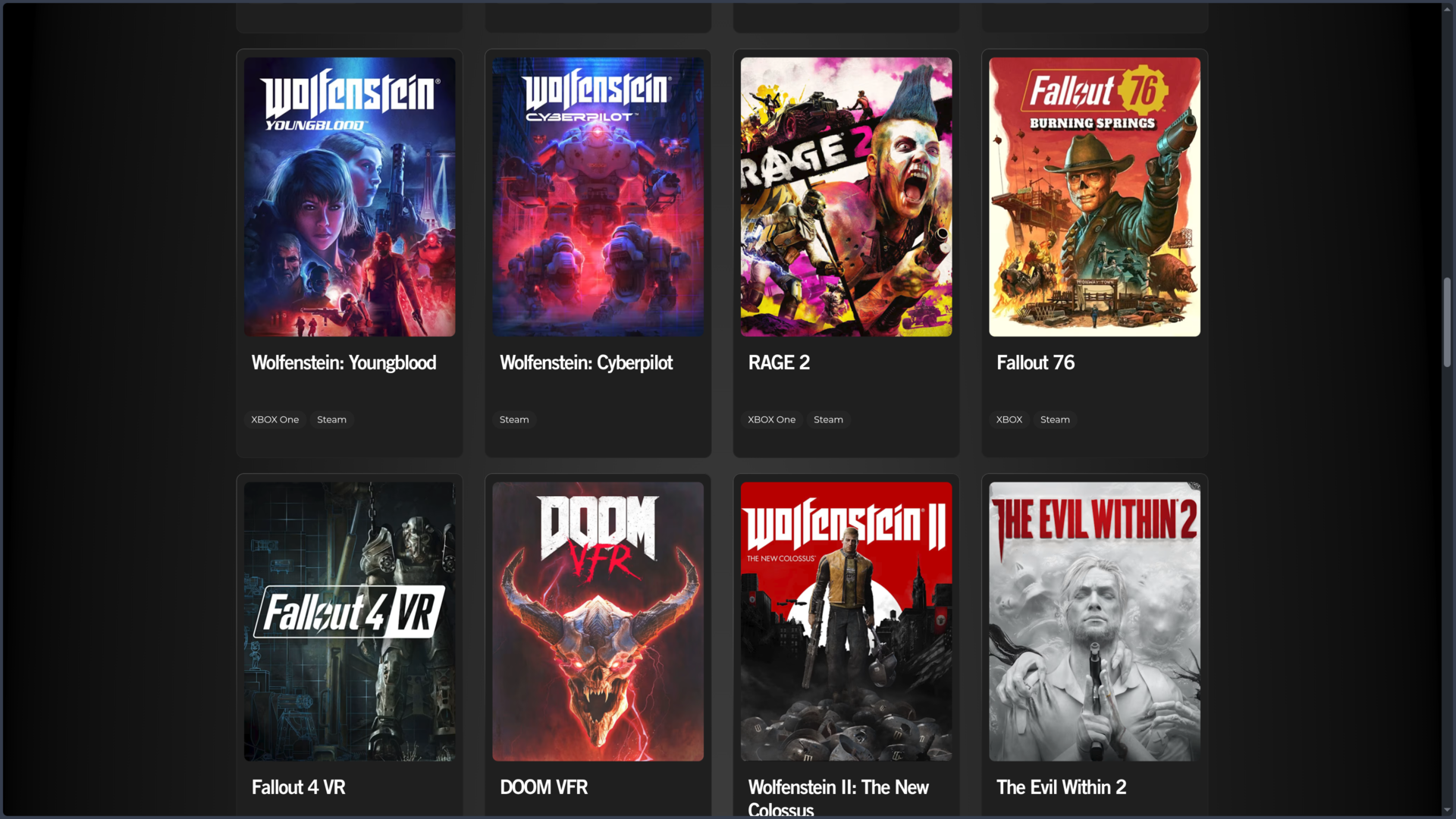
- The catalog associated with Bethesda notably includes The Elder Scrolls, Fallout, DOOM, Quake, Wolfenstein, and Dishonored.
- Microsoft finalized the acquisition of ZeniMax Media on March 9, 2021.
- Bethesda maintains a strong relationship with modding and community creations, particularly around Bethesda Game Studios games.