Presentation
Fallout: New Vegas begins by taking away almost everything an RPG usually uses to give its protagonist an identity.
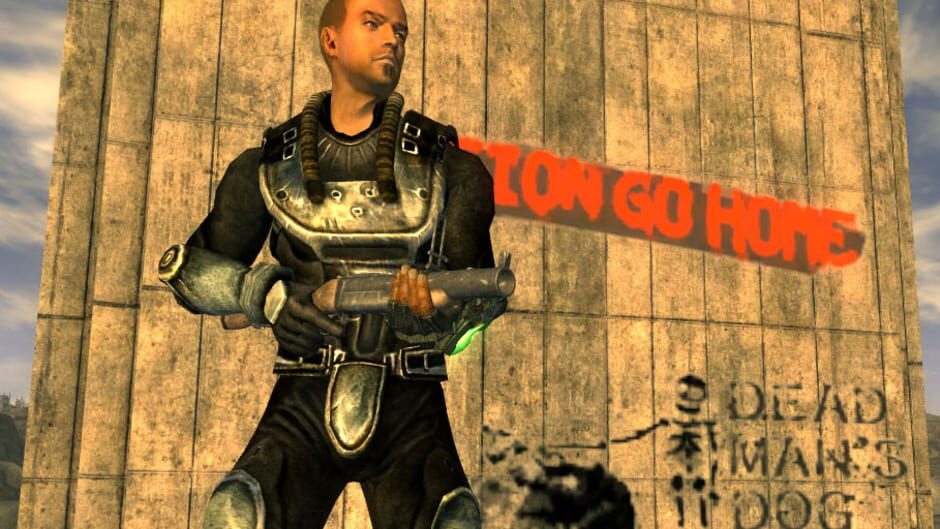
The Courier is neither a chosen one, nor a Vault dweller suddenly discovering the outside world, nor the descendant of an exceptional bloodline. Their profession simply explains why they happened to be on that road carrying a package important enough for someone to try to kill them.
This relative absence of an imposed past leaves considerable room for the player.
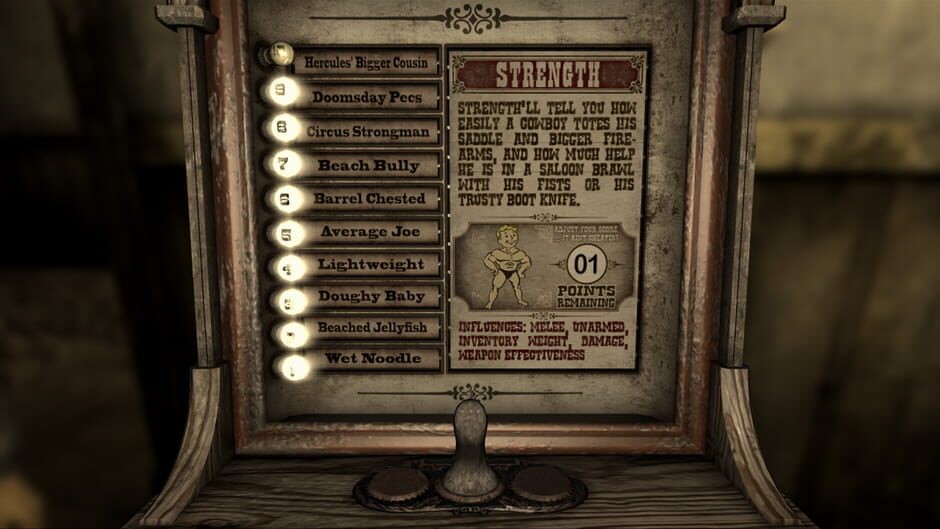
S.P.E.C.I.A.L. attributes, skills, perks and traits gradually define the character, but dialogue plays an equally important role. A high Speech skill can persuade someone, while Medicine, Science, Repair, Explosives or other areas of knowledge can unlock responses suited to a particular situation.
The character is therefore not merely effective in different ways during combat. What they actually know how to do changes how they understand and resolve certain quests.
This becomes particularly important because the Mojave is already a political territory before the player arrives. Unlike the Capital Wasteland of Fallout 3, largely defined by ruins and scattered communities, New Vegas presents a region where several organized powers are already attempting to impose their vision.
The New California Republic represents an organized society with institutions, an army and an expanding territory. It brings a degree of stability, but that growth also reveals bureaucracy, military exhaustion and territorial ambition.
Caesar’s Legion offers a radically different answer. Built around conquest, discipline and absolute authority, it absorbs defeated groups into a system founded on violence and submission.
Mr. House, meanwhile, views New Vegas as the center of a project whose full scope only he seems to understand. His power rests on the Strip, its technology and the families that operate the casinos under his control.
The player is not required to observe their conflict passively. They can work with these powers, undermine their operations or gradually seek another solution for the region.
The reputation system gives concrete form to these relationships. Different communities and factions may like, fear or hate the Courier depending on their actions. Being welcomed in one town therefore does not guarantee acceptance elsewhere, and repeatedly helping one side can make encounters with its enemies far more difficult.
Disguises even allow certain uniforms to be worn so that the Courier is temporarily identified as a member of a faction. The mechanic is imperfect, but it expresses an important idea in New Vegas: the player’s identity also has a social dimension.
Quests make extensive use of this structure. A mission may begin with a relatively simple objective before revealing several conflicting interests. Speaking with the people involved, possessing a particular skill or discovering information elsewhere in the Mojave can reveal solutions that were not initially visible.
It is therefore not simply a matter of choosing an answer at the end of a conversation. The way the Courier explores the world often determines the options available when a decision must be made.
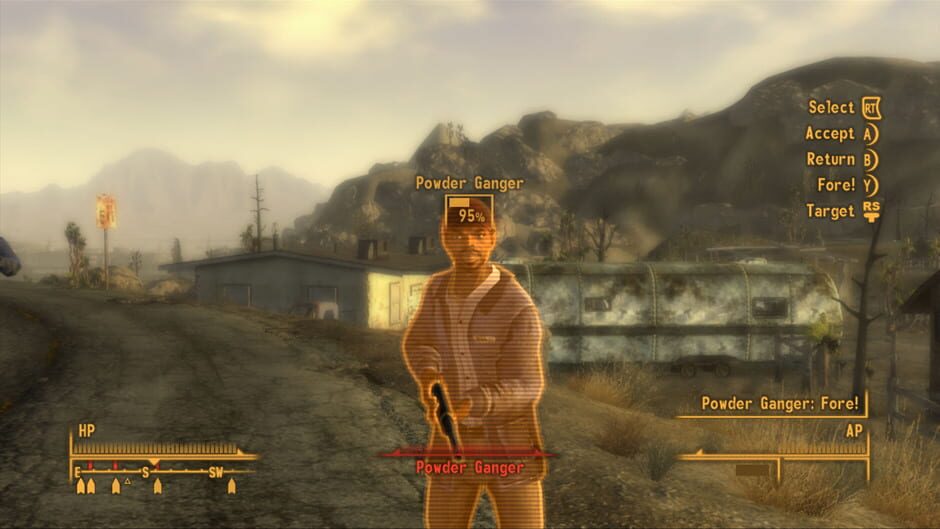
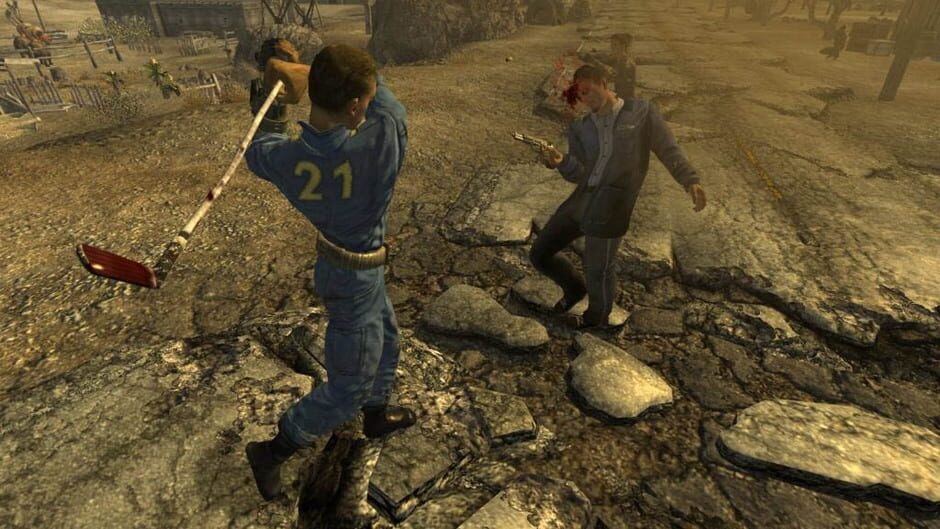
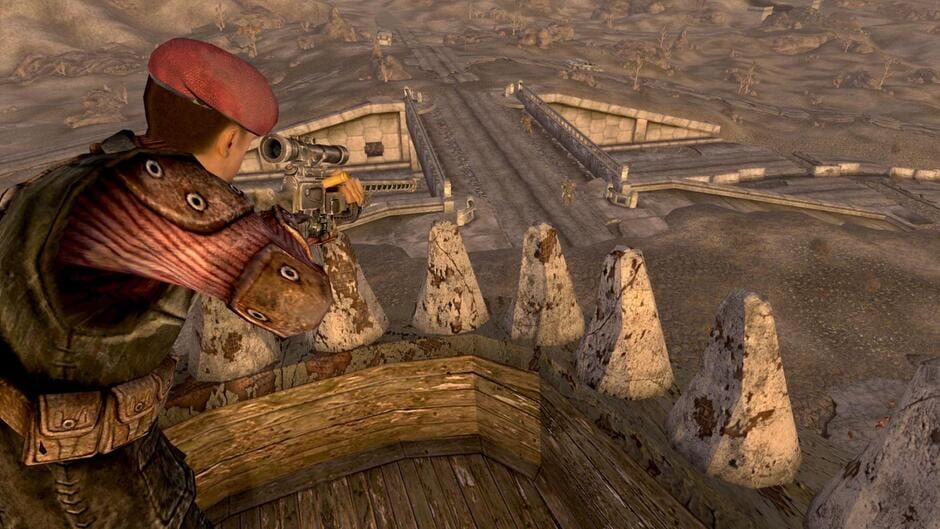
Combat retains the foundation introduced by Fallout 3. Firearms, melee weapons, explosives and energy weapons can be used in real time, while V.A.T.S. greatly slows the action and allows different body parts to be targeted by spending Action Points.
New Vegas nevertheless develops equipment management further. Many weapons can receive modifications, and certain ammunition types have properties suited to different kinds of protection. A character specializing in firearms can therefore prepare their arsenal according to what they expect to face rather than treating every round as interchangeable.
Crafting and survival also play a larger role. Campfires, workbenches and other facilities allow different items to be produced from resources found during exploration.
Hardcore mode pushes this logic further by adding hunger, thirst and sleep requirements, while making certain aspects of healing and resource management more demanding. It remains optional: the game can be completed perfectly well without turning every journey through the desert into a survival exercise.
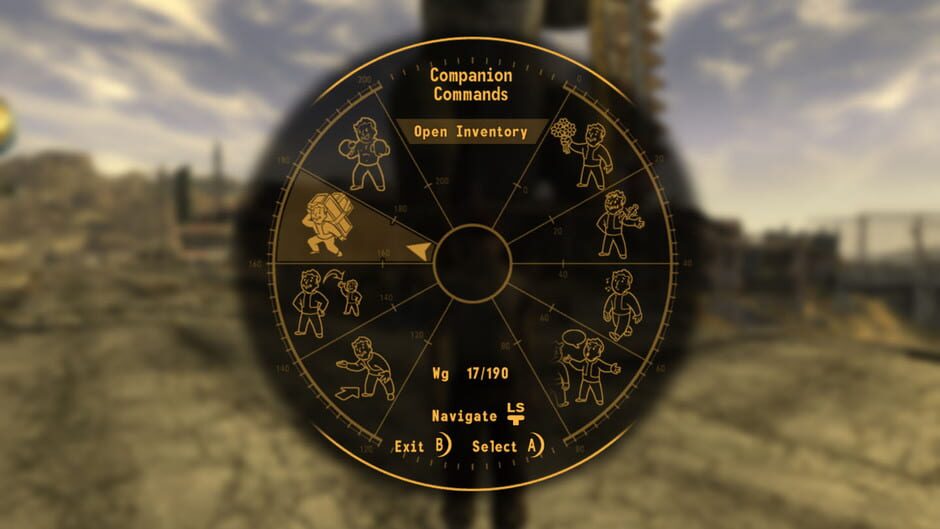
Companions complete this freedom of character building. Each has their own story, abilities and relationships with the Mojave. Traveling with them can open new conversations or gradually reveal elements that would otherwise remain unseen.
The territory itself has an identity very different from Washington. The Mojave is not uniformly destroyed. Trade routes function, casinos still receive customers, soldiers occupy strategic positions and some communities have had several generations to build something after the catastrophe.
New Vegas perfectly concentrates this contradiction.
Neon lights still shine in the middle of a post-nuclear world. Casinos sell an illusion of prosperity only a few kilometers from poor settlements, military camps and roads populated by dangerous creatures. Old Las Vegas has not simply survived: it has found a new way to sell the dream.
Above all these conflicts stands Hoover Dam. Its ability to generate electricity gives it a value extending far beyond symbolism. Controlling it means possessing an essential resource and a major strategic position.
That is why the real question of New Vegas is ultimately not who tried to kill the Courier.
The question becomes: who should rule the Mojave once the Courier has enough power to influence the answer?
What to remember
- An open-world action RPG set in 2281 in the Mojave and around the city of New Vegas.
- A protagonist known as the Courier, left for dead after the mysterious package they were meant to deliver is stolen.
- A major political struggle involving the NCR, Caesar’s Legion and Mr. House over control of the region and Hoover Dam.
- A reputation system specific to different factions and communities, which react to the player’s actions.
- Numerous dialogue and quest-resolution possibilities directly tied to the skills developed by the character.
- Combat combining real-time action, V.A.T.S., numerous weapon categories, specialized ammunition and equipment preparation.
- Considerable narrative freedom allowing the player to support different powers or seek a more independent future for the Mojave.
Conclusion
Fallout 3 asked what might be hiding beyond the horizon. Fallout: New Vegas asks a different question: what do you do when you arrive somewhere and everyone already has a plan for that horizon?
The Mojave does not wait for the Courier in order to exist. Its roads carry trade, its borders are contested, its communities are established and its armies are already moving. The player arrives in the middle of this political machinery simply because they had the bad luck to carry the wrong package.
That position is precisely what gives the role-playing so much strength.
The NCR, the Legion and Mr. House are not merely three colors placed on a map. Each proposes a different way of organizing the territory and forces the player to consider the cost of that stability. Even when the game presents some factions far more brutally than others, choosing a future for the Mojave rarely means selecting a perfect solution.
Side quests reinforce this impression because they give life to the populations living beneath these great powers. A political decision becomes far less abstract once the player knows the soldiers, traders, tribes or small communities that will have to live with its consequences.
Technically, New Vegas also carries the limitations of its foundations. Animations are stiff, real-time combat can still feel awkward and some spaces can seem barren in the least intentional sense of the word. V.A.T.S. often remains more satisfying than conventional shooting.
But these weaknesses affect its true playground far less: decision-making.
A character who knows how to talk can avoid a fight. An apparently secondary skill can transform a conversation. A former ally can become hostile. A quest completed several hours earlier can change a situation the player did not yet know would matter.
The Courier therefore begins the adventure as someone whose life seems to have been decided by another man at the edge of a grave.
Everything that follows gradually reverses that situation.
By the end, it is no longer the Mojave deciding the Courier’s fate. It is the Courier who may decide the fate of the Mojave.
Good to know
- Fallout: New Vegas was developed by Obsidian Entertainment and published by Bethesda Softworks.
- The game was originally released in October 2010 on PC, PlayStation 3 and Xbox 360.
- Its story takes place in 2281, four years after the events of Fallout 3.
- The main character is a Mojave Express Courier left for dead while carrying a package intended for New Vegas.
- The New California Republic and Caesar’s Legion are among the major powers fighting for control of the Mojave.
- The game retains systems from Fallout 3 such as S.P.E.C.I.A.L. and V.A.T.S., while placing greater emphasis on faction reputation, dialogue skills and different quest resolutions.
- Hardcore mode is optional and notably adds hunger, thirst and sleep management.