Presentation
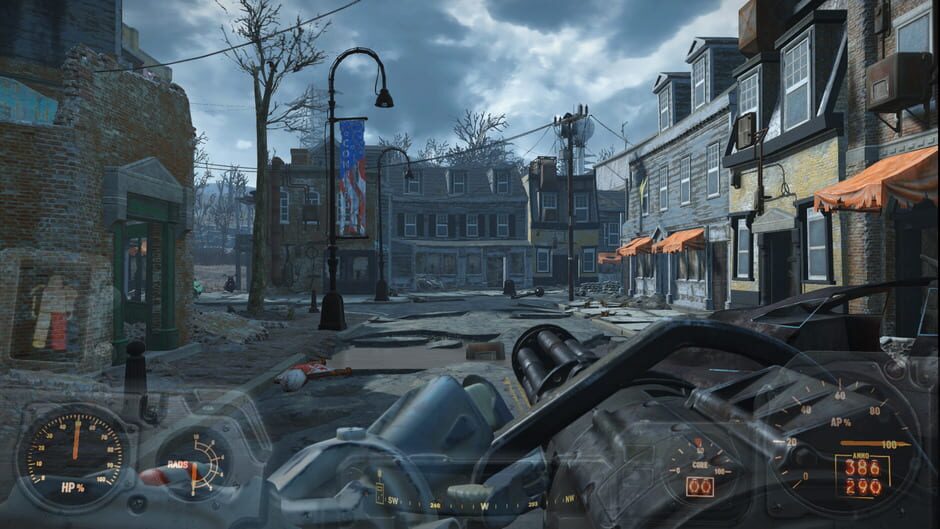
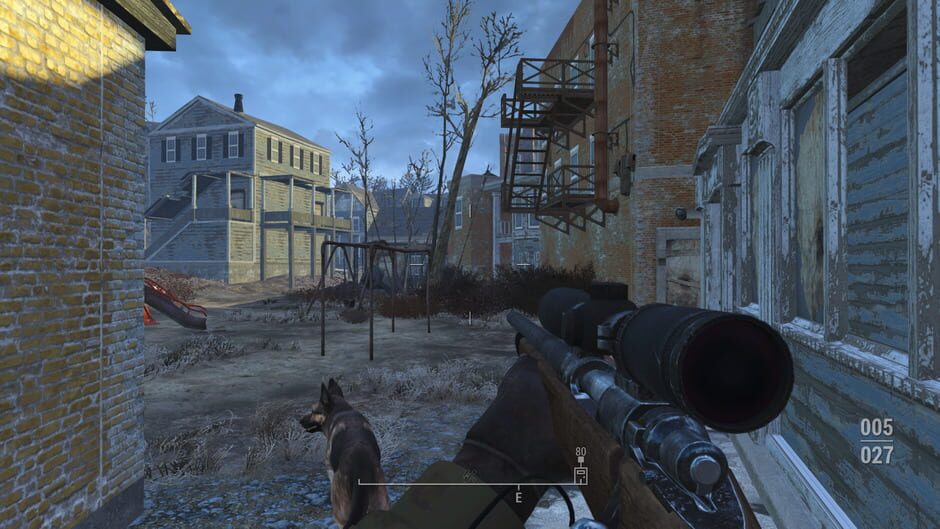
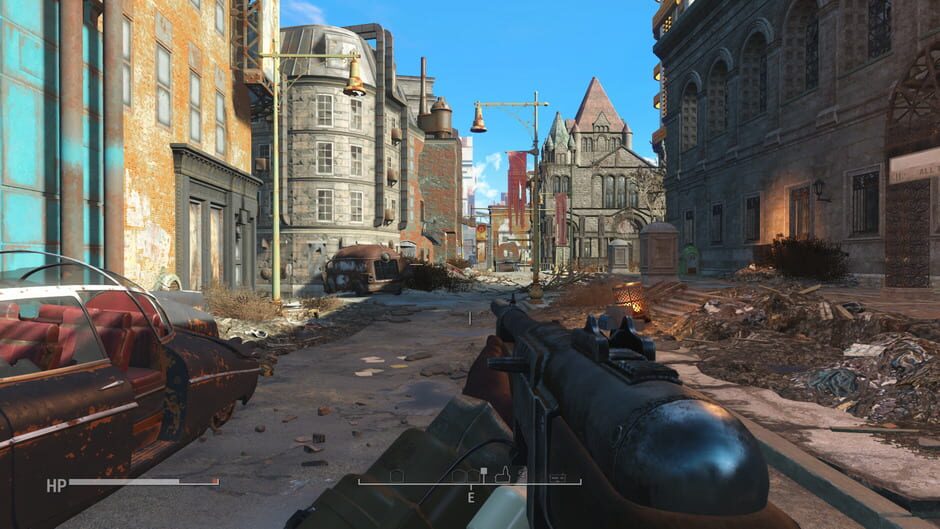
Fallout 4 begins by showing the world before destroying it. A few moments in an idealized American suburb are enough to create a sharp contrast with what awaits the player after leaving Vault 111. Houses have collapsed, roads disappear beneath vegetation, and Boston has become a patchwork of improvised fortifications, abandoned buildings and communities built inside the remains of the past.
Exploration is the true driving force of the experience. A mission may point toward a specific destination, but the journey there is often enough to create several new objectives. A distant light, an abandoned station or a radio signal can pull the player away from the original goal for an hour. Fallout 4 constantly rewards this curiosity with equipment, environmental stories, new characters or simply locations distinctive enough to justify the detour.
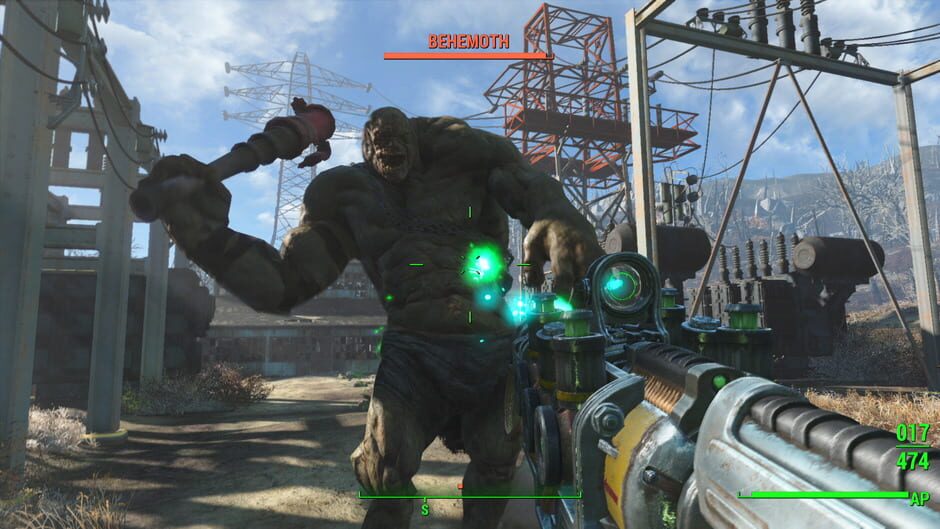
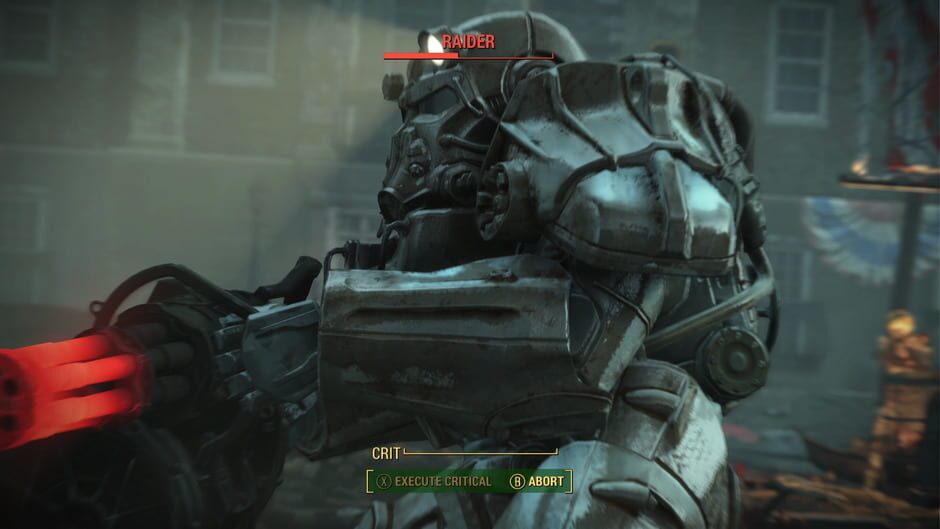
Combat plays a more immediate role than in several earlier entries. Rifles, handguns, heavy weapons, explosives and improvised equipment can be used much like in a traditional shooter, while V.A.T.S. greatly slows the action and allows specific body parts to be targeted. The system therefore preserves part of Fallout’s historical tactical logic without completely interrupting the flow of combat.
Progression still relies on the S.P.E.C.I.A.L. system — Strength, Perception, Endurance, Charisma, Intelligence, Agility and Luck — alongside a broad range of perks. Players can focus on firearms, melee combat, stealth, hacking, dialogue or crafting, then gradually combine several approaches. There is no single ideal way to cross the Commonwealth: a highly charismatic character does not solve situations in the same way as a heavy-weapons specialist or a stealth-oriented explorer.
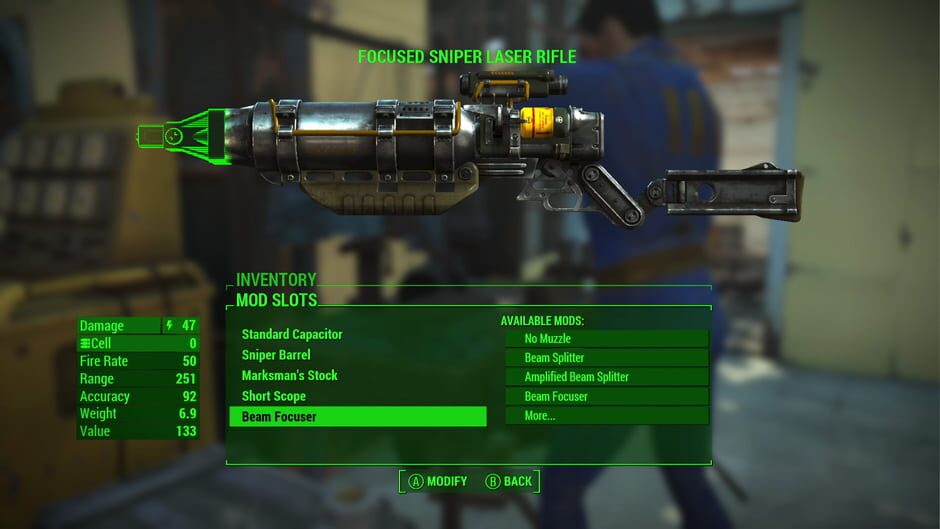
Crafting also takes on particular importance. Weapons and armor can receive numerous modifications, giving new value to objects scavenged from the ruins. An old typewriter, lamp or desk fan is no longer merely part of the scenery: its components can be used to improve a weapon, repair an installation or build something inside a settlement.
The settlement system extends this logic to the environment itself. In several secured locations, players can construct housing, crops, defenses, generators and other facilities to support new inhabitants. This dimension is not required to enjoy the main exploration, but it offers another way of reading the world: instead of simply scavenging ruins, their materials can be used to create new places to live.
Companions also contribute to the discovery of the Commonwealth. Some travel alongside the player in combat, comment on decisions and develop their relationship with the protagonist according to their behavior. Their presence gives a more personal face to the different visions of the world encountered throughout the journey.
These opposing visions become especially important once the major factions enter the story. The Minutemen seek to protect and rebuild the Commonwealth’s communities. The Brotherhood of Steel views certain technologies as threats that must be controlled. The Railroad defends synths capable of thought and of seeking their own freedom. The Institute, meanwhile, holds a radically different vision of humanity’s future.
These groups are not simply four sets of missions. They confront the player with incompatible ideas about progress, security and identity. The search for Shaun therefore eventually becomes part of a much larger question: in a world that has already survived its own destruction, who deserves to decide what comes next?
What to remember
- An open-world action RPG set in 2287 in the Commonwealth, built around the ruins of Boston.
- A personal quest in which the Sole Survivor of Vault 111 searches for their missing son after more than two centuries of cryogenic suspension.
- Highly free exploration that encourages detours, discovering locations and stories told directly through the environment.
- A combat system combining real-time shooting with V.A.T.S., which slows the action and allows precise targeting of enemies.
- Progression based on S.P.E.C.I.A.L. attributes, perks, weapon customization and scavenged materials.
- Settlements to build and several major factions whose opposing visions influence the fate of the Commonwealth.
Conclusion
Fallout 4 begins with an extraordinarily intimate motivation: finding a missing child. Yet the Commonwealth is so effective at pulling the player elsewhere that this personal urgency constantly collides with the stories of other people.
This is one of the game’s strongest qualities, but also one of its tensions. The story asks the player to care about Shaun while the open world invites them to restore a settlement, explore a forgotten factory, follow a radio signal or spend an entire evening modifying a suit of armor. The adventure gains enormously in freedom what it can sometimes lose in urgency.
This distraction works because exploration rarely feels like empty space between missions. The ruins tell stories about what existed before the war, new communities reveal what emerged afterward, and the factions show different ways of imagining the future. The Commonwealth therefore becomes more than a post-apocalyptic setting: it is a territory where several societies are already trying to replace the one that disappeared.
Crafting and settlements reinforce this idea in a very concrete way. The player does not merely collect remnants of the old world to become stronger; they can literally dismantle them in order to build something else.
That may be where Fallout 4 distinguishes itself most clearly. Its universe constantly speaks about destruction, yet its main mechanics also encourage scavenging, transformation and reconstruction. Two centuries after the end of the world, the question is no longer whether humanity can survive. It is what humanity chooses to become.
Good to know
- Fallout 4 was developed by Bethesda Game Studios and published by Bethesda Softworks.
- The game was originally released on November 10, 2015.
- The main adventure takes place in 2287, 210 years after the Great War of 2077.
- The protagonist is known as the Sole Survivor of Vault 111.
- The Commonwealth primarily represents a post-apocalyptic version of Boston and its surrounding region.
- Fallout 4 introduces a particularly extensive settlement-building system to the series and significantly expands weapon and armor modification.
- The Minutemen, Brotherhood of Steel, Railroad and Institute play decisive roles in the main conflict.