Presentation
Fallout 3 builds one of its most important moments around a simple door.
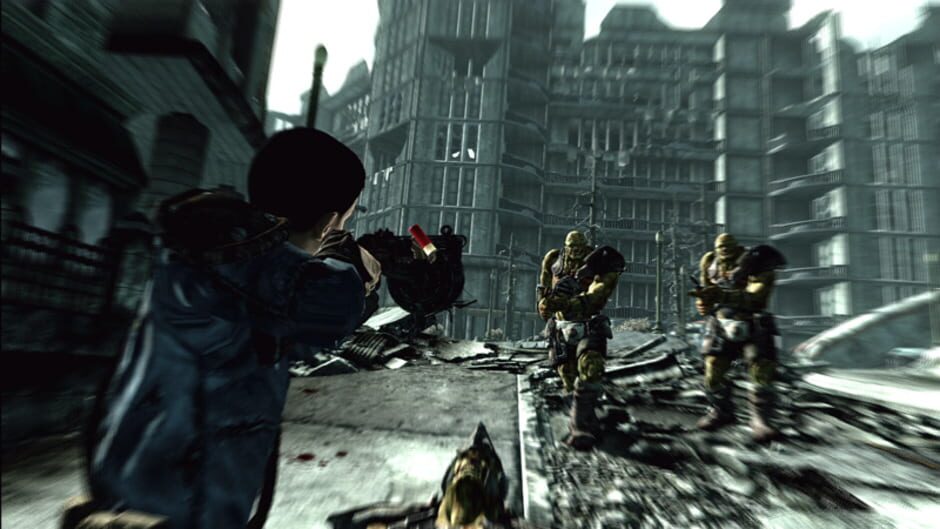
After spending the beginning of the adventure underground, the player leaves Vault 101 and suddenly discovers the horizon of the Capital Wasteland. There are no longer corridors pointing toward an obvious direction. A town appears in the distance, roads vanish into the ruins and Washington stands as a destroyed mass on the horizon.
This opening summarizes much of what Bethesda brings to the series. The first two Fallout games relied on an isometric RPG structure and turn-based combat. Fallout 3 transforms that legacy into a three-dimensional world explorable from first- or third-person perspectives without abandoning statistics, skills, dialogue and choices.
The Capital Wasteland therefore becomes more than a setting. An abandoned metro station may provide a route beneath an inaccessible area, a collapsed building may hide the story of its former occupants, and a broadcast heard through the Pip-Boy can lead toward a new encounter. Exploration constantly works through curiosity: something appears in the distance and is enough to change the planned route.
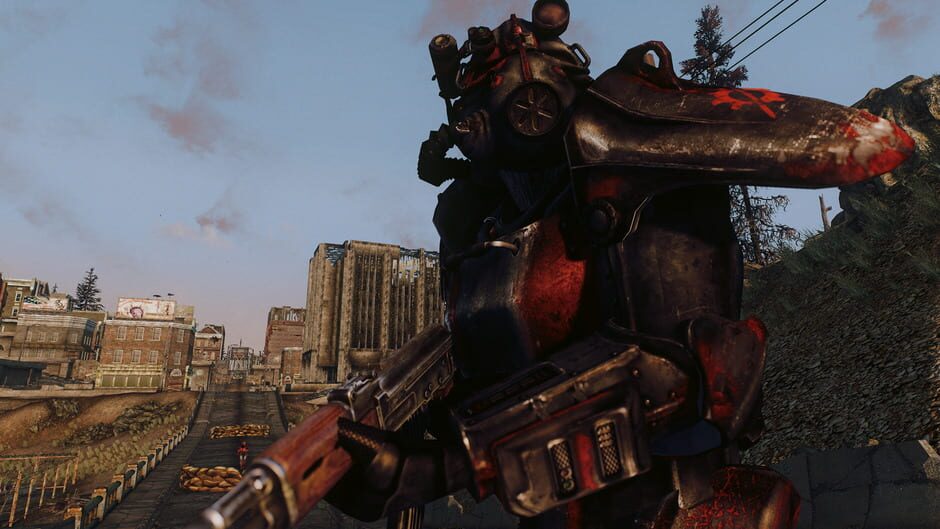
Washington D.C. gives this world a particular identity. The monuments of the former American capital still exist in mutilated form, surrounded by barricades, tunnels and combat zones. The contrast between symbols of a vanished power and the improvised lives of survivors contributes directly to the atmosphere.
The communities encountered also have their own rules. Megaton developed around an unexploded nuclear bomb. Rivet City occupies an old aircraft carrier. Other groups live in towers, stations or installations transformed into shelters. These places show different answers to the same question: how do you rebuild anything when almost every structure of the old world has disappeared?
The player shapes their character through the S.P.E.C.I.A.L. system — Strength, Perception, Endurance, Charisma, Intelligence, Agility and Luck — complemented by skills and perks. This build influences combat as well as lockpicking, hacking and certain dialogue possibilities.
That freedom allows several situations to be solved in different ways. A charismatic character may persuade where another would have to fight. Technical skills can open a door or disable a device. Some decisions can instead ignore a more peaceful solution entirely.
The Karma system translates some of these actions more visibly. Helping a community, stealing, killing or making certain choices can change the character’s overall moral reputation. The system is deliberately readable and sometimes quite stark, but it reinforces the idea that the Lone Wanderer leaves a mark on the wasteland rather than simply passing through it.
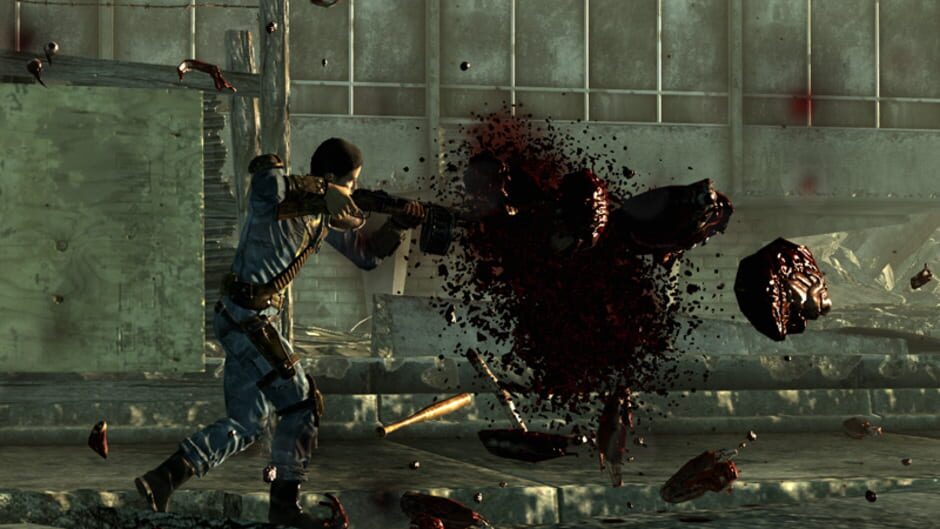
Combat combines real-time shooting with V.A.T.S., a direct heir to the tactical dimension of the earlier entries. Activating the system greatly slows the action and allows different parts of an opponent’s body to be selected with varying chances of success. Shooting a leg, targeting a weapon or concentrating attacks on the head therefore becomes a tactical choice rather than a simple test of accuracy.
Action Points limit the number of attacks that can be performed this way. The player therefore naturally alternates between conventional combat and more calculated decisions, allowing Fallout 3 to preserve part of its RPG heritage despite the new perspective.
Equipment also contributes to survival. Firearms, melee weapons, explosives and armor deteriorate over time and must be maintained. Bottle caps replace conventional currency, while medicines, Stimpaks and RadAway help manage injuries and radiation.
Radio plays a surprisingly important role in the experience. Pre-war songs broadcast by Galaxy News Radio accompany long journeys and create an almost absurd contrast with the nuclear landscape. Three Dog’s voice also comments on certain events, sometimes giving the impression that the player’s actions are genuinely beginning to circulate through the wasteland.
The factions gradually give the story a broader scale. The Brotherhood of Steel seeks to defend certain territories and technologies, while the Enclave represents another vision of what America should become after the catastrophe. The conflict then expands beyond the simple search for James and directly concerns the future of the Capital Wasteland.
Yet the strength of Fallout 3 often lies in what exists between those major stakes. A building with no connection to the main quest, a strange conversation or a forgotten metro station can create memories as powerful as a central mission.
What to remember
- An open-world action RPG set in 2277 in the ruins of Washington D.C. and the Capital Wasteland.
- A protagonist raised in Vault 101 who sets out to find their father after his mysterious disappearance.
- Highly free exploration where abandoned buildings, communities, tunnels and encounters can constantly pull the player away from the main objective.
- Progression built around the S.P.E.C.I.A.L. system, skills and perks.
- Combat combining real-time shooting with V.A.T.S., which slows the action and allows different body parts to be targeted.
- Moral choices and a Karma system capable of influencing certain situations and how the character is perceived.
- An entry that brings the historical Fallout formula into a three-dimensional world explorable from first- or third-person perspectives.
Conclusion
Fallout 3 begins by locking the player away in order to make them understand what it means to step outside.
Vault 101 has rules, corridors and a place prepared for everyone. The Capital Wasteland offers the exact opposite: almost no clear direction, communities built on contradictory principles and countless ruins that seem to ask the player to decide for themselves what is worth exploring.
The search for a father provides a reason to cross the door, but it quickly stops being the only reason to keep moving. That is where the open world works best. Setting out toward one objective and arriving two hours later somewhere completely different is not a distraction from the adventure: it is the adventure.
This freedom also carries the rough edges of its era. Animations can feel stiff, real-time combat sometimes lacks precision and some moral choices present their alternatives with limited nuance. V.A.T.S. partly compensates for the shooting’s rigidity while preserving a highly recognizable tactical dimension.
But the Capital Wasteland retains a remarkable personality. The desolation of its landscapes, dark humor, old songs, improbable communities and remnants of Washington create a world where the grotesque can appear only a few meters after a particularly bleak scene.
By transforming Fallout into a vast three-dimensional RPG, Bethesda therefore changes more than the camera. The studio changes how the wasteland is experienced. It is no longer merely represented on a map between destinations: it becomes the space itself, one that the player must physically cross.
Leaving Vault 101 therefore remains the essential image of Fallout 3. Beyond the door lies a destroyed, dangerous and often absurd world. But for the first time in the Lone Wanderer’s life, they can go exactly where they want.
Good to know
- Fallout 3 was developed by Bethesda Game Studios and published by Bethesda Softworks.
- The game was originally released in October 2008 on PC, PlayStation 3 and Xbox 360.
- The main story takes place in 2277, two hundred years after the nuclear Great War of 2077.
- The protagonist is generally known as the Lone Wanderer and grew up in Vault 101.
- The Capital Wasteland mainly covers the ruins of Washington D.C. and its surrounding region.
- Fallout 3 uses first- or third-person exploration while retaining historical systems from the series such as S.P.E.C.I.A.L., skills and perks.
- V.A.T.S. greatly slows combat and allows different body parts to be targeted by spending Action Points.