Presentation
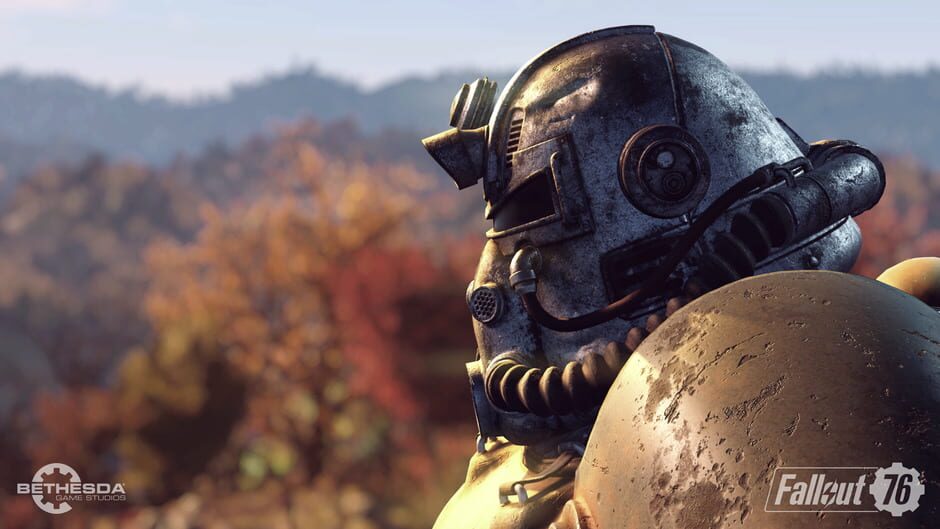
Fallout 76 retains much of the language of Fallout 4 — first- or third-person exploration, S.P.E.C.I.A.L., scavenging, crafting, power armor and combat — but profoundly changes the context in which these systems operate. The wasteland no longer belongs to a single player. Other residents of Vault 76 travel through the same territory, build their camps, take part in the same events and may appear unexpectedly along the road.
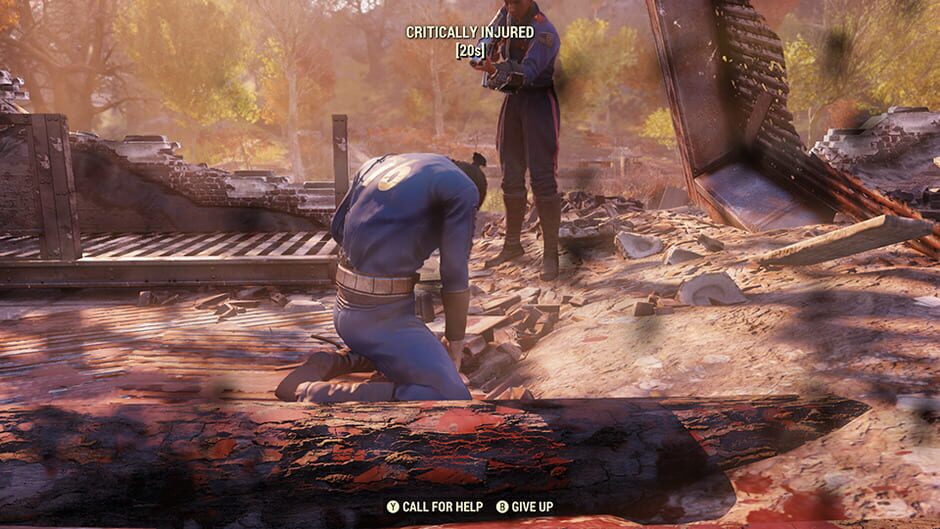
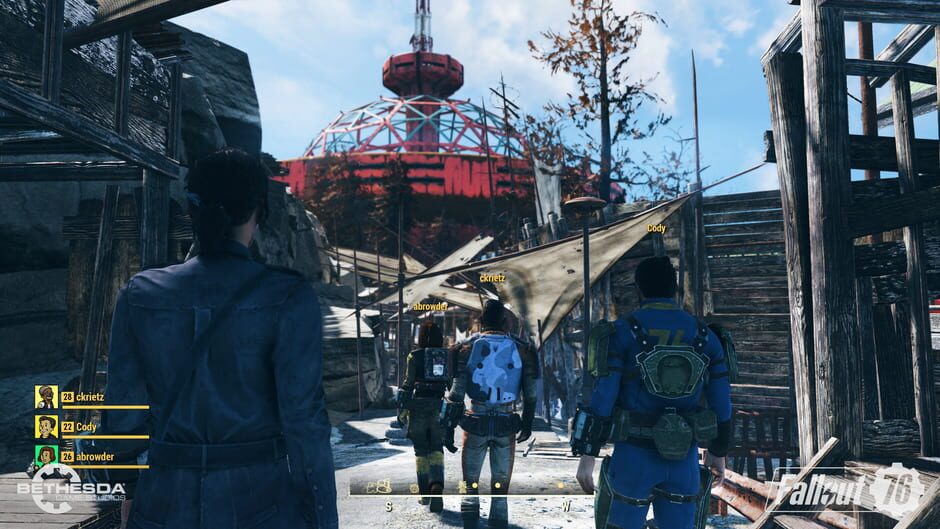
This presence changes a series traditionally associated with solitude. Most of the world can still be explored at your own pace, but a stranger may suddenly cross an area in power armor, help during a difficult fight or set up a shop a few kilometers away. Other players therefore become part of the landscape without turning the experience into an MMO built around permanent groups.
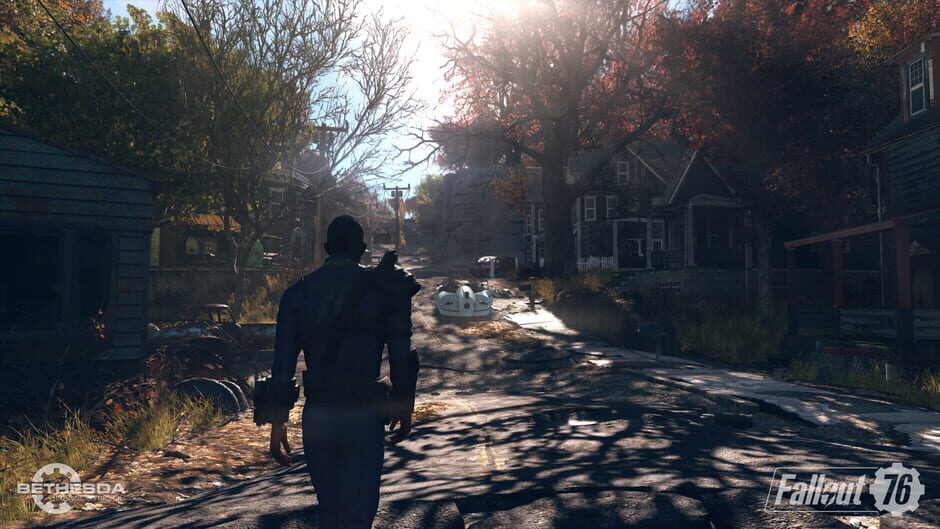
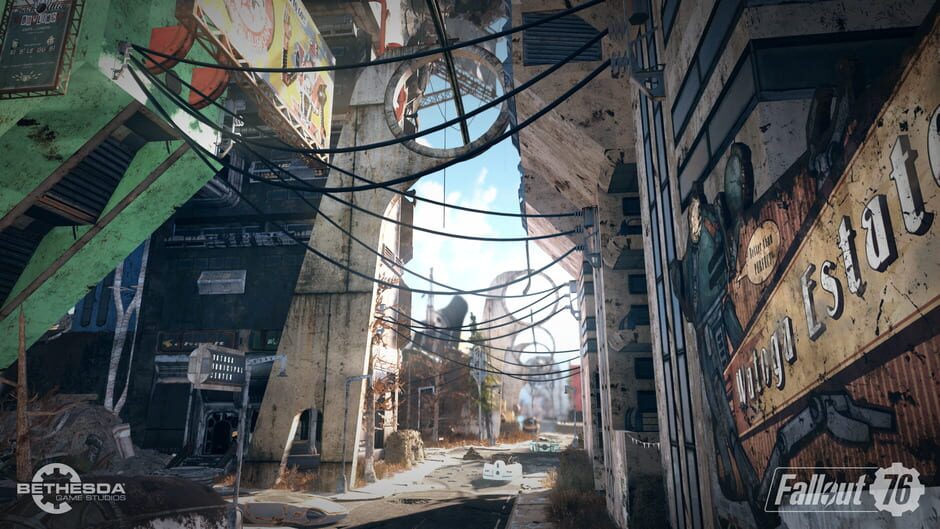
Appalachia lies at the heart of this exploration. Inspired by West Virginia, the map is divided into regions with very different identities, ranging from relatively welcoming forests to mining areas, swamps and zones deeply altered by radiation. This variety gives the territory a distinctive tone within the Fallout universe, greener and sometimes almost peaceful before a creature or abandoned building quickly reminds the player of what happened.
Detours remain essential. A road indicated by a quest can lead toward an abandoned mine, a small town, a bunker or an industrial facility filled with information about the people who lived there before or after the war. As in the other modern entries, the environment tells a significant part of the story through objects, terminals and the very arrangement of locations.
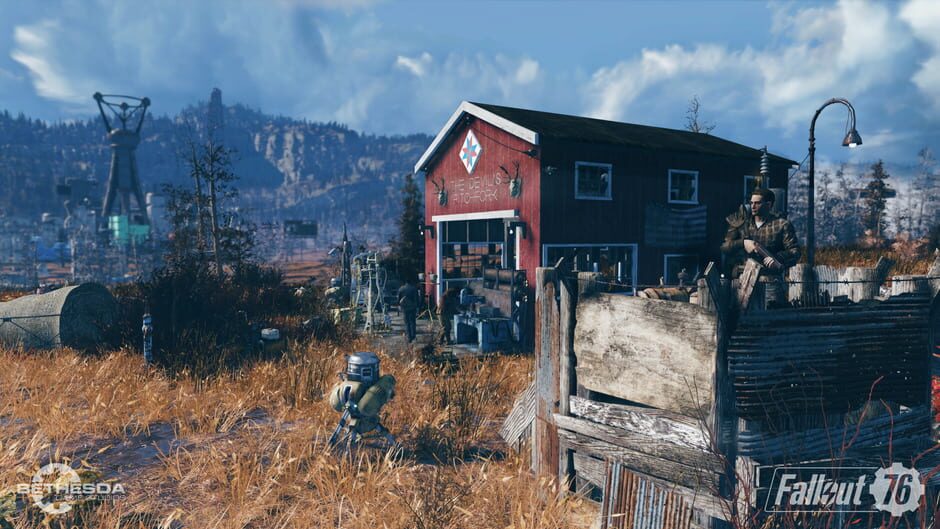
The C.A.M.P. gives scavenging a new purpose. Players can establish a base in many areas of the world, build shelter, workshops, defenses, resource structures or decorative elements, then move the installation when they decide to settle elsewhere. Construction is therefore no longer tied to predetermined settlements as in Fallout 4: it directly accompanies the journey.
This freedom also feeds into the survival economy. Wood, steel, aluminum, adhesive and many other materials are used to craft, repair and modify weapons and equipment. Objects found in the environment therefore retain the dual value typical of modern Fallout: they can seem completely useless until their components suddenly become essential for an upgrade.
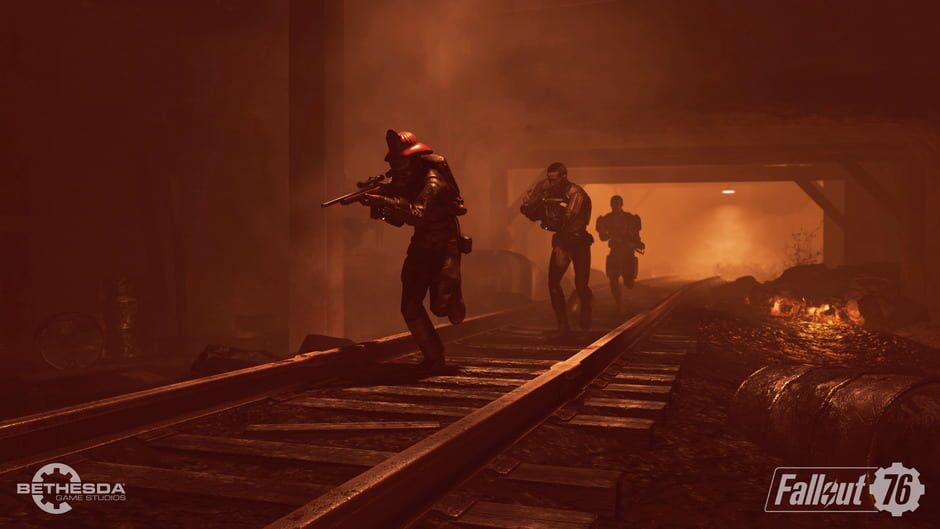
Combat retains firearms, melee weapons, explosives and power armor, with one important difference concerning V.A.T.S. In a world that cannot stop for a single player, the system works in real time. It keeps assisted targeting and hit probabilities, but decisions must be made without freezing the enemies around you.
Progression still allows players to shape their character through S.P.E.C.I.A.L., but Fallout 76 uses perk cards that can be selected and rearranged. This flexibility makes it easier to change specializations and adapt a build depending on whether the player wants to explore alone, craft, use specific weapons or join a group activity.
Public events are one of the clearest expressions of the shared nature of the world. An activity can appear on the map and spontaneously bring several players together around a common objective without requiring them to form a team beforehand. Some high-level threats push this idea even further by turning a location into an improvised gathering point.
Nuclear strikes represent the most spectacular extreme of this concept. Players can gain access to missile silos and launch nuclear weapons at certain parts of the map. The explosion is not simply a scripted effect: it temporarily alters the targeted area, increases its danger and can create opportunities to obtain particularly valuable resources or face sought-after enemies.
The later arrival of fully realized human characters, dialogue systems and new storylines ultimately brought Fallout 76 closer to the traditional narrative structure of the series. The world still retains its players, events and persistent dimension, but it is no longer told only through traces left by those who disappeared. People now live in Appalachia again and actively defend their own interests.
What to remember
- An online open-world action RPG set in Appalachia, twenty-five years after the Great War.
- Exploration that can be experienced alone or alongside other players sharing the same wasteland.
- A C.A.M.P. system that allows players to build and relocate their own base across the world.
- Progression built around S.P.E.C.I.A.L., perk cards, equipment and resource scavenging.
- Public events and cooperative activities that can spontaneously bring several survivors together.
- A world that evolved after launch, notably with the return of human characters, dialogue and new factions.
Conclusion
Fallout 76 is built around an unusual idea for the series: leaving the vault while the reconstruction of the world has barely begun and sharing that discovery with other players. Appalachia therefore does not feel only like the remains of an ancient civilization waiting to be explored. It feels like a territory still available, where different forms of society are only beginning to take shape.
This approach naturally changes the solitude traditionally associated with Fallout. A story discovered inside an abandoned house can retain all of its intimacy, then only a few minutes later another player appears, triggers an event or invites you to join an activity. The atmosphere constantly shifts between personal exploration and shared space.
The C.A.M.P. expresses this idea particularly well. The player does not own a fixed home at the center of the world: they carry with them the ability to build one. The refuge becomes an extension of the journey, sometimes a simple functional workshop, sometimes an elaborate construction designed to be discovered by other players.
The game’s evolving nature is both its defining characteristic and its main complexity. Fallout 76 has changed profoundly since release, to the point that present-day Appalachia no longer entirely matches the much lonelier original experience. This transformation makes the work harder to capture in a single snapshot, but it also fits its central theme: a territory gradually being repopulated and rebuilt.
At its core, Fallout 76 shifts one of the series’ classic questions. It no longer asks only what someone would do after the end of the world, but what happens when several survivors begin answering that question at the same time.
Good to know
- Fallout 76 was developed by Bethesda Game Studios and published by Bethesda Softworks.
- The game was originally released on November 14, 2018.
- The adventure begins on Reclamation Day in 2102, twenty-five years after the nuclear bombings of 2077.
- The game takes place primarily in Appalachia, in a post-apocalyptic version of West Virginia.
- The C.A.M.P. — Construction and Assembly Mobile Platform — allows players to build their own base in the wasteland.
- At launch, the other human characters encountered in the world were essentially other players; the arrival of Wastelanders in 2020 introduced human NPCs, dialogue and a new main storyline.
- Players can gain access to nuclear missiles and create irradiated zones with specific dangers and resources.