Synopsis

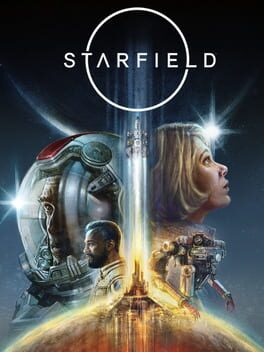
In 2330, humanity has moved beyond the limits of the Solar System and settled a region of space known as the Settled Systems. Several political powers coexist there after a history shaped by colonization, conflict and the emergence of very different societies.

The player character initially works as a miner when they come into contact with a mysterious artifact. The object triggers an incomprehensible vision and quickly attracts the attention of Constellation, an organization of explorers based in New Atlantis.

Recruited by the group, the new member receives a ship and begins searching for other artifacts scattered across the star systems.

This investigation becomes the guiding thread of a much broader adventure. The player can work for different factions, help residents of the colonies, build outposts, modify their ship or simply travel to a system with no direct connection to the main quest.

As the artifacts are brought together, their origin raises a question that gradually goes far beyond simple space exploration: how far can we go when an entire universe seems to conceal several versions of what we believed reality to be?

Overview

The Bethesda formula projected into the stars

Starfield retains several principles associated with Bethesda Game Studios RPGs: free character creation, numerous side quests, independent factions, exploration, item collection and the ability to gradually build an identity through the player’s decisions.

The character begins with a background that provides several initial skills. Optional traits can then modify certain situations, relationships or gameplay rules.

Progression does not lock the player into a fixed class, however. Skills are divided into several families and can be developed according to the evolution of the player’s preferred playstyle.

This flexibility makes it possible to become a pilot, fighter, scientist, diplomat or stealth specialist without having to follow a single predefined path.

Systems rather than a single territory

Scale is the most obvious difference compared with Skyrim or Fallout.

Starfield does not offer one continuous map to cross on foot. Its universe brings together numerous star systems, planets, moons, space stations and urban areas connected through space travel.

New Atlantis, capital of the United Colonies, has a highly institutional futuristic architecture. Akila City combines technology with frontier imagery. Neon transforms an industrial platform into a commercial city dominated by corporations and pleasure.

Between these more carefully developed centers lie numerous territories devoted to exploration, resources and encounters.

This structure gives the game considerable scale, but it also creates an experience different from Bethesda’s previous open worlds: exploration relies more on a succession of destinations than on a continuous territory where every detour naturally leads to another discovery.

Factions and parallel stories

Constellation’s quest is only one part of the game.

The player can become involved in several major narrative questlines connected to the United Colonies, the Freestar Rangers, Ryujin Industries or the Crimson Fleet.

These stories explore different aspects of the Settled Systems: politics, crime, corporate espionage, military security and the legacy of earlier conflicts.

As is often the case with Bethesda, some of the most interesting stories can therefore be found outside the main path.

Building and piloting your own ship

The spaceship serves simultaneously as a means of transportation, a mobile base and a customization system.

The player can alter its structure, install new modules, change weapons, improve engines, expand cargo capacity or reorganize parts of the interior.

Space combat notably relies on managing available power between engines, shields and different weapon systems. Some enemy ships can also be boarded and then captured.

Shipbuilding quickly becomes one of the areas where Starfield gives the player the most freedom: a vessel can be designed for combat, transportation or simply for the pleasure of building something that reflects its owner.

Exploration, resources and outposts

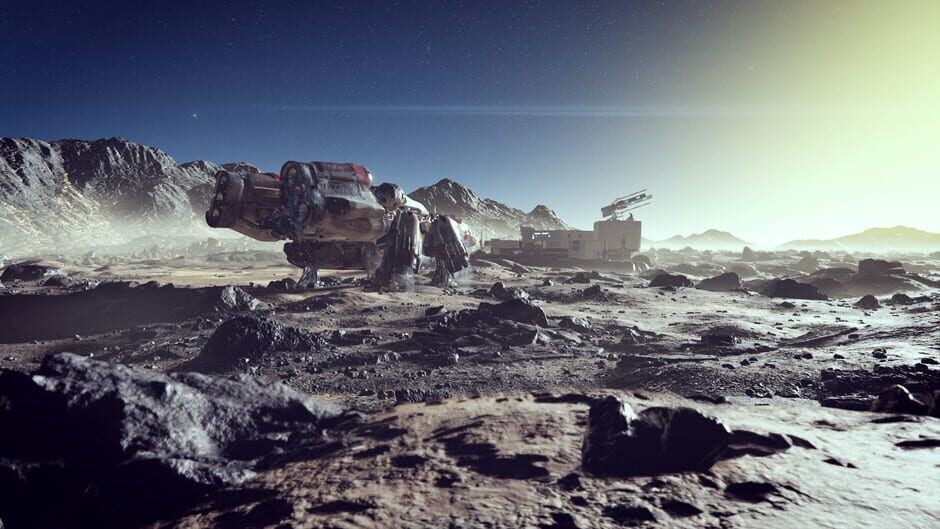
Planetary surfaces allow players to scan fauna, flora and resources, discover different points of interest and establish outposts.

These bases can be used to extract materials, produce certain resources, store equipment or gradually develop a logistical network.

The system is part of a broader research and crafting loop that makes it possible to improve weapons, equipment and technologies.

Not every planet offers the same density, however. Some provide memorable landscapes or encounters, while others rely more heavily on resource gathering and repeated structures.

Space travel substantially reworked in 2026

At launch, Starfield relied heavily on menus and quick transitions to move from one planet to another. This structure became one of the most debated aspects of its exploration.

The free Free Lanes update, released in April 2026, directly changes this part of the game with a Cruise Mode that allows players to fly freely between planets within the same system.

Players can continue living aboard their ship during these journeys, talk with their crew, use certain ship facilities and encounter new points of interest in space.

This evolution does not turn Starfield into a completely seamless universe, but it brings space travel closer to the fantasy the game had been trying to deliver from the beginning.

Key takeaways

  • Starfield takes place in 2330 in a region of space known as the Settled Systems.
  • The player freely creates their character, choosing a background, traits and skills.
  • Constellation forms the core of the main quest, centered on mysterious artifacts discovered across the galaxy.
  • Several major factions have their own questlines, independent from the main storyline.
  • The game combines FPS, TPS and RPG mechanics, with on-foot combat, skills, dialogue, crafting and character progression.
  • Ships can be extensively customized, both visually and through their systems and capabilities.
  • Exploration spans numerous systems, planets and moons, rather than a single continuous territory.
  • Outposts allow players to extract resources and build planetary bases.
  • The game uses Creation Engine 2, the new generation of Bethesda’s internal engine.
  • Shattered Space mainly develops House Va’Ruun and its homeworld Va’Ruun’kai.
  • Free Lanes substantially reworked space travel in 2026, particularly through Cruise Mode.
  • Terran Armada is the second major narrative expansion, released alongside Free Lanes.
  • Starfield is entirely single-player.
  • Since April 2026, the game has been available on PS5, Xbox Series X|S and PC.

PANACHES review

Immensity does not always replace the journey

Starfield has a fairly simple paradox: its universe is enormous, but that immensity does not always make the player feel as though they are traveling farther.

Bethesda multiplied the number of systems, planets and possible destinations. In return, the connections between those places remained highly fragmented for a long time. Where Skyrim could pull the player off course because a ruin appeared beside a road, Starfield more often asks the player to choose a destination first.

That fundamentally changes the pleasure of exploration. The major cities, some quests and several environments work very well individually, but the journey between them sometimes struggles to create the same sense of continuity.

Free Lanes addresses part of this weakness by giving the ship and the time spent in space a stronger presence. The original issue has not completely disappeared, but the 2026 version of the game comes closer to fulfilling its initial promise.

When the old formula meets a new scale

Starfield remains especially convincing when it becomes a Bethesda RPG again.

Walking into a city without a specific objective, accepting a small mission and then discovering that it leads into a much larger story still works remarkably well. The factions, certain companions and several side quests give the world a depth that procedural surfaces do not always produce on their own.

Conversely, the increased scale makes some of the studio’s habits more visible: a cumbersome inventory, repeated locations, intrusive interfaces and a significant contrast between carefully written areas and spaces mainly designed to be traversed.

Starfield is often at its best when it stops trying to demonstrate the size of its galaxy and simply lets a good story unfold somewhere inside it.

A game that has genuinely evolved since 2023

It would be difficult to judge Starfield in 2026 exactly as it was judged at launch.

Improved surface maps, the REV-8 vehicle, Creations, new options, expansions and especially Free Lanes have gradually addressed several frustrations from the original version.

This does not transform its fundamental architecture, but it does reveal something interesting: Bethesda has not merely added content, the studio has also reworked some of the ways players move through and inhabit the game.

Starfield therefore remains an imperfect space RPG, sometimes fascinated by its own scale, but still capable of producing those very Bethesda moments where a mission that seemed secondary becomes the reason you spent the entire evening in a system you never intended to visit in the first place.

Good to know

Release and platforms

  • Starfield officially launched on September 6, 2023 for Xbox Series X|S and PC.
  • Some editions offered early access before this date.
  • The game is developed by Bethesda Game Studios and published by Bethesda Softworks.
  • It is the first new universe created by Bethesda Game Studios in more than twenty-five years.
  • Starfield was released on PlayStation 5 on April 7, 2026.
  • The PS5 version uses several DualSense features and also benefits from specific optimizations on PS5 Pro.
  • The plateformes field therefore now includes ps5, unlike entries created before this release.

Creation Engine 2

  • Starfield is built with Creation Engine 2.
  • Bethesda presented it as a new generation of its internal engine during the game’s early presentations.
  • The engine notably supports the game’s large environments, shipbuilding, planetary systems and the moddable structure traditionally associated with Bethesda productions.

Shattered Space

  • Starfield: Shattered Space was released on September 30, 2024.
  • This narrative expansion focuses on the mysterious House Va’Ruun.
  • The adventure notably takes the player to Va’Ruun’kai and the city of Dazra following a catastrophic event.
  • The expansion adds a new story, new locations, equipment and elements connected to this faction.
  • The base game is required to play it.

Creations and the game’s evolution

  • The Creations system arrived in Starfield in June 2024.
  • It allows players to install additional content produced by Bethesda or by creators.
  • The Creation Kit also makes it possible to develop more complex content and modifications on PC.
  • Over time, updates have added several quality-of-life improvements, new gameplay options and the REV-8 ground vehicle.

Free Lanes and Terran Armada

  • Free Lanes was released as a free update on April 7, 2026 for Starfield players.
  • Its major addition is Cruise Mode, which allows players to fly freely between planets within the same star system.
  • The update also adds new space points of interest, activities, equipment and various improvements to existing systems.
  • Terran Armada was released on the same day, April 7, 2026.
  • This narrative expansion introduces a new military threat built in part around an army of robots and develops new quests and areas across the Settled Systems.
  • Bethesda was still publishing patches for Starfield in June 2026.
  • The entry nevertheless uses statut_parution: completed, because the base campaign constitutes a completed work; updates and expansions belong to its post-launch support.