Presentation
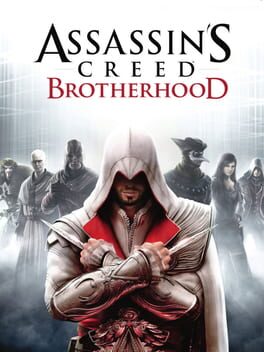
Assassin’s Creed Brotherhood picks up Ezio at exactly the point where his story might have begun to close.
He has become an accomplished Assassin. He has mastered the Hidden Blade, parkour, weapons and the principles of his order. The game can therefore no longer build his development solely around individual learning.
Its answer is contained in the title: the Brotherhood.
In Rome, Ezio no longer needs only to become better. He must make the Assassins around him stronger.
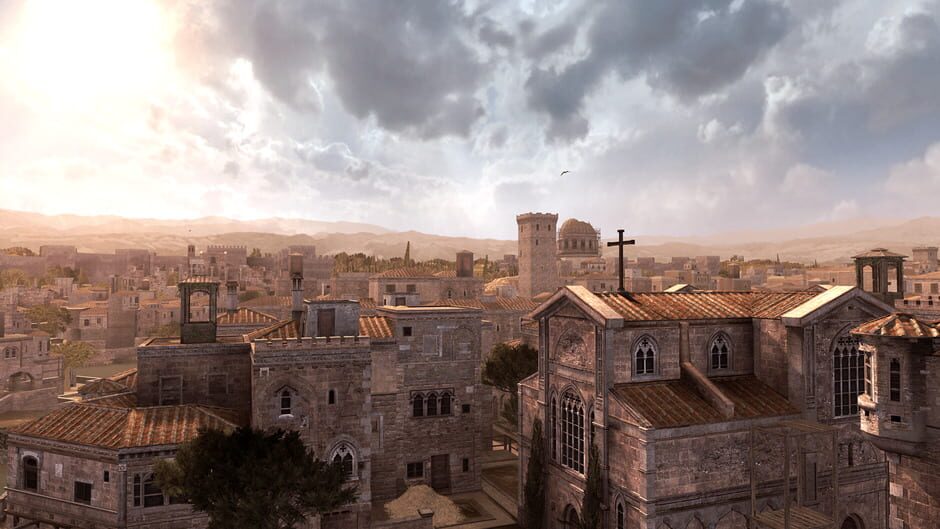
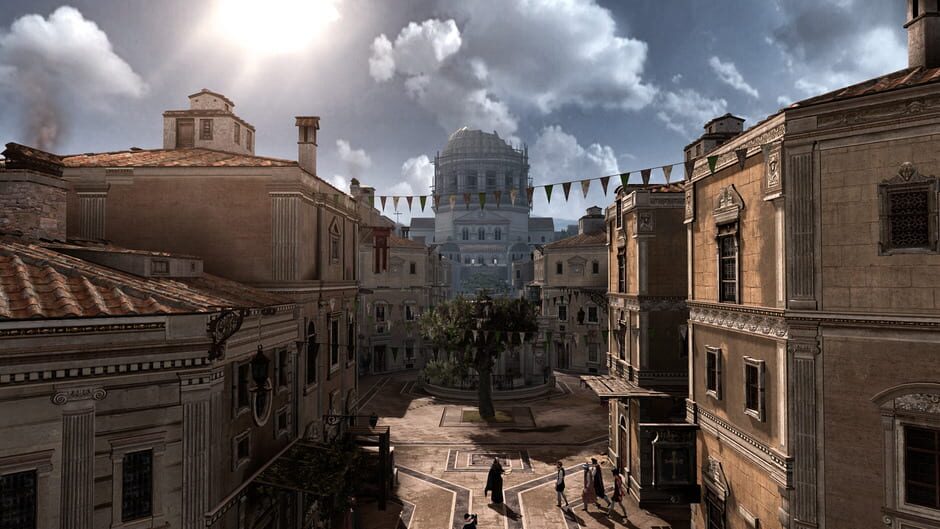
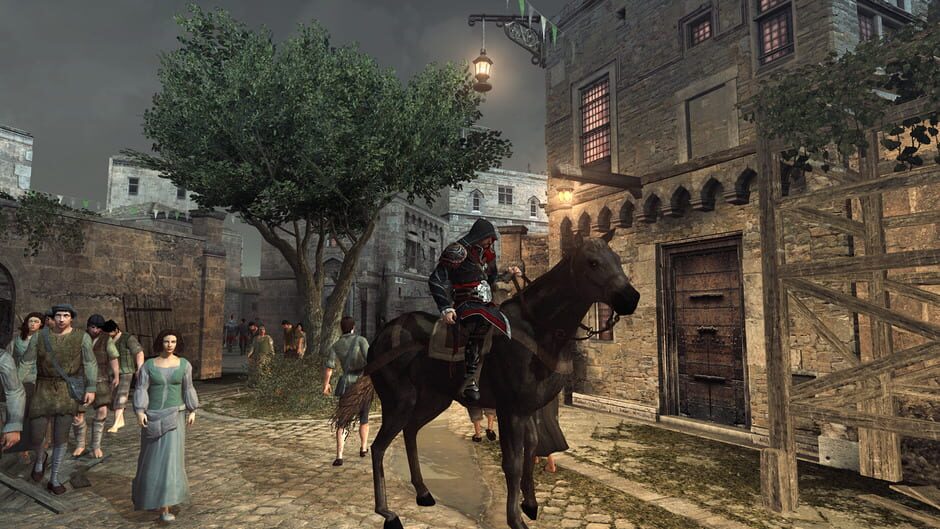
The city forms the almost exclusive center of this evolution. Unlike Assassin’s Creed II, which took Ezio between Florence, Venice, Monteriggioni and several Italian territories, Brotherhood concentrates most of its world on Rome and its surroundings.
This focus allows the transformation of the territory to feel more continuous. The city is divided into areas, many of which remain under Borgia influence. Eliminating their captains and then destroying their towers weakens that control and opens new possibilities within the district.
The reconquest therefore becomes visible.
Shops can be renovated, services begin operating again and the money invested by Ezio gradually helps make the city more lively. This economic layer remains relatively simple, but it establishes a direct link between the player’s actions and the state of Rome.
The idea works especially well because it extends the narrative. Ezio is not merely trying to cross the city to reach his missions. He is trying to strip the Borgias of the material and symbolic means that allow them to retain power.
Recruiting Assassins gives this concept an even more direct form.
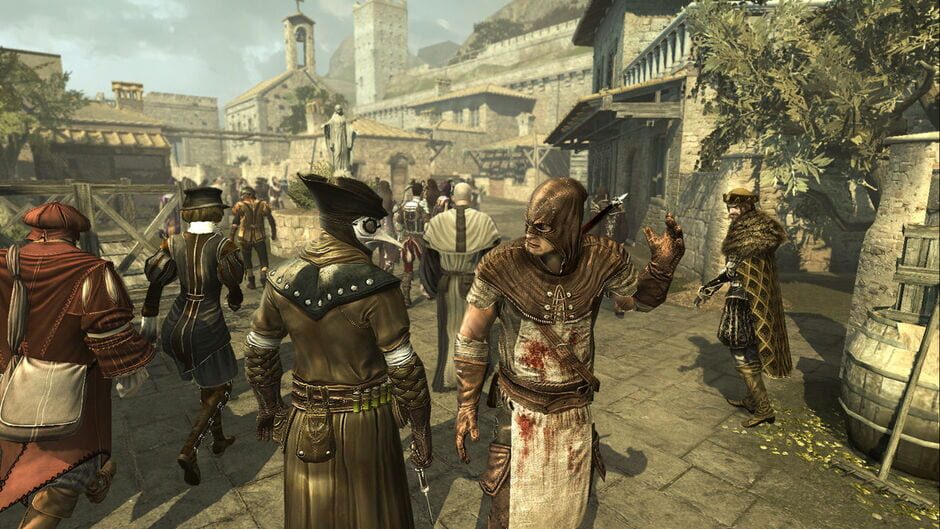
By helping certain citizens threatened by enemy forces, Ezio can convince them to join the Brotherhood. These recruits begin with limited experience and progress by completing contracts or taking part in the player’s actions.
They can be sent on missions across Europe, gain experience and improve their equipment. But their presence becomes most spectacular when Ezio calls them directly into the streets of Rome.
A guard can be eliminated by a recruit dropping from a rooftop. Several Assassins can intervene simultaneously in the middle of a fight. Once the group has developed enough, Ezio even gains options capable of quickly turning around a dangerous situation.
The system therefore does more than simply provide a few extra characters to manage.
It changes Ezio’s position.
In the first Assassin’s Creed, Altaïr belonged to a structure that gave him orders. In Assassin’s Creed II, Ezio gradually discovered that a network of Assassins existed around him. Here, he directly participates in building that network.
Combat also moves toward a more offensive approach.
Encounters retain the counters, dodges and different weapon categories inherited from the previous game, but Ezio can now chain eliminations more quickly when he maintains the rhythm of combat. A successful first execution can lead directly into another enemy, then another.
This acceleration noticeably changes the relationship with groups of enemies. Where waiting for a guard to attack was previously an especially effective strategy, Brotherhood encourages the player more strongly to take the initiative and maintain control of the pace.
The arsenal also continues to develop. Hidden Blades, swords, heavy weapons, throwing knives and the pistol remain available, while the crossbow provides an effective silent option at range.
Leonardo da Vinci’s inventions, meanwhile, are at the center of several special missions. The Borgias have recovered some of his war machines, and Ezio must locate and destroy their plans and prototypes. These sequences temporarily move away from the usual structure of Rome and allow the game to experiment with more spectacular situations.
Parkour retains the foundation established by the previous entries. Rome, however, offers a broader space, with densely built districts alongside more open areas where horses become useful for covering longer distances.
Historic monuments also give the city an immediately recognizable identity. The Colosseum, Pantheon and Castel Sant’Angelo are not merely scenery: their architecture regularly shapes routes, infiltrations and missions.
The sequences devoted to the Followers of Romulus continue the series’ taste for spaces designed around movement. Catacombs, ruins and monumental structures create more directed routes where observation and chaining movements become as important as combat.
But the main transformation in Brotherhood remains political.
The Borgias are not merely a succession of Templars to eliminate. Their power rests on an organization: money, military force, allies, institutions and fear. The game therefore attempts to make its open-world structure correspond to this domination. A destroyed tower, a reopened shop or a new recruit added to the Brotherhood all contribute to the same idea of reconquest.
Ezio himself has changed.
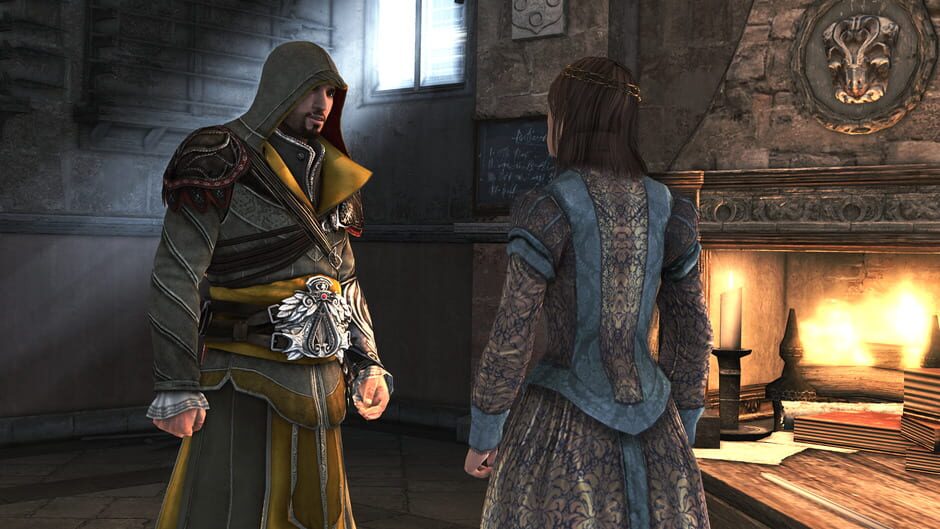
The revenge that dominated his youth has not completely disappeared, especially where Cesare is concerned, but it is no longer enough to define his role. He must work with Machiavelli, support his allies, make decisions for the order and accept that others will risk their lives under his command.
The modern-day story continues this evolution in parallel. Desmond no longer simply watches Ezio passively through the Animus: the Bleeding Effect caused by his extended sessions allows him to acquire some of his ancestors’ abilities. The boundary between virtual training and present-day capability therefore becomes increasingly important.
Brotherhood thus pushes both of its Assassins in the same direction.
Ezio learns to become the Mentor his order needs.
Desmond, meanwhile, begins to truly become the Assassin the Animus is training him to be.
What to remember
- The direct sequel to Assassin’s Creed II, continuing Ezio Auditore’s story after the attack on Monteriggioni.
- Rome as the main setting, dominated by Cesare Borgia and a network of powers connected to the Templars.
- A reconquest system allowing the player to weaken Borgia influence and gradually renovate different businesses across the city.
- The ability to recruit, train and send new Assassins on missions, then call them directly as reinforcements.
- More offensive combat that notably allows several eliminations to be chained together quickly.
- The return of parkour and social stealth, expanded by an arsenal including the crossbow and several tools already mastered by Ezio.
- A major evolution for the character: Ezio is no longer merely a member of the Brotherhood, but learns to become its leader.
Conclusion
Assassin’s Creed Brotherhood could have been little more than an extension of Assassin’s Creed II set in a new city.
Its best idea is precisely to recognize that Ezio no longer needs to learn how to be an Assassin.
He needs to learn what he can do with that experience.
Rome gives this transition a concrete form. At the beginning, the Borgias seem to be everywhere. Their soldiers occupy the streets, their captains control the districts and their money sustains a structure that extends far beyond a handful of individuals.
Gradually, the balance changes.
A shop reopens. A tower disappears from the skyline. A rescued citizen joins the Brotherhood. Then one day, in the middle of a fight, Ezio simply raises his hand and an Assassin he recruited himself strikes in his place.
That gesture almost summarizes the entire game.
The formula still contains the repetition characteristic of the series’ early open worlds. Towers, renovations and side activities can become mechanical, while the power gained by Ezio and his recruits gradually reduces the threat posed by ordinary guards.
But that rise in power has narrative meaning here.
Ezio is no longer the young Florentine trying to discover who destroyed his family. He now understands his enemy, his order and the tools at his disposal. The real change comes from his ability to pass that knowledge on.
That is why Brotherhood bears its name particularly well.
Ezio’s victory no longer depends only on his ability to reach a target with a Hidden Blade.
It depends on the fact that he is no longer the only one carrying it.
Good to know
- Assassin’s Creed Brotherhood was developed primarily by Ubisoft Montreal and published by Ubisoft.
- The game was originally released on November 16, 2010, on PlayStation 3 and Xbox 360, before later coming to PC.
- It is the second chapter of the trilogy centered on Ezio Auditore and continues directly after Assassin’s Creed II.
- Rome is the main setting of the adventure, where Ezio wages a secret war against the Borgia family and their Templar allies.
- Brotherhood introduces the ability to recruit citizens into the Brotherhood, develop their skills and call them into combat or use them to assassinate targets.
- Ezio can invest in different shops and infrastructure to help restore Rome’s economy.
- This entry also introduced competitive multiplayer to the Assassin’s Creed series, although its original online services are no longer active.