Presentation
Assassin’s Creed III changes almost everything surrounding the series without abandoning its central conflict.
After three games devoted to Ezio and Renaissance Italy, the narrow streets of Florence, Venice and Constantinople give way to colonial America. Cities are more spread out, nature occupies a much larger place, and the protagonist himself has a different relationship with the world he crosses.
Connor is born between several cultures.
His Kanien’kehá:ka heritage, British ancestry, commitment to the Assassins and proximity to the American revolutionaries constantly place him at the intersection of groups whose interests do not always align. This position gives the story a different tension from Ezio’s.
Connor believes deeply in freedom, but gradually discovers that those who use that word do not necessarily mean freedom for everyone.
This contradiction runs through the game’s depiction of the American Revolution.
Connor takes part in several historical events and encounters figures such as George Washington, Benjamin Franklin and Paul Revere. Yet the game does not turn the birth of the United States into a perfectly idealized victory. Behind the political speeches remain personal interests, territorial expansion and populations that may gain little from the change in power.
The world itself reflects this break.
Boston and New York retain the urban parkour characteristic of the series, but their architecture requires different movement. Buildings are generally lower and less densely arranged than those of Renaissance Italy. Trees, cliffs and natural spaces therefore become increasingly important.
The Frontier represents the most obvious transformation.
Forests, rivers, mountains and villages form a vast territory where Connor can climb directly into trees and move from branch to branch. Parkour thus leaves the façades behind and becomes a way of crossing nature as well.
This idea may feel familiar within the series today, but at the time it represented a major evolution. For the first time, a wilderness environment carries almost as much importance as the major cities.
The seasons strengthen this relationship with the terrain. Some regions can be covered in snow, slowing movement on the ground and encouraging the use of trees or clearer routes. Weather and landscapes give the Frontier a presence that the rural areas of previous games had to a much lesser degree.
Wildlife also contributes to exploration.
Connor can hunt different species, follow their tracks and recover resources. Hunting remains a relatively accessible activity, but it fits naturally with a protagonist whose childhood and training do not come solely from the European streets traveled by his predecessors.
Combat is also deeply redesigned.
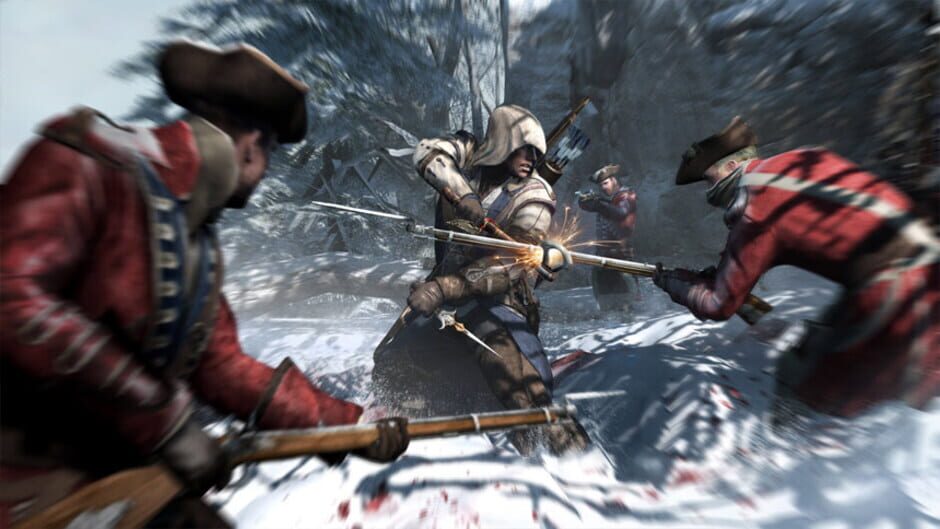
Connor feels more physical than Ezio. His tomahawk, Hidden Blades, firearms, bow and various melee weapons create particularly direct confrontations. The animations emphasize rapid transitions between enemies and the ability to use several tools within the same encounter.
Counters remain important, but the system requires more attention to the type of enemy being faced. Responses that work against an ordinary soldier may not be effective against a more heavily protected opponent.
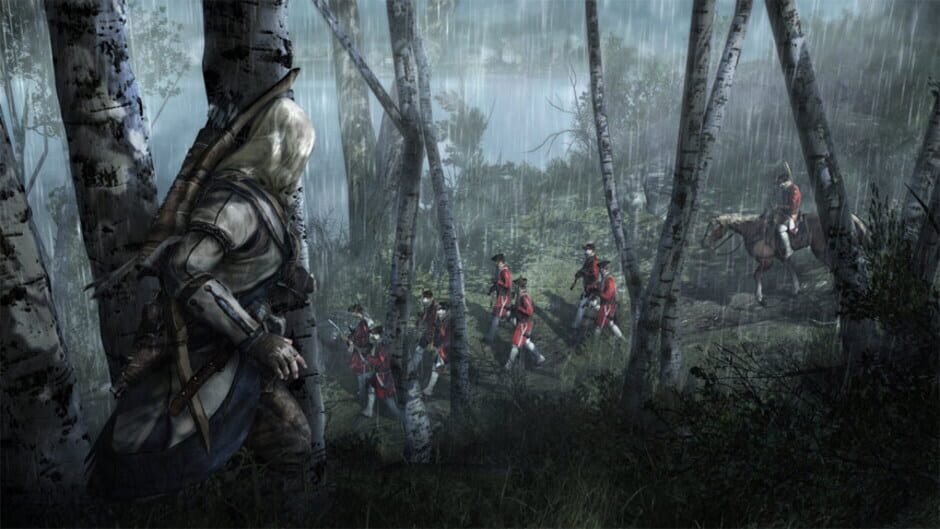
Social stealth remains present, with crowds and certain groups helping reduce the attention focused on Connor. In the Frontier, dense vegetation also introduces new hiding spaces that allow patrols to be observed or attacks prepared from the natural environment.
Assassinations therefore benefit from more varied terrain, even if several major missions retain a strongly directed presentation.
The other major innovation lies at sea.
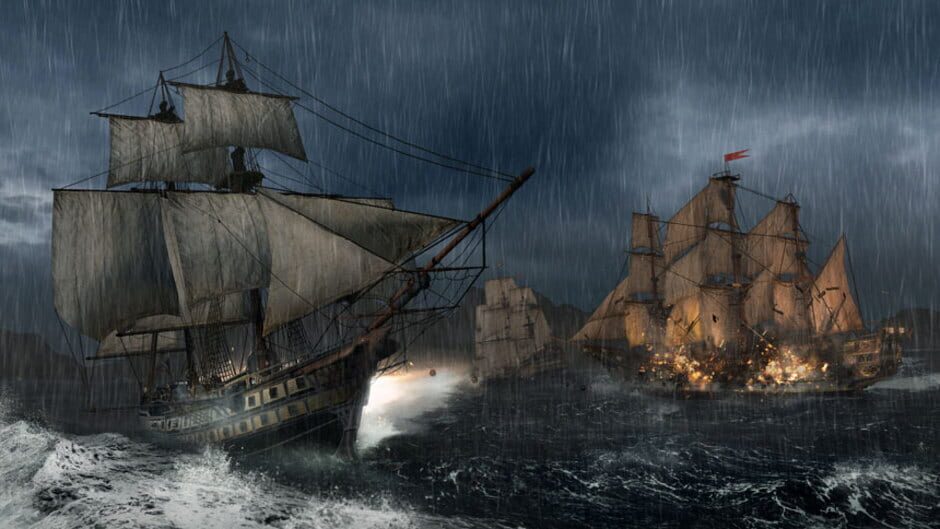
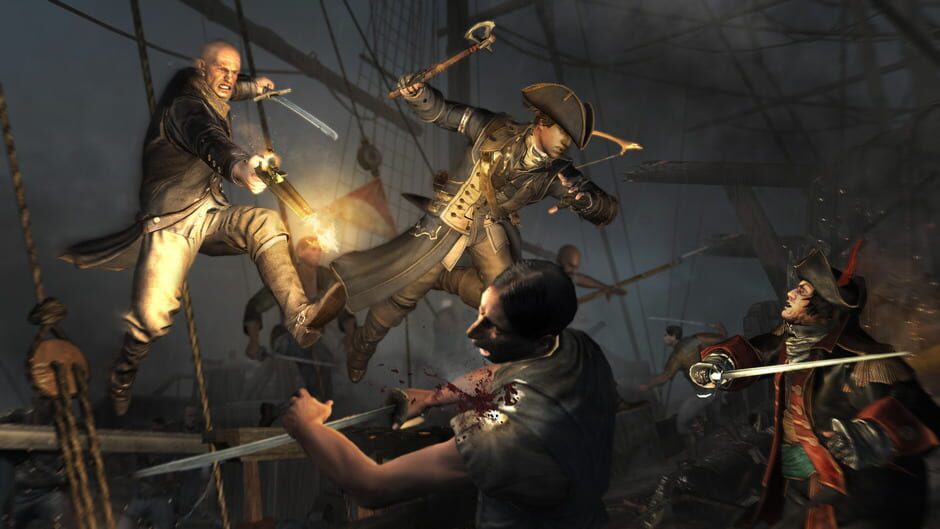
Connor becomes captain of the Aquila and takes part in several naval missions. The player directly controls the ship, adjusts its heading, manages speed through the sails and maneuvers to bring enemy vessels within cannon range.
These sequences do not yet form a fully open maritime world like the one later seen in Assassin’s Creed IV: Black Flag, but they establish a foundation strong enough for sailing to become one of the major directions of the series afterward.
On land, the Davenport Homestead provides a more intimate dimension.
Initially relatively empty, the property surrounding Achilles’s house can gradually welcome several inhabitants encountered by Connor. Craftspeople and families settle there as their personal stories progress.
These Homestead missions contrast with the large battles of the Revolution. Connor may help a craftsman, resolve a problem between residents or simply watch a small community grow around him.
This progression has particular meaning for a character who spends much of the story watching groups tear one another apart over control of territory. The Homestead represents a far more modest place where cooperation produces immediately visible results.
The Brotherhood can also be rebuilt. Connor recruits new Assassins in different regions and can call on them, continuing in another form the system introduced in Brotherhood.
The modern-day narrative finally receives more space.
Desmond occasionally leaves the Animus to carry out missions himself. The abilities acquired by reliving Altaïr, Ezio and then Connor therefore find a concrete use in his own era.
This structure gives Assassin’s Creed III a particular position within the first major period of the series. The game opens a new historical generation with Connor while bringing the modern-day story that began five years earlier with Desmond toward its conclusion.
What to remember
- An entry set mainly during the American Revolution and centered on Ratonhnhaké:ton, a young Kanien’kehá:ka who becomes the Assassin Connor.
- Boston, New York and a vast natural Frontier that extends parkour to trees, cliffs and wilderness environments.
- A story where Connor fights the Templars while maintaining a complex relationship with the American revolutionaries and their ideals of freedom.
- Deeply redesigned combat built around the tomahawk, Hidden Blades, firearms, the bow and more physical animations.
- The introduction of substantial naval sequences with the Aquila, anticipating the maritime development of later entries.
- The Davenport Homestead, which can gradually welcome craftspeople and residents through different personal missions.
- An episode that brings Desmond Miles’s modern-day storyline to its climax while opening a new historical period for the series.
Conclusion
Assassin’s Creed III speaks extensively about revolution, but its protagonist quickly discovers that a revolution does not automatically answer the most important question: freedom for whom?
Connor enters the conflict with almost unshakable conviction. If men are fighting tyranny and demanding the right to decide their own future, their goals should naturally align with his.
History teaches him something far less comfortable.
The revolutionaries can defend their freedom while threatening the lands of his people. The Templars can identify real weaknesses in the new political order while proposing even greater control as the solution. Even the conflict between Assassins and Templars becomes harder to reduce to two camps completely foreign to one another.
Connor nevertheless remains stubborn.
That rigidity may make him less immediately warm than Ezio, but it fits the story deeply. He possesses neither the Florentine’s social charm nor his taste for compromise. He keeps moving forward because abandoning his principles would mean accepting the world as others have decided to build it.
The game itself has a comparable ambition and sometimes the same awkwardness.
Its long introduction delays the full opening of its systems, some historical missions tightly constrain the player’s actions, and the vast Frontier is not always used with the same density as the cities of previous entries.
But this desire to expand permanently changes the series.
Running through trees, hunting in the snow, developing a small community and then taking command of a ship shows that an Assassin’s Creed game no longer needs to remain confined to the streets of a major city.
Above all, Connor brings an essential contradiction to the revolutionary setting.
Around him, a new country declares that people have the right to choose their own destiny.
He spends much of his story discovering that some must still fight to be included in that promise.
Good to know
- Assassin’s Creed III was developed primarily by Ubisoft Montreal and published by Ubisoft.
- The game was originally released in 2012 on PlayStation 3 and Xbox 360, followed by PC and Wii U.
- Its historical story spans several decades of the 18th century and focuses mainly on the period of the American Revolution.
- Ratonhnhaké:ton, known as Connor, is of Kanien’kehá:ka and British ancestry and joins the Assassin Brotherhood under the mentorship of Achilles Davenport.
- Boston, New York and the Frontier are the main explorable territories of the adventure.
- The game introduces expanded parkour in natural environments as well as the series’ first major naval combat sequences.
- Assassin’s Creed III is also the final main entry centered on Desmond Miles’s modern-day story arc.