After provoking the Hun army through overconfidence, the Prince witnesses the invasion of Persia by warriors corrupted by dark magic. Defeated in the initial confrontation, he is saved by a magical bola that returns him to the last safe place he visited: an oasis on the outskirts of the besieged capital. Trapped in a cycle of death and resurrection, the Prince must repeatedly cross occupied territories, understand the events that led to the disaster and use each new attempt to find a way to correct his mistakes and save his kingdom.

Video game
2025
Action
Adventure
Fantasy
Historical
Platformer
Hack and slash
The Rogue Prince of Persia
- Evil Empire Developer
- Ubisoft Entertainment Publisher
Trapped in a cycle of death and rebirth, the Prince combines parkour and acrobatic combat to push back the Hun invasion.
Details
- Type
- Video game
- Release
- 2025-08-20
- Genres
- Action, Adventure, Fantasy, Historical, Platformer, Hack and slash
- Platforms
- PlayStation 5, Xbox Series, Nintendo Switch, PC, Nintendo Switch 2
- Engine
- Unity
- Game modes
- Single player
Synopsis
The Rogue Prince of Persia
Trailer
Watch the trailer
Overview
Presentation
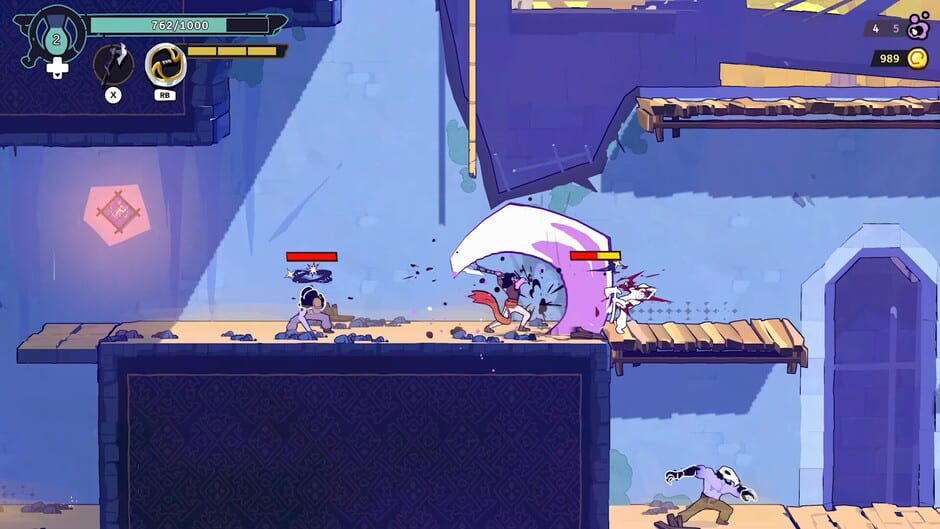
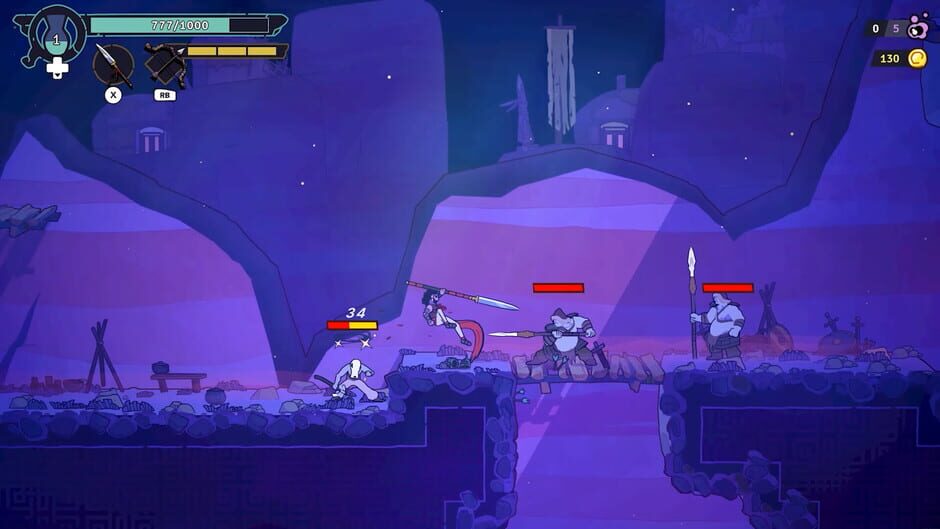
The Rogue Prince of Persia adapts the series' traditional acrobatic movement into a 2D action-platforming roguelite. The Prince attempts to stop a Hun invasion caused in part by his own mistakes, aided by a magical bola capable of returning him to an oasis after death.
Each defeat begins a new attempt. The areas crossed are rearranged, with variations in enemies, rewards and certain platforming challenges. Death does not mean starting entirely from zero, however: new narrative elements, items and progression options can be unlocked between runs.
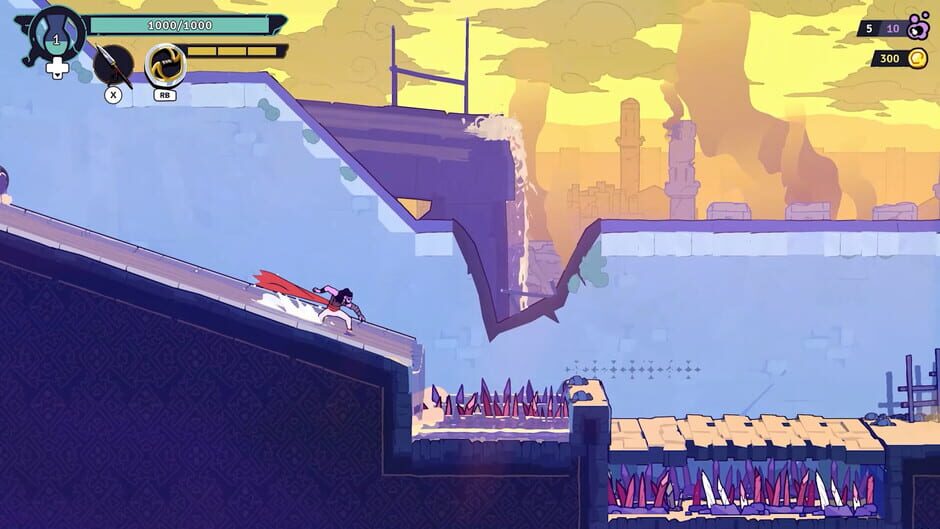
Parkour forms one of the foundations of movement. The Prince can run along walls, use different surfaces for momentum, interact with ropes and environmental elements, or rapidly chain jumps and attacks. This mobility is useful both for crossing environments and gaining an advantage during combat.
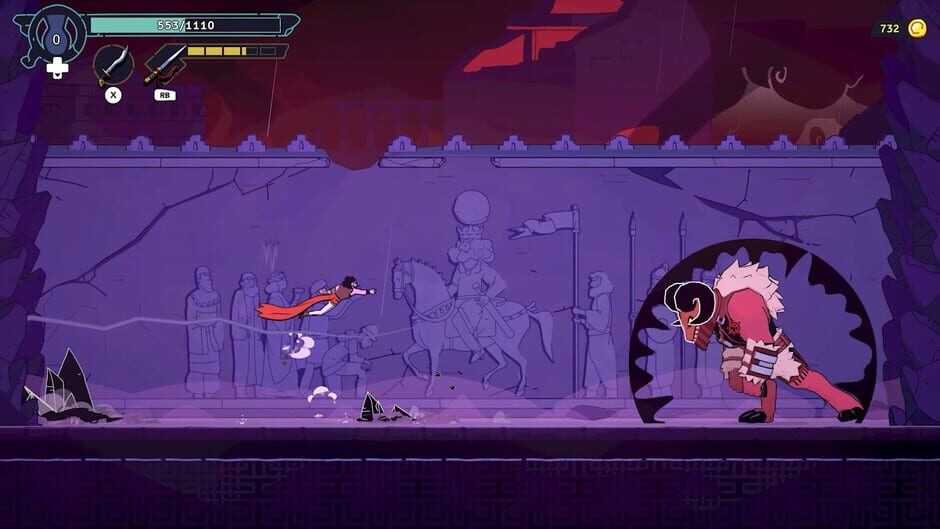
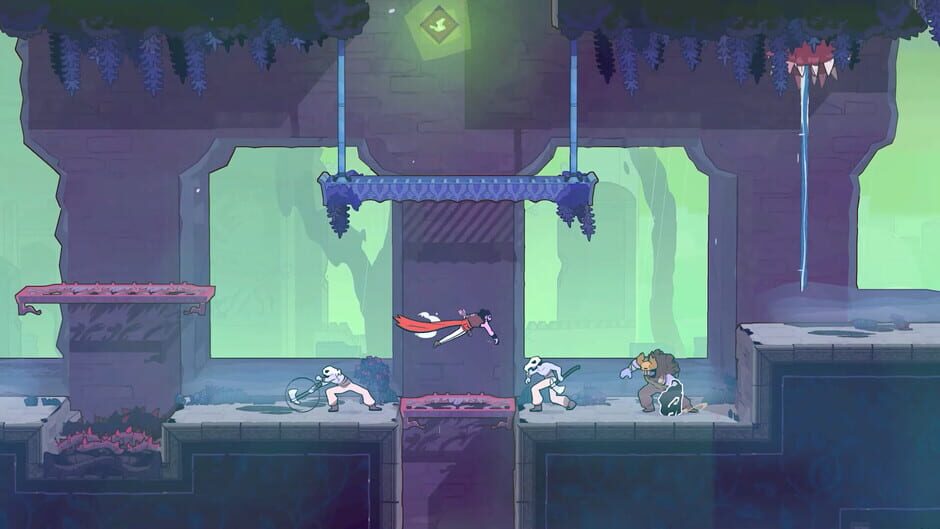
Combat combines primary weapons, secondary tools and acrobatic movement. The Prince can dodge, attack from the air or use a kick to knock an enemy into a wall, another opponent or an environmental trap.
Weapons offer different rhythms and combat styles, while tools provide additional ranged options or ways to control certain situations. Content discovered over successive attempts gradually expands the possibilities available in future runs.
Medallions are at the core of build creation. They add different effects to the Prince's actions, and some benefit from their position or combination with other medallions. The same weapon can therefore be used in very different ways depending on the upgrades obtained during a run.
Permanent progression also allows new equipment and advantages to be unlocked between attempts. The oasis serves as the return point and gradually brings together several characters who accompany the Prince throughout his quest.
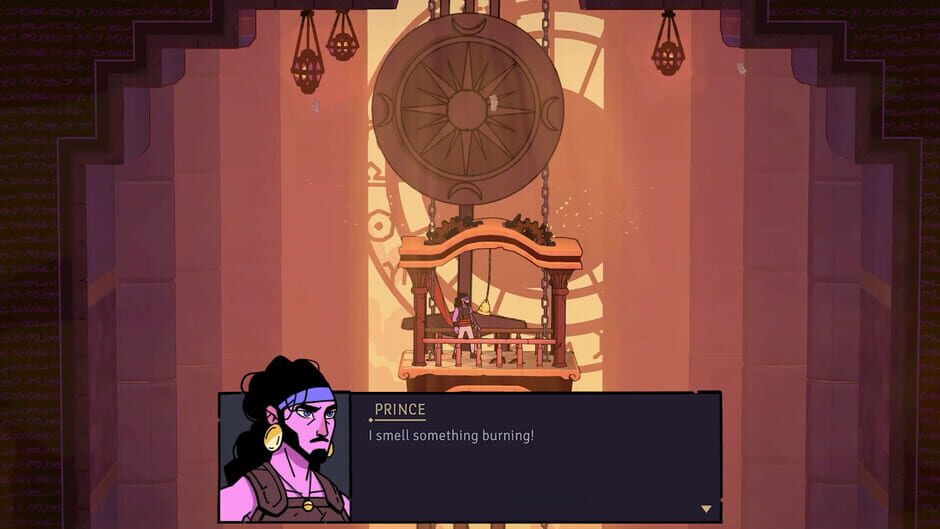
The story also progresses through this repetitive structure. Each attempt can reveal new paths, characters and information, while a Mind Map gathers discovered narrative clues and helps track the different story threads.
The Rogue Prince of Persia therefore uses the repetition inherent to roguelites as part of its narrative: the Prince's resurrection directly explains why he can learn from failure and begin again with new knowledge.
Key points
- A 2D action-platforming roguelite.
- A new Prince facing a Hun invasion.
- A magical bola that returns him to an oasis after death.
- Runs that rearrange paths, enemies and rewards.
- Parkour built around wall-running and acrobatic movement.
- Fast combat combining weapons, tools, dodges and the environment.
- The kick can knock enemies into obstacles or traps.
- Medallions used to build and combine different effects.
- New equipment and upgrades unlocked across successive attempts.
- Narrative progression directly tied to deaths and restarts.
- A Mind Map used to track story clues and objectives.
Conclusion
The Rogue Prince of Persia adapts the series' historical pillars — agility, parkour and acrobatic combat — to a structure built around repeated attempts.
The Prince's mobility constantly connects traversal and combat, while weapons and medallions allow different playstyles to emerge from one run to another.
The resurrection loop is not only a progression system: it is directly part of the story, turning each failure into another opportunity to explore the capital, uncover its secrets and move closer to finding a way to save Persia.
Good to know
The Rogue Prince of Persia was developed by Evil Empire in partnership with Ubisoft, which publishes the game.
An initial version entered Steam Early Access on May 27, 2024.
Version 1.0 was released on August 20, 2025 for PlayStation 5, Xbox Series X|S and PC, after more than a year of development in Early Access.
The Nintendo Switch and Nintendo Switch 2 versions followed on December 16, 2025.
Physical editions for PlayStation 5, Nintendo Switch and Nintendo Switch 2 were later released in April 2026.
The game is a single-player experience.
After completing the story, Awakening runs introduce new difficulty variations and extend the roguelite structure.
Post-1.0 updates also continued to expand the game. They remain separate from the core campaign foundations presented in this entry.
This entry focuses on the main story, parkour, combat and roguelite progression of The Rogue Prince of Persia, without detailing every weapon, medallion or post-launch addition individually.