Overview
Urban Comics is a French publishing house specializing in American comics, launched in January 2012 by Dargaud, within the Média-Participations group. Its creation accompanied an important change in the French market: from January 1, 2012, Dargaud became the new French-language publisher of the DC Comics catalogue.
Urban therefore immediately inherited an immense body of work. Batman, Superman, Wonder Woman, Green Lantern, Flash, Watchmen, Sandman and decades of American publishing had to be made understandable for French readers who had not necessarily followed DC’s different continuities, relaunches or editorial crises. Rather than mechanically reproducing the American organization, the publishing house built its own collections and reading paths.
This is one of Urban’s founding ideas: not requiring readers to know the complete history of DC before opening a book. Major periods are organized into collections such as DC Archives, DC Classiques, DC Renaissance, DC Rebirth and DC Infinite, while standalone stories and classics offer direct entry through a character or work. Batman : Année Un, The Dark Knight Returns, Batman : Un Long Halloween, Superman Red Son, Kingdom Come and Watchmen therefore become independent starting points.
The publishing house is not limited to superheroes, however. From its earliest years, it also took over a significant part of the Vertigo catalogue, including works such as Sandman, Fables, 100 Bullets, Transmetropolitan, Y: The Last Man, Preacher and Sweet Tooth. Then, as early as 2013, it created Urban Indies to publish independent works from American publishers such as Image Comics. Saga by Brian K. Vaughan and Fiona Staples quickly became one of the symbols of this expansion, later joined by Deadly Class, Black Science, Descender, Lazarus and other contemporary works.
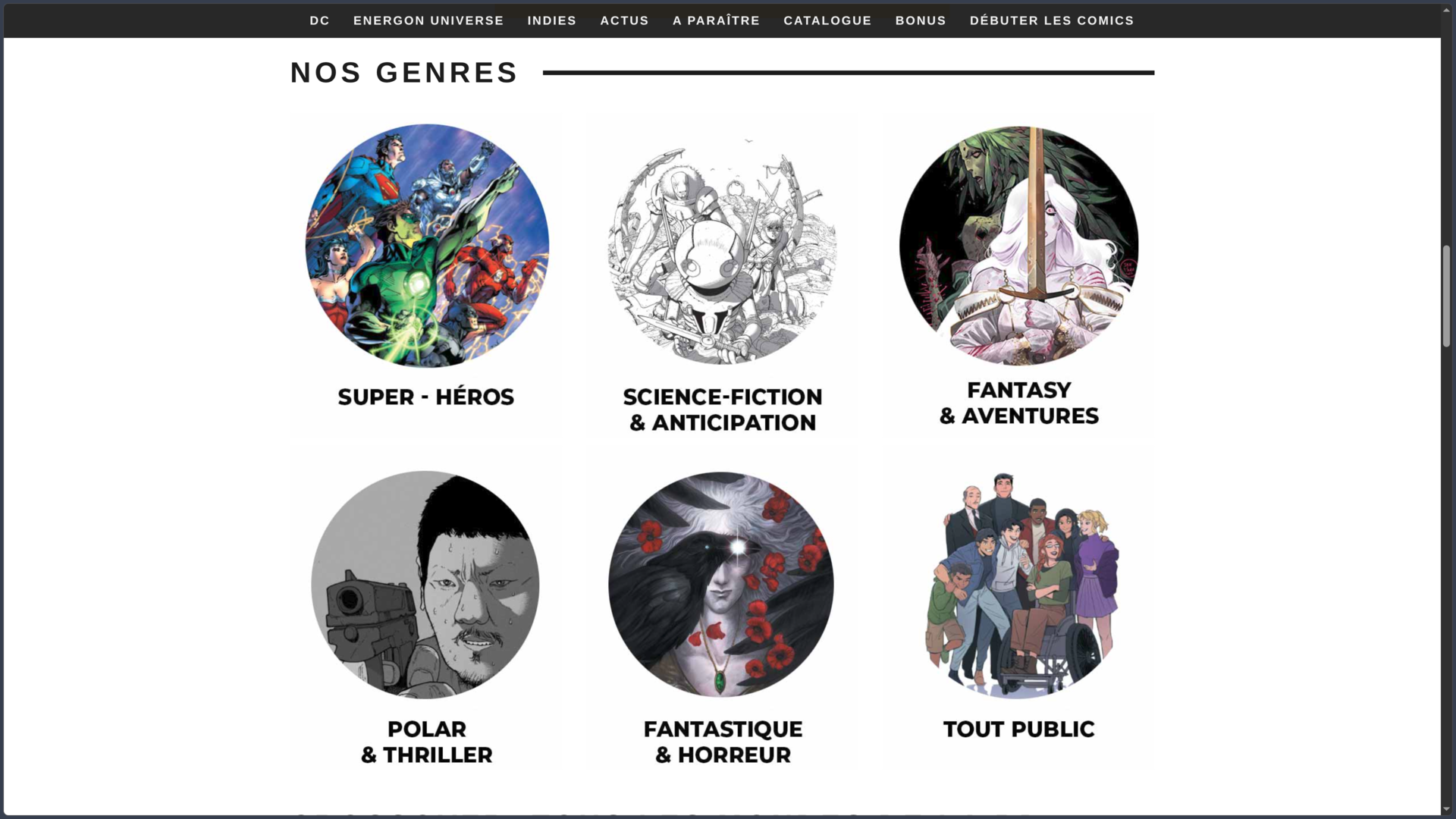
This diversification gradually changed how the publishing house was perceived. Urban remains strongly associated with DC, but its catalogue defends a much broader conception of American comics: superheroes, science fiction, crime, fantasy, horror, satire, social storytelling, graphic novels and creator-driven works can all coexist under the same French banner.
Urban also gives significant visibility to creators. Characters remain essential, but writers, artists, colorists and translators are regularly highlighted in books, collected editions and creator-focused collections. Alan Moore, Frank Miller, Neil Gaiman, Grant Morrison, Geoff Johns, Scott Snyder, Greg Capullo, Brian K. Vaughan, Fiona Staples, Tom King and Jeff Lemire therefore become editorial reference points just as important as certain licenses.
Over time, the publishing house also multiplied its formats. Standard editions coexist with collected editions, Deluxe, Absolute, Black Label, anthologies, prestige editions and, since 2022, the paperback line Urban Comics Nomad. A major story can therefore be offered as an affordable entry point, a standard reference edition or a more ambitious heritage edition.
In 2026, Urban Comics remains an editorial brand operated by Dargaud, itself part of Média-Participations. This hierarchy matters: DC Comics remains the original American publisher, Urban handles the French editions of many works, and Dargaud is the legal structure supporting the brand.
More than ten years after its launch, Urban has therefore built itself around a fairly clear balance: following current American comics while turning several decades of publishing into a French catalogue that is readable, durable and accessible.
History
2011-2012 — Building the new French publisher of DC Comics
On June 29, 2011, DC Comics announced that Dargaud would become its new French-language publisher from January 1, 2012. A new brand dedicated to American comics was to be created to host this catalogue: Urban Comics.
The editorial team was then assembled around a particular challenge. The task was not simply to continue ongoing series, but to reorganize a considerable heritage catalogue at the very moment DC had just relaunched its American universe through Flashpoint and the New 52.
François Hercouët notably took charge of editorial direction. Urban officially began publishing in January 2012 while working simultaneously on two areas: contemporary DC releases and the return of major classics.
This dual approach immediately became structural. New series were intended to follow current publishing, while older works had to remain accessible without forcing readers to search for out-of-print editions or reconstruct several decades of continuity themselves.
2012-2013 — Organizing the heritage catalogue and moving beyond DC
Urban gradually structured the DC catalogue around French collections. DC Archives hosts part of the historical catalogue, DC Classiques covers a broad modern period, while DC Renaissance accompanies the New 52 era. This system would later evolve alongside changes in American publishing.
At the same time, the publishing house brought many major works back into circulation: Batman : Année Un, The Dark Knight Returns, Batman : Un Long Halloween, Watchmen, Superman Red Son and Kingdom Come. The heritage catalogue therefore stopped being treated as a simple succession of old publications and became a genuine editorial backlist.
Vertigo also played a decisive role. With Sandman, Fables, 100 Bullets, Transmetropolitan and Y: The Last Man, Urban could show from the beginning that comics extended far beyond superheroes.
This approach continued in 2013 with the creation of Urban Indies. Saga quickly became one of its emblematic titles. Urban then began building an identity no longer dependent only on DC, but on American comics in all their diversity.
2014-2019 — Establishing a catalogue of creators, genres and formats
During the second half of the 2010s, Urban consolidated its catalogue around several complementary lines.
DC remained the historical core of the publishing house, but independent collections grew with works such as Deadly Class, Black Science, East of West, Descender and Lazarus. Creators became genuine reference points for readers, notably through collected editions and collections highlighting a writer or artist.
The publishing house also developed lines designed for more specific uses. Urban Kids opened the catalogue more directly to younger readers. Urban Games hosted comics connected to video games with universes such as Injustice, Batman: Arkham Knight, The Witcher and Bloodborne. Other collections explored illustrated books, oversized formats and heritage editions.
This diversification also accompanied the changes taking place at DC. The gradual disappearance of Vertigo and the development of DC Black Label led Urban to reorganize certain works and welcome new, more adult or standalone stories.
What mattered was not simply the number of collections created, but the logic connecting them: adapting the American catalogue to French reading habits without losing the coherence of the works.
2020-2022 — Opening new entry points
In 2020, Urban launched Urban Link, a line of graphic novels designed for readers who did not necessarily want to enter through long superhero continuities. Stories are often more standalone, contemporary and immediately accessible.
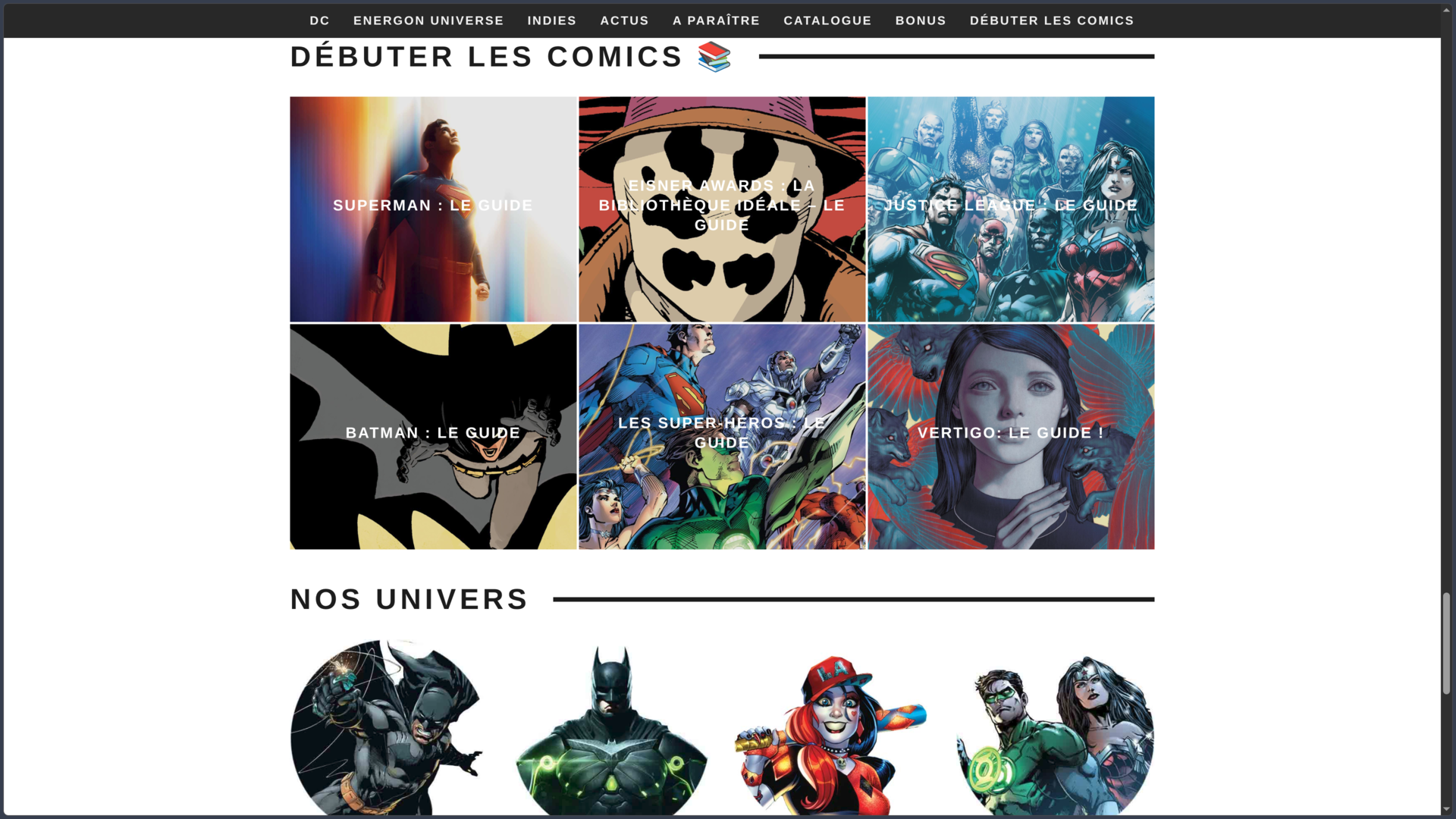
This direction extends work already very present in the publishing house’s communication: reading guides, timelines, anthologies and recommendations regularly explain how to discover Batman, Superman or the major DC universes without having to read everything from the beginning.
In 2022, for its tenth anniversary, Urban took another step with Urban Comics Nomad.
The collection republishes several major works in a more affordable paperback format, including Batman : La Cour des Hiboux, Watchmen, Flashpoint, Superman Red Son, Fables and Kingdom Come. The idea complements standard editions and oversized formats rather than replacing them.
Urban can now offer the same heritage catalogue in several forms: an affordable edition for discovery, a standard book for following a series, and a prestige edition for collecting.
This ability to rework its own backlist gradually becomes as important as acquiring new material.
2024-2026 — Strengthening the independent catalogue with the Energon Universe
From 2024, Urban added another major group of titles to its catalogue: the Energon Universe, published in the United States by Skybound through Image Comics.
The universe begins around Void Rivals by Robert Kirkman and Lorenzo De Felici, then brings together the Transformers and G.I. Joe licenses. Transformers, Duke, Cobra Commander, Scarlett, Destro and later G.I. Joe gradually form a shared universe.
This acquisition marks another step for the catalogue outside DC.
Urban Indies is no longer only a space devoted to independent creator-driven works. The publishing house is now also able to handle major American properties outside DC while maintaining its own work of selection and French editorial presentation.
In 2026, Urban therefore continues to work across several timelines at once: new DC series, independent creations, major universes such as the Energon Universe and heritage reissues.
The publishing house does not try to solve the complexity of comics by removing it. Instead, it seeks to give that complexity a structure clear enough for every reader to choose their own entry point.
What sets it apart
Turning a complex catalogue into reading paths
Urban’s greatest strength lies less in the number of works it publishes than in the way they are organized.
The DC catalogue can appear intimidating: characters with decades of history, relaunches, parallel universes, continuity changes and multiple versions of the same figure. Urban responds to this complexity with clear collections, complete stories and reading guides.
A reader can therefore discover Batman without starting in 1939, read a major Superman story without following his entire continuity or enter DC through a specific period.
Keeping heritage alive instead of simply reprinting it
Urban treats classics as a catalogue that is still alive.
Watchmen, The Dark Knight Returns, Batman : Année Un, Sandman, Kingdom Come and V pour Vendetta can be reissued, repositioned within new collections or offered in different formats.
Heritage is therefore not separated from current publishing. It continues to circulate among new generations of readers and remains visible in bookstores alongside contemporary series.
Not reducing comics to superheroes
DC plays a central role in the identity of the publishing house, but Urban broadened its catalogue very early.
Vertigo and later Urban Indies make it possible to publish science fiction, fantasy, crime, horror, satire, social storytelling and creator-driven works. Saga, Deadly Class, Descender and Transmetropolitan are reminders that American comics can take extremely different forms.
This diversity allows Urban to address both a Batman reader and someone who does not want to read any superheroes at all.
Giving equal importance to works, creators and formats
Urban does not build its catalogue only around famous licenses.
Creators also serve as reference points, while different formats allow the same work to reach different audiences.
A reader can choose a story because they like Batman, because they follow Tom King or Scott Snyder, because they want an affordable Nomad edition or because they are looking for a more complete Deluxe edition.
This combination of character, creator, collection and format gives the catalogue a particularly flexible structure.
Good to know
- Urban Comics began publishing in January 2012, after the agreement announced in 2011 between DC Comics and Dargaud.
- Dargaud legally operates the Urban Comics brand and belongs to the Média-Participations group.
- Urban is the French publisher of many DC works; DC Comics remains their original American publisher.
- Urban Indies was created in 2013 to expand the catalogue into independent comics; Saga quickly became one of its emblematic titles.
- The historical catalogue notably combines DC Comics, Vertigo, DC Black Label and numerous independent works.
- Urban Comics Nomad, launched in 2022, offers several major titles in a more affordable paperback format.
- Since 2024, Urban has published Skybound/Image’s Energon Universe in France, notably including Void Rivals, Transformers and G.I. Joe.
- In 2026, François Hercouët remains Urban Comics’ editorial director, with a catalogue continuing to combine current American publishing, independent creations and comics heritage.