
Overview
Panini Comics has held a major place in French publishing of American comics since the late 1990s. The company is the French branch of the Italian Panini group, historically known for its sticker albums and trading cards, but its publishing activities also extend to comics, manga and magazines.
For comics, the key year is 1997. Panini then took over the French publication of Marvel Comics, previously handled largely by Semic, and launched its new range under the Marvel France identity. Avengers, Spider-Man, X-Men, Silver Surfer, Wolverine and Hulk quickly became the pillars of a catalogue that accompanied an entire generation of readers.
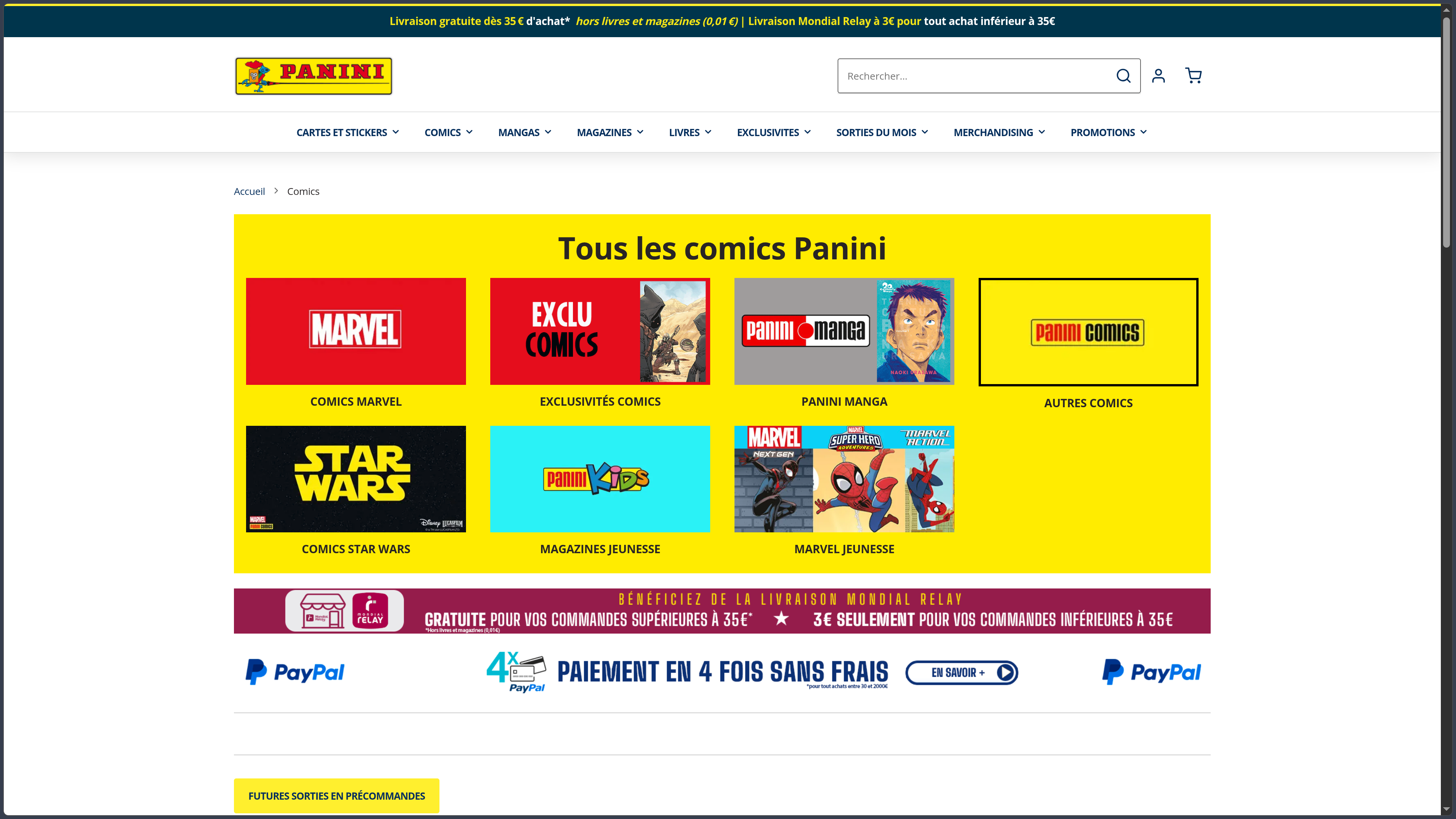
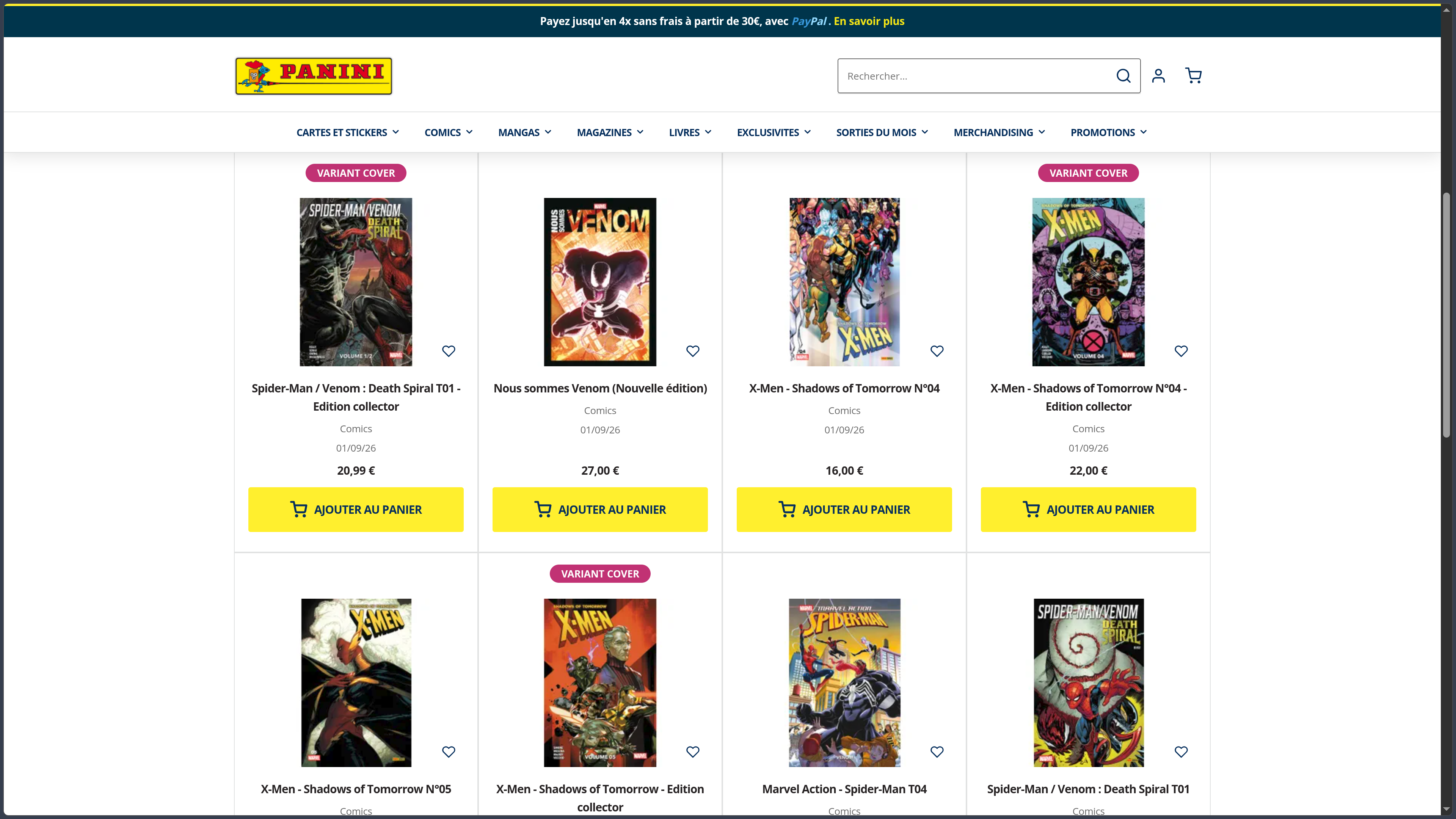
This relationship with Marvel remains at the heart of Panini Comics in France. Spider-Man, X-Men, Avengers, Daredevil, Fantastic Four, Thor, Captain America, Deadpool, Wolverine, Punisher and the many events of the Marvel universe are published in very different forms: new material close to the American releases, regular series, complete stories, chronological collections and major heritage editions.
Over time, Panini has above all developed a genuine architecture of formats. A reader can discover a classic in an affordable edition, follow a recent series in the 100% Marvel range, revisit a complete period in Deluxe format or explore several years of publication in an Omnibus. Ranges such as Marvel Must-Have, Marvel Poche, Marvel Deluxe, Marvel Omnibus, Marvel Absolute, collected editions and Prestige editions therefore serve different purposes.
This organization has become especially important as the catalogue has aged. After several decades of French publication, Panini no longer works only with new releases: the publishing house must also keep major stories such as Civil War, House of M, Secret Wars, Le Gant de l’Infini and important periods of Daredevil, Spider-Man, X-Men and Avengers available.
Marvel is not, however, the only focus of Panini Comics.
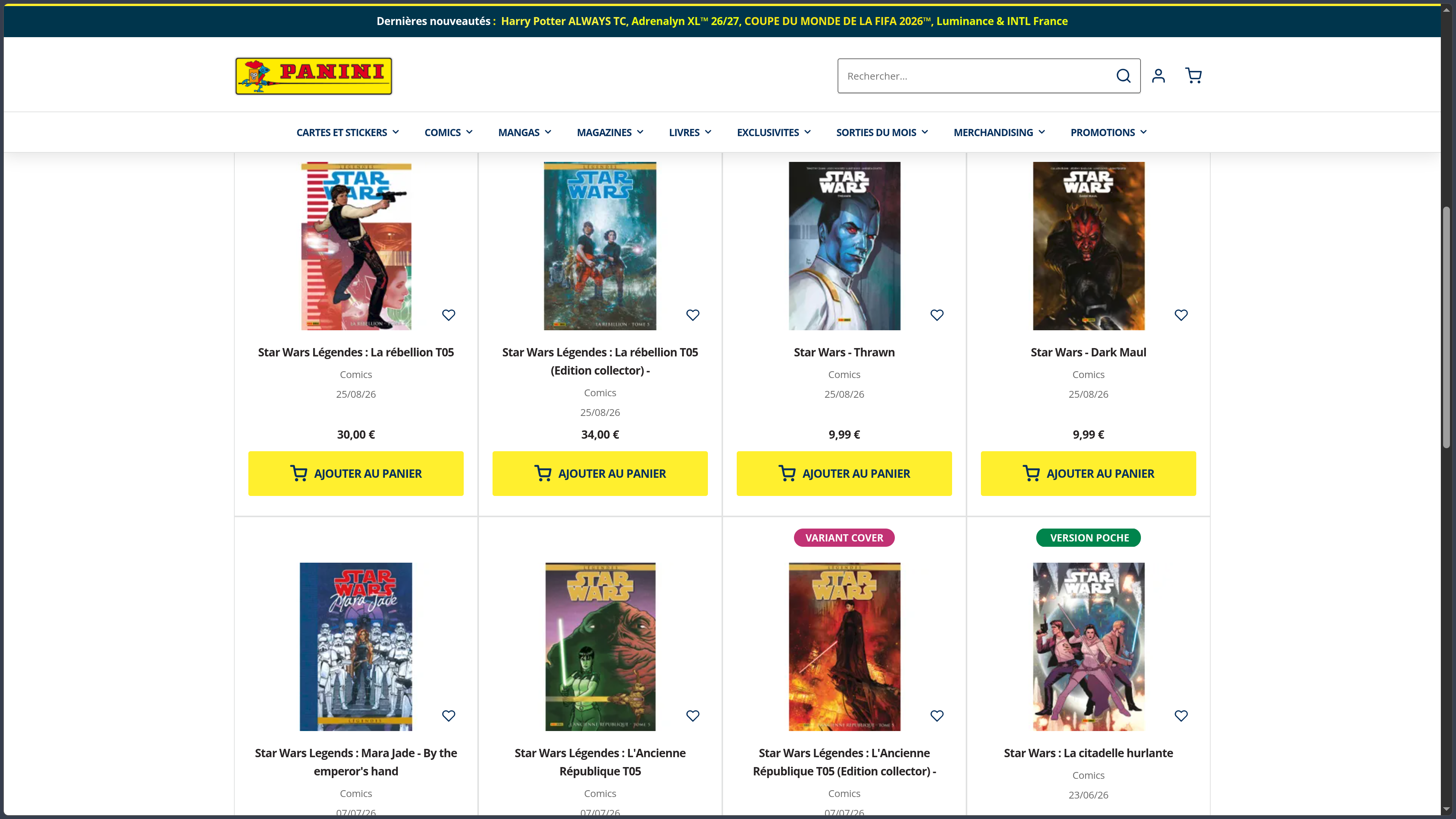
The publishing house also releases an important Star Wars catalogue, combining contemporary series with works from different periods of the expanded universe. It also works around Conan and a wider range of comics from American independent publishers and major licenses.
Its catalogue therefore includes works connected to Image Comics, Dynamite, BOOM! Studios, AWA, TKO, Top Shelf and other publishers, as well as universes originating in video games or popular culture such as Cyberpunk, World of Warcraft and Buffy. Creators such as Mark Millar, Garth Ennis, Jeff Lemire, Kieron Gillen and Alan Moore can therefore appear alongside Marvel’s major properties.
Panini Comics must therefore not be confused with Marvel.
Marvel Comics creates and publishes the original American works. Panini France handles their French editions when it holds the relevant rights: translation, adaptation, grouping of issues, book production and organization of the French catalogue are part of its work as a publisher.
The company also operates a manga line under Panini Manga, with works such as 20th Century Boys and Banana Fish. This branch shares the same French structure but remains editorially distinct from the comics catalogue.
In 2026, Panini France therefore remains difficult to reduce to a single license. Marvel remains its main historical marker, but its publishing identity also rests on almost thirty years of building a back catalogue, reissuing major works and diversifying beyond one universe.
History
1997 — Marvel France takes over the Marvel catalogue
Panini’s history in French comics truly begins in 1997.
Panini then acquired the French publishing rights to Marvel and launched Marvel France. The first publications immediately established the main universes of the House of Ideas with Avengers, Marvel, Spider-Man, Silver Surfer and X-Men, while other titles such as Wolverine, Hulk, X-Force and Cable quickly joined the catalogue.
The transition from Semic did not always represent a complete break. Some publications even continued an existing numbering system in order to preserve continuity for readers.
Newsstand publishing still occupied a central place. Readers followed American series through magazines grouping several issues and several characters.
This organization durably shaped the comics culture of an entire generation of French readers.
2000s — From newsstands to bookstores
During the 2000s, Panini gradually expanded the ways in which it published comics.
Regular magazines remained important, but bookstore editions gained increasing prominence. Major sagas could be offered independently from their periodical publication, while collections made it easier to follow an author, character or series.
This period also corresponded to the development of Panini France’s manga activity. Works such as 20th Century Boys appeared in French from the beginning of the 2000s and helped establish a second major publishing branch.
For comics, however, Marvel remained the foundation.
The arrival of major American crossover events and the growth of the French market gradually gave greater visibility to stories that could be sold as complete books and kept permanently in bookstores.
2010s — Turning comics into a permanent back catalogue
As publications accumulated, Panini faced a new challenge: several decades of Marvel material were now available or could potentially be republished.
The publishing house therefore developed numerous formats to distinguish current releases from heritage material.
The Intégrales often follow characters year by year. Deluxe editions collect more recent runs. Omnibus editions offer very large bodies of work, while other collections make well-known stories easier to access.
This system allows older works to continue circulating even while new series are released every month.
The French catalogue gradually becomes a multi-level system: follow current American releases, keep major sagas available and allow new readers to discover decades of comics without going through old magazines.
At the same time, Panini develops universes outside Marvel more extensively.
Star Wars becomes another important pillar of the catalogue, while independent comics, licensed adaptations and creator-driven works broaden the editorial line.
2020s — Multiplying entry points
The 2020s further reinforce this diversification of formats.
Panini simultaneously offers new releases, reissues, limited editions, oversized books and more economical collections.
Marvel Must-Have brings back stories considered important entry points, while Marvel Poche develops an even more accessible approach through price and format. At the opposite end, Omnibus, Absolute and various Prestige editions are aimed more at readers seeking complete periods or particularly elaborate editions.
This diversity responds to changes in readership.
Someone discovering Spider-Man after a film does not have the same needs as a reader who has followed Marvel for twenty years or a collector looking for a complete Daredevil or X-Men period.
Panini therefore adapts the same heritage material to several levels of reading and several budgets.
In 2026, this approach remains clearly visible. Monthly releases combine new Marvel series, historical collected editions, Deluxe or Omnibus reissues, Star Wars, Conan and various independent works.
The newsstand model that largely defined Marvel France in 1997 is no longer the only center of the system. Bookstores, the back catalogue and the multiplication of formats now occupy a decisive place.
What sets it apart
A historic relationship with Marvel that became structurally important in France
The main distinctive feature of Panini France remains its long-standing association with Marvel Comics.
Since 1997, several generations of French readers have discovered or followed Spider-Man, X-Men, Avengers, Daredevil, Wolverine and their universes through Panini editions.
This continuity now gives the publishing house a particularly extensive back catalogue, ranging from historical stories to the most recent American series.
Publishing the same work for several generations of readers
Panini no longer simply publishes a story once.
A story can first appear in a publication following current American releases, later return in book form, and then several years afterward join a heritage collection, an economical edition or an Omnibus.
This circulation gives works a new life and allows each generation to discover them in a form suited to its time.
Turning format into a genuine editorial tool
At Panini, the choice of collection often immediately indicates the purpose of the book.
An Intégrale allows a character to be followed chronologically. A Deluxe edition collects a run. An Omnibus aims for comprehensiveness over a long period. A Poche edition emphasizes accessibility, while an Absolute or Prestige edition places greater emphasis on the object itself.
This architecture helps organize an enormous catalogue without requiring readers to buy every title in the same way.
Being broader than Marvel without diluting its identity
Marvel remains the historical heart of Panini Comics, but the publishing house has built a much broader environment around it.
Star Wars, Conan, independent comics, video game adaptations and creator-driven works provide access to other genres and other American publishers.
Panini France can therefore remain immediately identifiable with Marvel while covering a much wider part of the comics market.
Good to know
- Panini France’s comics activity began in 1997, but the French company already existed before then; 1997 is therefore not its legal creation date.
- The first Marvel publications of 1997 appeared under the Marvel France brand.
- Panini then succeeded Semic in publishing a large part of the Marvel catalogue in France.
- Marvel Comics remains the original American publisher; Panini France handles the French editions of works for which it holds the rights.
- The catalogue notably includes Spider-Man, X-Men, Avengers, Daredevil, Fantastic Four, Wolverine, Deadpool, Thor and Captain America.
- Panini also publishes in France an important Star Wars catalogue, along with Conan and numerous independent or licensed comics.
- Current collections cover several levels of reading, from Marvel Poche to Deluxe, Intégrales, Omnibus, Absolute and Prestige editions.
- Panini France also has a distinct manga activity and remains in 2026 an active French company in book publishing.