PANACHES Culture · Works

Book — PANACHES Culture

Discover documented games, books, films, animation, series, albums and other creations, then explore their associated studios, tools and articles.

104 works

Aristotle: Metaphysics
Book

Aristotle: Metaphysics

If the composite character of Metaphysics has given rise to numerous debates, relating to its ordering and the authenticity of the treatises which compose it, a certain thematic unity emerges from the latter. After having verified, through a comparison with the doctrine of causes and principles of his predecessors, the theory of causes exposed in Physics, Aristotle sets out to construct a theory of forms, capable of…

  • Philosophy
Book
Aristotle: Nicomachean Ethics
Book

Aristotle: Nicomachean Ethics

The Nicomachean Ethics is not only one of Aristotle's most famous works, one of those which best testify to his philosophy today. It is also, more generally, one of the great texts in the history of thought. What is the activity that, ultimately, gives meaning to human life? This is the question that Aristotle begins by raising, knowing that the human being is a rational being, capable of developing multiple projec…

  • Philosophy
Book
Aristotle: Physics
Book

Aristotle: Physics

“The fundamental book of Western physics,” said Heidegger about Aristotle’s Physics. Few works, it is true, will have had such a profound and lasting impact on our ways of thinking and, on one point at least, Heidegger is right: Aristotelian nature, in its opposition to the supernatural, to art and to history, is still our nature. By taking as its object the study of change, Physics delivers, in the shadow of the m…

  • Philosophy
  • Classical
Book
Aristotle: Poetics
Book

Aristotle: Poetics

What is a good tragedy? What is a really funny comedy? How to understand the rules of their composition? What is the method for becoming a good literary and dramatic critic? The questions posed by the Poetics resonate with particular acuteness in the Greece of theatrical competitions known to Aristotle. But they go beyond the ancient context to nourish contemporary reflections linked to literature and the fine arts.…

  • Writing
  • Essay
  • Philosophy

Book
Aristotle: Politics
Book

Aristotle: Politics

The extraordinary interest that our time has in Aristotle's Politics is not only an effect of the reverence due to the great books, but a mark of insight. Because behind a text which sets as its horizon a moribund reality in Aristotle's own time – the city – today's reader cannot help but detect the foundation and therefore the foundation of the way in which we think of the relationships between men, and more genera…

  • Philosophy
Book
Aristotle: Rhetoric
Book

Aristotle: Rhetoric

The Rhetoric is a foundational text in many respects. In addition to the capital interest it presents for specialists in ancient Greek civilization, it constitutes a mine of information and questions for theorists of language, for historians or practitioners of what we today call “communication”. But its interest is above all philosophical. Recognize the importance of persuasion in social and political relationships…

  • Philosophy
Book
Descartes: Discourse of method
Book

Descartes: Discourse of method

A manifesto of Cartesian philosophy, the Discourse on Method (1637) is both the story of an intellectual journey and the masterful illustration of a project: to found the unity of the sciences and constitute a universal science. Home to an abundant work, the Discourse claims the rights of reason against all tradition and authority. This is why he assigns a task to philosophy: to rise to certainty. The present editi…

  • Essay
  • Philosophy
Book
Descartes: Metaphysical meditations
Book

Descartes: Metaphysical meditations

In Metaphysical Meditations, Descartes plans to give a solid foundation to knowledge: what allows me to think that I hold a truth? It is necessary to sort out the true from the false, and the philosopher will endeavor to reject everything that is doubtful. A first incontestable truth will emerge from this methodical doubt: “I think therefore I am” (the famous cogito).

  • Philosophy
Book
Descartes: Rules for the direction of the mind
Book

Descartes: Rules for the direction of the mind

The Rules for the Direction of the Mind, composed between 1628 and 1629, and published posthumously, constitute the first major philosophical text by Descartes (1596-1650). Through these rules, the author aims to explain the mode of resolution of all the questions that may arise for man, and to manifest the fundamental unity of the spirit, in a way which announces the Discourse of the method (1637). The method is pr…

  • Philosophy
Book
Descartes: The Search for Truth
Book

Descartes: The Search for Truth

"No other writing by Descartes, even the Discourse on Method, provides us with a better approach and a better introduction to his universe of thought. "Ernst Cassirer.The Search for Truth through Natural Light introduces us to a little-known Descartes, eager to transmit his thoughts, not only through meditation but also through dialogue. In this philosophy, what is most individual and most intimate, consciousness, i…

  • Philosophy
Book
Epictetus: Interviews
Book

Epictetus: Interviews

“My goal is to finally make of you men freed from all constraints, from all constraints, from all obstacles, free, peaceful, happy, who turn their eyes towards God in both small and big things. » A lame slave who became a philosopher, Epictetus orally gave his students and disciples lessons which, through the study of exemplary models, aimed at their edification. Recorded by one of them, his teaching is above all ba…
  • Philosophy
Book
Epictetus: Manual
Book

Epictetus: Manual

A summary of Epictetus' thought bequeathed by his disciple Arrian, the Manual - that is to say the enkheiridion, the dagger that we have on hand to face any eventuality - is dedicated to ethical effectiveness. It is brief and incisive by necessity. It is not addressed to the wise, who have no need of it, but to those, among the unwise, who are progressing and practicing wisdom. An exercise book for philosophical edu…

  • Philosophy
Book
Leibniz: Discourse on metaphysics
Book

Leibniz: Discourse on metaphysics

A complex route leads to the Discourse on Metaphysics (1686), considered the first almost perfect exposition (but unknown until 1846) of Leibnite's doctrine. To rehabilitate “substantial forms”, we must in fact deploy a philosophy of conciliation which encourages us to read the concepts of the Ancients under the results of the Moderns. The “Cartesian sect” does not emerge unscathed from this quest at the end of whic…

  • Philosophy
Book
Leibniz: Essays on theodicy
Book

Leibniz: Essays on theodicy

How can we reconcile the evil at work on Earth and the holiness of God who created it? In the Essays on Theodicy on the Goodness of God, the Freedom of Man and the Origin of Evil (1710), Leibniz sets himself the Promethean task of resolving the problem of evil and exonerating God. According to him, torment, suffering and loss are necessary data to be integrated into an overall perspective, a general harmony. It is …

  • Philosophy
Book
Leibniz: New essays on human understanding
Book

Leibniz: New essays on human understanding

The imaginary dialogue of Théophile and Philathèle in the New Essays on Human Understanding (1765) is the substitute for a dialogue that never took place: that of Leibniz with Locke. In this work published posthumously, the philosopher of the monad makes the alternating voices of empiricism and rationalism heard. The fundamental question that Locke asks himself is that of the powers of knowledge: the wisdom of man …

  • Philosophy
Book
Marcus Aurelius: Thoughts for myself
Book

Marcus Aurelius: Thoughts for myself

Emperor of Rome, Marcus Aurelius was first a student of the Stoic masters. This learning will allow him to overcome the difficulties and contradictions that his role imposed on him: a man of peace, he led numerous wars; a thoughtful and reserved man, he had a destiny that took center stage. From the Stoics he learned resistance and self-control. He has also developed techniques that he describes in this work in orde…

  • Philosophy
Book
Plato: Apology of Socrates
Book

Plato: Apology of Socrates

Athens, 399 BCE. Socrates, a citizen without wealth or political power, appears before the city tribunal. What are the alleged facts? He is accused of not recognizing the existence of traditional gods, of introducing new deities and of corrupting the youth. Faced with his judges, Socrates alone defends himself and warns the Athenians: the philosopher is a blessing to the city and the city condemns itself by putting …

  • Philosophy
Book
Plato: Crito
Book

Plato: Crito

In 399 BCE, in Athens, Socrates appeared before the city tribunal. Accused of not recognizing the existence of traditional gods, of creating new deities and of corrupting youth, he is condemned to death. We have few testimonies left of his trial, but the one that Plato gives us in the Apology of Socrates elevates to the rank of founding myth of philosophy a fact that could have remained banal in the light of history…

  • Philosophy
Book
Plato: Gorgias
Book

Plato: Gorgias

The tone of Gorgias is particularly violent, and not only with regard to rhetoric. The dialogue formulates one of the most radical critiques that have been addressed to Athenian democracy, its dominant values ​​and its prestige politics. Indeed, Socrates attacks all aspects of this policy, from the most concrete to the most ideological. But most of the criticism targets the condition which gives Athenian democracy i…

  • Philosophy
Book
Plato: Phaedo
Book

Plato: Phaedo

The Phaedo tells of a death, that of Socrates. But the story of these singular farewells is an opportunity to have a different discourse on this subject. Because Socrates dies after speaking, after tearing off his frightening “mask” of a witch from death, and betting on the immortality of our souls. With him, death and philosophy engage in the same work as Penelope, undoing what life has woven and freeing the soul …

  • Philosophy
Book
Plato: Phaedrus
Book

Plato: Phaedrus

How to speak, why write? This is what two Athenians are discussing, at the end of the 5th century BC, lying near a flowering chaste tree, in the shade of a plane tree under which a spring flows, on the banks of the Ilissos, a few hundred meters from the Acropolis. But how can we evoke the power of discourse without speaking of the reality which produces discourse and over which its power is exercised, the human soul…

  • Philosophy
  • Classical
Book
Plato: The Laws
Book

Plato: The Laws

The Laws are undoubtedly the last of the dialogues written by Plato. In the twelve books of this legislative sum of extraordinary ambition, the philosopher pronounces on an exorbitant number of aspects of human and civic life, produces a true political history of humanity, and recalls, with a clarity which has hardly any equivalent in the other dialogues, the general principles of his "physics" and his cosmology: th…

  • Philosophy
Book
Plato: The Republic
Book

Plato: The Republic

What do artists do? The question runs through these two texts of Plato with sovereign irony. In the Ion, Socrates pushes to his limits a rhapsode who claims to interpret Homer by art: what he believes he has mastered is only divine possession – a favor granted by the Muses, not technical acquired through work. In book Together, these founding texts outline a question that philosophy has never ceased to reopen: if ar…

  • Philosophy
Book
Plato: The Symposium
Book

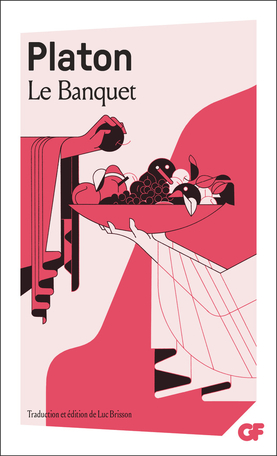
Plato: The Symposium

They lie on beds and talk about love and beauty. Their speeches follow one another, sometimes responding to each other, because there are several loves and several ways of desiring Beauty. To these men living in a time and place where the education of boys is inseparable from the sexuality which regulates the relationship between master and disciple, a foreigner, Diotima, opposes a feminine model of transmission of …

  • Philosophy
Book
Plato: Timaeus
Book

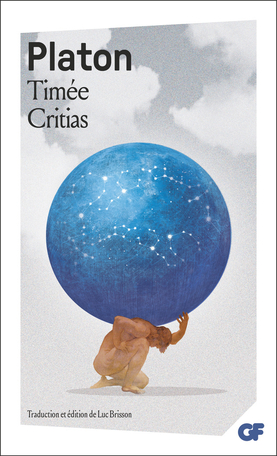
Plato: Timaeus

How to talk about origins? How can we say what was the birth of the universe, that of man, that of society? From Timaeus to Critias, the answer does not vary: it is to a discourse which constitutes its object that the explanatory task falls. On the one hand, the cosmology of Timaeus which seeks the conditions for knowledge of the sensible world. On the other, the story of the war which opposed ancient Athens to Atla…

  • Philosophy
Book
Seneca: Anger
Book

Seneca: Anger

In his treatise On Anger (or The Art of Calming Anger), Seneca defines this emotion as a passing madness and the worst of passions, characterized by the desire to punish unjustly. He radically distinguishes it from reason and justice, asserting that it deprives the individual of his ability to think and inevitably leads to personal and social destruction. Seneca maintains that the wise should never feel angry, e…

  • Philosophy
Book
Seneca: Benefits
Book

Seneca: Benefits

Seneca is a Roman Stoic philosopher who wrote Benefits, a seven-book treatise dedicated to Aebutius Liberalis and published around 54 AD. JC This text offers an in-depth analysis of the ethical notions of gratitude, ingratitude and benefit, aimed at defining how to properly grant, receive and return social favors. Benefit lies in the intention and act of giving, not in the material value of the object. Seneca m…

  • Philosophy
Book
Seneca: Letters to Lucilius
Book

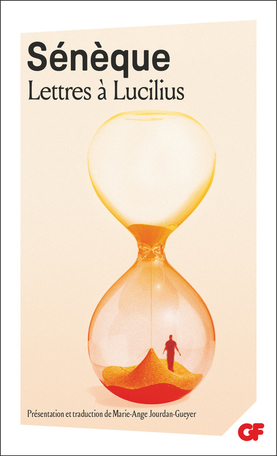
Seneca: Letters to Lucilius

Seneca, a Latin philosopher born in Cordoba, lived between the 1st century BC and the 1st century AD. He studied rhetoric and philosophy in Rome but was forced into exile in 41 BC. On his return to Rome, he became the tutor of the young Nero and composed an excessively biting satire of his society. In these letters he addresses his old friend Lucilius. Of modest origin, Lucilius rose, through merit, to the rank of k…

  • Philosophy
Book
Seneca: On providence
Book

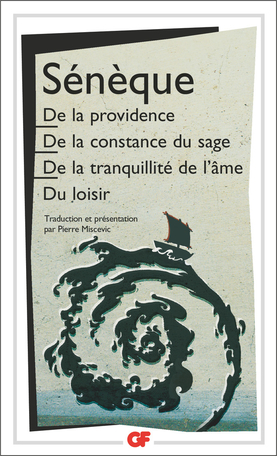
Seneca: On providence

“You ask me, Lucilius, why, if the world is governed by a Providence, good people experience so much evil. The answer would more easily find its place in the body of a treatise where we would demonstrate that this Providence presides over all things and that a God dwells in our midst. »

  • Philosophy
Book
Seneca: On the brevity of life
Book

Seneca: On the brevity of life

In “On the Brevity of Life,” Seneca the Younger explores the timeless themes of time and wisdom. This philosophical text, written in the form of an essay, is addressed to his friend Paulinus, to whom Seneca gives advice on how to live fully. The author develops the idea that human life, often perceived as too short, is in reality long enough if used well. Seneca criticizes inaction, procrastination and the incessant…

  • Philosophy
Book
Seneca: On the happy life
Book

Seneca: On the happy life

On the Happy Life (or De vita beata), Stoic treatise by Seneca written around 58 AD. JC, defines happiness as virtue and agreement with reason (nature), and not as the possession of material goods. The work responds to critics accusing Seneca of hypocrisy (a wealthy Stoic) by establishing that: The sovereign good resides in virtue, which provides indestructible inner autonomy in the face of the vagaries of f…

  • Philosophy
Book
Seneca: On the tranquility of the soul
Book

Seneca: On the tranquility of the soul

On the Tranquility of the Soul is a Stoic philosophical dialogue by Seneca addressed to his friend Serenus, who seeks to overcome persistent inner turmoil. The work explores ways to achieve inner peace (tranquillitas or euthymia) by identifying and healing the causes of anxiety, such as misdirected desires, vain ambition and dispersion of the mind. Seneca, playing the role of the doctor of the soul, offers ther…

  • Philosophy
Book
Spinoza: Ethics
Book

Spinoza: Ethics

The starting point of Spinoza's reflection is his own experience: he knows, through observation, that he has a body, and he is aware of its affects. But, if this is indeed a kind of knowledge, it is an incomplete and painful knowledge: to be conscious is, for the human being, if not always to suffer, at least to suffer, to be constrained, overwhelmed. According to Spinoza, it is important to have an idea of ​​one's…

  • Philosophy
Book
Spinoza: Political Treatise
Book

Spinoza: Political Treatise

The Political Treatise draws all the conclusions from The Ethics: after having addressed individuality, Spinoza attacks the life of man in society. It traces the genesis of the political constitution of a group. It shows how the right to preserve one's life takes precedence over the right to live according to one's will. Everyone must cede to others the power to govern them. And this other must ensure the safety and…

  • Philosophy
Book
Spinoza: Principles of Descartes' Philosophy
Book

Spinoza: Principles of Descartes' Philosophy

Descartes' Principles of Philosophy (Renati Descartes Principiorum philosophiae pars I et II, more geometrico demonstratae) is the only work that Baruch Spinoza published during his lifetime, under his own name, in Amsterdam in 1663 (editor J. Rieuwertsz). Written at the request of a student, it takes up the Principles of Philosophy of Descartes (1644) by exposing them according to geometric order (more geometri…

  • Philosophy
Book
Spinoza: Short treatise
Book

Spinoza: Short treatise

Long neglected, even mistreated, the Short Treaty has acquired, since the work of Filippo Mignini, the status of the first formulation of Spinoza's system. But for this very reason, it still too often remains in the shadow of Ethics. The Short Treatise deserves to be read (and reread) for itself, and not only with a view to understanding the genesis of Ethics. This is the main goal pursued by the contributions of th…

  • Philosophy
Book
Spinoza: Theological-political treatise
Book

Spinoza: Theological-political treatise

“I am currently composing a treatise on the way in which I view Scripture, and my reasons for undertaking it are the following: 1° The prejudices of theologians; I know in fact that it is these prejudices which are especially opposed to men being able to apply their minds to philosophy; I therefore consider it useful to expose these prejudices and to rid thoughtful minds of them. 2° The opinion that the vulgar have…

  • Philosophy
Book
Spinoza: Treatise on the Reform of the Understanding
Book

Spinoza: Treatise on the Reform of the Understanding

“After experience had taught me that everything that frequently happens in common life is vain and futile, I saw that everything which was for me a cause or object of fear had in itself nothing good or bad, except to the extent that the soul was agitated by it, I finally decided to seek if there was something which was a true good, capable of being communicated and by which alone, all other things having been reject…

  • Philosophy
Book
Lenoir: The Five Pillars of Wisdom
Book 2025

Lenoir: The Five Pillars of Wisdom

"There is an amazing convergence between all the great philosophical and spiritual currents of the world around fundamental qualities to develop in order to lead a good and happy life. This is what I call the 5 pillars of wisdom: knowledge, love, ethics, presence and acceptance. Beyond their cultural or metaphysical differences, the messages of Buddha, Lao-tse, Socrates, Plato, Epicury, Jesus, Epictetus, Rûmi, Monta…

  • Essay
  • Self-help
  • Philosophy
Book
Lenoir: The Odyssey of the Sacred
Book 2023

Lenoir: The Odyssey of the Sacred

Since his appearance, Homo sapiens has felt terrified and admired in the face of Nature and wondered about his existence. From this feeling of the sacred were born all the great spiritual and religious currents of the world. Why is he the only animal that seeks to give meaning to his life, practices funeral rituals and invents great collective stories?Frédéric Lenoir tries to answer these questions and shows, over t…

  • Essay
  • Self-help
  • Philosophy
Book
Lenoir : Desire, a philosophy
Book 2022

Lenoir : Desire, a philosophy

"To desir life is not simply to be alive. It is to let ourselves be driven by the vital momentum that leads us to create, to love, to overcome us. It is to cultivate the power of desire that is the driving force of our lives. Yet, in everyday life, we feel many limitations - 'I am not capable', 'It is too risky', 'It is not for you' - which inhibit us. We are often also trapped in the impulses of our primary brain, …

  • Essay
  • Self-help
  • Philosophy
Book
Lenoir : Jung, a journey to yourself
Book 2021

Lenoir : Jung, a journey to yourself

"Carl-Gustav Jung (1875-1961), a Swiss physician, pioneer of psychoanalysis, is one of the greatest thinkers of the 20th century. He remains quite unknown in France, while his ideas have exerted a profound influence on our contemporary culture and he has been the inventor of many revolutionary concepts, such as synchronicity, collective unconsciousness, archetypes or complexes.He is with Spinoza one of the authors w…

  • Essay
  • Self-help
  • Philosophy
Book
Lenoir: Living! in an unpredictable world
Book 2020

Lenoir: Living! in an unpredictable world

"It was enough to have a far-off virus for the course of the world and our lives to be upset.""I am convinced that nothing will be as before and that we must learn to develop our inner resources in order to live the best possible way in an unpredictable world. May this book written in the urgency of time bring light and comfort to all those who will read it."F. L. In a language accessible to all, Frédéric Lenoir off…

  • Essay
  • Self-help
  • Philosophy
Book
Lenoir : Meditate with open heart
Book 2018

Lenoir : Meditate with open heart

"This is the ultimate goal of the art of meditating: to be fully human by harmonising our mind, our body and our heart." Meditation is a thousand-year-old practice used both in the East by Buddhists and in the West by the ancient Greeks, and today validated by scientific research. By developing our attention, it teaches us not only to calm the agitations of our mind but also to broaden our sensory perceptions. In th…

  • Essay
  • Self-help
  • Philosophy
Book
Lenoir : Wisdom explained to those who seek it
Book 2018

Lenoir : Wisdom explained to those who seek it

"You undoubtedly aspire, reader friend, to a successful life. Not necessarily to succeed in life, but to lead a good and happy existence. Ever since, all over the world, men and women have been nourishing this aspiration and working to implement it. Everyone believes that what makes our life meaningful is to grow in humanity. I am convinced that this philosophical ideal of wisdom remains the object of a quest we can…

  • Essay
  • Self-help
  • Philosophy
Book
Lenoir : The Spinoza Miracle
Book 2017

Lenoir : The Spinoza Miracle

Baruch Spinoza, 23 years old of the Jewish community for heresy, decides to devote his life to philosophy. His objective? To discover a real good that would "provide him for eternity the enjoyment of supreme and incessant joy." During the twenty years remaining to live, Spinoza builds a revolutionary work. How could this man, in the middle of the seventeenth century, be the forerunner of the Enlightenment and our mo…

  • Essay
  • Self-help
  • Philosophy
Book
Lenoir: The Power of Joy
Book 2015

Lenoir: The Power of Joy

"Is there a more desirable experience than that of joy? More intense and deeper than pleasure, more concrete than happiness, joy is the manifestation of our vital power. Joy is not decreed, but can it be tamed? To provoke it? To cultivate it? I would like to propose here a way of self-fulfillment based on the power of joy. A way of liberation and love, to the opposite of the false happiness proposed by our narcissis…

  • Essay
  • Self-help
  • Philosophy
Book
Aristotle: Ethics to Eudemus
Book 2013

Aristotle: Ethics to Eudemus

The time has come for Ethics in Eudeme. Like the Nicomachean Ethics, this other Ethics attributed to Aristotle has as its object the completion of humanity in man, a completion which is confused with happiness. But while the first treatise is expressly linked to a political project, the second insists on the intimate – and nevertheless universal – dimension of ethics: “If the beauty of a life resides in things obtai…

  • Philosophy
Book
Lenoir : Happiness, a philosophical journey
Book 2013

Lenoir : Happiness, a philosophical journey

A magnificent collector's edition with artist's cover, laser cut paper, firm book like a box. Blue Jaspage. What do we mean by happiness? Do we depend on our genes, luck, our sensibility? Is it a lasting state or a series of fleeting pleasures? Is it only subjective? Should we look for it? Can we cultivate it? Can we cultivate it? Can we coexist in pain and happiness? To try to answer these questions, Frederic Lenoi…

  • Essay
  • Self-help
  • Philosophy
Book
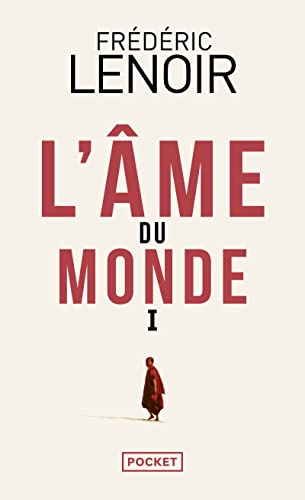
Lenoir : The Soul of the World
Book 2012

Lenoir : The Soul of the World

"Presenting the imminence of a planetary cataclysm, seven wise men from all over the world gather in a lost monastery of the Tibetan mountains to transmit to Tenzin and Natina, two teenagers, the keys to universal wisdom. Beyond the differences of their respective traditions but inspired by what the ancient philosophers called the "soul of the world" - this benevolent force that maintains the harmony of the universe…

  • Essay
  • Self-help
  • Philosophy
Book
Lenoir: Small treatise of inner life
Book 2010

Lenoir: Small treatise of inner life

Of all my books of philosophy and spirituality, this one is certainly the most accessible, but probably also the most useful. For it is not a theoretical knowledge that I seek to convey, but a practical knowledge, the most essential one: how to lead a good, happy life, in harmony with oneself and others. What I say here with simple words and concrete examples, as in a conversation with a friend, is the fruit of thir…

  • Essay
  • Self-help
  • Philosophy
Book
Lenoir : Socrates, Jesus, Buddha
Book 2009

Lenoir : Socrates, Jesus, Buddha

The crisis that we are experiencing is not simply economic and financial, but also philosophical and spiritual. It refers to universal questions: What makes the human being happy? What can be considered as real progress? What are the conditions for a harmonious social life?Contains a purely materialistic vision of man and the world, Socrates, Jesus and Buddha are three masters of life. A life that they never lock up…

  • Essay
  • Self-help
  • Philosophy
Book
Plotinus: Enneads IV
Book 2003

Plotinus: Enneads IV

The fourth Ennead brings together nine treatises devoted to the soul: its essence, its immortality, its memory, its perception, its descent into the body and the question of the unity of all souls. Plotinus specifies the links between the individual soul, the Soul of the world and the intelligible world.

  • Philosophy
  • Classical
Book
Plotinus: Enneads V
Book 2003

Plotinus: Enneads V

The fifth Ennead explores Intelligence, intelligible realities and their relationship with the One. His nine treatises describe the procession of beings from the first principle, the nature of Ideas and the way in which the soul can rise towards intelligible beauty.

  • Philosophy
  • Classical
Book
Plotinus: Enneads VI
Book 2003

Plotinus: Enneads VI

The sixth Ennead examines the kinds of being, the unity and omnipresence of being, numbers, freedom and the will of the One. It leads Plotinus' reflection to the Good, the supreme principle located beyond being and thought.

  • Philosophy
Book
Plotinus: Enneads III
Book 1999

Plotinus: Enneads III

Philosopher of the 3rd century AD, Plotinus constructed one of the most important metaphysics in Western history. His work was brought together by one of his disciples, Porphyry, who ordered the fifty-four treatises into six Enneads of nine treatises each.

  • Philosophy
Book
Plotinus: Enneads II
Book 1998

Plotinus: Enneads II

Philosopher of the 3rd century AD, Plotinus constructed one of the most important metaphysics in Western history. His work was brought together by one of his disciples, Porphyry, who ordered the fifty-four treatises into six Enneads of nine treatises each.

  • Philosophy
Book
Paulo Coelho : Manual of the Warrior of Light
Book 1997

Paulo Coelho : Manual of the Warrior of Light

The warriors of light recognize themselves at first glance. They are in the world, they are part of the world. Often, they find that their life has no meaning. But they have not renounced to give it one. They question themselves, refuse passivity and fatalism. This is what makes them warriors of light. This short, simple and precious book offers a true synthesis of Paulo Coelho's humanist philosophy: a message of tr…

  • Novel
  • Essay
  • Self-help
Book
Plotinus: Enneads I
Book 1997

Plotinus: Enneads I

Plotinus opened a school of philosophy in Rome and obtained the respect of his contemporaries through his virtues and his knowledge. He then obtained permission from the Emperor Gallienus to build a city to realize Plato's ideal republic, but envious people caused this project to fail. Plotinus had proposed to found eclecticism by taking as a basis the doctrine of Plato and striving to reconcile with it the other do…

  • Philosophy
Book
Descartes: The Passions of the Soul
Book 1994

Descartes: The Passions of the Soul

The last work published by Descartes, the Treatise on the Passions of the Soul (1649) is the fruit of his entire philosophy. This treatise, which is based on a summary of Cartesian biology, moves towards a concrete medicine for psycho-physiological conditions and blossoms into an apology for generosity. To scientific observations, Descartes does not disdain to add psychological notations whose finesse sometimes evok…

  • Philosophy
Book
Epicurus: Letters, maxims and sentences
Book 1994

Epicurus: Letters, maxims and sentences

Human life, hideous to behold, lay on the earth, crushed under the weight of a religion which reared its head from the heavenly regions, towering over mortals, looking horrible, when for the first time a Greek, a mortal, dared to turn his eyes upon it, and the first to stand against it; neither what was said about the gods, nor the lightning, nor the sky and its menacing rumble stopped him (...). Therefore, the vigo…

  • Philosophy
Book
Aristotle: Of the soul
Book 1982

Aristotle: Of the soul

What is the soul? This fundamental question finds in Aristotle an answer which may seem confusing. We expect a psychology, and he places the soul within the framework of a natural science; we are about to read a reflection on the mind or thought, and it deals with the constitutive principle of all living things - plants and animals included - to define the soul by the nutritive, sensitive, appetitive and intellectiv…

  • Philosophy
Book
Leibniz: Principles of nature and grace founded in reason
Book 1954

Leibniz: Principles of nature and grace founded in reason

Leibniz's philosophy posed a thousand questions to his contemporaries. On the essentials: the notions of monad, force and matter, the union of the soul with its body, the problem of Evil – and on the validity of the solutions proposed by pre-established harmony. Hence the writing, in 1714, two years before his death, of two systematic abridgements of his philosophy, the famous Monadology and the exemplary Principles…

  • Philosophy
Book
Descartes: Principles of Philosophy
Book 1950

Descartes: Principles of Philosophy

In the Principia philosophiae, published for the first time in Latin in 1644, Descartes sets out in a synthetic form what the analyzes of the Meditations and the Discourse had brought to light, namely the articulation between the general principles of human knowledge, the principles of the sciences and his discoveries on the structure of the physical world. It is in the Letter-preface to its French translator, Abbe …

  • Philosophy
Book
Hegel: Lectures on the Philosophy of History
Book 1837

Hegel: Lectures on the Philosophy of History

Hegel interprets universal history as the progressive development of the consciousness of freedom. Through the great political and cultural forms, the Spirit transforms conflicts, passions and institutions into moments of a rational process whose necessity philosophy seeks to understand.

  • Philosophy
Book
Hegel: Elements of the Philosophy of Right
Book 1820

Hegel: Elements of the Philosophy of Right

Published in 1820 by Hegel, the Grundlinien der Philosophie des Rechts, a work known in France under the title of Principles of the Philosophy of Law, is one of the major works of modern philosophy. On the basis of a considerably expanded idea of law, corresponding to all the manifestations of what he calls “objective spirit”, Hegel successively exposes the structures of “abstract law” (which corresponds to private …

  • Philosophy
Book
Hegel: Encyclopedia of the Philosophical Sciences
Book 1817

Hegel: Encyclopedia of the Philosophical Sciences

Hegel's Encyclopedia of Philosophical Sciences is the first, but also the last total thought of reality which bases its necessity on the identity of the rigorously respected self-identity of thought and the concretely explored difference from itself of reality; concept and experience triumph here jointly. This first part of the work - the science of logic - which dialectically deploys all the meanings organically en…

  • Philosophy
Book
Hegel: The Phenomenology of Spirit
Book 1807

Hegel: The Phenomenology of Spirit

The Phenomenology of Spirit is not only a decisive work in the history of philosophy: it is also, alongside Shakespeare's theater or Dante's Divine Comedy, one of the major works of Western culture. Completed in a hurry, published in 1807 in a Europe agitated by the Napoleonic wars, it had a late success: in France, it was not until the 20th century that we recognized in it the summit of German idealist philosophy –…

  • Philosophy
Book
Kant: The Metaphysics of Morals
Book 1797

Kant: The Metaphysics of Morals

Kant applies the principles of his moral philosophy to law and virtue. The Doctrine of Law analyzes the external conditions allowing the freedom of each person to coexist with that of others; The Doctrine of Virtue sets out the duties that the subject gives to himself, towards himself and towards others.

  • Philosophy
Book
Kant: Toward Perpetual Peace
Book 1795

Kant: Toward Perpetual Peace

Towards Perpetual Peace appeared in 1795. The work, which was a great success, closed a movement to rationalize the law which determined universal norms for peace without regard for the cultural or religious identity of the parties involved. It thus continues the movement of legal theologians who had to reflect on the legal aspects of the conquest of America, where most historians of international law trace the syst…

  • Philosophy
Book
Kant: Religion within the Bounds of Bare Reason
Book 1793

Kant: Religion within the Bounds of Bare Reason

A small treatise on philosophical theology, and not strictly biblical, this is how Kant presented his work to the theologian Matern Reuss in 1793. This work deals with natural religion as conceived by the philosopher Konisgberg, that is to say a religion above all rational and reasonable. Its object is in fact the faith of man which is based solely on reason: a faith in which every man could and should rediscover, b…

  • Philosophy
Book
Kant: Critique of Judgment
Book 1790

Kant: Critique of Judgment

Kant studies the faculty of judging through beauty, the sublime and the organization of life. Aesthetic judgment claims a common validity without relying on a determined concept; teleological judgment thinks of natural beings as ends. The work thus seeks a passage between nature and freedom.

  • Philosophy
Book
Kant: Critique of Practical Reason
Book 1788

Kant: Critique of Practical Reason

“The moral law is holy (inviolable). Man is undoubtedly very far from holiness, but the humanity in his person must be holy for him. In all of creation, whatever one wants, and whatever one has power over, can also be used simply as a means; man alone, and with him every reasonable creature, is end in himself. He is, in fact, thanks to the autonomy of his freedom, the subject of the moral law, which is holy. It is p…

  • Philosophy
Book
Kant: Groundwork of the Metaphysics of Morals
Book 1785

Kant: Groundwork of the Metaphysics of Morals

What are the Foundations of the Metaphysics of Morals and the Critique of Practical Reason about? On the foundation of moral discourse, of a coherent discourse, absolutely valid for all beings endowed with reason, binding on everything that is finite and reasonable. It is not a question of morality in the traditional sense of the term, of a system of rules of conduct for concrete situations, of precise prescriptions…

  • Philosophy
Book
Kant: Prolegomena to Any Future Metaphysics
Book 1783

Kant: Prolegomena to Any Future Metaphysics

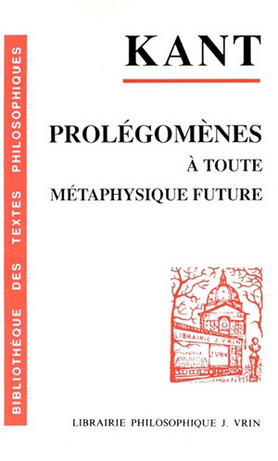
Kant presents in a more accessible form the central problem of the Critique of Pure Reason: how is synthetic a priori knowledge possible? By examining the conditions of mathematics, physics and metaphysics, he clarifies the limits of reason and the foundations of his critical philosophy.

  • Philosophy
Book
Rousseau: Confessions
Book 1782

Rousseau: Confessions

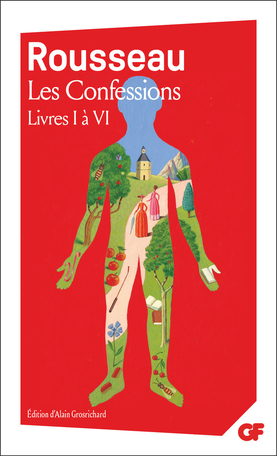
The Confessions of Jean-Jacques Rousseau is an autobiography covering the first fifty-three years of Rousseau's life, until 1765. The twelve books of the Confessions are divided into two distinct sets, defined by Rousseau himself: the first part consisting of books i to vi with the Preamble, written in 1765-1767, covers the years 1712-1740 (years of training, from birth in Geneva to settling in Paris at age 28) whil…

  • Biography
  • Philosophy
Book
Rousseau: Reveries of a Solitary Walker
Book 1782

Rousseau: Reveries of a Solitary Walker

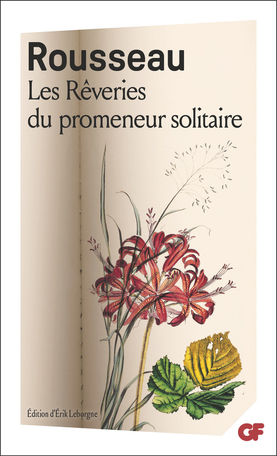
After the "Confessions" and "Rousseau judge of Jean-Jacques", the philosopher wrote between 1776 and 1778 these "Rêveries d'un promeneur solitaire" before ending his days with René-Louis de Girardin at the Château d'Ermenonville. Sketched out day by day on playing cards before being composed and structured into ten “walks” – the last remaining unfinished – they were only published posthumously in 1782, in Geneva, by…

  • Biography
  • Philosophy
Book
Kant: Critique of Pure Reason
Book 1781

Kant: Critique of Pure Reason

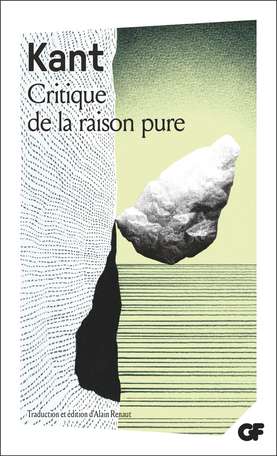
The Critique of Pure Reason revolutionized our relationship to knowledge. The Introduction from 1787 reproduced in the present edition is the royal road to enter this cathedral work. The text offers a powerful definition of the overall objective of Critique: to trace the boundaries of human knowledge. But the stakes are even greater. It is a question of determining the destiny of metaphysics, whether to place it bac…

  • Philosophy
Book
Voltaire: Questions on the Encyclopedia
Book 1770

Voltaire: Questions on the Encyclopedia

Voltaire "undertook to bring together, in the form of a dictionary, all the ideas, all the views which offered themselves to him on the various objects of his reflections, that is to say on the almost complete universality of human knowledge. In this collection, modestly entitled Questions à des amateurs <i>sur l'Encyclopédie, he speaks in turn about theology and grammar, physics and literature; he discusses sometim…

  • Philosophy
Book
Voltaire: The Ignorant Philosopher
Book 1766

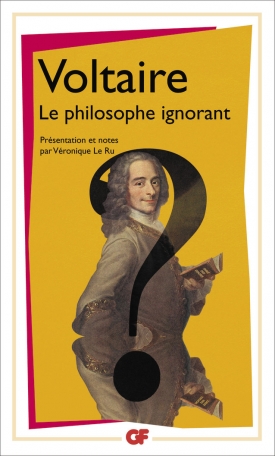
Voltaire: The Ignorant Philosopher

Voltaire was 72 years old in 1766 when The Ignorant Philosopher was published, a mischievous invitation to a journey around the world of philosophy. Mocking Descartes, Spinoza and Leibniz – the will is no more free than it is blue or square, he opposes the first –, praising the analyzes of Pierre Bayle and John Locke, Voltaire criticizes above all the systematic spirit of philosophers, which lies in wait for the fai…

  • Philosophy
Book
Voltaire: Philosophical Dictionary
Book 1764

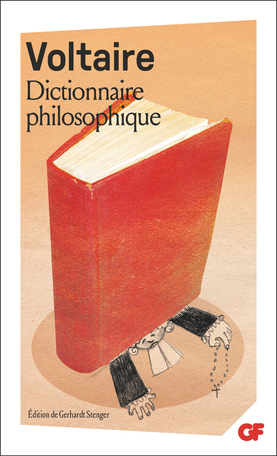
Voltaire: Philosophical Dictionary

On February 28, 1766, the Chevalier de La Barre, an eighteen-year-old young man accused of having kept his hat on and singing impious songs as a procession passed, was condemned to have his tongue cut out, his hand cut off, and to be burned slowly. On his pyre, as a symbol, a copy of the Philosophical Dictionary is also burned. This shows the role of Voltaire and his “diabolical Dictionary” in the fight of the Enlig…

  • Philosophy
Book
Voltaire: Treatise on Tolerance
Book 1763

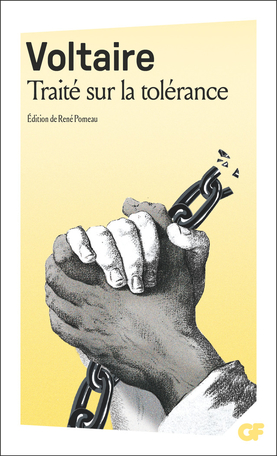
Voltaire: Treatise on Tolerance

A philosophical essay published in 1763 then completed in 1765, the “Treatise on Tolerance” is based on the death sentence in 1762 of the Protestant Jean Calas. Unjustly accused of having killed his son who wanted to convert to Catholicism, he was tried and condemned without evidence by thirteen judges in Toulouse. Denouncing the fanatical religious character which animated this trial, Voltaire first exposes the sit…

  • Philosophy
Book
Rousseau: Emile, or On Education
Book 1762

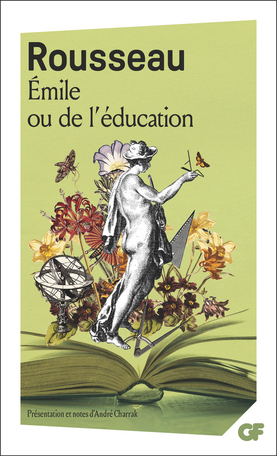
Rousseau: Emile, or On Education

The publication of L'Émile, in 1762, restored the problem of education to its central place in philosophy. From his first months until his romantic encounter, Émile is followed at each stage, through experiences which first attest to the concern to consider “the child within the child”, instead of taking him out of his age. Rousseau shows that it is possible to educate a man according to nature and how vices and ine…

  • Graphic novel
  • Philosophy
Book
Rousseau: The Social Contract
Book 1762

Rousseau: The Social Contract

In The Social Contract, Rousseau establishes that a “just” social organization is based on a pact guaranteeing equality and freedom between all citizens. This pact is contracted between all the participants, that is to say the exhaustive set of citizens. In the social compact, everyone gives up their natural freedom to gain civil freedom. Popular sovereignty is the fundamental principle of the social contract. The i…

  • Essay
  • Philosophy
Book
Rousseau: Julie, or the New Heloise
Book 1761

Rousseau: Julie, or the New Heloise

“I saw the customs of my time, and I published these letters”: it is with these words that the “editor” Rousseau opens La Nouvelle Héloïse, a romantic correspondence between Julie d’Étange and her tutor Saint-Preux. On the shores of Lake Geneva, these “beautiful souls” form a small ideal society, where gentle passions and sincerity of feeling prevail, away from the evils of civilization. In line with Montesquieu's …

  • Philosophy
Book
Voltaire: Candide
Book 1759

Voltaire: Candide

In our time, Candide is Voltaire's most famous work. It was not always this way. Even for mortals like Voltaire, less condemned to oblivion than the rest of us, we don't really choose our destiny. That’s how it is, we spend our lives making mistakes, we fight against chimeras, we are deceived, flouted, betrayed, we hope, we are disappointed, and we end our lives by returning to the starting point. That way, we proba…

  • Philosophy
Book
Rousseau: Discourse on the Origin and Foundations of Inequality Among Men
Book 1755

Rousseau: Discourse on the Origin and Foundations of Inequality Among Men

The "Discourse on the Origin and Foundations of Inequality Among Men" is one of the greatest texts ever written, one of the most beautiful of the Enlightenment, and one of Rousseau's two great essays with "The Social Contract". For Chomsky, it is a fundamentally revolutionary text avant la lettre. Rousseau sees inequality as the origin of social ills: wars, poverty, violence of all kinds. From the persistence of ine…

  • Philosophy
Book
Hume: An Enquiry Concerning the Principles of Morals
Book 1751

Hume: An Enquiry Concerning the Principles of Morals

Hume seeks the origin of our moral judgments in human experience. He examines utility, benevolence, sympathy and the feeling of approval to show that morality is neither reduced to personal interest nor to an abstract reason: it is rooted in our sensitivity and in common life.

  • Philosophy
Book
Rousseau: Discourse on the Sciences and Arts
Book 1750

Rousseau: Discourse on the Sciences and Arts

The Discourse on the Sciences and the Arts is a text by Jean-Jacques Rousseau written as part of the Dijon Academy competition of 1750. Jean-Jacques Rousseau gives voice to the Roman hero Fabricius through prosopopeia in his Discourse. Winner of the competition, Rousseau saw his essay widely commented on and owed his fame to it, well before his magnum opus The Social Contract. As required by the competition, the spe…

  • Philosophy
Book
Hume: An Enquiry Concerning Human Understanding
Book 1748

Hume: An Enquiry Concerning Human Understanding

“It is vain to pretend to teach the principles and contents of Hume's philosophy. And the problem is not to leave room for controversy, but to understand that we are not dealing with a system, that the principles are obscure and that the contents are skeptical. The career of commentary is indefinitely open, as long as one does not fall into dogmatism. Through a constantly deceptive rationality, Hume brings all those…

  • Philosophy
  • Classical
Book
Montesquieu: The Spirit of the Laws
Book 1748

Montesquieu: The Spirit of the Laws

A true political summation, On the Spirit of the Laws (1748) is Montesquieu’s masterpiece. The author engages in reflection on the different governments, a survey of human societies and a comparative analysis of laws, in order to train everyone to evaluate legislative intervention. By attempting to grasp the “spirit of the laws” – or the relationships that the laws have with the climate, religion, morals, wealth an…

  • Philosophy
Book
Hume: Essays, Moral, Political, and Literary
Book 1741

Hume: Essays, Moral, Political, and Literary

Through their diversity, depth of reflection and elegance of style, these essays perfectly serve Hume's purpose: that of developing a practical philosophy, closely linked to common life. Some titles of these essays: The Delicacy of Taste and the Delicacy of Passion, On Freedom of the Press, On Impudence and Modesty, On Love and Marriage, On the Study of History, On the Independence of Parliament...

  • Philosophy
Book
Hume: A Treatise of Human Nature
Book 1739

Hume: A Treatise of Human Nature

It was in 1734, at the age of twenty-three, that the young David Hume began writing A Treatise on Human Nature. Complex and polymorphous, this Treatise aims to establish a “science of man”, that is to say a science whose object would be the human being, studied as a phenomenon. It consists of three books, the first two of which appeared in 1739 and the third in 1740.

  • Philosophy
Book
Montesquieu: The Rise and Fall of the Romans
Book 1734

Montesquieu: The Rise and Fall of the Romans

Writing about Rome: after Bossuet, Saint-Evremond and so many others, the company no longer had, in 1734, the merit of novelty. However, Montesquieu was able to renew this “worn material”, in the words of Voltaire who recognized in the Considerations “very fine reflections and very strong paintings”. As a true historian – and no longer as a storyteller – the writer describes ancient Rome, its power, its abuses and i…

  • Philosophy
Book
Voltaire: Philosophical Letters
Book 1734

Voltaire: Philosophical Letters

Compared to the work of Diderot, Montesquieu and Rousseau, the philosophical work of Voltaire does not seem to carry much weight. We know Voltaire as a storyteller, poet, playwright, historian, politician... what about Voltaire as a philosopher? The texts brought together in this volume, from his first polemical work – the famous Philosophical Letters – to his latest writings on God, less known, invite us to discove…

  • Philosophy
Book
Blaise Pascal: On the Geometrical Spirit
Book 1728

Blaise Pascal: On the Geometrical Spirit

Pascal analyzes the method specific to geometry: defining the terms, starting from clear principles and stringing together demonstrations with rigor. He also specifies its limits, since all knowledge is based on primary notions that are impossible to define, and thus links scientific method, the art of persuasion and reflection on the powers of reason.

  • Philosophy
Book
Montesquieu: Persian Letters
Book 1721

Montesquieu: Persian Letters

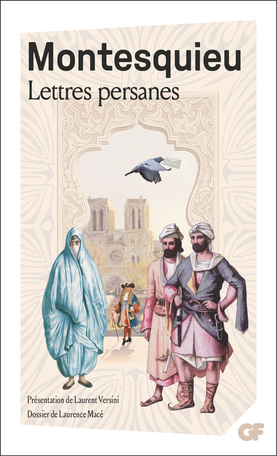
The East and the West, the seraglio and the salons, the intrigues of the sultanas and the coquetry of the Parisians, the muftis and the pope... This is what nourishes the correspondence maintained by Usbek and Rica, Persian lords who left to discover the France of Louis XIV, with their friends who remained in Isfahan. Under the cover of a distant gaze, Montesquieu draws up in the Persian Letters (1721) an uncomprom…

  • Essay
  • Philosophy
  • Classical
Book
Locke: A Letter Concerning Toleration
Book 1689

Locke: A Letter Concerning Toleration

What are the relationships that should exist between the State and the Church, or rather between the State and the Churches? To answer this question, the Letter on Tolerance takes the path of a double reflection on the nature of belief and power. Belief does not depend on will, while power, which is essentially coercive, can only influence the conduct of men in actions where they have the possibility of modifying th…

  • Philosophy
Book
Locke: An Essay Concerning Human Understanding
Book 1689

Locke: An Essay Concerning Human Understanding

Published in 1689, Locke's Essay on Human Understanding completed the reconfiguration of the philosophical landscape of modernity. Philosophy now has the task no longer of increasing our knowledge of things, but of analyzing their materials - the ideas - and providing criticism. She sees in man a being dedicated to sensation, desire and anxiety, who can no longer rely on the resources of innateness or divine inspira…

  • Philosophy
Book
Blaise Pascal: Thoughts
Book 1670

Blaise Pascal: Thoughts

After the brilliant Provincial campaign, Pascal would have planned to compose an Apology for the Christian religion. When he died, his loved ones undertook to reconstruct this work from the scattered fragments found in his papers: this is how the Pensées were born. Neither a metaphysical treatise, nor mystical autobiography, nor even just an apology for the Christian religion, the Thoughts describe man in his great…

  • Philosophy
Book
Hobbes: De Corpore
Book 1655

Hobbes: De Corpore

Published for the first time in 1655, this text is Hobbes' major work in logic, first philosophy and physics, but also one of the greatest metaphysical texts of the 17th century. There we find a theory of logic as calculation, one of the decisive elements of which is a critique of language. This logic is the condition of a first philosophy.

  • Philosophy
Book
Hobbes: Leviathan
Book 1651

Hobbes: Leviathan

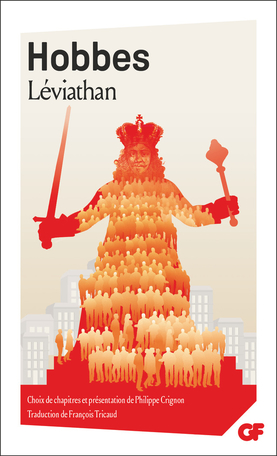
Leviathan by Hobbes (which appeared in 1651) is one of the rare founding texts of philosophy, like Plato's Republic, to which its author compared it. He lays, in fact, the foundations of the modern political tradition, by inventing the myth of sovereignty: considering their natural state, frightened by the deadly exacerbation of their passions, men decided, through their own faculty of wanting and thinking, to equip…

  • Philosophy
Book
Hobbes: The Elements of Law, Natural and Politic
Book 1650

Hobbes: The Elements of Law, Natural and Politic

The Elements of Natural and Political Law is Hobbes's first political work. Written in 1640, they circulated in manuscript, just before Hobbes returned to France where he remained in exile for eleven years to escape the horrors of the English civil war. The writing of this work is therefore directly linked to the political context. However, Hobbes accomplished a radical deterritorialization of politics. Far from sta…

  • Philosophy
Book
Hobbes: On the Citizen
Book 1642

Hobbes: On the Citizen

Retranslated in full for the first time in more than three centuries, Du Citoyen (1642 then 1647) turns out to be much more than a step towards Leviathan. Initially conceived as the third and final section of the Elements of Philosophy, the work was ultimately written and printed before the other two. If the circumstances of the civil war are the occasion for this change of calendar, they above all allow Hobbes to p…

  • Philosophy