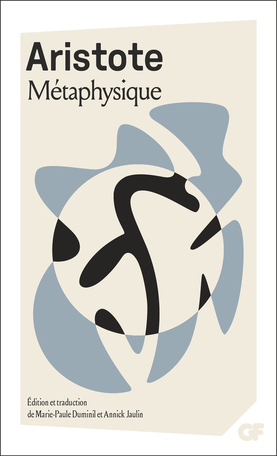
If the composite character of Metaphysics has given rise to numerous debates, relating to its ordering and the authenticity of the treatises which compose it, a certain thematic unity emerges from the latter. After having verified, through a comparison with the doctrine of causes and principles of his predecessors, the theory of causes exposed in Physics, Aristotle sets out to construct a theory of forms, capable of explaining the internal necessity of natural phenomena. Concerned with articulating the search for first principles and first causes with a positive theory of movement, Metaphysics, with the concepts of power and act, leads to a reform of the theories of form, born in the Platonic Academy. The whole of the previous theory of principles, which posited opposites as principles, is renewed there. Taking note of the evolution of philological and philosophical knowledge, the present translation rigorously conforms to the Greek text in an attempt to restore the style specific to Aristotle's thought. The reader will find in this work an updated translation of all fourteen books of Metaphysics.
Book
Philosophy
Aristotle: Metaphysics
Metaphysics
- Editions L'Harmattan Publisher
Details
- Type
- Book
- Original title
- Metaphysics
- Genres
- Philosophy
- ISBN
- 9782140495991
Synopsis