Origins
Punk emerged during the mid-1970s, primarily in the United States and the United Kingdom. It challenged some of the conventions of contemporary rock music: increasingly ambitious compositions, spectacular concerts, instrumental virtuosity and a growing distance between rock stars and their audiences.
Its principle seemed simple: making music was not reserved for people possessing exceptional technique, expensive equipment or the support of a major record label.
A few chords, amplified instruments and the desire to express something could be enough to form a band.
But punk was not limited to fast music or a provocative aesthetic. It helped change the relationships between artists, their audiences and the music industry.
Self-production, fanzines, collectively organized concerts and independent labels became essential elements of its culture.
This approach is often described by the expression Do It Yourself, generally abbreviated as DIY: creating things yourself rather than waiting for permission from established institutions.
However, punk's musical roots predate its emergence as a distinct movement.
Rock 'n' roll of the 1950s already possessed direct energy, while American garage rock of the 1960s frequently emphasized short compositions, distorted guitars and relatively unsophisticated production.
Meanwhile, certain bands explored more experimental forms of rock.
In New York, The Velvet Underground developed music combining repetition, distortion, urban poetry and sonic experimentation.
Their album The Velvet Underground & Nico, released in 1967, gradually became a major reference for several generations of underground musicians.
Lou Reed helped give this music a lyrical approach attentive to marginalized experiences and urban life.
In Detroit, MC5 developed a particularly explosive conception of rock.
The album Kick Out the Jams, released in 1969, demonstrated the intensity of their concerts and their involvement in the protest movements of the period.
The Stooges, with Iggy Pop, explored a different aesthetic.
Their music relied on repetitive riffs, provocative vocal performances and a particularly intense physical relationship with the audience.
The album Fun House, released in 1970, would become one of the major references for the emerging punk movement.
Not all these bands were considered punk when they first began performing.
The term proto-punk would subsequently be used to describe several artists who helped prepare the ground for this evolution.
Punk therefore inherited a rich musical history, but chose to transform it by emphasizing immediacy, apparent simplicity and creative freedom.
Its emergence also corresponded to particular social circumstances.
In the United States, several underground scenes developed in cities undergoing economic and urban transformations.
In the United Kingdom, rising unemployment, social tensions and the difficulties faced by some young people contributed to an atmosphere of discontent.
These realities did not directly produce a single musical style. However, they help explain why such direct music quickly found an audience.
Punk became a space where frustration, humor, provocation and political concerns could be expressed without necessarily respecting the conventions of mainstream rock.
Very quickly, this freedom gave rise to two complementary developments.
Some bands intensified speed, energy and aggression, notably preparing the emergence of hardcore.
Others used the possibilities opened up by punk to experiment with new rhythms, structures and sounds.
Post-punk would develop from this second direction.
Emergence and Early Musical Scenes
New York, 1973–1976 — CBGB and the First Punk Generation
During the early 1970s, New York possessed a particularly active underground scene.
The club CBGB, opened in 1973 by Hilly Kristal in the Bowery neighborhood, gradually became one of the central venues of this new musical culture.
Its name remains associated with a generation of artists whose approaches were sometimes very different.
Patti Smith developed music there combining poetry, electric rock and expressive vocal performance.
Her album Horses, released in 1975, occupies a fundamental place in this history.
It demonstrated that punk could be as much an artistic and literary approach as a transformation of rock's sound.
The same scene included Television, a band notably led by Tom Verlaine.
The album Marquee Moon, released in 1977, developed a musical language built around guitar interplay, extended compositions and considerable instrumental freedom.
These characteristics distinguished Television from the image often associated with punk as exclusively fast and rudimentary music.
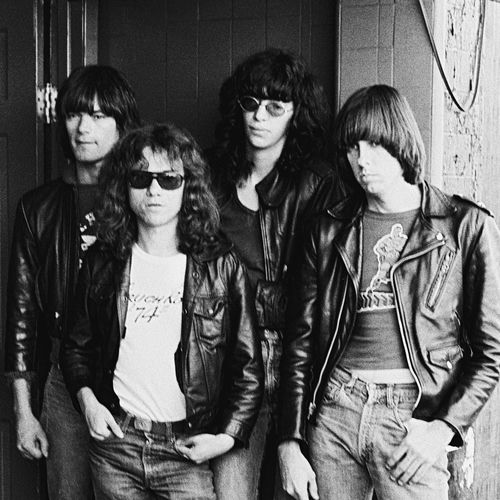
The Ramones developed a much more direct approach.
The group formed in New York in 1974 and soon began performing at CBGB.
Their compositions emphasized powerful guitars, fast rhythms, simple melodies and short songs.
Their debut album, Ramones, released in 1976, became one of the fundamental references of punk rock.
Songs such as "Blitzkrieg Bop" and "Judy Is a Punk" established an immediately recognizable aesthetic.
The repetition of chords and the speed of the songs did not reflect an absence of musical effort.
They represented an artistic choice emphasizing concision and energy.
Other groups contributed to this creative ferment.
Blondie, led by Debbie Harry, developed music drawing from punk, pop and, gradually, other traditions.
Dead Boys favored a more aggressive approach, while Richard Hell and the Voidoids helped establish a provocative and urban aesthetic.
These bands shared venues and networks without necessarily belonging to the same sonic style.
New York thus became a laboratory where punk emerged less as a musical formula than as a new possibility for creation.
London, 1976–1977 — The Sex Pistols and the British Explosion
On the other side of the Atlantic, a parallel scene developed in the United Kingdom.
In London, Sex Pistols quickly became one of the most widely publicized bands of this new generation.
The group combined aggressive music, provocative lyrics and an image that broke with the dominant conventions of British rock.
Malcolm McLaren contributed to their management and media exposure, while Vivienne Westwood participated in developing a fashion aesthetic that would become closely associated with the punk movement.
Torn clothing, safety pins, leather, slogans and the subversion of fashion elements formed part of this new visual language.
However, this image did not represent the entire British scene.
The release of "Anarchy in the U.K." in 1976 helped make Sex Pistols a symbol of protest.
Their album Never Mind the Bollocks Here’s the Sex Pistols, released in 1977, became one of the major works of British punk.
Its importance lay as much in its musical power as in the controversies surrounding the group.
The Damned also contributed to the establishment of this first generation.
Their album Damned Damned Damned, released in 1977, demonstrated fast punk directly inspired by rock 'n' roll.
Buzzcocks developed a more melodic approach, combining punk energy with pop songwriting.
Their record Spiral Scratch, released in 1977, also represented an important milestone for British self-produced music.
The scene did not rely exclusively on major record labels.
New labels, fanzines and concert networks allowed relatively unknown groups to distribute their music.
This independent organization became one of the movement's most enduring characteristics.
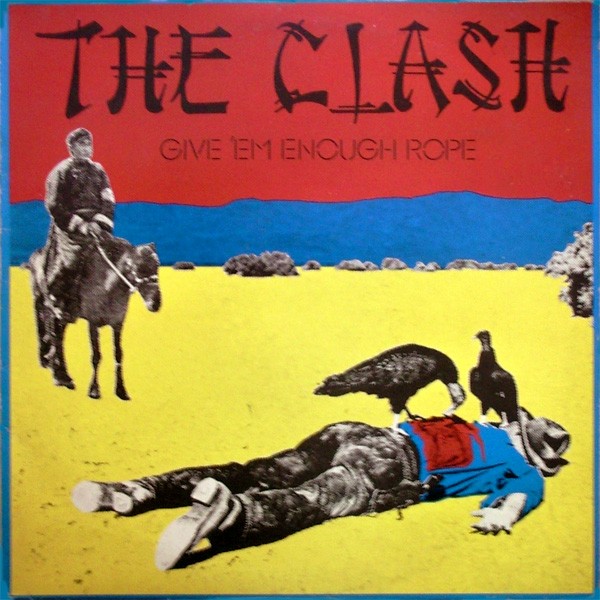
The Clash — Punk Open to the World
The Clash occupy a distinctive place in the history of British punk.
From their earliest compositions, the band combined punk energy with political and social concerns.
Their debut album, The Clash, released in 1977, demonstrated this approach.
The lyrics notably addressed urban tensions, inequalities and the experiences of British youth.
But the group quickly refused to restrict itself to a single musical language.
Its members gradually incorporated influences from reggae, ska, rockabilly, soul and rhythm and blues.
These exchanges also reflected the important place of Caribbean cultures in the United Kingdom at the time.
With London Calling, released in 1979, The Clash developed compositions of remarkable diversity.
The album combined punk rock, reggae, traditional rock and other popular influences.
It demonstrated that a band originating from punk could considerably expand its repertoire without abandoning its artistic and social concerns.
Sandinista!, released in 1980, deepened this approach through particularly varied experimentation.
With Combat Rock, released in 1982, the group achieved even greater international recognition.
The evolution of The Clash represents one of the most striking examples of the musical openness encouraged by punk.
It also anticipated several directions that post-punk would develop.
Women and the First Punk Revolution
From its earliest days, punk opened spaces of expression for female musicians who rejected the roles traditionally assigned to women within the music industry.
Patti Smith represents one of the major figures of this evolution.
In London, X-Ray Spex developed particularly energetic music driven by the voice of Poly Styrene.
Their compositions notably addressed consumerism, social norms and the expectations imposed on individuals.
The Slits, a predominantly female band, pursued a different approach.
The group gradually developed close relationships with reggae and dub.
Their album Cut, released in 1979, became an important work at the intersection of punk and post-punk.
The Raincoats also explored unconventional musical structures, emphasizing spontaneity and a collective conception of creation.
These bands helped challenge expectations about how a group should play, sing or present itself on stage.
This artistic freedom would become a fundamental reference for subsequent generations.
Punk Spreads Beyond London and New York
As early as 1976 and 1977, punk developed in several cities around the world.
In Australia, The Saints and Radio Birdman contributed to the establishment of an energetic scene with its own origins in local rock music.
In Northern Ireland, Stiff Little Fingers developed music deeply shaped by the social and political context of Belfast.
In the United Kingdom, The Jam combined punk energy with mod influences, while The Ruts explored relationships with reggae.
These different trajectories demonstrate that punk was not a single international scene reproducing the same models.
Each city adapted this new musical freedom to its own experiences.
The exchange of records, touring and independent publications accelerated the circulation of ideas.
Within a few years, punk evolved from a collection of relatively small scenes into a worldwide cultural movement.
The Golden Age
1977–1980 — The Birth of Post-Punk
Post-punk emerged while the first punk wave was still active.
It therefore did not simply represent a period that chronologically followed punk.
Rather, it described a diversity of approaches that extended punk's creative freedom while exploring different musical possibilities.
Several bands notably rejected the idea that punk should be limited to a few chords and very short compositions.
They experimented with funk, Jamaican dub, experimental rock, electronic music and structures inherited from jazz.
Guitars sometimes became angular and dissonant.
Bass could occupy a central melodic position, while drums developed more repetitive rhythms or patterns less directly inherited from rock.
Lyrics sometimes moved away from immediate provocation to explore alienation, social relationships, introspection and artistic concerns.
Post-punk thus became a highly diverse collection of approaches, without a single defining sound.
Wire was among the first bands to illustrate this transformation.
With Pink Flag, released in 1977, the British group offered compositions that were often brief but constructed around a particularly inventive conception of rock structures.
Their subsequent albums gradually deepened this experimentation.
Gang of Four developed another direction, built around dry guitar sounds, rhythms close to funk and lyrics attentive to social relationships.
The album Entertainment!, released in 1979, became a major reference for this aesthetic.
Post-punk therefore did not abandon punk's energy.
Instead, it sought to discover what could be achieved when musicians stopped treating traditional rock structures as obligatory limitations.
Public Image Ltd — Punk Becomes Experimental
After Sex Pistols separated in 1978, their former singer John Lydon developed a new approach with Public Image Ltd.
The group deliberately moved away from several characteristics of British punk.
It placed considerable importance on bass lines, repetition, sonic textures and dub influences.
Compositions sometimes became long and intentionally disorienting.
With Metal Box, released in 1979, Public Image Ltd presented music that was difficult to classify.
Guitars, vocals and rhythms were used to create atmospheres rather than reproduce traditional rock song structures.
This conception opened new possibilities for groups seeking to move beyond instrumental conventions.
It also helped establish post-punk as a field of sonic exploration in its own right.
Manchester — Joy Division and New Atmospheres
Manchester became one of the principal centers of British post-punk.
The evolution of its scene relied notably on concerts, clubs and a network of producers and independent organizations.
Joy Division occupies a fundamental place in this history.
The band developed music in which melodic bass lines, repetitive guitars and precise rhythms created particularly distinctive atmospheres.
The voice of Ian Curtis contributed strongly to this identity.
His lyrics notably addressed isolation, human relationships and inner experiences.
Producer Martin Hannett played a major role in shaping the recordings' sound.
His studio approach placed particular emphasis on space, effects and the separation of instruments.
The album Unknown Pleasures, released in 1979, became a fundamental work of post-punk.
It combined energy inherited from punk with a more atmospheric conception of sound.
Closer, released in 1980 after the death of Ian Curtis, deepened this aesthetic.
Joy Division's career was short, but its influence would be considerable.
The Factory Records label, notably associated with Tony Wilson, also contributed to the establishment of this scene.
After Ian Curtis's death in 1980, the remaining members of Joy Division continued their work under the name New Order.
The group gradually developed music increasingly based on synthesizers, drum machines and interactions with emerging dance cultures.
This transformation illustrated one of post-punk's major legacies: the possibility of moving from rock to electronic music without abandoning a coherent artistic approach.
Post-Punk Diversifies
During the late 1970s and early 1980s, several scenes developed different forms of post-punk.
Siouxsie and the Banshees combined guitars, dark atmospheres and experimentation.
The album The Scream, released in 1978, represented an important milestone in this evolution.
Singer Siouxsie Sioux also helped establish a visual identity that would influence several generations.
The Cure gradually developed music that moved from early punk influences toward more introspective compositions.
Bauhaus contributed to the establishment of gothic rock, notably with In the Flat Field, released in 1980.
Killing Joke explored powerful, repetitive rhythms combined with industrial sounds.
Magazine, The Fall and The Pop Group pursued other forms of experimentation, notably incorporating influences from funk, jazz and electronic music.
Cabaret Voltaire participated in the emergence of new forms of industrial and electronic music.
Young Marble Giants, by contrast, developed a particularly stripped-down and minimalist aesthetic.
In the United States, Talking Heads combined post-punk, funk and rhythmic experimentation.
The band, led by David Byrne, developed increasingly elaborate compositions.
Its collaboration with Brian Eno contributed to this evolution.
The album Remain in Light, released in 1980, particularly illustrated experimentation with repetitive rhythms and collective structures.
Post-punk thus became a broad range of musical practices.
Some would lead toward gothic rock, others toward new wave, synth-pop or alternative rock.
These movements shared origins and influences without necessarily being interchangeable.
1979–1985 — Hardcore Accelerates American Punk
While post-punk was developing, another transformation emerged in the United States.
Hardcore punk emphasized faster compositions, particularly intense performances and a largely independent musical economy.
On the West Coast, Black Flag helped establish several fundamental characteristics of this scene.
Formed in California around guitarist Greg Ginn, the band developed particularly direct music.
Its concerts and tours played a major role in spreading hardcore throughout the United States.
With Damaged, released in 1981, Black Flag established an aesthetic built around aggressive riffs, fast rhythms and particularly intense vocal expression.
Singer Henry Rollins contributed strongly to the band's identity during this period.
The SST Records label, created around Black Flag's activities, also helped develop an important independent network.
Dead Kennedys developed another approach to Californian punk.
The group combined fast rhythms with satirical and political lyrics.
Its album Fresh Fruit for Rotting Vegetables, released in 1980, became a fundamental reference of American hardcore punk.
Circle Jerks and several other Californian bands also contributed to this scene.
On the East Coast, Bad Brains played a particularly important role.
The band, originating from Washington, developed music combining instrumental virtuosity, extreme speed and reggae influences.
Hardcore therefore did not represent an absence of musical technique.
It often relied on exceptional rhythmic precision, made necessary by the speed of the compositions.
Washington — Minor Threat, Straight Edge and Independence
In Washington, D.C., a particularly influential hardcore scene developed during the early 1980s.
Minor Threat, formed in 1980, became one of its principal representatives.
The band developed very short songs characterized by fast tempos and direct lyrics.
Their track "Straight Edge," released in 1981, helped give its name to a cultural movement based notably on abstaining from alcohol and drugs.
Straight edge would subsequently take different forms depending on the scene and generation.
Ian MacKaye, the singer of Minor Threat, also participated in creating Dischord Records, an independent label that would become an important reference.
The approach was based on a desire to retain control over recordings, production conditions and distribution.
After Minor Threat separated in 1983, several musicians from the Washington scene sought to renew hardcore's musical forms.
Rites of Spring contributed to this transformation by developing more expressive and introspective music.
This evolution would subsequently be associated with the origins of emo and certain forms of post-hardcore.
The Washington scene thus demonstrated that hardcore could itself become a starting point for new musical explorations.
Fugazi — Another Conception of the Independent Band
During the late 1980s, Fugazi continued several principles inherited from the Washington scene.
The group, which included Ian MacKaye, developed music built around angular guitars, prominent bass lines and particularly inventive rhythms.
Hardcore punk influences were combined with elements of funk, dub and experimental rock.
With Repeater, released in 1990, Fugazi established a distinctive musical identity.
The compositions used contrasts between tense rhythmic passages and more restrained moments.
The group also distinguished itself through its independent way of operating.
It notably emphasized financially accessible concerts and maintained close relationships with Dischord Records.
Fugazi refused to regard independence as merely an aesthetic.
It represented an organizational principle affecting recordings, touring and relationships with audiences.
This approach would exert a major influence on post-hardcore and alternative scenes during the following decades.
Anarcho-Punk, Political Punk and British Scenes
In the United Kingdom, several bands developed an approach to punk particularly connected to political engagement.
Crass became one of the principal references of anarcho-punk.
The group combined music, lyrics, graphic design and independent organization in an approach that challenged power structures and social conventions.
Here, DIY culture acquired an explicitly collective and activist dimension.
Discharge developed a particularly intense form of punk, characterized by fast rhythms and aggressive production.
Its influence would be important for crust punk and several extreme metal movements.
Other scenes formed around street punk and Oi! culture.
Sham 69 and Cockney Rejects contributed to different stages of this evolution.
The movement notably maintained relationships with British working-class cultures and certain football supporter traditions.
It was also affected by political tensions and controversies connected to the presence of racist movements in some circles.
However, these tendencies did not represent the entire punk or Oi! scene, many of whose participants were also involved in anti-racist movements.
The Exploited subsequently developed a particularly energetic aesthetic, becoming one of the references of 1980s British punk.
These movements demonstrate that punk has never possessed a single political or social orientation.
It constitutes a collection of scenes whose values and practices can be very different.
The 1980s — Melodic Punk and Independent Rock
During the 1980s, several bands sought to retain punk's energy while developing more melodic songwriting.
Descendents became a fundamental reference for this evolution.
Their album Milo Goes to College, released in 1982, combined short songs, fast rhythms and themes connected to adolescence and everyday life.
Bad Religion also developed a particularly recognizable approach.
The band combined fast guitars, vocal harmonies and lyrics frequently addressing social, political or philosophical questions.
Its album Suffer, released in 1988, helped renew interest in melodic and intellectually ambitious punk.
In California, Social Distortion developed an identity combining punk rock, rock 'n' roll and country influences.
Meanwhile, several bands originating from hardcore contributed to the evolution of American independent rock.
Hüsker Dü developed increasingly melodic compositions.
The album Zen Arcade, released in 1984, illustrated this openness toward more ambitious narrative and musical structures.
Minutemen explored another approach, particularly influenced by funk, jazz and short compositions.
This diversity anticipated part of the alternative rock of the 1990s.
Punk and post-punk therefore did not disappear during the 1980s.
They evolved into a multitude of independent scenes that prepared the developments to come.
The 1990s — Melodic Punk Goes Global
During the 1990s, punk rock experienced another period of great international popularity.
The Californian scene played a particularly important role in this evolution.
Green Day developed melodic punk built around direct songs, memorable choruses and energy inherited from bands of previous decades.
The album Dookie, released in 1994, achieved enormous success.
That same year, The Offspring released Smash.
The record became one of the great symbols of Californian punk's commercial recognition.
The success of these albums helped introduce punk rock to a new generation of listeners.
However, this evolution did not rely exclusively on major record labels.
NOFX, Pennywise, Lagwagon and No Use for a Name participated in developing a melodic scene supported by independent labels and touring.
The album Punk in Drublic, released by NOFX in 1994, became one of the period's major references.
Meanwhile, Rancid developed music combining punk rock, ska and influences from the British tradition.
Their album …And Out Come the Wolves, released in 1995, illustrated this diversity.
The success of these bands helped popularize skate punk, closely connected to skateboard cultures and Californian alternative scenes.
In Europe, Millencolin and several Scandinavian bands also contributed to this international expansion.
Melodic punk thus became an international musical culture in which independent networks coexisted with increasing commercial popularity.
The Late 1990s — The Rise of Pop-Punk
Pop-punk developed an approach even more directly focused on melodies and choruses.
Blink-182 became one of its leading figures.
The album Enema of the State, released in 1999, helped establish this music at the center of international popular culture.
The compositions combined punk energy, pop songwriting and themes often connected to adolescence or human relationships.
During the early 2000s, Green Day continued its evolution with American Idiot, released in 2004.
The album developed a narrative structure and political concerns while retaining the band's melodic efficiency.
Paramore subsequently contributed to a new generation of pop-punk and alternative rock.
The band developed a vocal and melodic identity that would gradually evolve toward other forms of pop and rock.
The success of these artists demonstrated that punk techniques could be incorporated into music intended for a very broad audience.
This evolution sometimes prompted debates about the genre's commercialization.
But independent scenes and popular bands continued to coexist without necessarily sharing the same objectives.
The 1990s — Riot Grrrl and Feminist Reappropriation
During the early 1990s, a new scene developed primarily between Olympia, Washington, and Washington, D.C.
The riot grrrl movement combined punk music, feminism, fanzines and collective organization.
It notably emerged from the experiences of women confronting sexism within certain rock and punk scenes.
Bikini Kill became one of the movement's emblematic bands.
The group, notably featuring Kathleen Hanna, developed direct music and lyrics addressing power relations, gender-based violence and personal empowerment.
The album Pussy Whipped, released in 1993, constitutes one of its principal references.
Bratmobile also participated in this scene, combining music, fanzines and collective initiatives.
The movement was not limited to concerts.
Self-produced publications allowed people to share testimonies, analyses and experiences across different communities.
Gatherings and discussion spaces also occupied an important place.
Sleater-Kinney would extend some of these traditions through particularly inventive music.
Kathleen Hanna subsequently continued her work with Le Tigre, combining punk, electronic music and feminist expression.
Riot grrrl therefore constituted a cultural movement as much as a musical direction.
Its influence would extend far beyond the 1990s.
The 2000s — The Return of Post-Punk
From the late 1990s and early 2000s onward, a new generation of bands rediscovered post-punk and new wave traditions.
Angular guitars, melodic bass lines and repetitive rhythms became important elements of several emerging rock scenes.
The Strokes achieved international recognition with Is This It, released in 2001.
The band developed direct rock music informed by garage rock and the New York scenes of the 1970s.
Interpol explored an aesthetic more strongly influenced by the dark atmospheres of post-punk.
Their album Turn on the Bright Lights, released in 2002, became one of the important references of this new wave.
In Scotland, Franz Ferdinand developed music in which dance rhythms and guitars occupied a central place.
Their debut album, Franz Ferdinand, released in 2004, helped popularize this meeting between independent rock and post-punk influences.
Bloc Party continued a comparable direction with Silent Alarm, released in 2005.
These bands did not simply reproduce recordings from the 1970s and 1980s.
They adapted their characteristics to a new generation, in a context shaped by festivals, digital media and the evolution of independent rock.
The movement is frequently described by the expression post-punk revival.
It helped bring renewed attention to several historic bands while developing an identity of its own.
Movements and Subgenres
Punk Rock
Punk rock is generally characterized by direct compositions, distorted guitars, energetic rhythms and considerable importance given to immediate expression.
Ramones, Sex Pistols and The Clash represent different expressions of its early years.
However, the genre possesses highly varied traditions, ranging from melodic songs to particularly aggressive compositions.
Art Punk and Post-Punk
Art punk describes approaches combining punk energy with artistic and experimental exploration.
Post-punk extends this freedom by incorporating, among other elements, funk, dub, electronic music and less conventional structures.
Wire, Joy Division, Gang of Four and Public Image Ltd are among its principal historical references.
The two categories share common ground but do not refer to exactly the same scenes.
New Wave
New wave emerged during the late 1970s in the wake of punk's transformations.
It encompassed approaches that were often more melodic, sometimes associated with pop, synthesizers and emerging radio formats.
The Police and several British bands participated in this evolution.
However, the term covers sufficiently diverse traditions that it should not be considered a simple synonym for post-punk.
Gothic Rock and Cold Wave
Gothic rock developed primarily from certain post-punk scenes of the late 1970s and early 1980s.
It frequently emphasized dark atmospheres, prominent bass lines and melancholic arrangements.
The Cure, Bauhaus and Siouxsie and the Banshees contributed to different stages of its evolution.
The term cold wave describes related aesthetics, often more minimalist or electronic, whose usage varies depending on the scene and country.
Hardcore Punk
Hardcore punk accelerates and intensifies several characteristics of punk rock.
It generally emphasizes fast tempos, aggressive riffs and particularly physical concerts.
Black Flag, Bad Brains, Minor Threat and Dead Kennedys contributed to its American development.
Hardcore also possesses an important independent culture built around labels, touring and local networks.
Anarcho-Punk, Oi! and Street Punk
Anarcho-punk combines punk music with political engagement, placing particular importance on collective organization.
Crass is among its major references.
Street punk and Oi! developed traditions more directly connected to urban working-class cultures.
These movements possess different histories and cannot be reduced to a single ideological orientation.
Crust Punk and D-Beat
Crust punk combines certain characteristics of hardcore punk with heavier sounds and an often particularly abrasive aesthetic.
D-beat notably describes a drumming pattern strongly associated with the influence of Discharge.
These practices would contribute to several transformations of extreme punk and metal.
Melodic Punk and Skate Punk
Melodic punk retains punk's energy while placing particular importance on choruses and vocal harmonies.
Bad Religion, Descendents, NOFX and Lagwagon contributed to different stages of its history.
Skate punk developed in connection with skateboard cultures and Californian scenes, frequently emphasizing fast tempos.
Pennywise and Millencolin notably participated in its international expansion.
Pop-Punk
Pop-punk brings punk's musical structures closer to the melodies and songwriting conventions of pop.
Green Day and Blink-182 contributed greatly to its international popularity during the 1990s.
Paramore subsequently participated in new developments of the genre.
Pop-punk retains several instrumental characteristics of punk while developing productions that are often more accessible.
Ska-Punk
Ska-punk combines punk rock energy with the syncopated rhythms of Jamaican ska.
Operation Ivy played a major role in its American development.
The Specials belong more closely to the ska revival and 2 Tone tradition, which helped prepare the ground for several of these musical encounters.
Rancid, Sublime, Mad Caddies and The Interrupters subsequently developed different expressions of this fusion.
Post-Hardcore and Emo
Post-hardcore emerged from transformations of hardcore punk during the 1980s.
It emphasizes more varied structures, dynamic contrasts and greater instrumental freedom.
Fugazi became one of its principal references.
Emo developed alongside it around more introspective expression before undergoing numerous transformations during subsequent decades.
At the Drive-In, Refused and several other bands helped expand the possibilities of post-hardcore.
Riot Grrrl
Riot grrrl is a cultural and feminist movement that emerged during the early 1990s.
It combines punk, fanzines, personal expression and collective organization.
Bikini Kill and Bratmobile are among its principal references.
Its importance extends beyond its musical characteristics and also concerns women's place within alternative scenes.
Post-Punk Revival
The post-punk revival developed particularly during the 2000s.
It reinterpreted the angular guitars, melodic bass lines and dance rhythms of historic post-punk.
Interpol, Franz Ferdinand and Bloc Party contributed to different expressions of this revival.
The movement helped renew relationships between independent rock, punk and dance music.
Legacy and Influence Today
Punk and post-punk have profoundly transformed popular music.
Their legacy is not based solely on distorted guitars, speed or protest lyrics.
They helped change the very conditions under which music is created.
Punk asserted that artists could form a band, record their compositions and organize concerts without necessarily going through the dominant structures of the music industry.
Post-punk extended this freedom by questioning compositional habits, sounds and boundaries between genres.
These two approaches encouraged the development of particularly inventive independent scenes.
Alternative rock, grunge, certain forms of electronic music and numerous movements of contemporary rock bear this legacy.
Nirvana, notably with Nevermind, released in 1991, helped bring music deeply influenced by American underground traditions to international attention.
The band belongs primarily to the history of grunge and alternative rock, but its success demonstrated how a culture emerging from independent networks could reach a worldwide audience.
DIY practices, small labels and independent concert circuits remain essential characteristics of this continuity.
France — From the First Punk Scenes to Alternative Rock
France participated very early in the international history of punk.
In 1976, several bands began developing a particularly active scene, notably in Paris.
Stinky Toys was among the first French groups associated with this culture.
The band, notably featuring Elli Medeiros and Jacno, participated in the 100 Club Punk Festival in London in September 1976.
This event demonstrated the existence of direct relationships between the earliest French and British scenes.
Métal Urbain developed a more aggressive approach, characterized notably by the use of drum machines and an aesthetic close to industrial music.
Asphalt Jungle and Marie et les Garçons also participated in this first generation.
The Mont-de-Marsan punk festivals, organized in 1976 and 1977, constituted important milestones in the movement's expansion in France.
However, the scene did not possess a single musical identity.
Some bands emphasized direct rock music, while others developed electronic experimentation or relationships with local artistic traditions.
During the 1980s, a second generation contributed to the establishment of French alternative rock.
Bérurier Noir became one of the emblematic bands of this evolution.
The group combined guitar, drum machine, protest lyrics and independent organization.
Its concerts played a central role in developing an alternative culture built around community networks and local scenes.
Les Wampas, Ludwig von 88 and Parabellum also contributed to this period, each with a different musical identity.
OTH participated in the history of French punk, notably through the Montpellier scene.
Mano Negra subsequently developed encounters between punk, rock, ska and international musical traditions.
French alternative rock was therefore not simply an adaptation of British models.
It developed its own networks, humor, languages and social references.
Post-Punk and New Wave in France
France also possesses an important history of music emerging from post-punk.
In Rennes, Marquis de Sade developed an aesthetic combining rock, experimentation and new wave influences during the late 1970s.
In Paris, Taxi Girl contributed to the establishment of music built around synthesizers, guitars and urban songwriting.
Kas Product developed a more directly electronic and minimalist approach.
These bands demonstrate the diversity of connections between post-punk, cold wave and new musical technologies.
They participated in a transformation of French rock that extended beyond the most visible punk scenes.
The use of drum machines, synthesizers and studio techniques also encouraged encounters with electronic music.
This evolution reflected several international transformations of post-punk.
New Generations of French Punk
From the 1990s and 2000s onward, several French bands continued punk's legacy through melodic and independent approaches.
Guerilla Poubelle developed French-language punk rock characterized by socially conscious lyrics and a strong DIY identity.
The group also participated in a scene where small labels and concerts occupied an important place.
Justin(e) continued a French punk rock tradition combining instrumental energy with particularly carefully crafted songwriting.
Charly Fiasco also contributed to this scene, notably through compositions rooted in French-language melodic punk.
Condkoï represented another expression of these independent networks.
Meanwhile, La Ruda participated in the history of encounters between ska, punk and rock in France.
These bands demonstrate the persistence of a musical culture that does not depend exclusively on mainstream media.
Independent festivals, associations and small venues continue to play an essential role in its development.
The Internationalization of Punk
Punk now possesses a particularly extensive international history.
In Japan, The Stalin contributed to the development of an intense and provocative punk scene during the 1980s.
In Spain, La Polla Records became one of the major references of Spanish-language punk.
In Brazil, Ratos de Porão participated in a scene combining hardcore punk with metal influences.
These different groups developed their own identities within distinct social and cultural contexts.
Punk thus became an adaptable musical language whose energy and principles of independence could be reinterpreted in numerous regions.
This circulation did not rely exclusively on major international tours.
It also depended on the exchange of recordings, fanzines, local labels and, more recently, digital platforms.
Punk communities could therefore share common references while developing their own practices.
Punk, Feminism and New Forms of Representation
Punk's legacy also includes a lasting transformation in the possibilities for personal expression.
The earliest scenes allowed artists to challenge certain norms of gender, representation and behavior.
This dimension developed in different ways over the decades.
The riot grrrl movement helped make women's experiences within musical cultures more visible.
Several generations of artists subsequently continued these approaches.
Against Me! notably developed punk rock combining personal expression with social concerns.
The album Transgender Dysphoria Blues, released in 2014, constitutes an important work in the band's career.
Other groups, such as The Linda Lindas, contributed to renewing the representation of young people and women in punk scenes.
These developments remind us that punk has never been exclusively about speed or distortion.
It has also constituted a space in which artists could affirm identities and experiences underrepresented in mainstream music.
The 2010s–2020s — The Return of Socially Engaged Post-Punk
Since the 2010s, several bands have helped renew interest in direct and experimental forms of rock.
In the United Kingdom, IDLES developed powerful music built around repetitive riffs and particularly intense vocal expression.
Their album Brutalism, released in 2017, contributed to the recognition of this new generation.
The group subsequently explored more varied compositions, incorporating several post-punk and alternative rock influences.
In Ireland, Fontaines D.C. established themselves with music combining angular guitars, repetitive rhythms and lyrics attentive to urban experiences.
Their album Dogrel, released in 2019, constituted an important milestone in their international recognition.
In Australia, Amyl and the Sniffers developed a particularly energetic form of punk rock characterized by direct compositions and intense live performances.
In the United States, Turnstile helped renew the relationships between hardcore, alternative rock and accessible melodies.
Their album Glow On, released in 2021, illustrated this evolution.
These groups do not represent a single movement.
Some are more closely connected to traditional punk rock, while others explore the legacies of post-punk or hardcore.
However, they share a desire to reinvent forms of rock emphasizing collective energy and creative freedom.
The Continuity of Melodic Punk and Hardcore
The 2010s and 2020s also witnessed the continuation of numerous traditions originating from melodic punk and hardcore.
Rise Against developed punk rock combining accessible compositions with social concerns.
Propagandhi continued a particularly technical approach informed by hardcore punk and metal.
Comeback Kid contributed to the continuity of international hardcore scenes.
PUP developed music combining punk energy, melodies and personal songwriting.
The Flatliners represented another evolution of Canadian melodic punk.
In Australia, Clowns developed a particularly energetic approach combining hardcore, punk rock and psychedelic influences.
These bands demonstrate that contemporary punk cannot be reduced to a revival of styles from the 1970s.
It possesses its own networks, innovations and audiences.
New productions coexist with historic bands whose influence remains important.
DIY — The Most Enduring Legacy
Among punk's contributions to music history, the principle of DIY occupies an essential place.
It encourages artists to develop their own means of creation and distribution.
The earliest punk bands used fanzines, collectively organized concerts and independent labels to build their scenes.
These methods were subsequently adopted by numerous musical genres.
American hardcore developed this culture particularly extensively.
Dischord Records and SST Records helped establish models in which artistic independence occupied a central position.
Other organizations participated in the evolution of melodic punk and its international networks.
Digital distribution profoundly changed the conditions of production and distribution.
Artists now have access to technical resources that make recording and releasing music easier than in the past.
This evolution does not eliminate the economic difficulties faced by independent bands.
Nevertheless, it extends part of punk's fundamental idea: opportunities for creation should not be reserved for a small number of established players.
Punk and the Visual Arts
Punk also exerted an important influence on graphic design, fashion and artistic practices.
Early album covers, posters and publications frequently used collage, altered photographs and irregular typography.
This aesthetic expressed a desire to break with established communication conventions.
Fanzines became spaces where enthusiasts could write, draw, photograph and distribute their own creations.
They also made it possible to document musical scenes often ignored by traditional media.
Post-punk, meanwhile, developed a visual culture that was sometimes more minimalist or conceptual.
Joy Division's album covers and several Factory Records productions illustrate this meeting between music, photography and graphic design.
Visual art therefore did not simply accompany the songs.
It participated in constructing artistic identities that have had a lasting influence on contemporary culture.
A History of Freedom and Transformation
Punk and post-punk do not correspond to a single way of playing rock.
Their history began with a challenge to musical conventions and the structures of the industry.
Punk emphasized direct expression, energy and independence.
Post-punk extended this freedom through experimentation, new rhythms and exchanges between different traditions.
Hardcore intensified certain forms of musical power, while melodic punk, pop-punk and other movements developed their own identities.
These different developments do not constitute a succession of styles simply replacing their predecessors.
Historic and contemporary scenes continue to coexist and interact.
The history of punk is also that of the clubs, fanzines, independent producers and communities that helped music circulate.
From Ramones to Sex Pistols, from Patti Smith to The Clash, from Joy Division to Fugazi, and then to contemporary generations, this history demonstrates a constant capacity for renewal.
More than half a century after its emergence, punk remains a fundamental element of modern musical culture.
Its legacy rests not only on a few chords or a provocative attitude, but on an idea that continues to inspire artists: creative freedom does not require permission.