Origins
Rock emerged in the mid-20th century in the United States, at the intersection of several popular musical traditions. Before becoming an enormous cultural phenomenon, it took shape within African American communities, whose musical practices had profoundly transformed blues, gospel, jazz and rhythm and blues.
The rock 'n' roll of the 1950s did not appear out of nowhere. Its rhythms, vocal techniques, instrumental energy and much of its repertoire already existed in various forms during the preceding decades.
Blues contributed its harmonic structures, riffs and expressiveness. Gospel brought powerful singing, exchanges between vocalists and accompanying musicians, and an especially intense approach to performance. Rhythm and blues helped establish strongly marked dance rhythms, often emphasizing the second and fourth beats of the measure.
Country and western swing also participated in this evolution. In the southern United States, Black and white musicians sometimes shared repertoires, instruments and techniques despite the divisions imposed by segregation.
The electric guitar gradually assumed a central role. Amplification allowed musicians to produce powerful sounds and develop distortion effects that would become characteristic of many forms of rock. Piano, double bass, and later electric bass and drums completed the most common lineups.
Among the essential figures of this period, Sister Rosetta Tharpe occupies a particularly important place. From the late 1930s onward, this gospel singer and guitarist developed an energetic performance style combining instrumental virtuosity, amplification and vocal intensity. Her performances influenced several future rock 'n' roll pioneers.
During the 1940s, Louis Jordan and his jump blues ensembles popularized rhythmic music built around horn riffs, humor and dialogue between voices and instruments.
Fats Domino and Big Joe Turner also contributed to bringing blues and rhythm and blues traditions closer to what would soon be identified as rock 'n' roll.
However, it would be misleading to designate a single song as the true birth of rock. Several recordings made before the 1950s already possessed many of its defining characteristics.
The genre developed gradually before records, radio, cinema and a new teenage culture gave it a distinct commercial and social identity.
Rock's history therefore begins with a blending of musical traditions, but also with a paradox: creations largely originating in African American communities would become an international phenomenon within an industry still deeply marked by racial inequality.
Emergence and Early Musical Scenes
1950–1955 — The Emergence of Rock 'n' Roll
During the early 1950s, several recordings illustrated the accelerating transformation of popular music.
In 1951, Jackie Brenston and Ike Turner's band recorded "Rocket 88," often cited among the earliest important rock 'n' roll records. Its rhythm, vocals and guitar sound helped establish its historical significance, although it cannot conclusively be considered the genre's first song.
Radio broadcasting played a decisive role. Disc jockeys helped introduce African American music to audiences who had not necessarily listened to it before.
In 1954, Bill Haley & His Comets recorded "Rock Around the Clock." The song achieved enormous popularity in 1955, particularly after its use in the film Blackboard Jungle, helping associate rock 'n' roll with youth culture.
In Memphis, producer Sam Phillips developed Sun Records, which became an important meeting point for blues, country and rhythm and blues traditions.
Elvis Presley recorded "That's All Right" there in 1954, covering a song by Arthur Crudup. His vocal style and the rhythms of his early accompanists contributed to the rise of rockabilly.
Elvis Presley's success transformed rock's commercial reach. His stage presence, television appearances and recordings quickly made him one of American music's biggest stars.
However, this popularity must not obscure the contributions of the Black musicians whose innovations had prepared the genre's emergence.
The 1950s — Chuck Berry, Little Richard and the Pioneers
From the mid-1950s onward, several artists gave rock 'n' roll an immediately recognizable identity.
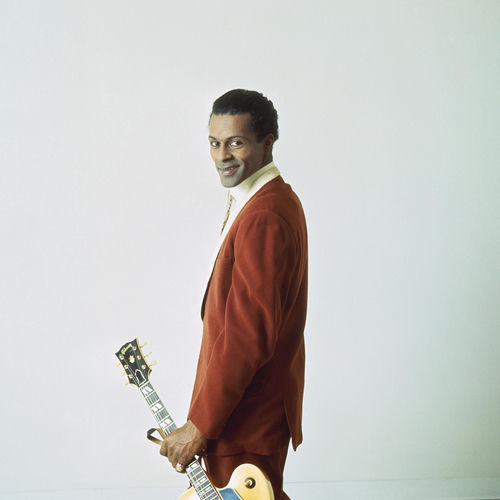
Chuck Berry combined blues traditions with electric guitar riffs, an energetic pulse and lyrics exploring the lives of young Americans.
"Maybellene," released in 1955, followed by "Johnny B. Goode" in 1958, became major landmarks. His guitar playing, instrumental introductions and storytelling permanently influenced subsequent generations.
Little Richard developed a spectacular style characterized by his piano playing, powerful voice and exceptional stage energy. With "Tutti Frutti" in 1955 and "Long Tall Sally" in 1956, he helped establish a particularly intense form of rock.
Bo Diddley, meanwhile, introduced a distinctive rhythmic signature built around repetitive patterns and a highly personal approach to electric guitar.
Buddy Holly contributed to establishing the model of a rock band centered on guitars, bass and drums while developing melodic songwriting that would particularly influence British musicians.
Carl Perkins contributed to the popularity of rockabilly, while Wanda Jackson established herself among the pioneering women of this style.
Rock 'n' roll rapidly became associated with dancing, younger generations and the questioning of certain social conventions.
Tensions surrounding this new culture were significant. Authorities, the media and sections of the public sometimes criticized performances, artists' behavior and musical exchanges between racial communities.
Yet the phenomenon soon expanded beyond the United States.
1958–1964 — Rock Crosses the Atlantic
In the United Kingdom, young musicians discovered American rock through imported records, radio broadcasts and concerts.
Cliff Richard and The Shadows helped establish the first major British scenes, while clubs in London, Liverpool and other cities welcomed a new generation of bands.
The Beatles developed their musical identity within this environment. Influenced by Chuck Berry, Buddy Holly, Little Richard and American vocal harmonies, they gradually developed their own compositions.
The success of "Love Me Do" in 1962 opened a period of rapid transformation. In February 1964, their appearance on the American television program The Ed Sullivan Show accompanied the beginning of their extraordinary popularity in the United States.
The Rolling Stones followed a different path, deeply rooted in Chicago blues and rhythm and blues. Their early years helped introduce several American musicians to a new generation.
The Kinks, The Who and The Animals also participated in this movement, generally known as the British Invasion.
These groups did not simply reproduce American music. They developed new approaches to songwriting, guitar arrangements and band identity.
Meanwhile, in the United States, the California scene explored vocal harmonies and surf rock sounds.
Dick Dale helped popularize a fast, heavily amplified instrumental guitar style, while The Beach Boys developed a musical universe combining rock, vocal harmonies and pop songwriting.
By the mid-1960s, rock had become an international musical phenomenon. It was entering a period of unprecedented experimentation.
The Golden Age
1965–1969 — Rock Becomes a Creative Laboratory
From 1965 onward, rock gradually moved beyond dance songs and early radio hits.
Bob Dylan participated in this transformation by adopting electric instrumentation. His album Highway 61 Revisited, released in 1965, combined blues, rock and poetic songwriting in a form that considerably expanded the genre's possibilities.
The Byrds also contributed to bringing folk and rock closer together, particularly through their electric interpretation of "Mr. Tambourine Man."
Recording technology underwent important developments at the same time. Musicians increasingly used the studio as a creative instrument, multiplying tracks, effects and sonic experimentation.
The Beatles actively participated in this evolution with Revolver in 1966, followed by Sgt. Pepper’s Lonely Hearts Club Band in 1967.
In the United States, The Beach Boys also explored new possibilities in arrangement and production with Pet Sounds, released in 1966.
Psychedelic rock developed in this context, particularly in San Francisco and London.
Jefferson Airplane and Grateful Dead became part of California's counterculture, with concerts sometimes emphasizing extended improvisations and collective musical experiences.
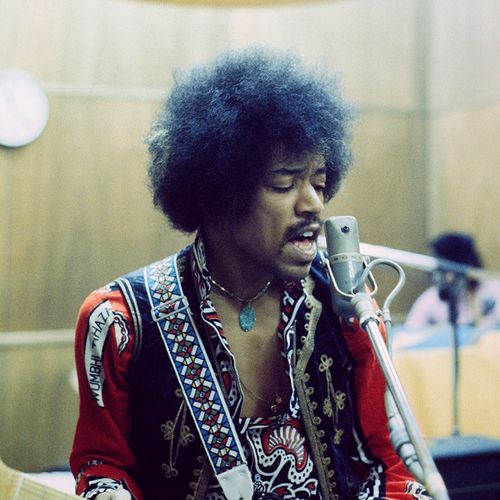
Jimi Hendrix profoundly renewed the use of electric guitar. His work with distortion, feedback and sound effects transformed the instrument's expressive possibilities.
Janis Joplin developed a powerful vocal approach rooted in blues and soul, while The Doors combined rock, poetry and psychedelic atmospheres.
Another scene emerged in New York around The Velvet Underground. Their debut album, The Velvet Underground & Nico, released in 1967, offered an experimental aesthetic that would exert a lasting influence on independent rock.
Festivals became major cultural events. The Monterey International Pop Festival in 1967 and Woodstock in 1969 symbolized the movement's extraordinary growth.
Rock was now more than a collection of popular songs: it had become a space for musical, artistic and social exploration.
The 1970s — Hard Rock, Metal and Progressive Rock
At the beginning of the 1970s, several movements extended earlier experimentation in very different directions.
Led Zeppelin developed powerful music combining electric blues, British folk and particularly memorable guitar riffs.
Their fourth album, generally identified as [Led Zeppelin IV], appeared in 1971. It notably contained "Stairway to Heaven" and illustrated their ability to combine acoustic compositions with hard rock.
Deep Purple also contributed to the rise of a rock style built around instrumental virtuosity, keyboards and heavily amplified guitars.
Black Sabbath developed a darker, heavier aesthetic, particularly recognizable on Paranoid, released in 1970. The band became one of the principal founders of heavy metal.
Heavy metal gradually began forming a distinct musical tradition, although its origins remained deeply connected to hard rock.
Meanwhile, progressive rock developed extended compositions, complex structures and references to classical, jazz and experimental music.
King Crimson, Yes and Genesis were among the groups that contributed to this evolution.
Pink Floyd explored another direction, built around atmospheres, sound effects and the construction of cohesive albums.
The Dark Side of the Moon, released in 1973, became one of the major works of this period. Its use of the recording studio, transitions and themes illustrated the album's new artistic ambitions.
Queen distinguished itself through vocal harmonies, theatrical arrangements and an ability to bring together rock, pop and operatic influences. The album A Night at the Opera, released in 1975, reflected this experimentation.
David Bowie contributed to the development of glam rock, in which music was accompanied by explorations of imagery, characters and theatrical presentation.
T. Rex and Roxy Music also participated in this diversity.
The 1970s therefore witnessed the coexistence of spectacular arena rock, sophisticated musical experimentation and more marginal scenes.
1975–1980 — The Punk Revolution
By the mid-1970s, a new generation was challenging the most commercial and sophisticated forms of rock.
In New York, bands such as The Stooges and MC5 had already helped develop raw, energetic and provocative music during the late 1960s.
The CBGB club subsequently became one of the principal venues of New York's punk movement.
Ramones developed fast, direct music built around short songs. Their debut album, Ramones, released in 1976, became a major reference in punk rock.
Patti Smith combined poetry and rock energy with Horses, released in 1975, while Television explored a more instrumental and elaborate approach with Marquee Moon in 1977.
In the United Kingdom, economic difficulties and social tensions encouraged the emergence of a particularly dynamic punk scene.
Sex Pistols became one of the symbols of this rebellion through their songs, public image and performances.
The Clash developed a more open musical approach, gradually incorporating reggae, ska, rockabilly and political influences.
Their album London Calling, released in 1979, illustrated their desire to expand punk's boundaries without abandoning its original energy.
The movement also contributed to the rise of do it yourself, an approach encouraging bands to record, produce and distribute their music through independent means.
Punk did not mark the end of 1970s rock. Instead, it triggered a new diversification whose consequences would be felt for decades.
The 1980s — Post-Punk, Independent Rock and Major Stages
At the beginning of the 1980s, the transformations emerging from punk gave rise to numerous new aesthetics.
Post-punk retained the movement's experimental spirit while incorporating electronic influences, different rhythms and darker atmospheres.
Joy Division, Siouxsie and the Banshees, Talking Heads and The Cure contributed to this evolution through very different approaches.
New wave brought some of these innovations closer to pop and new studio technologies.
The Police developed music combining rock, reggae and pop, while U2 gradually built an identity around atmospheric guitars and compositions intended for large stages.
Their album The Joshua Tree, released in 1987, accompanied their international recognition.
In the United States, another story unfolded within independent music networks.
Hüsker Dü, R.E.M., Sonic Youth and Pixies helped prepare the development of alternative rock. Their compositions sometimes favored harsher, more experimental approaches or sounds further removed from commercial conventions.
Hardcore scenes also developed around groups such as Black Flag and Bad Brains, followed by bands including Fugazi.
Meanwhile, major rock productions continued dominating concert venues and the media.
Bruce Springsteen achieved enormous success with Born in the U.S.A. in 1984. Dire Straits also contributed to rock's international popularity with Brothers in Arms, released in 1985.
Guns N’ Roses brought energetic hard rock back to the forefront with Appetite for Destruction, released in 1987.
The rise of MTV, launched in 1981, reinforced the importance of imagery and music videos in promoting artists.
Rock during the 1980s was therefore characterized by an apparent opposition, but also numerous exchanges, between major international productions and independent scenes.
The 1990s — Grunge, Alternative Rock and Britpop
At the beginning of the 1990s, alternative rock experienced spectacular commercial recognition.
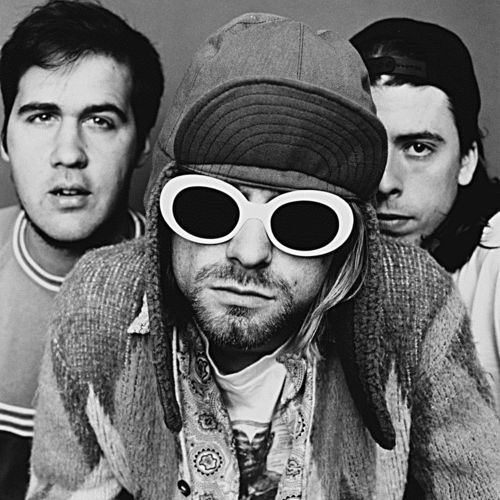
In Seattle, Nirvana developed a style combining the melodic structures of pop with energy drawn from punk and independent rock.
Their album Nevermind, released in 1991, became a major event. The success of "Smells Like Teen Spirit" helped introduce grunge to an international audience.
Pearl Jam also achieved considerable success with Ten, released the same year.
Soundgarden and Alice in Chains represented other dimensions of this scene, characterized by influences from hard rock, punk and metal.
However, grunge was not a uniform musical movement. The bands associated with the term developed distinct styles and sensibilities.
Meanwhile, The Smashing Pumpkins explored more ambitious compositions, while P.J. Harvey renewed the expressive possibilities of independent rock.
The riot grrrl movement, particularly around Bikini Kill, combined punk, women's creative expression and feminist demands.
In the United Kingdom, Britpop experienced significant growth during the mid-1990s.
Blur and Oasis became two of its principal representatives, reinterpreting different traditions of British rock and pop.
Parklife, released by Blur in 1994, and Definitely Maybe, Oasis's debut album from the same year, helped define the period.
Radiohead developed a different approach. With OK Computer, released in 1997, the band explored relationships between rock, technology, alienation and sonic experimentation.
Other groups also pushed the genre's boundaries.
Rage Against the Machine combined electric guitar, funk and rap, while Red Hot Chili Peppers developed a personal mixture of rock, funk and alternative influences.
Green Day and The Offspring simultaneously contributed to the international success of melodic punk rock.
The 1990s demonstrated that rock could still undergo profound transformations while reaching very different audiences.
The 2000s — Garage Rock and the Independent Revival
At the beginning of the 21st century, new bands reaffirmed the importance of guitars, small ensembles and sometimes deliberately stripped-down production.
The Strokes achieved significant success with Is This It, released in 2001. Their music drew particular inspiration from 1970s New York rock while adapting it to a contemporary aesthetic.
The White Stripes developed a particularly direct sound based on guitar, drums and blues traditions. Their album Elephant, released in 2003, contributed to their international recognition.
Franz Ferdinand and Arctic Monkeys also participated in the revival of British rock, with rhythmic compositions influenced by post-punk and pop.
The Black Keys continued the relationship between blues and modern rock, while Queens of the Stone Age developed music built around repetitive riffs and rhythmic experimentation.
Meanwhile, Muse combined rock, ambitious arrangements and electronic textures, while Foo Fighters continued a tradition of energetic, melodic rock.
Linkin Park illustrated the connections between rock, metal, hip-hop and electronic production, particularly with Hybrid Theory, released in 2000.
However, the arrival of digital platforms, changing listening habits and the crisis affecting the record market transformed the conditions in which rock circulated.
Independent scenes gained new means of production and distribution, while major festivals continued attracting enormous audiences.
Movements and Subgenres
Rock 'n' Roll and Rockabilly
Rock 'n' roll represents the first major commercial form of rock, particularly popular during the 1950s.
It combines rhythm and blues, blues, gospel and country influences around dance rhythms and direct instrumentation.
Chuck Berry, Little Richard and Elvis Presley are among its major references.
Rockabilly places greater emphasis on the meeting between country and rhythm and blues, particularly within the early scenes of the American South.
Blues Rock and Psychedelic Rock
Blues rock extends electric blues traditions by placing amplified guitar and improvisation at the center of the music.
The Rolling Stones, Cream, Jimi Hendrix and Led Zeppelin contributed to different stages of its development.
Psychedelic rock emerged mainly during the mid-1960s. It explores sound effects, improvisation and less conventional compositional forms.
Pink Floyd, The Doors and Grateful Dead are among its major representatives.
Hard Rock and Heavy Metal
Hard rock is notably characterized by powerful riffs, heavy amplification and pronounced rhythms.
Led Zeppelin, Deep Purple and AC/DC contributed to its development, while Black Sabbath helped bring heavy metal into existence.
The latter gradually became an independent musical family, undergoing numerous transformations from the 1980s onward.
Progressive Rock and Art Rock
Progressive rock developed mainly from the late 1960s onward.
It often emphasizes extended compositions, complex structures and influences drawn from jazz, classical and experimental electronic music.
King Crimson, Yes, Genesis and Pink Floyd contributed to its history.
Art rock more broadly refers to approaches in which rock interacts with visual arts, theater or experimental musical forms.
Punk Rock and Post-Punk
Punk rock developed during the 1970s around a direct, fast and often rebellious aesthetic.
Ramones, Sex Pistols and The Clash contributed to its international recognition.
Post-punk subsequently extended this energy in more experimental directions, incorporating electronic music, funk, dub and darker atmospheres.
These movements have their own scenes and histories, extending far beyond their earliest years.
New Wave and Independent Rock
New wave emerged during the late 1970s and developed throughout the 1980s, combining certain punk influences with pop and new technologies.
Independent rock developed alongside it through labels, clubs and distribution networks operating outside major commercial structures.
R.E.M., Sonic Youth and Pixies contributed to its development.
Grunge and Alternative Rock
Grunge developed primarily in the northwestern United States during the late 1980s before achieving enormous success in the early 1990s.
Nirvana, Pearl Jam and Soundgarden became its major representatives.
Alternative rock is a broader category, encompassing bands with diverse aesthetics, from experimental rock to melodic forms approaching pop.
Radiohead notably helped expand the musical possibilities of this family.
Indie Rock and Garage Rock Revival
Indie rock continued the independent traditions of the 1980s and 1990s, emphasizing artistic approaches that were often more personal.
The garage rock revival of the 2000s brought guitars, small bands and deliberately direct sounds back to the forefront.
The Strokes, The White Stripes and Arctic Monkeys illustrated different expressions of this revival.
However, these designations cover diverse musical forms and do not correspond to rigid boundaries.
Legacy and Influence Today
Rock occupies a fundamental place in the history of modern popular music. It helped transform instrumental techniques, recording practices, concert culture and relationships between artists and audiences.
Its influence extends far beyond music itself.
From the 1950s onward, it contributed to the emergence of an international youth culture associated with new clothing styles, dancing and changes in the media.
During subsequent decades, concerts became major cultural events. Large tours, festivals and stadium performances gradually transformed the economics of musical entertainment.
Rock also helped develop the concept of the album as an artistic work. Studio innovations during the 1960s and 1970s permanently influenced production methods.
However, its history also contains important contradictions.
Originating largely in African American traditions, the genre was long presented through narratives that favored white artists. Renewed recognition of figures such as Sister Rosetta Tharpe and other pioneers now contributes to restoring a more complete historical picture.
Women also played an essential role in its development, from early rockabilly pioneers to punk and alternative scenes.
Patti Smith, Joan Jett, Janis Joplin and numerous other musicians helped expand opportunities for expression and representation within the genre.
Rock's place in social movements represents another important aspect of its legacy. Certain songs accompanied civil rights demands, antiwar mobilizations and the cultural transformations of their time.
However, these commitments do not define rock as a whole, which also encompasses festive, intimate, commercial and experimental traditions.
A Musical Language That Became Global
Rock's expansion was not limited to the United States and the United Kingdom.
In France, Téléphone helped popularize French-language rock from the late 1970s onward.
Later, Noir Désir developed an aesthetic combining alternative rock, poetry and social engagement, notably with Tostaky, released in 1992.
In Latin America, several countries have developed their own rock traditions since the 1960s.
In Argentina, Soda Stereo became one of the major bands in Spanish-language rock, helping expand its continental reach during the 1980s and 1990s.
In Mexico, Café Tacvba participated in another evolution, combining rock, traditional Mexican music and experimentation.
In Japan, X Japan contributed to the emergence of a particularly significant rock and metal scene, while ONE OK ROCK subsequently developed an international career.
These examples show that rock is not simply American music exported abroad. Local scenes adopted its instruments and techniques to develop their own repertoires, sometimes within very different cultural and political contexts.
Rock in the Contemporary Era
Since the 2010s, rock has continued evolving in a musical environment shaped by streaming, digital networks and the coexistence of numerous genres.
It no longer necessarily occupies the same dominant position in popular charts that it held during certain earlier periods, but it retains particularly active scenes.
Bands such as Wolf Alice, Idles and Wet Leg demonstrate the diversity of contemporary British productions, spanning independent rock, post-punk and pop.
King Gizzard & the Lizard Wizard, meanwhile, pursue an experimental approach, exploring numerous musical aesthetics across a particularly varied discography.
Guitar remains an important instrument, but contemporary productions also incorporate synthesizers, programmed rhythms and techniques drawn from electronic music.
Boundaries with pop, hip-hop and metal remain open.
Olivia Rodrigo notably illustrates the lasting presence of punk and alternative rock influences in contemporary pop, with SOUR, released in 2021, followed by GUTS in 2023.
Meanwhile, numerous independent artists favor more direct recordings, sometimes produced with limited resources, reconnecting with certain practices of early garage and punk scenes.
Festivals and concerts continue playing an essential role in transmitting the genre. New generations also discover major historical albums through digital platforms, cinema and contemporary reinterpretations.
Rock has never been a static form of music.
From Chuck Berry's earliest riffs to alternative rock experimentation, it has continually absorbed new influences and given rise to movements sometimes very far removed from its origins.
Its legacy rests as much on instrumental innovations and major works as on a particular approach to musical creation: transforming existing forms, experimenting with sound and asserting an artistic identity.
More than seven decades after its commercial breakthrough, rock therefore remains an international family of musical traditions, shaped by continuities, ruptures and constant renewal.