

Overview
Founded in Kyoto in 1889, Nintendo has a history that predates its entry into video games by nearly a century. The company began by manufacturing Japanese hanafuda cards, later developed other forms of games and entertainment, then gradually moved toward electronics during the 1970s. This transformation led to a model that became central to its identity: designing machines, developing and publishing software for those machines, then building around them universes capable of spanning several generations.
Classifying Nintendo as a video game publisher therefore does not mean reducing the company to an activity comparable to a publisher solely responsible for financing and marketing external productions. Nintendo operates at several levels simultaneously. The company defines its platforms, develops games within its own teams, works with subsidiaries and partner studios, publishes their productions, organizes their distribution and manages a vast portfolio of intellectual properties.
This structure explains why Nintendo as a company and publisher must be distinguished from the studios that actually developed each work. A game published by Nintendo is not necessarily made by a single internal team called “Nintendo.” Depending on the project, development may be handled directly by its own teams, by a company belonging to the group or by an external partner. This organization allows Nintendo to maintain a shared editorial direction while drawing on different production cultures.
Over the decades, its catalogue has been built around series that became central to video game history: Super Mario, The Legend of Zelda, Donkey Kong, Metroid, Animal Crossing, Pikmin and Splatoon, alongside important properties and collaborations such as Kirby, Fire Emblem, Xenoblade Chronicles and the Pokémon ecosystem.
Nintendo’s particularity lies in the relationship between these games and the machines that host them. The directional pad of the Game & Watch, the portable concept of the Game Boy, the analog sticks and vibration associated with the Nintendo 64, the dual touchscreen setup of the Nintendo DS, the motion detection of the Wii, the hybrid structure of the Nintendo Switch and the new functions of the Nintendo Switch 2 all illustrate a recurring logic: hardware should open possibilities that software then gives a reason to exist.
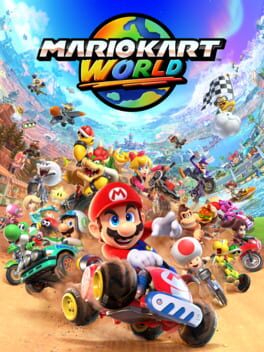
This interaction also works in the opposite direction. Franchises can help explain a machine. Super Mario 64 immediately demonstrates what it means to move a character through a three-dimensional environment with an analog stick. Wii Sports makes motion control understandable without a long learning process. Nintendo Land explores the possibilities of the Wii U GamePad. Mario Kart World accompanies the launch of the Nintendo Switch 2.
Nintendo therefore operates less like a collection of independent divisions than like a company seeking to make platforms, games, characters and services function as a whole.
Since the 2010s, this whole has also expanded beyond consoles. Mobile applications, merchandise, cinema, theme parks, official stores and the Nintendo Museum have multiplied the points of contact with its properties. The strategy nevertheless remains centered on video games: these extensions are intended to strengthen familiarity with the characters and bring interest back toward Nintendo platforms.
In 2026, this continuity continues around the Nintendo Switch 2, launched in June 2025 as the successor to the Nintendo Switch. More than one hundred and thirty years after its first hanafuda cards, Nintendo therefore remains an entertainment company whose core is now video games, with an unusual position combining hardware manufacturer, developer, property holder and global publisher.
History
1889-1969: from playing cards to an entertainment company
Nintendo’s history begins in September 1889, when Fusajiro Yamauchi begins producing Japanese hanafuda playing cards in Kyoto.
The business develops gradually. Nintendo later produces Western-style playing cards and consolidates its presence in that market over several decades.
The company goes through different legal structures and names during this period. A distribution company, Marufuku Co., Ltd., is established in 1947, while the historic business continues to evolve under the leadership of the Yamauchi family.
In 1950, Hiroshi Yamauchi takes control of the company.
The introduction of cards using Walt Disney characters in 1959 notably helps broaden the audience beyond traditional card players.
This period leads Nintendo to think more broadly about what it can produce in the field of entertainment.
In 1963, the company adopts the name Nintendo Co., Ltd. and officially expands its activities beyond playing cards.
This transformation is essential: Nintendo gradually stops being defined by a particular product and becomes a company exploring different forms of play.
The 1970s: entering electronics
At the end of the 1960s and throughout the 1970s, Nintendo expands its toy business and begins integrating more electronic technologies.
Products using optoelectronics, such as the Beam Gun Games, contribute to this transition.
Nintendo also experiments with systems intended for entertainment spaces and arcades.
In 1975, the company works with Mitsubishi Electric on a video game system using an EVR player. The following year, it integrates the microprocessor into its video game activities.
In 1977, Nintendo develops its first home video game consoles, the Color TV-Game 6 and Color TV-Game 15, also in collaboration with Mitsubishi Electric.
These machines are still very different from the model Nintendo would later adopt with the Famicom.
But the general direction is already clear: electronics, interactive play and home hardware gradually become central components of the company.
Nintendo simultaneously develops arcade games and begins building an international presence.
Game & Watch and Donkey Kong: bringing characters to the foreground
The beginning of the 1980s marks an acceleration.
Nintendo launches the Game & Watch line, a series of small portable electronic devices combining an LCD screen, an integrated game and a clock.
These products notably help popularize the directional pad used on certain models, a control system that would later become fundamental on consoles.
At the same time, Nintendo seeks to expand its arcade business.
In 1981, Donkey Kong, designed under the direction of Shigeru Miyamoto, becomes a major international success.
The game also gives Nintendo a character who would soon become central: the figure still presented as Jumpman before taking the name Mario.
This period gradually changes the way Nintendo can think about its productions.
The company no longer owns only isolated machines or games.
Characters and universes can now become lasting elements, reused and transformed from one project to another.
Famicom and NES: building a platform around games
In 1983, Nintendo launches the Family Computer, better known as the Famicom, in Japan.
The machine represents a decisive step because it permanently brings together the different functions Nintendo had previously developed separately: hardware manufacturing, software development, publishing and catalogue building.
Internationally, a redesigned version of the console is marketed as the Nintendo Entertainment System, or NES.
The success of the platform is closely tied to its catalogue.
Super Mario Bros., The Legend of Zelda, Metroid, Excitebike and Punch-Out!! gradually give Nintendo several properties capable of serving different functions within the same offering.
Super Mario Bros. becomes a benchmark for platform games.
The Legend of Zelda develops exploration and adventure.
Metroid builds more open progression within an interconnected environment.
Nintendo therefore no longer depends on a single arcade success.
The catalogue becomes a structuring element of the platform.
The company also works with third-party publishers and developers, turning its consoles into ecosystems hosting productions from many different companies.
This combination of proprietary hardware, internal software and partner catalogue becomes one of the foundations of its publishing model.
Game Boy, Super Nintendo and the multiplication of franchises
In 1989, Nintendo launches the Game Boy.
The portable console uses interchangeable cartridges and favors a relatively simple, robust design suited to mobility.
Its association with Tetris strongly contributes to its international adoption.
Nintendo now has two complementary spaces: home consoles and portable systems.
The Super Famicom, later marketed internationally as the Super Nintendo Entertainment System, continues the home console line in the early 1990s.
This period also reinforces the way Nintendo works with partners.
External studios can develop major productions for its platforms, while Nintendo acts depending on the project as property holder, producer, publisher or distributor.
Donkey Kong Country, developed by Rare, illustrates this organization: a Nintendo franchise can be entrusted to an external team capable of bringing its own technology and sensibility.
The same logic becomes lasting.
The Nintendo name on a work therefore often describes publishing responsibility and ownership, but does not by itself identify the team that actually built the game.
Nintendo 64: designing games around 3D
The Nintendo 64, launched in Japan in 1996, confronts Nintendo with a major transformation of the industry: the widespread shift to 3D.
The company does not simply transpose the controls of the previous generation.
The controller notably introduces an analog stick allowing more precise movement through three-dimensional environments.
Super Mario 64 becomes one of the most important demonstrations of this new relationship between hardware and software.
Movement, camera, inertia and level architecture are designed to give the player a direct understanding of 3D space.
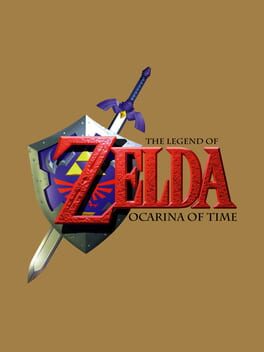
The Legend of Zelda: Ocarina of Time then develops other responses, notably with a system allowing players to target and follow enemies or characters more easily.
This period demonstrates a characteristic that would remain central to Nintendo’s publishing strategy: its major productions often serve to make the possibilities of its machines immediately understandable.
Hardware innovations are not isolated from the catalogue.
They find meaning in games designed to exploit them.
Game Boy Advance and GameCube: maintaining two families of machines
At the beginning of the 2000s, Nintendo continues a strategy clearly separating home consoles and portable systems.
The Game Boy Advance extends the Game Boy family.
The Nintendo GameCube, launched in Japan in 2001, succeeds the Nintendo 64.
The catalogue of this period relies both on historic series and on new collaborations.
Super Mario Sunshine, The Legend of Zelda: The Wind Waker, Mario Kart: Double Dash!! and Super Smash Bros. Melee develop already established properties, while Metroid Prime, developed by Retro Studios, profoundly transforms Metroid by adapting it to a first-person perspective.
This collaboration once again illustrates the difference between franchise, publisher and studio.
Nintendo can define a property, supervise its development and publish a work without it necessarily being made by a team based at the Kyoto headquarters.
The publishing role therefore becomes as much a matter of coordination and continuity as of direct development.
Nintendo DS and Wii: broadening the definition of the player
From 2004 onward, Nintendo profoundly changes its hardware strategy.
The Nintendo DS is built around two screens, one of them touch-sensitive, and also offers a microphone and wireless functions.
Rather than seeking only a conventional increase in power, the console introduces interfaces capable of changing the way players interact with games.
Productions such as Nintendogs, Brain Training, Professor Layton and New Super Mario Bros. contribute to a catalogue capable of reaching both experienced players and people less familiar with consoles.
The Wii, launched in 2006, develops this logic further with motion detection.
Wii Sports plays a particularly important role.
The game uses immediately understandable gestures to represent tennis, bowling or golf and becomes a demonstration of the machine’s objective: reducing some of the barriers associated with learning a traditional controller.
This period presents Nintendo as a publisher capable of changing not only the types of games released, but also the audience a console can address.
Historic series continue in parallel with Super Mario Galaxy, The Legend of Zelda, Mario Kart, Animal Crossing and Metroid.
Nintendo therefore seeks less to replace its traditional audience than to broaden it.
Nintendo 3DS and Wii U: innovation and communication difficulties
The following generation keeps two distinct machines.
The Nintendo 3DS, launched in 2011, continues the portable business with notably a screen capable of displaying a stereoscopic image without glasses.
The Wii U, launched in 2012, introduces a controller with its own screen, the Wii U GamePad.
The console seeks to explore experiences divided between television and controller, but its positioning proves more difficult to communicate than that of the Wii.
Despite limited hardware adoption, this generation plays an important role in the evolution of Nintendo’s catalogue.
Splatoon, launched in 2015, creates a new property around a shooting game where ink, movement and territorial control are closely linked.
Super Mario Maker turns the construction of Mario levels into a tool accessible to players.
Other concepts developed on Wii U would be reused or extended on the following generation.
The period therefore serves as a reminder that a platform can face commercial difficulties while still producing ideas that durably influence the company’s publishing strategy.
Nintendo Switch: bringing home and portable together
In 2017, Nintendo launches the Nintendo Switch.
The machine profoundly changes the historic organization of its offering.
Instead of maintaining separate home and portable consoles, Nintendo offers a hybrid system that can function connected to a television or be used as a standalone portable device.
This convergence also affects the catalogue.
Resources previously divided between several machine families can gradually concentrate around one main platform.
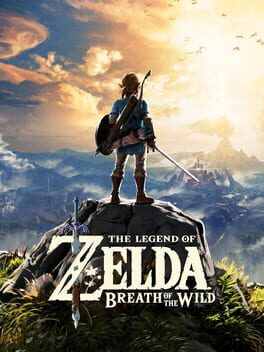
The Legend of Zelda: Breath of the Wild accompanies the launch and profoundly rethinks exploration within the series.
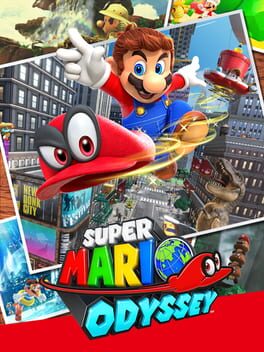
Super Mario Odyssey, Animal Crossing: New Horizons, Splatoon 2 and later Splatoon 3, Super Smash Bros. Ultimate, Pikmin 4 and The Legend of Zelda: Tears of the Kingdom subsequently support the platform.
Nintendo also welcomes a much larger number of third-party and independent productions through the Nintendo eShop.
The publishing model therefore evolves with digital distribution.
Nintendo does not publish the entire catalogue available on the console, but organizes the platform on which its own productions coexist with those of many other publishers.
Extending properties without leaving video games
During the Switch generation, Nintendo also expands the use of its universes beyond games.
The company develops mobile activities, opens official stores, participates in the creation of SUPER NINTENDO WORLD areas in Universal parks and becomes more involved in audiovisual productions.
The Super Mario Bros. Movie, released in 2023, represents an important step in this expansion.
Nintendo also opens the Nintendo Museum in Uji in 2024 to present and let visitors experience different periods of its entertainment history.
This strategy does not, however, mean shifting the center of the company toward cinema or theme parks.
Nintendo presents these activities as ways to increase opportunities for people to encounter its characters and universes.
Video games and proprietary platforms remain at the center of the model.
Other activities strengthen familiarity with the properties that then feed this ecosystem.
2025: Nintendo Switch 2 and platform continuity
On June 5, 2025, Nintendo launches the Nintendo Switch 2.
The choice of name itself represents an important evolution for the company.
Nintendo had often strongly differentiated its generations through identity and concept. Switch 2, by contrast, explicitly embraces continuity with the Nintendo Switch.
The new machine retains the hybrid principle while increasing its technical capabilities and introducing new functions, notably the magnetically attached Joy-Con 2, their possible use as mice and GameChat.
Compatibility with a large part of the Nintendo Switch catalogue also makes it possible to maintain stronger software continuity between generations.
Mario Kart World accompanies the launch of the machine and uses a more open world as well as new gameplay structures around the series.
For Nintendo as a publisher, this transition shows a change in priorities.
The objective is no longer necessarily to rebuild the entire ecosystem with each generation, but to preserve more strongly the relationship with players, accounts, software and properties developed during the previous generation.
In 2026, Nintendo therefore focuses its video game activity on continuing this transition toward Switch 2 while maintaining its historic principle: using its games to give identity to its platform, then using the platform to create a lasting environment around its games.
What sets it apart
Building hardware and software as a single project
Nintendo’s main particularity as a publisher lies in its simultaneous control of hardware and of an essential part of the software that gives that hardware its identity.
The company does not only have to decide which game to publish.
It can think about how a future machine will be controlled, what information it will display and what kinds of experiences it will allow.
Software teams can then develop games that directly exploit these choices.
The relationship between Game & Watch and the directional pad, Nintendo 64 and Super Mario 64, Wii and Wii Sports, or Switch and its portable and television-based play modes illustrates this continuity.
Hardware becomes a gameplay proposition.
Games then demonstrate why that proposition can be interesting.
Nintendo still describes this approach today as an integrated hardware-software strategy placed at the center of its dedicated gaming platform business.
Using franchises as different languages
Nintendo’s catalogue is not built around a single formula adapted to several characters.
Its main properties serve different functions.
Mario can be used to explore movement and platforming.
The Legend of Zelda develops exploration, adventure and experimentation more strongly.
Mario Kart transforms racing into an experience that is immediately accessible while still allowing significant mastery.
Animal Crossing is built around time, relationships and customization.
Splatoon transforms movement, shooting and territorial control through ink.
Pikmin builds its interactions around group management.
This diversity allows Nintendo to reuse characters and universes for several decades without having to preserve exactly the same game structure.
A franchise therefore becomes less a fixed formula than a set of principles capable of being reinterpreted depending on machines and generations.
Publishing without confusing ownership, development and publishing
Nintendo’s organization requires several levels to be distinguished.
Some productions are developed by Nintendo’s internal teams.
Others come from companies belonging to the group.
Still others are produced by independent partner studios.
Nintendo can also own or share a property without directly developing every work associated with it.
This distinction is particularly important for understanding its catalogue.
The Nintendo name as publisher is not enough to determine who developed the game.
This organization nevertheless allows the company to maintain catalogue consistency while benefiting from external expertise.
Nintendo therefore acts as producer, supervisor, property holder, publisher or distributor depending on the project.
Its publishing identity is precisely based on this ability to make these different contributions work within a single ecosystem.
Seeking understandable interaction before raw power alone
Nintendo does not systematically place itself in competition based solely on hardware power.
Several of its historic machines stand out above all through their interface or context of use.
The Game Boy prioritizes mobility and battery life.
The Nintendo DS adds a touchscreen.
The Wii builds much of its identity around motion.
The Switch brings home console and portable device together.
The Switch 2 retains this foundation while adding new interaction possibilities.
This strategy directly influences the games published.
A hardware innovation should ideally be understandable through the experience itself rather than through a technical specification sheet.
Nintendo’s publishing strength therefore lies in having franchises and teams capable of rapidly transforming an abstract feature into a concrete gameplay situation.
Evolving properties across several generations
Few publishers possess such a large collection of franchises that remain active after several decades.
Mario and Donkey Kong date back to the early 1980s.
The Legend of Zelda and Metroid appear during the 1980s.
Mario Kart becomes established in the early 1990s.
Animal Crossing appears in 2001.
Pikmin belongs to the same period.
Splatoon, created in 2015, represents a much more recent generation.
Nintendo does not preserve these properties only through re-releases.
The series are regularly adapted to new technical possibilities and changing audiences.
This continuity creates a particular relationship between novelty and familiarity: the same character can span several generations of players while the structures around that character change profoundly.
Using properties beyond games to strengthen games
Nintendo now develops its characters across cinema, parks, merchandise and physical spaces.
But this diversification follows a logic different from replacing its video game activity.
The company’s stated strategy is to multiply points of contact with its properties in order to increase the number of people likely to know them and then strengthen their relationship with Nintendo platforms.
A character can be discovered through a film, a park or merchandise and then lead toward a game.
Conversely, several generations of players already have a relationship with these characters that makes their presence in other media immediately recognizable.
Nintendo is therefore gradually transforming its game catalogue into a broader collection of entertainment properties while keeping its consoles and software at the economic and creative center of this organization.
Good to know
- Nintendo was founded in Kyoto in September 1889 by Fusajiro Yamauchi around the manufacture of hanafuda cards.
- The current company was legally incorporated in November 1947, while Nintendo officially retains 1889 as the company’s founding date.
- The name Nintendo Co., Ltd. was adopted in 1963, when the company expanded its activities beyond playing cards.
- Nintendo began developing its first Color TV-Game home consoles in 1977 after several experiments in electronic entertainment.
- Donkey Kong, launched in arcades in 1981, played an essential role in the emergence of Mario and in Nintendo’s international video game identity.
- The Famicom appeared in Japan in 1983 before becoming the Nintendo Entertainment System in international markets.
- The Game Boy, launched in 1989, established Nintendo permanently in the portable console market alongside its home systems.
- The Nintendo DS and Wii marked a strategy in the 2000s particularly focused on new interfaces and broadening the video game audience.
- The Nintendo Switch, launched in 2017, brought home console and portable uses together around one main platform.
- Nintendo acts as a publisher, hardware manufacturer and property holder, but the games it publishes can be developed by its internal teams, subsidiaries or partner studios.
- Nintendo Switch 2 launched on June 5, 2025 as the direct successor to Nintendo Switch and retains the principle of a hybrid console.
- In 2026, Nintendo Co., Ltd. remains based in Kyoto and continues a strategy centered on hardware-software integration while extending its properties into cinema, theme parks, merchandise and other forms of entertainment.