Overview
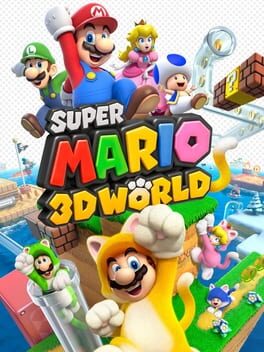
Developed by Nintendo Entertainment Analysis & Development and Nintendo, and published by Nintendo, Super Mario 3D World is a video game released on November 21, 2013 for Nintendo Wii U. The genres associated with this entry are action and platforming, with single-player, multiplayer and cooperative modes.
The game brings the structure of Super Mario 3D Land into three-dimensional levels built around a starting point and a Goal Pole. The environments provide more freedom than a strictly horizontal course while retaining separate stages and clearly defined objectives.
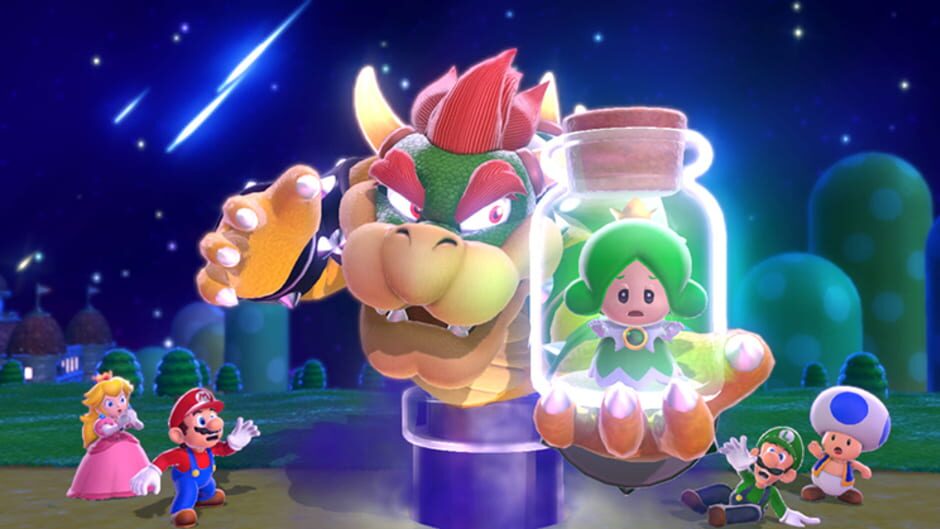
Mario, Luigi, Peach and Toad are playable from the start and have different characteristics. Mario offers balanced handling, Luigi jumps higher, Peach can briefly float through the air after jumping and Toad stands out for his ground speed.
These differences directly affect certain platforming situations. A vertical section may favor Luigi, a long gap over a pit can be easier with Peach, while Toad can move quickly through certain parts of a level.
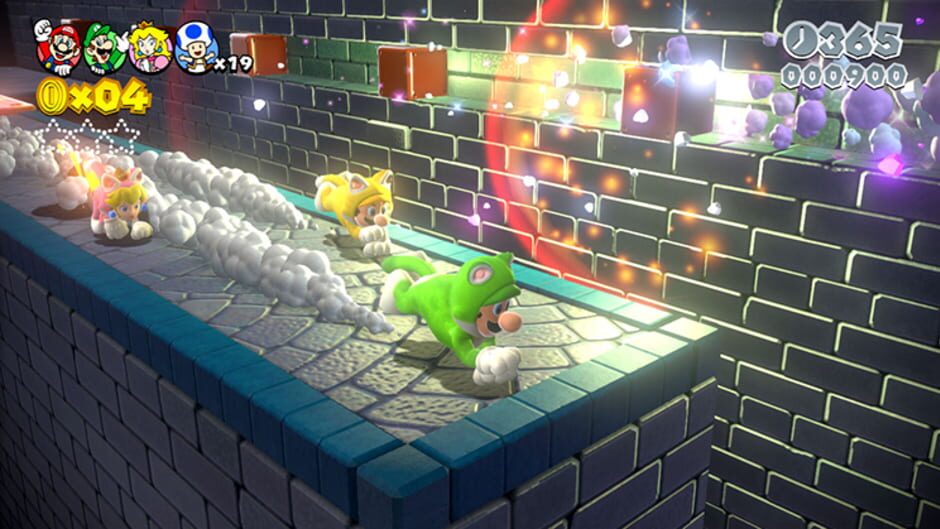
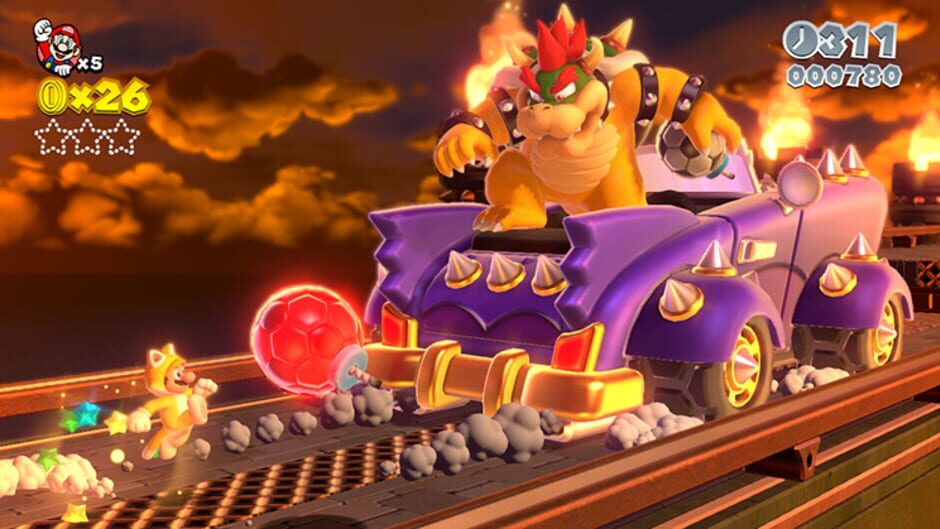
The game’s signature transformation is based on the Super Bell. It transforms the characters into their cat forms, allowing them to temporarily climb walls, swipe with their claws and pounce on enemies.
This ability also changes vertical exploration. Certain secrets, high platforms and wall tops become easier to reach thanks to the abilities of Cat Mario and the other characters’ cat forms.
The Double Cherry introduces another specific mechanic by creating a duplicate of the controlled character. Several duplicates can be controlled simultaneously, with their movements mirroring those of the player.
Some courses make direct use of this mechanic by requiring enough duplicates to activate several switches or occupy different positions at the same time.
The game also includes other items and transformations. Cannon Boxes can notably be worn to fire projectiles, while power-ups such as Tanooki Mario or Boomerang Mario bring back abilities that appeared in earlier entries.
The levels contain several collectibles, including Green Stars hidden throughout the stages. Collecting them contributes to progression and encourages players to examine side paths, elevated areas and less immediately visible locations.
Stamps are also hidden in the levels. In the original Wii U version, they can be used with Miiverse-related features and provide an additional collectible objective.
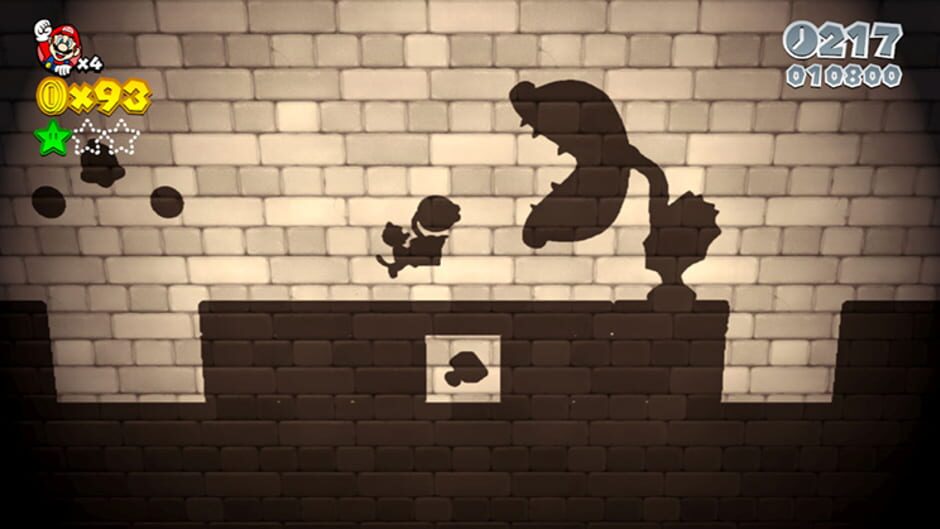
Some stages significantly alter the usual formula. Captain Toad sequences, for example, take the form of small three-dimensional courses focused on observation and collecting Green Stars, with a character who is unable to jump.
The Wii U GamePad is also used in certain levels. Its touchscreen can be used to interact with elements of the environment, reveal certain hidden objects, stop or move mechanisms and affect enemies depending on the situation.
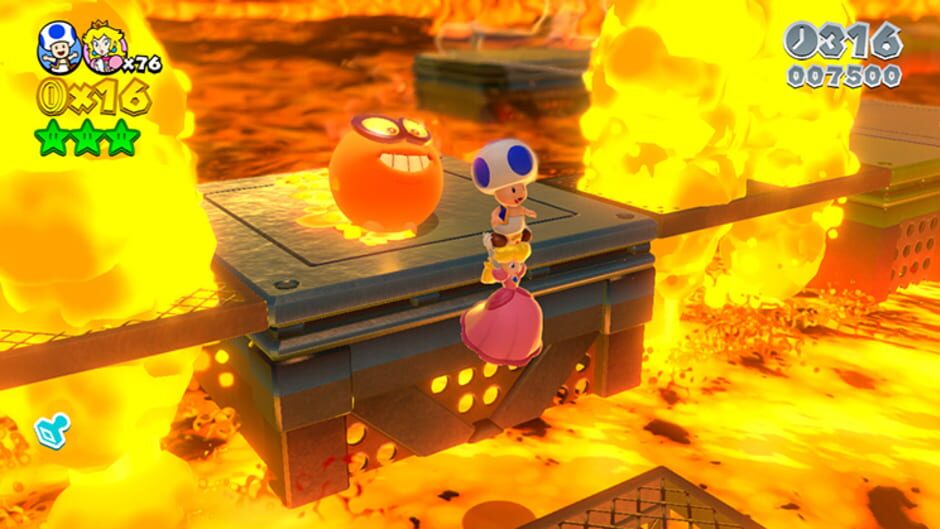
Local multiplayer allows up to four players to move through the levels simultaneously. Participants must cooperate to reach the goal, but a scoring system also compares their performance at the end of each stage.
Players can carry and throw one another, bounce off each other or progress separately within certain limits. The structure therefore combines direct cooperation with competition for points and collected items.
When a character moves too far away from the group or temporarily wants to avoid a difficult section, they can enter a bubble before reappearing near the other participants. Lives are shared between players during multiplayer games.
The kingdom map organizes progression between the different levels, houses, encounters and branching paths. The stages alternate between traditional platforming, sequences using transformations, shorter challenges and situations built around the particularities of multiplayer play.
Super Mario 3D World therefore builds its platforming around relatively compact 3D levels, characters with different properties and transformations capable of changing both movement and the way certain obstacles are solved, while integrating this structure into a 3D Mario game playable simultaneously by up to four players.
Key takeaways
- Super Mario 3D World uses three-dimensional platforming levels structured around a starting point and a Goal Pole.
- Mario, Luigi, Peach and Toad have different movement characteristics.
- The Super Bell transforms characters into cats capable of climbing walls and attacking with their claws.
- The Double Cherry creates duplicates controlled simultaneously and is used in certain challenges designed around this mechanic.
- The levels notably contain Green Stars and Stamps to find.
- Local multiplayer allows up to four players to cooperate simultaneously, while their scores are compared at the end of each level.
Conclusion
Super Mario 3D World combines the goal-based level structure of Mario platformers with three-dimensional environments that allow more exploration to the sides, upward and along secondary routes.
The specific abilities of Mario, Luigi, Peach and Toad provide several ways to approach these courses, while the Super Bell, Double Cherry and other transformations add new movement and interaction possibilities.
Green Stars, Stamps, Captain Toad stages and interactions using the Wii U GamePad diversify the objectives beyond simply reaching the Goal Pole.
Multiplayer completes this structure by bringing up to four characters into the same levels, with cooperative progression that simultaneously retains an individual ranking based on the points earned.
Good to know
- Super Mario 3D World was released on November 21, 2013.
- The game was developed by Nintendo Entertainment Analysis & Development and Nintendo, and published by Nintendo.
- It is available on Nintendo Wii U.
- The genres listed in this entry are action and platforming.
- It features Single player, Multiplayer and Co-operative modes.
- The Super Bell introduces the cat transformation, which notably allows characters to climb walls.
- Local multiplayer can bring together up to four players simultaneously.