Presentation
Developed and published by Capcom, Resident Evil 2 was originally released for PlayStation in 1998. Directed by Hideki Kamiya and produced by Shinji Mikami, it retains the formula of the first game while considerably expanding its scale. The isolated mansion gives way to Raccoon City, and the biological incident that once appeared contained has now become a catastrophe affecting an entire population.
The Raccoon City Police Department forms the heart of the adventure. Like the mansion before it, the building functions as an interconnected environment rather than a succession of independent levels. Locked doors, secondary passages, specific items and puzzles require players to cross the same spaces several times while gradually discovering new ways to move through the building.
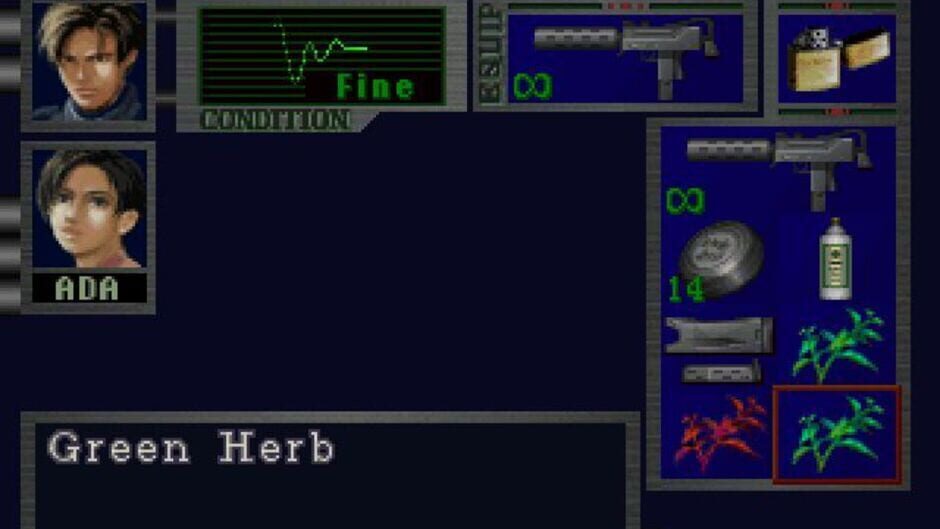
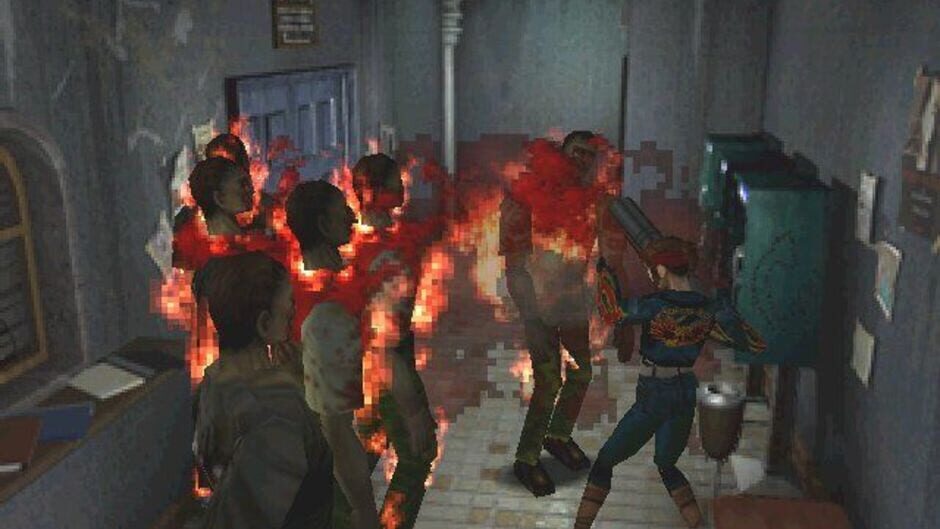
This structure preserves the importance of exploration and resource management. Ammunition, healing supplies and inventory space remain limited, requiring players to choose what to carry and which encounters are genuinely worth engaging in. The larger number of enemies therefore does not turn Resident Evil 2 into an action game: preparation and knowledge of the environment remain essential.
The main evolution comes from the presence of two protagonists, Leon S. Kennedy and Claire Redfield. Each has a separate campaign, particular supporting characters, different weapons and several unique sequences. In the original PlayStation release, each character even has a dedicated disc, emphasizing the intention to provide two distinct routes through the same catastrophe.
Completing the first campaign also opens a second scenario with the other protagonist. These A and B scenarios show certain events from a different perspective and alter several encounters or situations. Some decisions made during the first route can even affect the second, reinforcing the idea that Leon and Claire are moving through the same locations at the same time.
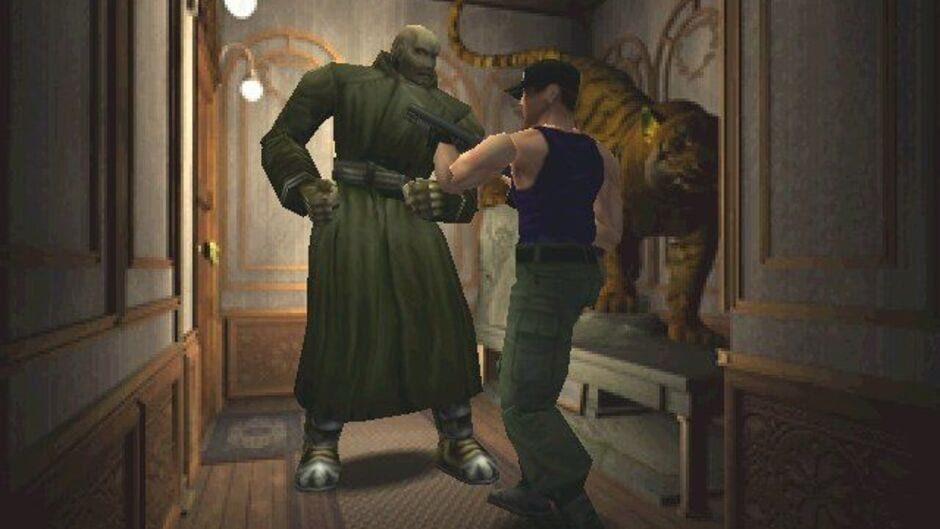
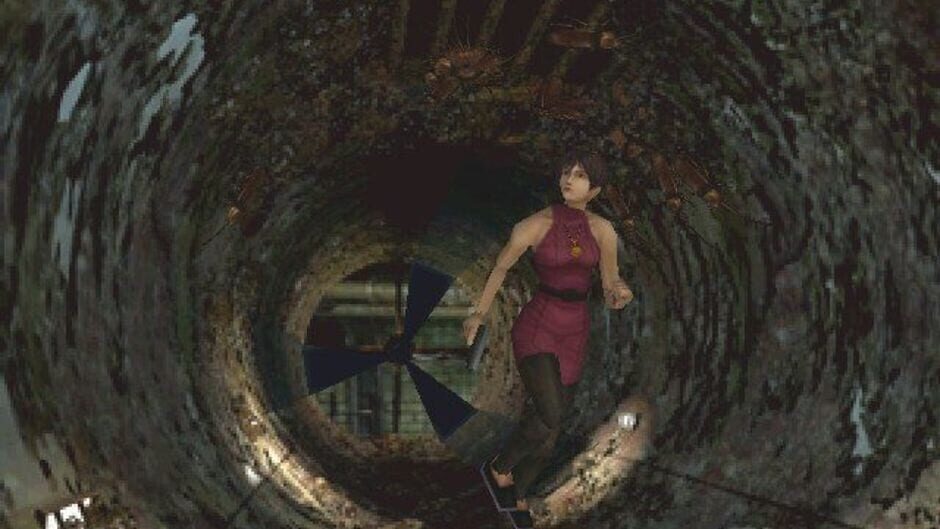
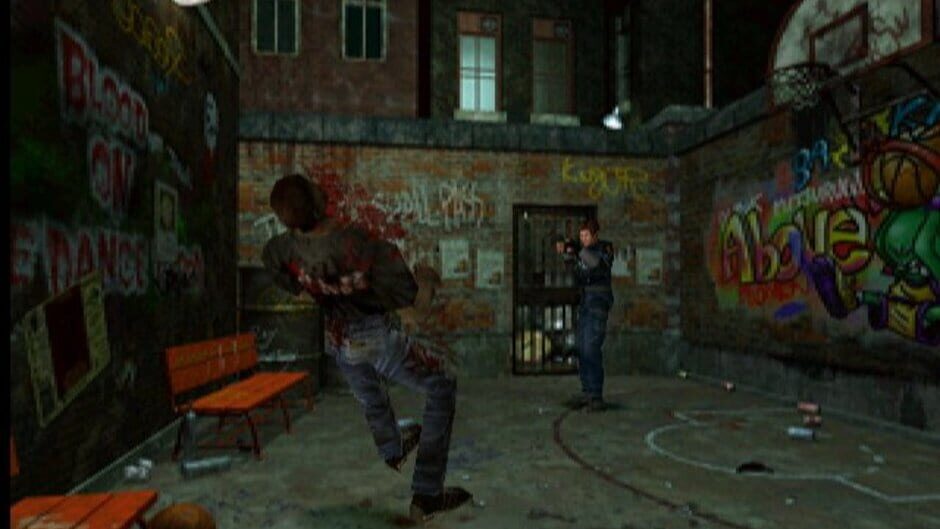
The game retains the first Resident Evil's 3D characters, pre-rendered backgrounds and fixed camera angles. The technique still allows for detailed environments while giving the developers precise control over presentation. It takes on a different scale here, however, across a wider variety of locations ranging from devastated streets to the police station and the hidden facilities beneath the city.
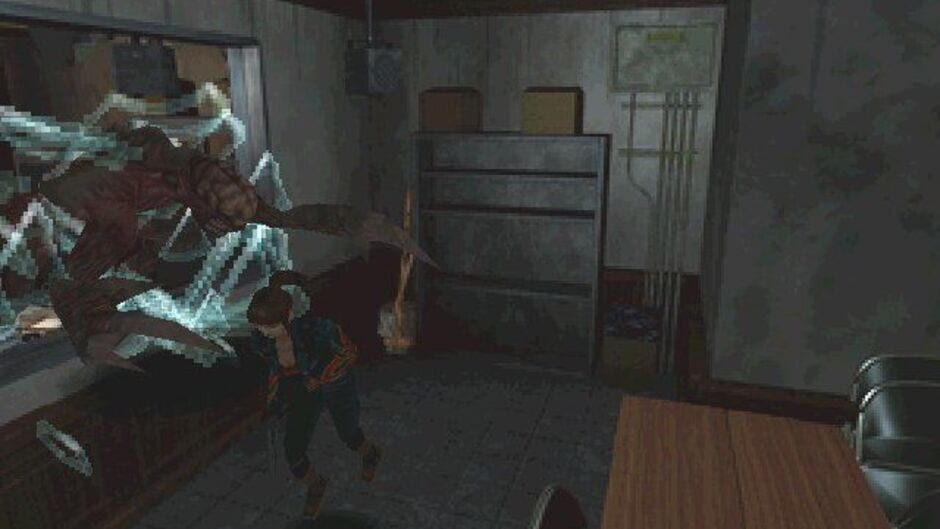
Resident Evil 2 also expands the bestiary. Zombies remain the most common threat, but new creatures force players to adapt their movement and weapon use. The Lickers in particular became one of the episode's defining monsters thanks to their mobility and their ability to turn familiar spaces into much more dangerous areas.
The story also receives greater emphasis. While the first game largely followed the S.T.A.R.S. investigation inside an isolated location, Resident Evil 2 follows several characters caught in a catastrophe already well underway. Leon, Claire, Ada and Sherry develop their own objectives and relationships, while discovered documents and facilities provide a clearer understanding of Umbrella's role and the nature of its research.
This broader universe does not replace the original survival horror structure. Resident Evil 2 still relies on the alternation between exploration, management, puzzles and combat, but now applies that formula to a larger story. The game therefore turns the principles established in 1996 into a genuine series framework capable of supporting new characters and different environments.
What to remember
- A sequel that expands the incident of the first Resident Evil to the scale of Raccoon City, now directly affected by the outbreak.
- Two playable protagonists, Leon S. Kennedy and Claire Redfield, with different campaigns, supporting characters, weapons and several unique situations.
- An A and B scenario system that allows the catastrophe to be experienced from two complementary perspectives and can alter certain events in the second route.
- The Raccoon City Police Department as the main interconnected environment, built around exploration, puzzles and repeated visits to previously explored areas.
- A survival horror formula still based on limited resources, restricted inventory space and the need to choose battles despite the larger number of enemies.
- An installment that introduces Leon, Claire, Ada Wong, Sherry Birkin, the G-virus and several elements that would become important to the wider Resident Evil mythology.
Conclusion
Resident Evil 2 does not attempt to replace the principles of the first game. Instead, it takes them and applies them to a far more ambitious catastrophe, expanding beyond the walls of a single building without abandoning the structure that made the original survival horror formula work.
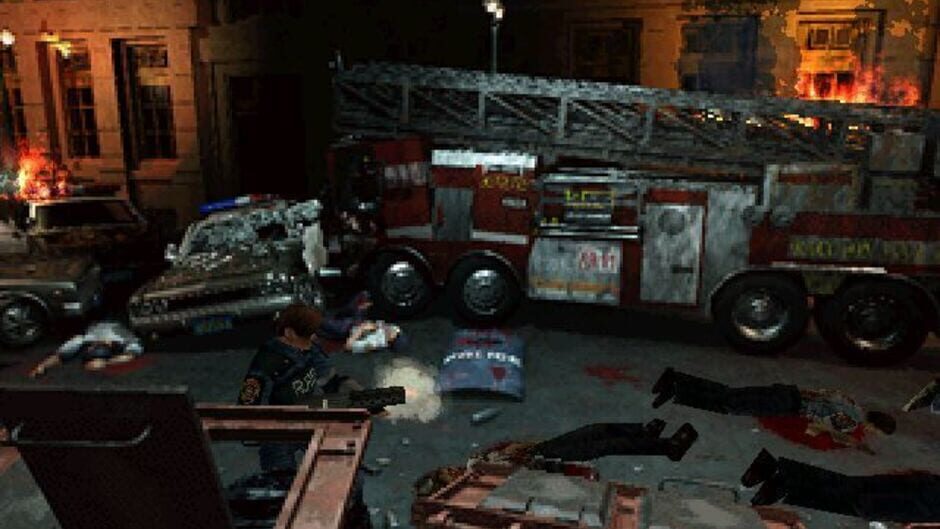
Raccoon City notably changes the perception of the threat. Players are no longer simply discovering the consequences of experiments conducted in a secret location: they enter a city whose streets, institutions and inhabitants have already been affected. The police station preserves the labyrinthine logic of the mansion, but now belongs to an urban environment whose collapse becomes increasingly visible.
The two campaigns form the other essential evolution. Leon and Claire provide access to different relationships, weapons and situations, while the complementary scenarios encourage players to reconsider certain events from another point of view. Replayability therefore becomes a component directly integrated into the narrative.
The presentation remains deeply tied to late-1990s conventions, with fixed cameras, characteristic movement and pre-rendered backgrounds. Yet these choices continue to support spatial awareness and tension, particularly when a familiar environment suddenly changes purpose or becomes more dangerous.
By developing Raccoon City, introducing several major characters and expanding the scale of Umbrella's activities, Resident Evil 2 turns a still-recent formula into a universe capable of continuing beyond its original setting. It therefore represents both an evolution of the first game and a decisive stage in establishing the identity of the series.
Good to know
- Resident Evil 2 was developed and published by Capcom, with Hideki Kamiya as director and Shinji Mikami as producer.
- The game was originally released in 1998 for PlayStation and is titled Biohazard 2 in Japan.
- The story takes place primarily on September 29, 1998, approximately two months after the mansion incident.
- Leon S. Kennedy arrives in Raccoon City to begin his first assignment with the police, while Claire Redfield is searching for her brother Chris.
- The original PlayStation release uses two discs, one dedicated to Leon and the other to Claire.
- Resident Evil 2 was later ported to several platforms, including Windows, Nintendo 64, Dreamcast and GameCube. The original PC version was made available again through GOG in 2024.
- This game should not be confused with Resident Evil 2 released in 2019, a complete remake that retains the main characters and events while rebuilding the presentation, environments, combat and part of the progression.
```