Origins
Hip-hop emerged during the early 1970s in the Bronx, New York, within predominantly African American and Latino communities. It grew out of neighborhood parties, collective musical practices and a desire to create with whatever resources were available.
Its history extends far beyond that of a musical genre. Hip-hop is a culture bringing together several forms of expression: DJing, MCing, breaking and graffiti.
Each of these practices has its own particular history, but their convergence in New York neighborhoods helped give hip-hop a shared identity.
Rap, based on rhythmic vocal expression, gradually became its best-known musical form. However, it does not represent the entirety of hip-hop culture.
At the beginning, DJs occupied a fundamental position.
They selected records, shaped the energy of parties and developed new techniques to extend the instrumental passages most appreciated by dancers.
MCs, short for Masters of Ceremonies, gradually took the microphone to accompany performances, introduce artists and energize audiences.
These interventions progressively developed into more elaborate vocal compositions built around rhymes, wordplay and rhythmic mastery.
Hip-hop's development took place within a particular social context.
During the 1960s and 1970s, several neighborhoods in the Bronx experienced significant economic difficulties. Urban transformations, disinvestment and inequality affected the living conditions of part of the population.
Nevertheless, young people developed their own spaces for creation and social interaction.
Parks, apartment courtyards, schools and community centers became places where musicians, dancers and visual artists could meet.
Hip-hop therefore did not emerge solely as a response to poverty or social tensions.
It was also a culture of celebration, artistic competition, creativity and collective affirmation.
Its musical influences were numerous.
The funk of James Brown played an essential role, particularly through its instrumental passages dominated by drums and bass.
Soul, disco and rhythm and blues also supplied many of the earliest records used by DJs.
Caribbean traditions exerted another important influence, notably through Jamaican sound system culture and toasting, in which performers delivered vocal interventions over recorded rhythms.
These connections do not mean that New York rap was simply an adaptation of Jamaican reggae.
It possessed its own origins, also drawing on African American oral traditions, spoken-word poetry, verbal games and collective performances.
Hip-hop's fundamental innovation was to transform existing recordings into raw material for new creations.
A drum passage could become the foundation of an entire composition. A rhythmic phrase could provide accompaniment for vocal improvisation.
This freedom anticipated several decisive transformations in modern popular music.
Emergence and Early Musical Scenes
The Bronx, 1973 — A Party That Became a Symbol
August 11, 1973, occupies a special place in hip-hop history.
That evening, Cindy Campbell organized a back-to-school party in the recreation room of her apartment building at 1520 Sedgwick Avenue in the Bronx.
Her brother, Clive Campbell, known as DJ Kool Herc, provided the music.
Today, this party is regularly regarded as one of the founding events of hip-hop culture.
However, it would be misleading to describe the movement as something invented in a single night.
The practices that gave rise to hip-hop developed gradually over several years, in different neighborhoods and through the contributions of numerous participants.
DJ Kool Herc made a particularly important contribution to transforming the role of turntables.
He noticed that dancers responded with particular energy to instrumental passages in funk and soul recordings.
These sections, called breaks, frequently emphasized drums and percussion.
By using two copies of the same record, Herc could extend these passages and keep people dancing for longer.
This practice, notably associated with his Merry-Go-Round technique, became one of the great innovations of hip-hop DJing.
Dancers gradually developed movements suited to these instrumental moments.
The terms b-boys and b-girls became associated with breaking practitioners.
Artists such as Coke La Rock also participated in the evolution of vocal party hosting, contributing to early forms of MCing.
Hip-hop thus took shape through constant interaction between turntables, microphones and dancing.
Grandmaster Flash — Turntables Become Instruments
During the second half of the 1970s, several DJs helped perfect techniques pioneered in the Bronx.
Grandmaster Flash occupied a particularly important place.
He developed methods for identifying and transitioning between musical passages that allowed greater rhythmic precision.
Using two turntables and a mixer gradually became a genuine creative process.
DJs no longer simply played complete songs.
They selected, repeated and rearranged fragments of recordings.
Grand Wizzard Theodore is also associated with early major innovations in scratching, a technique involving manually moving a record to produce new rhythmic effects.
Grandmaster Caz and DJ Hollywood, meanwhile, contributed to the development of vocal performances and MCing practices.
Rap groups gradually formed around DJs and several MCs.
Grandmaster Flash and the Furious Five became one of the essential groups of this period.
Melle Mel helped develop more elaborate songwriting that progressively moved beyond interventions intended solely to energize parties.
Hip-hop thus began establishing its own techniques, artists and networks.
Afrika Bambaataa and Hip-Hop Culture
Afrika Bambaataa also occupied an important place in the movement's early history.
A DJ from the Bronx, he participated in spreading a culture built around music, dancing and community organization.
He is associated with the founding of the Universal Zulu Nation, an organization that historically contributed to bringing together different hip-hop practices.
However, his role in developing this culture must be distinguished from the serious allegations and controversies that subsequently concerned him.
The movement's achievements rest on numerous artists and communities, not on a single founder.
During the early 1980s, Afrika Bambaataa participated in exploring the relationships between hip-hop and electronic music.
The track "Planet Rock," released in 1982 with Soulsonic Force, became an important reference for this encounter.
Drum machines and synthesizers opened new possibilities for production.
Hip-hop was already demonstrating its ability to incorporate very different musical influences while developing its own identity.
Breaking and Graffiti — A Visual and Physical Culture
Hip-hop's development was not limited to recorded sound.
Breaking became a particularly important form of expression at parties and competitions.
Dancers developed floor movements, acrobatic techniques and exchanges based on displays of skill.
Collectives such as Rock Steady Crew contributed to its international recognition.
Crazy Legs became one of the emblematic figures of this evolution.
Collective performances relied on competition, but also on sharing techniques and gaining recognition among dancers.
Meanwhile, graffiti developed in New York through an urban history with origins of its own.
Tags, paintings and visual compositions appeared notably in streets and on subway trains.
Artists such as Lady Pink helped establish the creativity and diversity of this scene.
Fab 5 Freddy subsequently helped create connections between New York street cultures, art galleries and the media.
The association between DJing, rap, breaking and graffiti contributed to constructing hip-hop's international image.
These practices remained distinct, but they shared an ability to transform ordinary spaces into places of creation.
1979 — Rap Enters the Recording Industry
For several years, hip-hop circulated primarily through parties, concerts and informal recordings.
The end of the 1970s marked its entry into the recording industry.
In 1979, The Fatback Band released "King Tim III (Personality Jock)," one of the first commercial recordings incorporating a rapped performance within a musical context close to funk.
That same year, The Sugarhill Gang achieved enormous success with "Rapper's Delight."
The track helped introduce rap to an international audience.
Its instrumental foundation notably reinterpreted the bass line of "Good Times" by Chic.
This connection with disco recalls the importance of dance music in early hip-hop history.
The success of "Rapper's Delight" owed much to producer Sylvia Robinson, who helped organize some of the earliest major commercial rap productions at Sugar Hill Records.
The record marked a turning point, but it was not the first rap performance in history.
Vocal practices and DJing traditions were already established in New York neighborhoods.
Kurtis Blow also became one of the first rappers to achieve significant commercial recognition.
His track "The Breaks," released in 1980, illustrated the gradual establishment of rap as an independent musical form.
Groups such as Funky 4 + 1 contributed to this first generation, notably through the presence of MC Sha-Rock, a pioneer of female rap performances.
The industry was beginning to discover a culture that had already existed for several years.
1982 — "The Message" Transforms Rap's Possibilities
In 1982, Grandmaster Flash and the Furious Five released "The Message."
The track marked a fundamental milestone in the evolution of rap lyrics.
It offered a direct description of social difficulties and living conditions in certain urban neighborhoods.
Melle Mel's voice contributed strongly to this new direction.
Rap demonstrated that it could be more than music intended for parties.
It could recount social experiences, construct characters, describe injustices and develop a form of political commentary.
This evolution did not cause celebratory songs to disappear.
It expanded the genre's narrative possibilities.
The MC gradually became an author whose writing, vocabulary and vocal rhythm constituted essential elements of artistic identity.
Rap was entering a period of rapid transformation.
1983–1986 — Run-D.M.C. and the New School
During the early 1980s, producers increasingly used drum machines and electronic recording techniques.
Compositions sometimes became more stripped-down, leaving greater space for vocals.
Run-D.M.C. played a decisive role in this evolution.
The New York trio developed rap built around powerful rhythms, direct arrangements and particularly assertive vocal performances.
Their debut album, Run-D.M.C., was released in 1984.
With King of Rock, released in 1985, the group strengthened the connections between rap and electric rock.
The album Raising Hell, released in 1986, marked another stage in their international recognition.
Their cover of "Walk This Way," recorded with Aerosmith, helped bring together several audiences discovering these musical exchanges.
However, the new school was not limited to a single formula.
LL Cool J developed an approach combining rhythmic power, vocal performances and accessible compositions.
His album Radio, released in 1985, became an important reference.
Beastie Boys also contributed to this period by combining rap, rock and provocative humor.
Licensed to Ill, released in 1986, achieved considerable success.
These developments anticipated hip-hop's rapid expansion toward the end of the decade.
The Golden Age
1986–1992 — The Golden Age of New York Rap
The second half of the 1980s and the beginning of the 1990s are frequently associated with hip-hop's golden age.
This expression does not describe a period whose boundaries are universally agreed upon.
Rather, it refers to an era of exceptional creativity, during which songwriting techniques, production methods and musical identities multiplied.
The development of samplers profoundly transformed creative possibilities.
Producers could extract fragments from older records, modify them and rearrange them to construct new compositions.
Funk drum patterns, jazz bass lines and soul arrangements became essential raw materials.
Drum machines and samplers established themselves as creative instruments in their own right.
Hip-hop thus developed a distinctive relationship with the history of recorded music.
Every producer could draw from different traditions to build an original sound.
Meanwhile, MCs refined their vocal techniques.
Rhymes became more complex, rhythmic placement more varied, and lyrics addressed an increasingly broad range of subjects.
Rakim and the Transformation of Lyricism
Eric B. & Rakim occupied a fundamental place in rap's evolution during the 1980s.
The album Paid in Full, released in 1987, developed a particularly precise vocal approach.
Rakim helped transform the way rappers used rhythm, internal rhymes and variations in flow.
His performance was notably distinguished by his mastery of vocal placement and structures more complex than many earlier performances.
This development would exert a considerable influence on subsequent generations.
Big Daddy Kane continued developing rap characterized by technical virtuosity and stage presence.
His album Long Live the Kane, released in 1988, became an important reference.
Slick Rick developed another approach, particularly connected to storytelling.
With The Great Adventures of Slick Rick, released in 1988, he helped establish narrative as a major form of rap composition.
Boogie Down Productions, associated with KRS-One, meanwhile developed a more direct aesthetic.
Their album Criminal Minded, released in 1987, contributed to the emergence of rap that was both intense and attentive to urban realities.
These different artists demonstrated that rap could emphasize technique, storytelling, reflection or energy without adopting a single approach to writing.
Public Enemy — Rap as a Political Force
Public Enemy became one of the most important groups of the late 1980s.
The group developed particularly dense music in which samples, rhythms and vocal interventions created constant tension.
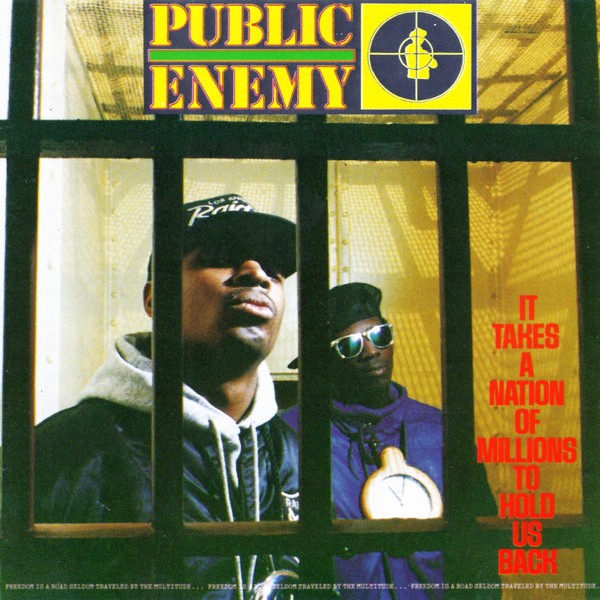
Their album It Takes a Nation of Millions to Hold Us Back, released in 1988, profoundly influenced the history of political rap.
The lyrics addressed racial inequality, the media, power and the history of African American communities.
The production multiplied sonic fragments, effects and rhythmic layers.
With Fear of a Black Planet, released in 1990, Public Enemy continued this approach.
The group demonstrated that a rap album could develop a coherent message through its lyrics, arrangements and historical references.
KRS-One also participated in this tradition of socially engaged hip-hop, notably through his reflections on education and social conditions.
However, political rap does not constitute a single sonic style.
It can take very different forms depending on artists, scenes and historical periods.
De La Soul and A Tribe Called Quest — Jazz, Humor and Freedom
During the late 1980s, several groups developed an approach different from the aggressive image sometimes associated with rap.
De La Soul released 3 Feet High and Rising in 1989.
Produced with Prince Paul, the album combined varied samples, humor, melodies and experimentation.
It helped expand hip-hop's possibilities through the use of particularly diverse musical references.
A Tribe Called Quest developed an aesthetic emphasizing jazz, groove and vocal interplay.
With People’s Instinctive Travels and the Paths of Rhythm, released in 1990, the group offered rap that was both inventive and accessible.
The album The Low End Theory, released in 1991, deepened this approach.
Bass lines, stripped-down rhythms and exchanges between MCs became essential characteristics of its identity.
Q-Tip contributed strongly to the songwriting and artistic direction of this music.
Other groups pursued related directions.
The Pharcyde developed rap combining humor, introspection and original musical production.
Their album Bizarre Ride II the Pharcyde, released in 1992, contributed to this diversification.
These movements are often associated with jazz rap and alternative hip-hop.
They demonstrated that rap could incorporate a wide variety of influences without losing its rhythmic and vocal character.
The West Coast — From N.W.A to G-Funk
While New York consolidated its influence, the West Coast of the United States developed its own scenes.
In Los Angeles, N.W.A contributed to the emergence of particularly direct rap.
Their album Straight Outta Compton, released in 1988, notably addressed relations with the police, urban violence and living conditions in certain neighborhoods.
The group belonged to a development often associated with gangsta rap, several forms of which already existed.
Ice-T also contributed to this tradition.
The writing sometimes emphasized first-person narratives, characters and descriptions of difficult social environments.
These lyrics could provoke controversy, particularly regarding violence and representations of women.
Nevertheless, they participated in an important transformation of narrative rap.
During the early 1990s, Dr. Dre developed a particularly influential aesthetic.
His album The Chronic, released in 1992, helped popularize G-funk.
The style combined relatively relaxed rhythms, deep bass and synthesizers inherited notably from American funk.
Snoop Dogg quickly became one of the most recognizable voices of this scene.
His album Doggystyle, released in 1993, contributed to the expansion of West Coast rap.
Other artists, such as Warren G and Nate Dogg, contributed to this aesthetic, in which melodic choruses and synthetic arrangements occupied an important place.
Californian rap thus developed a musical identity distinct from that of many New York producers.
New York in the 1990s — Wu-Tang Clan, Nas and Mobb Deep
During the early 1990s, New York experienced another period of creativity.
Wu-Tang Clan released Enter the Wu-Tang (36 Chambers) in 1993.
The collective developed a particularly recognizable aesthetic characterized by rough-edged samples, powerful rhythms and references to martial arts films.
RZA's production contributed strongly to this identity.
The collective's members subsequently developed several solo careers.
Method Man, Ghostface Killah and Raekwon notably participated in this expansion.
The group demonstrated that a rap collective could function as a genuine artistic universe, bringing together several voices, characters and styles.
In 1994, Nas released Illmatic.
The album became one of the great references of New York rap.
Its compositions combined particularly precise writing with productions drawing notably on boom bap.
The lyrics developed urban narratives, social observations and personal reflections.
Pete Rock and DJ Premier were among the producers associated with this aesthetic.
Mobb Deep pursued a dark and atmospheric direction, notably with The Infamous…, released in 1995.
The Notorious B.I.G. also contributed to this period with Ready to Die, released in 1994.
His storytelling and variations in flow helped renew rap's narrative possibilities.
New York hip-hop possessed a great diversity of voices and productions despite its shared cultural identity.
Tupac and the Great Narrative Figures
Tupac occupied a major position in 1990s rap history.
His music combined personal narratives, social concerns and often particularly direct compositions.
The album 2Pacalypse Now, released in 1991, helped establish his artistic identity.
Me Against the World, released in 1995, developed a more introspective style of writing.
With All Eyez on Me, released in 1996, Tupac achieved considerable commercial recognition.
His songs could address very different subjects: family relationships, everyday life, inequality, violence and personal aspirations.
This diversity partly explains the importance of his legacy.
However, highly publicized rivalries between certain scenes and record labels during the 1990s contributed to an atmosphere of tension.
The murders of Tupac in 1996 and The Notorious B.I.G. in 1997 became two landmark events of the period.
They should not lead to the history of American rap being reduced to these conflicts.
The 1990s were also a period of exceptional musical creativity, during which collaborations and exchanges between regions remained essential.
The American South — A Third Major History
For a long time, media accounts of American rap focused primarily on New York and Los Angeles.
Yet cities in the southern United States developed particularly inventive scenes from the 1980s and 1990s onward.
In Houston, Geto Boys contributed to the establishment of rap featuring lyrics that were often dark and provocative.
Scarface subsequently developed a particularly important career, notably with The Diary, released in 1994.
UGK helped construct a musical identity specific to Texas.
The album Ridin’ Dirty, released in 1996, became a reference of Southern rap.
In Memphis, Three 6 Mafia developed productions characterized by hypnotic rhythms and dark atmospheres.
In New Orleans, Master P participated in building a significant independent music industry.
But Atlanta gradually became one of the major creative centers of American rap.
OutKast developed music combining hip-hop, funk, soul and experimentation.
Their debut album, Southernplayalisticadillacmuzik, released in 1994, established a distinct Southern identity.
With ATLiens, released in 1996, the group developed more experimental atmospheres.
Aquemini, released in 1998, deepened the relationships between rap and instrumental traditions.
Stankonia, released in 2000, confirmed this musical freedom.
André 3000 and Big Boi developed complementary artistic personalities that helped make OutKast one of the major groups of its era.
Goodie Mob also participated in Atlanta's scene, where social concerns encountered productions strongly influenced by funk.
The South thus demonstrated that American hip-hop did not possess a single geographical center.
The 1990s — Women Redefine Rap
Women have participated in hip-hop history since its earliest years.
However, their contributions have sometimes been less visible in accounts dominated by male groups.
Roxanne Shanté became one of the important figures in early vocal competitions.
MC Lyte subsequently helped establish particularly precise lyricism and an assertive artistic presence.
Queen Latifah developed an approach combining rap, soul and social concerns.
Salt-N-Pepa participated in popularizing female rap among international audiences.
During the 1990s, new artists profoundly renewed the genre's possibilities.
Missy Elliott developed an aesthetic built around inventive rhythms, humor, creative music videos and electronic productions.
Her album Supa Dupa Fly, released in 1997, illustrated this originality.
Her collaborations with Timbaland participated in a major transformation of hip-hop and R&B sounds.
Lauryn Hill achieved international recognition with Fugees.
The group released The Score in 1996, an album combining rap, singing, soul and Caribbean influences.
In 1998, Lauryn Hill released The Miseducation of Lauryn Hill.
The album developed a particularly elaborate meeting between rap, soul, reggae and personal expression.
This work demonstrated that an artist could combine different vocal forms and construct a coherent project without being limited to a single genre.
The 2000s — Rap Becomes a Global Industry
Around the turn of the 21st century, rap established itself as one of the major commercial forces in popular music.
JAY-Z developed a career characterized by precise writing, varied productions and an increasingly important position within the music industry.
The Blueprint, released in 2001, became one of his major albums.
Eminem achieved considerable international success.
With The Marshall Mathers LP, released in 2000, followed by The Eminem Show in 2002, he helped expand rap's audience even further.
His writing combined vocal technique, satire, autobiography and fictional characters.
Meanwhile, Dr. Dre continued his work as a producer.
The album 2001, released in 1999, confirmed his influence on the evolution of American rap sounds.
Kanye West subsequently emerged as an important figure in production and songwriting.
His album The College Dropout, released in 2004, developed an aesthetic based notably on soul samples and personal themes.
The 2000s also witnessed the expansion of Southern rap.
Lil Wayne became one of the great voices of this period, notably with Tha Carter III, released in 2008.
Collaborations with R&B and pop artists multiplied.
Rap no longer functioned solely as a distinct genre: its production methods, rhythms and vocal techniques influenced the entire music industry.
Independent Hip-Hop — Another Relationship with Creation
Rap's commercial success did not cause independent scenes to disappear.
On the contrary, several artists developed particularly inventive approaches outside dominant industry models.
Mos Def contributed to this evolution with Black on Both Sides, released in 1999.
Common and Talib Kweli also participated in rap that placed great importance on lyrics and soul influences.
The Roots developed an original approach by using a live instrumental band.
Their albums combined hip-hop traditions with funk, jazz and soul techniques.
During the 2000s, MF DOOM became a reference in underground rap.
His artistic universe relied on characters, wordplay and productions often built around unusual samples.
The Madvillain project, created with Madlib, resulted in Madvillainy, released in 2004.
The album became one of the important works of alternative hip-hop.
Meanwhile, J Dilla exerted a considerable influence on production techniques.
His rhythmic approach emphasized placements that were sometimes deliberately off the beat, giving percussion a particularly organic feeling.
The instrumental album Donuts, released in 2006, illustrated his conception of composing from sonic fragments.
Aesop Rock, Atmosphere, CunninLynguists and Little Brother also contributed to different forms of independent hip-hop.
These scenes demonstrated that musical exploration and lyricism remained essential to the genre, regardless of its commercial success.
Trap — Atlanta Transforms the Rhythms
During the early 2000s, a new aesthetic established itself in the southern United States.
Trap gradually developed a musical language built around deep bass, drum machines and programmed percussion.
The term originated in vocabulary associated with neighborhoods and activities connected to drug dealing.
It subsequently acquired a broader musical meaning.
T.I. helped popularize the designation with the album Trap Muzik, released in 2003.
Young Jeezy and Gucci Mane also contributed to its development during the following years.
Producers placed great importance on bass sounds inspired by the Roland TR-808, rapid hi-hats and often repetitive melodies.
This aesthetic evolved considerably during the 2010s.
Future developed a vocal approach blending singing, rap and electronic effects.
His album DS2, released in 2015, became an important reference of this period.
Migos helped popularize a flow characterized by particularly recognizable groups of syllables.
The album Culture, released in 2017, contributed to the international spread of this aesthetic.
Young Thug, 21 Savage and Travis Scott also developed different expressions of contemporary trap.
Producers such as Metro Boomin played a central role in its expansion.
Trap gradually became one of the principal sounds of global rap.
The 2010s — New Narratives and Musical Diversity
Hip-hop's evolution during the 2010s was not limited to trap.
Several artists developed approaches combining rap, singing, soul and narrative exploration.
Drake achieved considerable international success by bringing together rap, R&B and pop melodies.
His album Take Care, released in 2011, helped define this aesthetic.
J. Cole developed an approach based on introspection and personal narratives.
Tyler, the Creator pursued a more experimental direction, in which musical production and visual identity occupied an important place.
Kendrick Lamar became one of the major references of contemporary rap.
With good kid, m.A.A.d city, released in 2012, he developed a particularly carefully constructed narrative around his environment and experiences.
To Pimp a Butterfly, released in 2015, combined rap, jazz, funk and historical and social concerns.
The album became a major work of contemporary hip-hop.
DAMN., released in 2017, continued his narrative and rhythmic explorations.
Rap thus demonstrated that it could maintain a strong commercial presence while producing demanding albums and complex writing.
Drill, Melodic Rap and New Generations
During the late 2000s and early 2010s, the development of digital platforms transformed the conditions under which rap circulated.
Artists could reach substantial audiences through videos, mixtapes and streaming services.
New aesthetics emerged without necessarily depending on the music industry's traditional channels.
In Chicago, Chief Keef helped popularize drill during the early 2010s.
The music was initially characterized by dark rhythms, prominent bass and often direct vocal expression.
Drill subsequently evolved in several regions, notably the United Kingdom and New York.
Pop Smoke contributed to the spread of a New York version influenced by British productions.
The style gradually developed its own rhythms and production techniques.
Meanwhile, several artists explored forms of melodic rap and experimental trap.
Playboi Carti developed an approach characterized by sonic textures, repetition and a particular use of the voice.
These developments show that contemporary rap no longer relies exclusively on traditional lyrical virtuosity.
Timbre, rhythm, melodies and sonic construction can become central elements of artistic identity.
Women at the Center of Contemporary Rap
During the 2010s and 2020s, several female rappers occupied major positions within the music industry.
Nicki Minaj developed an aesthetic combining technical performances, changes of persona and pop influences.
Her album Pink Friday, released in 2010, contributed to her international recognition.
Cardi B also established herself as a major figure, notably with Invasion of Privacy, released in 2018.
Megan Thee Stallion developed rap characterized by strong rhythmic mastery and particularly assertive expression.
Doja Cat, meanwhile, explored the boundaries between rap, pop and R&B.
In the United Kingdom, Little Simz constructed an approach strongly characterized by lyrics, arrangements and soul and jazz influences.
Her album Sometimes I Might Be Introvert, released in 2021, illustrated this artistic ambition.
These different careers demonstrate the diversity of female expression within hip-hop.
They continue a history that began at the earliest Bronx parties while developing new creative possibilities.
Movements and Subgenres
Old School Hip-Hop
Old school hip-hop primarily describes the earliest forms of rap and DJing that appeared during the 1970s and early 1980s.
The compositions were strongly connected to party culture and interactions with dancers.
DJ Kool Herc, Grandmaster Flash and The Sugarhill Gang are among the references of this period.
The expression describes a historical stage rather than a perfectly homogeneous musical category.
New School and the Golden Age
The new school developed during the 1980s with more stripped-down rhythms, drum machines and increasing emphasis on MCs.
Run-D.M.C. contributed strongly to this transformation.
The golden age subsequently describes a period of great musical diversity marked by innovations in sampling and lyricism.
Public Enemy, De La Soul and A Tribe Called Quest represent different expressions of this creativity.
Boom Bap
Boom bap is generally characterized by a drum pattern in which the kick drum and snare occupy particularly prominent positions.
It frequently uses jazz, soul and funk samples.
Pete Rock, DJ Premier and several New York producers contributed to its development.
Nas, Mobb Deep and Wu-Tang Clan participated in different expressions of this aesthetic.
Boom bap remains a major influence on independent and contemporary hip-hop.
Jazz Rap and Alternative Hip-Hop
Jazz rap develops relationships between hip-hop rhythms and jazz sounds.
It can incorporate samples, acoustic instruments and particularly elaborate harmonies.
A Tribe Called Quest and De La Soul are among the references of this evolution.
Alternative hip-hop more broadly describes approaches moving away from dominant commercial conventions.
It may incorporate rock, electronic music, experimental music or complex instrumental compositions.
Conscious Rap and Political Rap
Conscious rap emphasizes lyrics addressing social, historical or philosophical questions.
Public Enemy, KRS-One and Immortal Technique represent different approaches to this tradition.
Political rap develops a more explicitly critical perspective on institutions, inequality or power relationships.
These categories do not correspond to a single sonic style.
They primarily describe lyrical approaches and artistic concerns.
Gangsta Rap and G-Funk
Gangsta rap developed particularly during the 1980s and 1990s, with narratives addressing violence, social tensions and experiences in urban neighborhoods.
N.W.A, Ice Cube and several West Coast artists contributed to its recognition.
G-funk represents a more specific musical direction popularized notably by Dr. Dre.
It emphasizes melodic synthesizers, deep bass and relaxed rhythms inherited from funk.
The two categories overlap without being equivalent.
Southern Rap and Crunk
Southern rap brings together several scenes possessing distinct identities, notably in Houston, Memphis, Atlanta and New Orleans.
OutKast, UGK and Three 6 Mafia participated in different stages of its development.
Crunk emphasizes particularly intense energy, shouted choruses and productions designed for clubs.
Lil Jon contributed strongly to its popularity during the early 2000s.
The American South gradually became one of the principal centers of innovation in global hip-hop.
Trap
Trap developed an aesthetic built around electronic bass, programmed percussion and often repetitive rhythms.
T.I., Gucci Mane and Young Jeezy contributed to its establishment during the 2000s.
Future, Migos and Young Thug subsequently participated in its international evolution.
Today, trap possesses numerous variations, ranging from dark productions to melodic rap.
Drill
Drill emerged in Chicago during the early 2010s.
It is notably characterized by dark atmospheres, prominent bass and lyrics often rooted in local realities.
It subsequently transformed in the United Kingdom and New York.
Its different scenes developed distinct rhythmic structures and sonic identities.
Drill gradually became an important influence in several European countries.
Instrumental Hip-Hop and Abstract Hip-Hop
Instrumental hip-hop emphasizes compositions and production techniques rather than vocal performances.
DJ Shadow contributed strongly to its recognition with Endtroducing....., released in 1996.
RJD2, The Herbaliser and several contemporary producers developed different expressions of this approach.
Abstract hip-hop emphasizes experimental structures, unusual samples and atmospheres sometimes far removed from rap conventions.
These approaches demonstrate that hip-hop can exist without MCs.
Turntablism and the Art of Sampling
Turntablism treats turntables as creative instruments.
Scratching, break transitions and rhythmic manipulation become performance techniques in their own right.
Sampling uses fragments of recordings to construct new works.
DJ Shadow, Pete Rock and J Dilla contributed to different stages of this evolution.
These techniques are closely connected to hip-hop history without necessarily constituting independent subgenres.
Experimental Rap and Contemporary Fusions
Experimental rap explores the boundaries of structures, rhythms and vocal techniques.
Aesop Rock, MF DOOM and several underground artists develop particularly inventive writing.
Other groups combine hip-hop and rock, such as Rage Against the Machine and Linkin Park.
Gorillaz explores different encounters between rap, pop and electronic music.
These developments highlight the genre's ability to incorporate highly varied influences without losing its fundamental relationship with rhythm and voice.
Legacy and Influence Today
Hip-hop represents one of the most important cultural and musical transformations of the second half of the 20th century.
Its influence does not rest solely on rap's commercial success.
It changed the ways popular music is produced, distributed and represented.
Samplers, drum machines, scratching and programming techniques gradually acquired a central place in studios.
Spoken and rhythmically delivered vocals became a musical form capable of carrying particularly varied narratives.
Album covers, music videos, clothing and visual identities also contributed to constructing this culture.
But one of hip-hop's most important characteristics remains its ability to adapt to different contexts.
Numerous scenes adopted its principles while developing their own languages, rhythms and social references.
France — Hip-Hop Arrives in the 1980s
Hip-hop began spreading in France during the early 1980s.
Early enthusiasts discovered American recordings through imported records, radio and cultural exchanges.
Concerts, dance demonstrations and specialized broadcasts contributed to its recognition.
In 1984, the television program H.I.P. H.O.P., presented by Sidney on TF1, contributed strongly to popularizing this culture.
It provided important visibility for breaking, graffiti and the earliest French expressions of the movement.
Dee Nasty occupied an essential position in this history.
His album Paname City Rappin’, released in 1984, constitutes one of the earliest major recorded hip-hop productions in France.
Parties, radio programs and meetings between artists gradually helped construct a local scene.
Lionel D also participated in this first generation, notably through his vocal performances and radio work.
The 1980s were primarily a formative period.
Artists gradually developed ways of rapping in French while adapting techniques and rhythms inherited from American scenes.
The 1990s — IAM, NTM and the Establishment of French Rap
During the early 1990s, French rap entered a new phase.
Several groups began recording albums capable of reaching broader audiences.
In Marseille, IAM developed music combining historical references, popular culture, samples and particularly elaborate writing.
The album ... de la planète Mars, released in 1991, helped establish the group's identity.
With L’École du micro d’argent, released in 1997, the group achieved considerable recognition.
The compositions developed urban narratives, social reflections and an artistic universe informed by numerous cultural references.
In the Paris region, Suprême NTM adopted an often more direct approach.
The group developed lyrics addressing social tensions, relations with institutions and the experiences of young people in working-class neighborhoods.
The album Paris sous les bombes, released in 1995, contributed to its major influence.
Suprême NTM, released in 1998, confirmed its place in French rap history.
Meanwhile, MC Solaar developed a style of writing particularly characterized by wordplay, literary references and melodies.
His album Qui sème le vent récolte le tempo, released in 1991, helped introduce French-language rap to broader audiences.
Assassin and Ministère A.M.E.R. represented other approaches, often more explicitly political.
French rap then developed around multiple scenes whose identities cannot be reduced to a simple opposition between Paris and Marseille.
The Diversity of French Rap in the 1990s–2000s
Throughout the 1990s, several artists contributed to expanding the possibilities of French rap.
Fonky Family became an important reference of the Marseille scene.
The group developed music particularly rooted in local realities, with recognizable productions and vocal performances.
Oxmo Puccino constructed a different approach based on imagery, characters and storytelling.
His album Opéra Puccino, released in 1998, constituted an important milestone in French rap history.
Ärsenik also participated in this period, notably through technical performances and lyrics.
During the early 2000s, several artists developed particularly assertive identities.
Booba, originating from the group Lunatic, became a major figure.
The album Mauvais Œil, released in 2000, represents an important reference for this evolution.
Rohff also participated in transforming French rap, developing powerful writing and vocal presence.
Keny Arkana pursued an approach strongly associated with social and political engagement.
Diam's helped expand women's place in French rap.
Her album Dans ma bulle, released in 2006, achieved considerable success.
This diversity demonstrated that French rap could accommodate personal narratives, socially engaged lyrics, technical performances and compositions intended for broad audiences.
The 2010s–2020s — French Rap Reinvents Itself
During the 2010s, digital platforms profoundly transformed the distribution of French rap.
Artists could develop audiences through videos, mixtapes and streaming services.
Orelsan contributed to this period with writing combining storytelling, observations of everyday life and contemporary cultural references.
His album Le Chant des sirènes, released in 2011, marked an important stage in his career.
PNL developed a particularly recognizable aesthetic built around atmospheric melodies and introspective lyrics.
The album Dans la légende, released in 2016, contributed strongly to the group's popularity.
Nekfeu represented another direction, particularly focused on rhyme techniques and lyricism.
SCH developed a cinematic identity combining characters, atmospheres and trap productions.
Jul helped transform production and distribution practices, notably through particularly sustained musical activity.
Ninho became another major figure of contemporary French rap.
Drill also experienced significant development in France.
Gazo participated in its popularization, notably with KMT, released in 2022.
French-language rap also extended beyond national borders.
In Belgium, Damso developed a career characterized by introspective writing and contemporary production.
These different scenes demonstrate that French and Francophone rap now encompasses several generations, aesthetics and distribution networks.
The United Kingdom — From Hip-Hop to Grime and Drill
The United Kingdom developed a hip-hop history with characteristics of its own.
The British scene maintained important relationships with Caribbean cultures, sound systems, reggae and electronic music.
During the early 2000s, grime emerged in a context shaped by transformations in UK garage and electronic rhythms.
Wiley became one of the fundamental figures of this evolution.
Dizzee Rascal achieved major recognition with the album Boy in da Corner, released in 2003.
Grime developed synthetic productions, fast rhythms and particularly direct vocal expression.
Skepta and Stormzy subsequently contributed to its international popularity.
British drill developed alongside it, with its own rhythmic characteristics and relationships with Chicago scenes.
The United Kingdom thus constituted a major center of innovation, whose productions would gradually influence other European scenes.
Latin America — Rap in New Languages
Hip-hop gradually spread across Latin American countries from the 1980s onward.
Artists adapted its techniques to their own musical and linguistic traditions.
In Spain, Kase.O became one of the major references of Spanish-language rap, notably through his writing and rhythmic mastery.
Mala Rodríguez developed a personal approach combining rap, Spanish musical influences and social concerns.
In Mexico, Control Machete contributed to rap's popularity during the 1990s.
In South America, several scenes developed their own identities.
In Chile, Ana Tijoux constructed an approach combining hip-hop, social engagement and Latin American influences.
In Puerto Rico, Calle 13 participated in an evolution that moved beyond traditional classifications.
The project combined rap, Caribbean rhythms and Latin American music.
Residente subsequently continued different musical and narrative explorations.
These careers demonstrate that rap can adapt to numerous languages without losing its fundamental characteristics.
It became a creative tool in which local expressions occupied a central place.
Africa — National Scenes in Constant Evolution
Hip-hop experienced significant expansion across the African continent from the 1980s and 1990s onward.
Its development varied considerably according to countries, languages and musical traditions.
In Senegal, Positive Black Soul contributed to establishing a particularly influential rap scene.
Daara J also developed music combining rap, reggae and African influences.
These groups helped establish hip-hop in which local languages and social concerns occupied an essential place.
In Ghana, Sarkodie became an important figure in contemporary rap.
In South Africa, Nasty C contributed to the popularity of rap maintaining close relationships with international productions.
In Nigeria, M.I Abaga participated in developing a hip-hop scene structured around new artists and producers.
These examples represent only part of the diversity of African scenes.
There, rap interacts with local instrumental traditions, contemporary urban music and different languages.
Its history therefore cannot be reduced to a simple reproduction of American models.
Asia — Hip-Hop Encounters Other Popular Cultures
Hip-hop also spread significantly across Asia.
In South Korea, Seotaiji and Boys : 서태지와 아이들 helped popularize combinations of rap, rock and pop from the 1990s onward.
This transformation contributed to the evolution of Korean popular music.
South Korean hip-hop subsequently developed its own artists and networks.
Tiger JK and the group Drunken Tiger are among the important references of this history.
Yoon Mi-rae also contributed to the scene's development.
Epik High and Dynamic Duo subsequently offered different forms of rap, sometimes combining introspective writing, electronic music and pop influences.
These artists helped establish Korean hip-hop as distinct from K-pop productions, even though collaborations and reciprocal influences are numerous.
In other regions of Asia, rap also developed through cultural exchanges and digital platforms.
Each scene adapted hip-hop techniques to its languages, rhythms and local concerns.
Sampling — Creating with Musical Memory
Sampling constitutes one of hip-hop's most important contributions to musical creation.
It involves using a sonic fragment extracted from an existing recording.
This fragment can be transformed, accelerated, slowed down, repeated or combined with other elements.
Early producers primarily used funk, soul and jazz records.
But the practice quickly expanded to particularly diverse musical traditions.
The sampler became an instrument of composition.
It made it possible to construct a new work from fragments of older recordings.
This method also raised legal questions concerning the rights to original works.
The development of licensing and clearance procedures gradually changed producers' practices.
Some then favored original compositions, while others continued exploring older records.
DJ Shadow contributed strongly to the recognition of instrumental hip-hop as an independent creative form.
Pete Rock, Madlib and J Dilla developed different methods based on selecting sounds and rearranging them.
Sampling thus transformed the relationship between musical creation and the memory preserved in recordings.
European Production and Instrumental Hip-Hop
In Europe, several producers developed music inspired by hip-hop techniques without necessarily emphasizing vocal rap.
In France, Wax Tailor developed compositions combining samples, cinematic atmospheres and instrumental arrangements.
Chinese Man explored encounters between hip-hop, funk, dub and electronic music.
L’Entourloop notably combined reggae, hip-hop and sampling techniques.
Smokey Joe & The Kid developed an aesthetic also incorporating swing and electronic music.
Ours Samplus emphasized sample-based productions and melodic atmospheres.
These approaches contributed to the expansion of instrumental hip-hop in which the producer's work occupied a central place.
They also demonstrated that the genre's techniques could be used in very different musical contexts.
Rap as an Art of Writing
One of rap's major contributions is having renewed the possibilities of spoken voice within popular music.
Lyrics often constitute the center of the composition.
Rhyme, flow, accents and silences participate in constructing rhythm.
Some artists emphasize storytelling.
Others develop wordplay, poetic imagery or particularly complex structures.
Flow notably refers to the way syllables and phrases are organized in relation to the instrumental rhythm.
This technique can vary considerably between artists.
KRS-One, Nas, Eminem, Aesop Rock and Kendrick Lamar represent different approaches to this vocal mastery.
Rap can also take an improvised form.
Freestyle competitions and battles help maintain a tradition based on immediate creativity.
These practices have participated in the genre's history since its earliest years.
They demonstrate that rap is not simply a way of speaking over music.
It develops performance and composition techniques of its own.
A Visual and Social Culture
Hip-hop also exerts a considerable influence on visual arts, dance and fashion.
Graffiti constitutes one of its principal historical dimensions.
Artists developed tags, lettering and visual compositions that gradually acquired a place within the history of urban art.
Breaking became an international practice structured around competitions, collectives and particularly elaborate techniques.
Music videos also helped transform representations of rap.
They made it possible to construct visual identities, represent neighborhoods and develop artistic universes.
Fashion played an important role in this evolution.
Clothing, accessories and styles associated with artists participated in spreading hip-hop culture internationally.
But these practices do not possess a single aesthetic.
They evolve according to eras, cities and communities.
Hip-hop thus became a global culture capable of influencing advertising, cinema, graphic arts and contemporary dance practices.
Between Commercial Success and Independence
Rap's history is marked by constant tension between commercial success and artistic independence.
The earliest Bronx DJs built a culture largely outside the music industry's traditional structures.
From 1979 onward, record companies gradually participated in its development.
During the 1990s and 2000s, several artists became major commercial figures.
This evolution encouraged the genre's international expansion.
But it also transformed creative conditions and relationships between artists, producers and audiences.
Meanwhile, independent scenes continued developing their own networks.
Labels, mixtapes and digital platforms made it possible to distribute productions that did not necessarily correspond to dominant trends.
Hip-hop thus remained a space in which very different artistic approaches could coexist.
The 2020s — Creativity Without Borders
During the 2020s, rap continued evolving within a musical environment profoundly transformed by digital platforms.
Boundaries between genres became increasingly open.
Trap, drill, melodic rap and experimental productions coexisted with traditions based on sampling and boom bap.
Artists could develop international audiences without necessarily adopting English as their principal language.
Collaborations between rappers, singers and producers from different scenes multiplied.
Kendrick Lamar continued his musical and narrative explorations, notably with Mr. Morale & the Big Steppers, released in 2022, followed by GNX in 2024.
Other artists continued the traditions of independent hip-hop.
New generations also relied on increasingly accessible electronic instruments and production techniques.
This diversity makes it difficult to define contemporary rap through a single sound.
The genre now evolves simultaneously in numerous countries, each developing its own practices.
A Cultural Revolution Still Alive
Hip-hop cannot be reduced to a musical style that appeared in the Bronx during the 1970s.
It represents a profound transformation of creative, performance and distribution practices.
Its earliest innovations were based on a simple idea: using available resources to invent something new.
DJs transformed records into instruments.
MCs developed a new form of vocal expression.
Dancers constructed movements that became international references.
Visual artists transformed urban spaces into places of creation.
Over the decades, these practices gave rise to a particularly extensive collection of musical traditions.
Boom bap, jazz rap, gangsta rap, trap, drill and different forms of experimental hip-hop developed their own identities.
These movements did not simply replace their predecessors.
They continue to coexist, interact and transform.
Hip-hop's history is also that of the producers, dancers, visual artists and communities who built its earliest spaces of expression.
From DJ Kool Herc to Grandmaster Flash, from Run-D.M.C. to Public Enemy, from N.W.A to Wu-Tang Clan, from Lauryn Hill to Kendrick Lamar, and then to scenes around the world, this history demonstrates an extraordinary capacity for invention.
More than half a century after the earliest Bronx parties, hip-hop remains one of the most influential cultures in contemporary music.
Its legacy rests not only on rhythms or vocal techniques, but on a fundamental freedom: transforming what we possess, what we hear and what we experience into something new.