PANACHES Media

Ideas and stories to create with more clarity.

Articles, analysis and creative monitoring: PANACHES Media explores practices, tools and digital culture to help you understand, learn and move forward.

11 articles in Writing

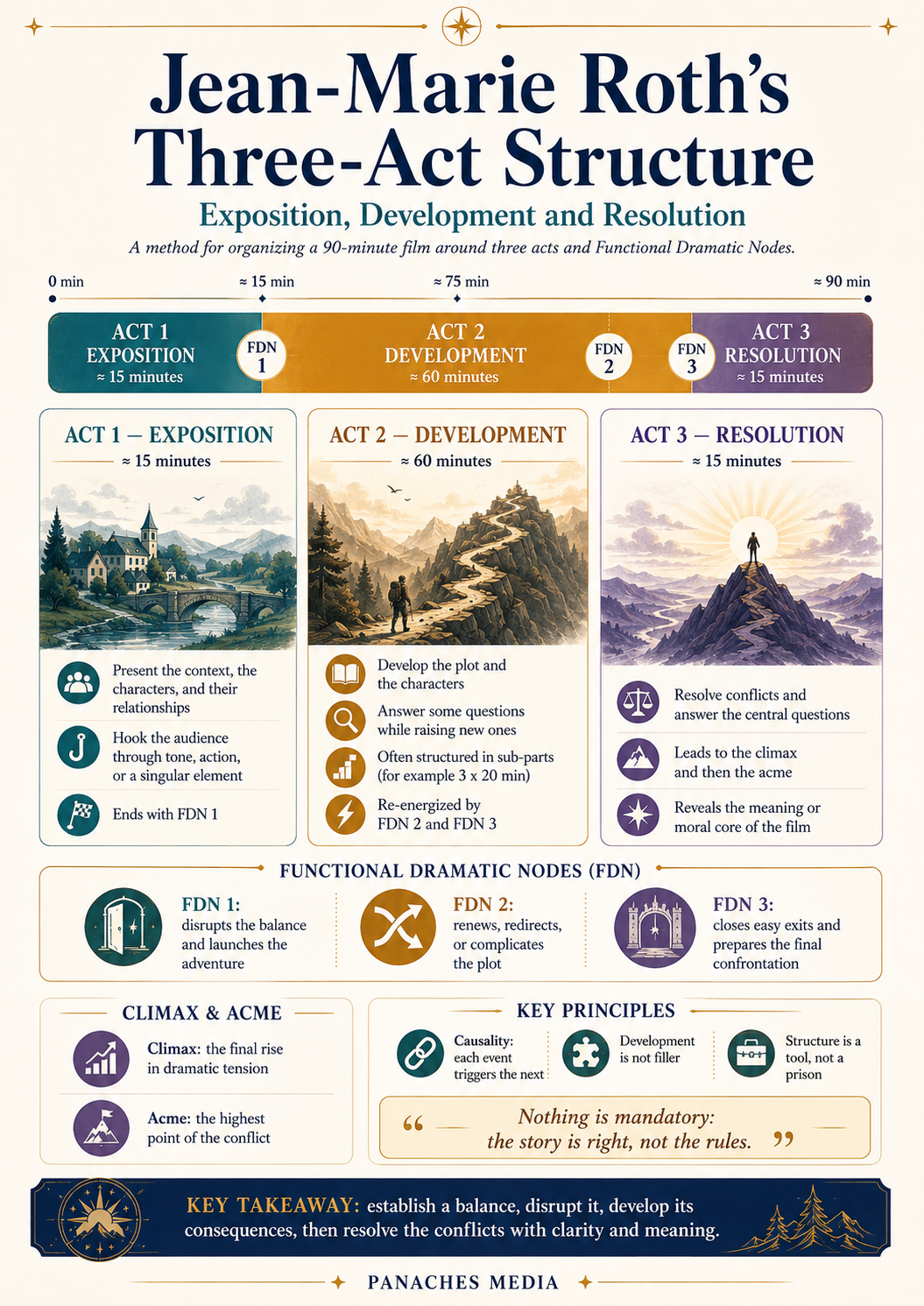
Illustration for Jean-Marie Roth’s Three-Act Structure: Exposition, Development, and Resolution
Writing Guide

Jean-Marie Roth’s Three-Act Structure: Exposition, Development, and Resolution

Jean-Marie Roth’s method organizes a 90-minute screenplay around three acts—exposition, development, and resolution—connected by Functional Dramatic Nodes. Discover their role, the construction of the climax and acme, and the principles that help pace a plot without turning structure into a rigid rule.
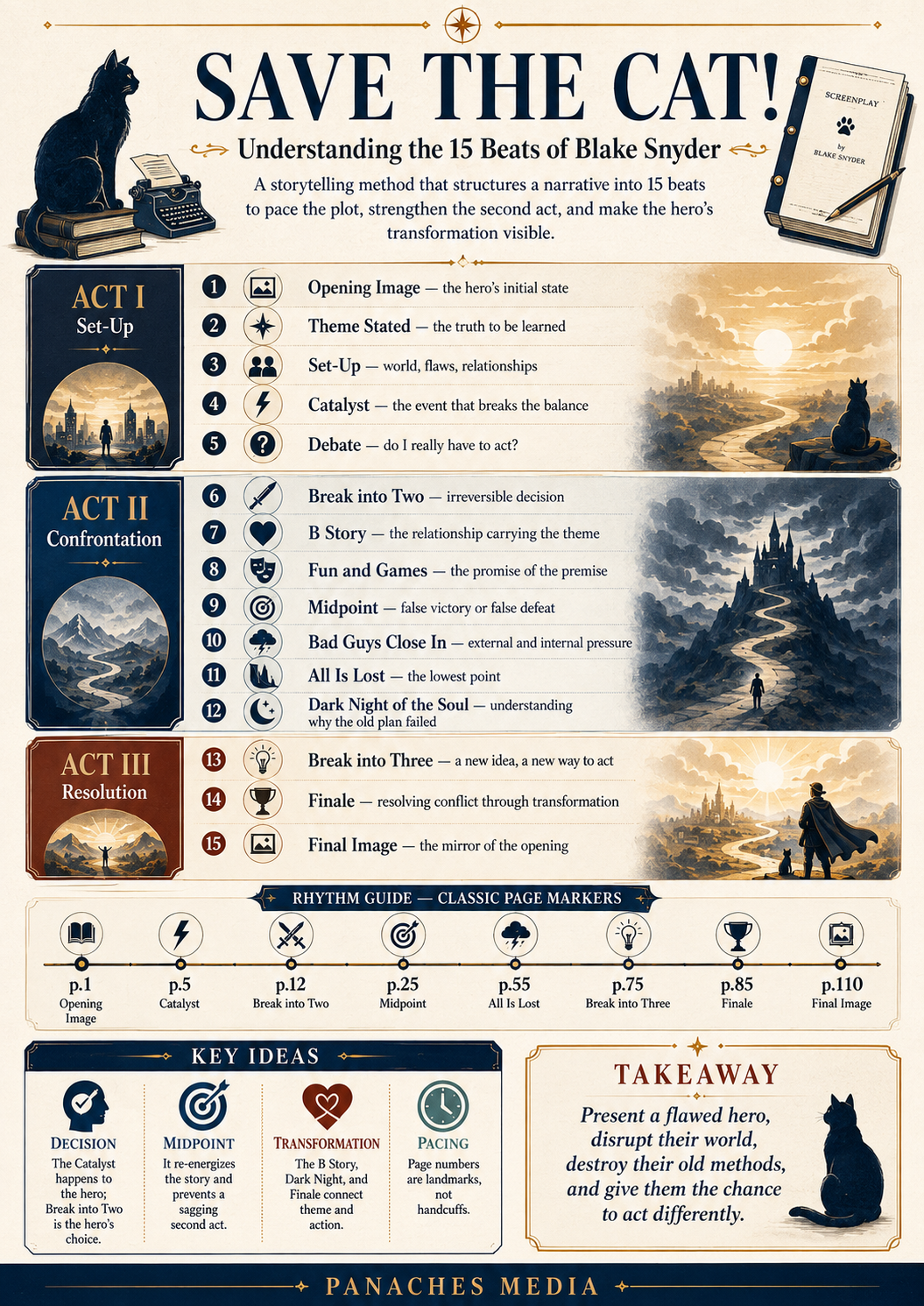
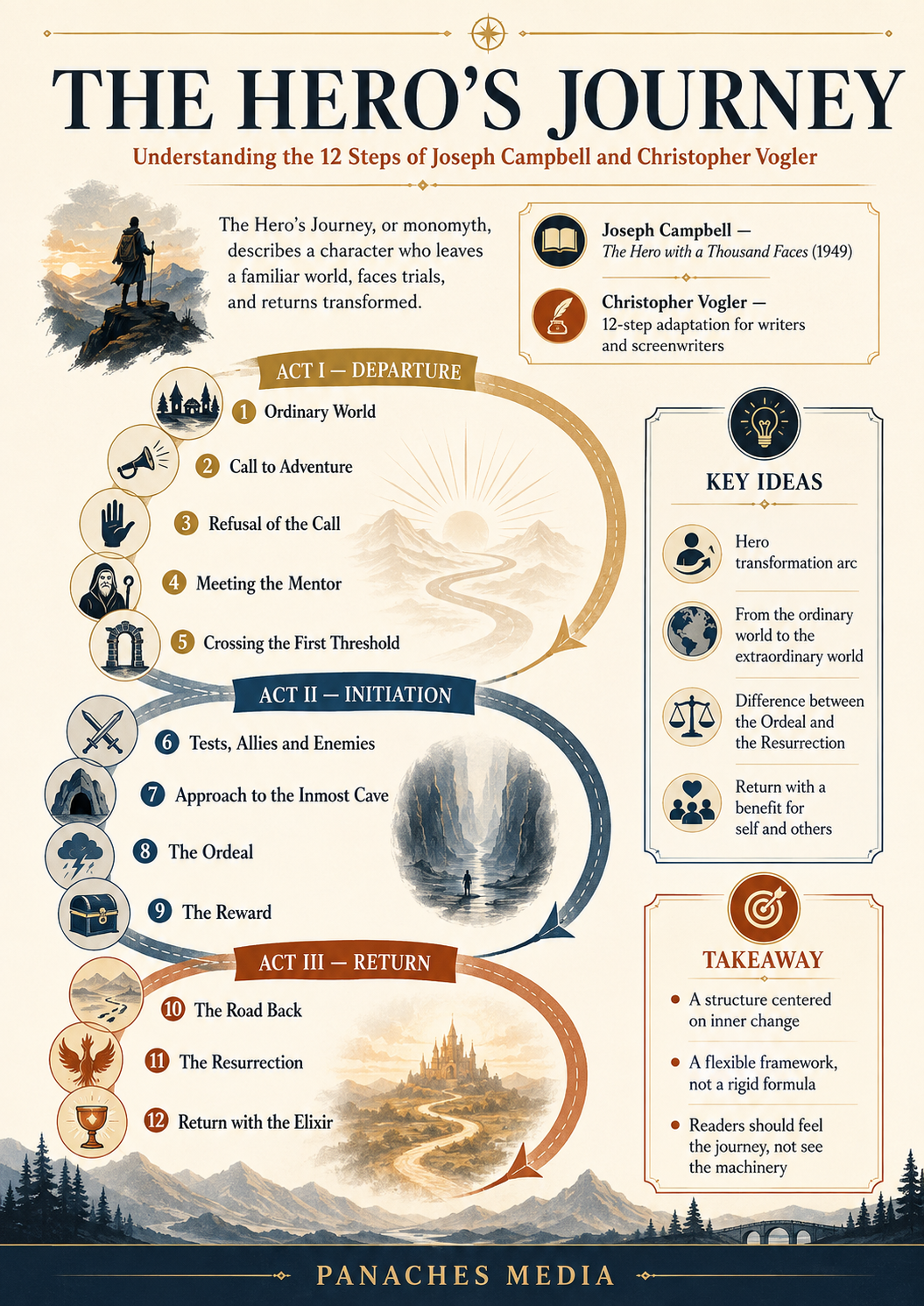
Illustration for Save the Cat! by Blake Snyder: Understanding the 15 Beats of a Screenplay
Writing Guide

Save the Cat! by Blake Snyder: Understanding the 15 Beats of a Screenplay

The Save the Cat! method organizes a narrative around 15 beats designed to structure dramatic progression, sustain pacing, and make the hero’s transformation visible. Discover the role of each beat, from the Catalyst to the Final Image, along with the method’s strengths, limitations, and possible adaptations.

Illustration for The Hero’s Journey: Understanding the 12 Steps of Joseph Campbell and Christopher Vogler
Writing Guide

The Hero’s Journey: Understanding the 12 Steps of Joseph Campbell and Christopher Vogler

From the Ordinary World to the Return with the Elixir, the Hero’s Journey describes the transformation of a character confronted with the unknown. Discover the origins of the monomyth, Christopher Vogler’s 12 steps, their narrative functions, and the precautions needed to use them without creating a predictable story.

Illustration for From prompt to novel: why writers need project memory
Writing Article

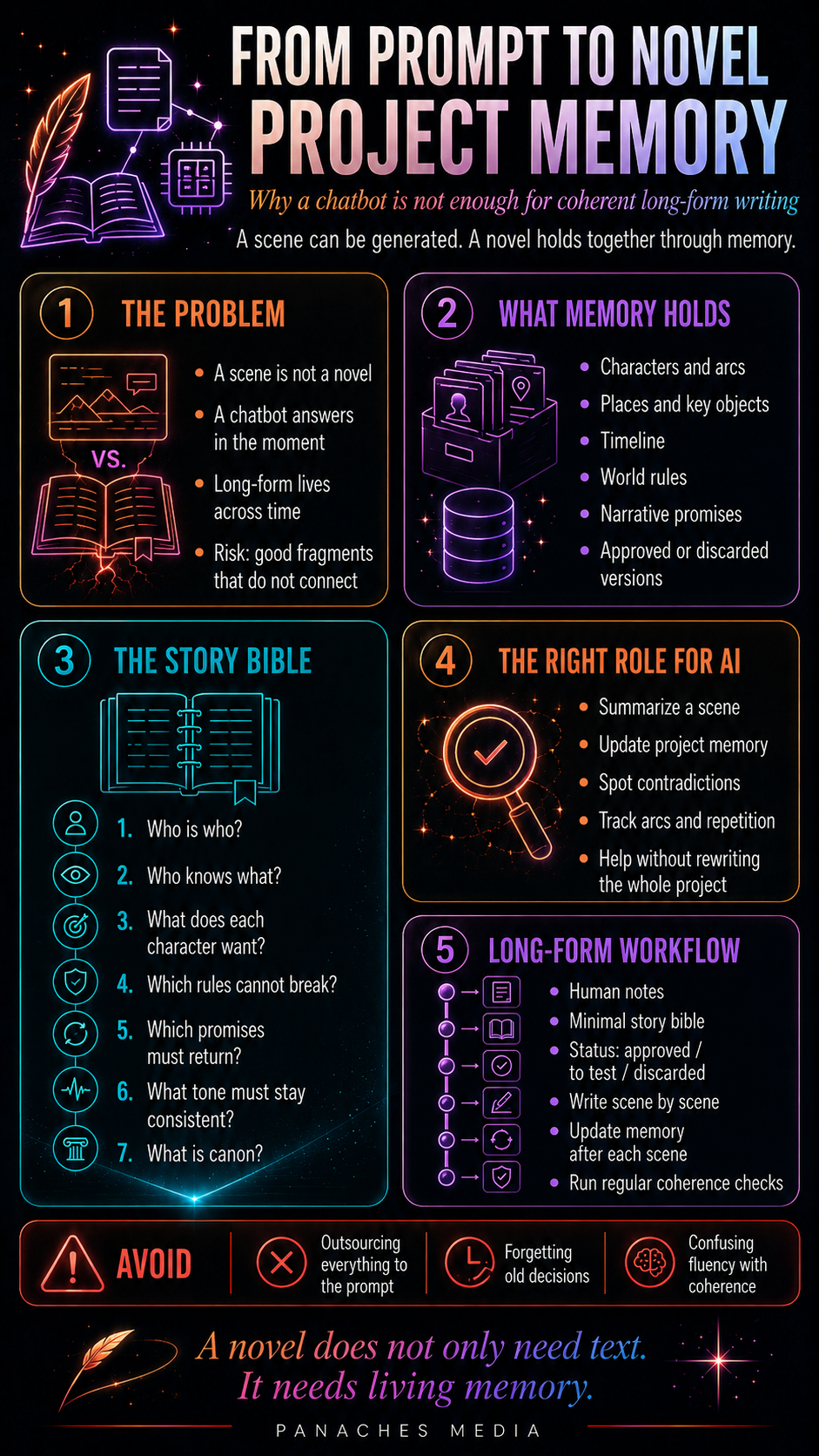
From prompt to novel: why writers need project memory

A chatbot can help write a scene. But a novel, a series, or a long-form fictional universe requires much more: characters, places, timeline, narrative promises, versions, coherence, and a living memory of the project.

Illustration for Can AI-written text really be detected?
Writing Analysis

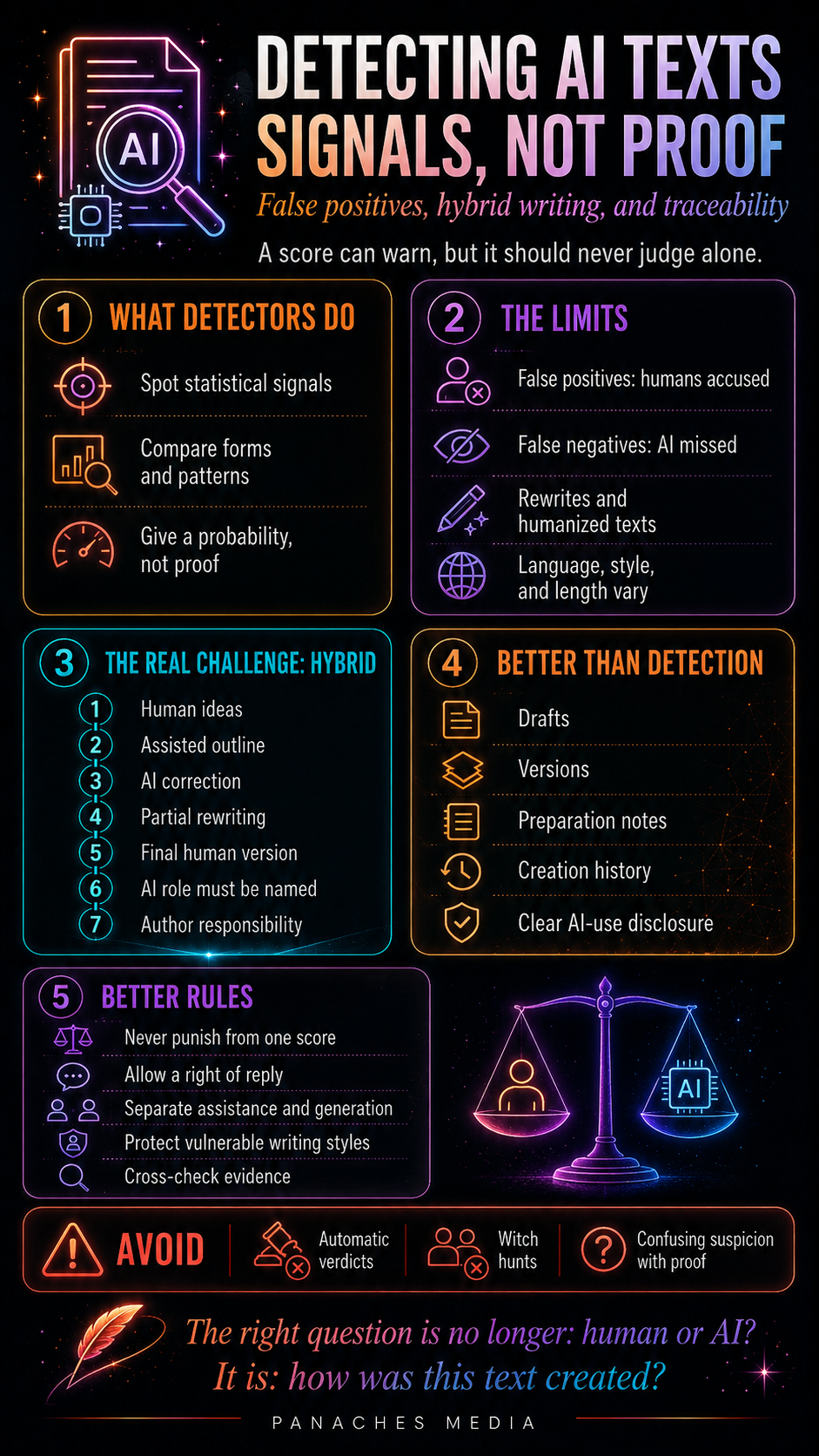
Can AI-written text really be detected?

AI text detectors promise to distinguish human writing from machine-generated text. But between false positives, hybrid writing, rewrites, and unfair suspicion, the real question is no longer only detection: it is documenting the writing process.

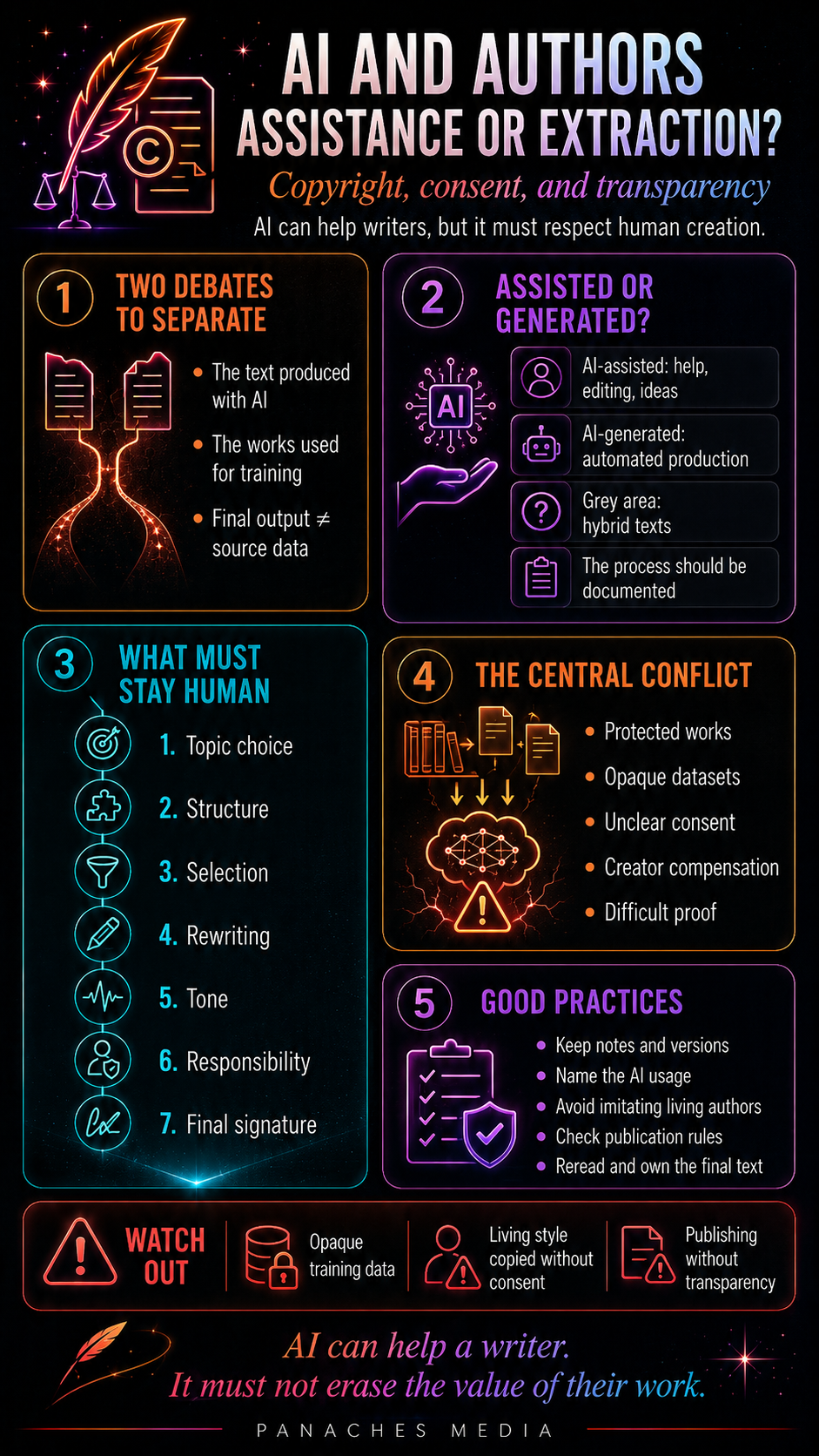
Illustration for AI and authors: creative assistance or cultural extraction?
Writing Analysis

AI and authors: creative assistance or cultural extraction?

AI can help authors write, structure, and revise. But it also raises an explosive question: which works were used to train the models, who should be compensated, and how can the human part of a text be proven?

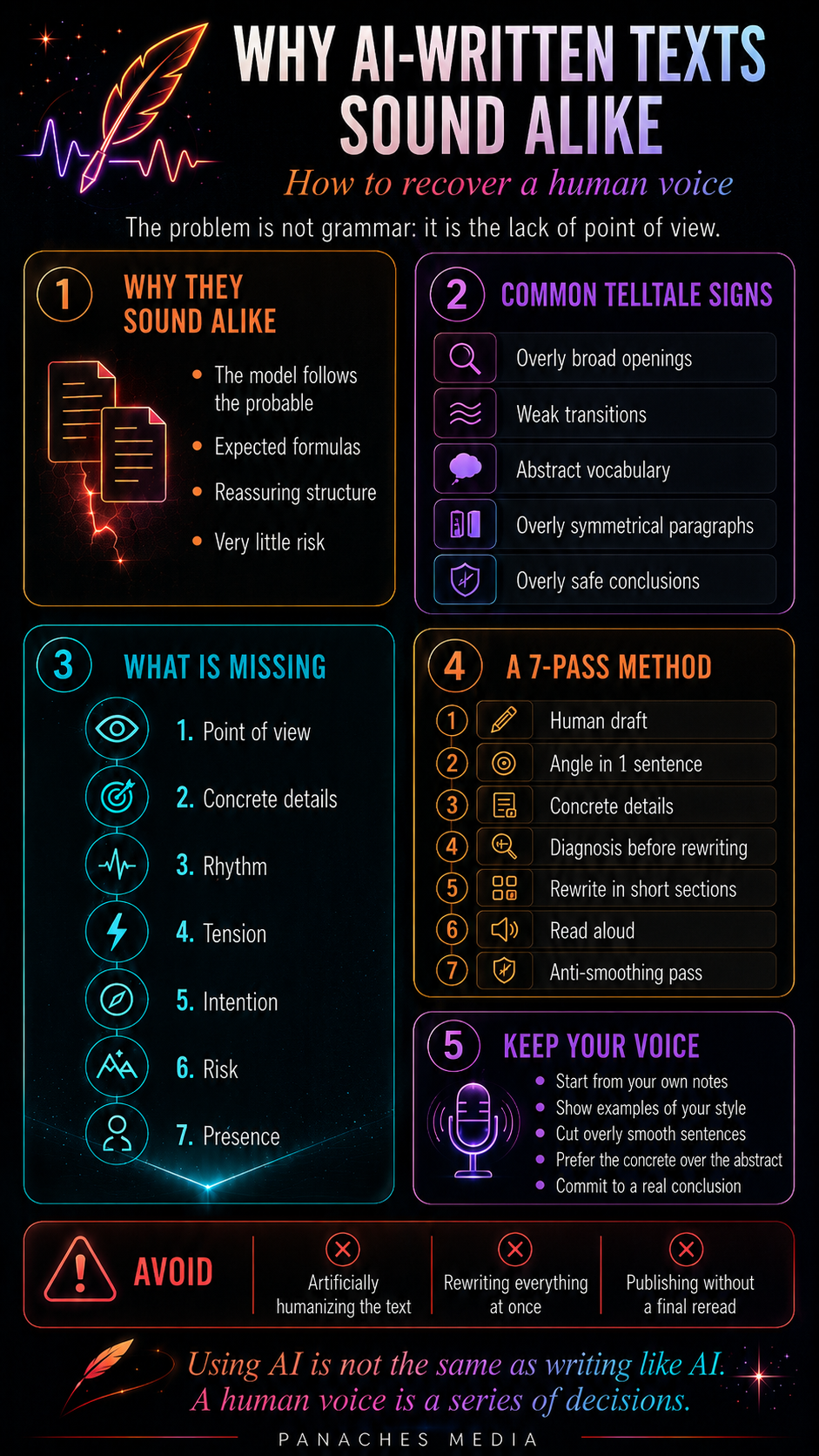
Illustration for Why AI-written texts sound alike and how to recover a human voice
Writing Article

Why AI-written texts sound alike and how to recover a human voice

AI-generated texts are often clean, fluent, and well structured, but they can quickly become interchangeable. Here is why they sound so similar, which telltale signs make them recognizable, and how to use AI without losing your voice.

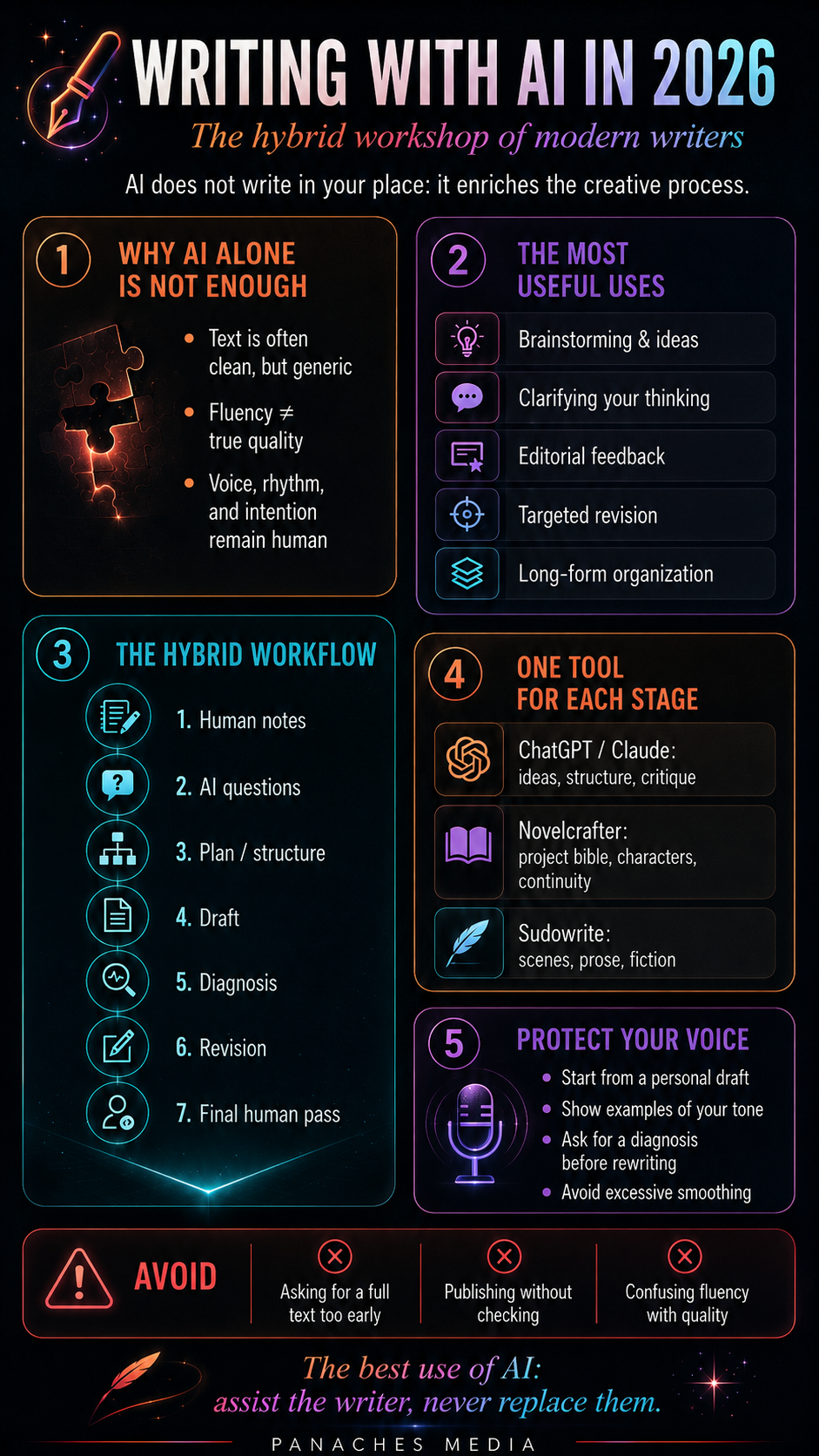
Illustration for Writing with AI in 2026: the hybrid workshop of modern writers
Writing Guide

Writing with AI in 2026: the hybrid workshop of modern writers

Writing with AI is not about asking a machine to replace the author. In 2026, the best uses look more like a hybrid workshop: brainstorming, research, structure, critique, project memory, editing, and human revision.