Origins
Jazz emerged in the late 19th and early 20th centuries in the southern United States, primarily within African American communities. Its development resulted from the meeting of several musical traditions in a context shaped by the history of slavery, racial segregation, and profound social transformations in American society.
New Orleans occupies a fundamental place in this history. A port city connected to the Gulf of Mexico and the Caribbean, it brought together populations with African, European, and Caribbean cultural backgrounds. Musical traditions intersected in working-class neighborhoods, churches, dance halls, parades, and entertainment establishments.
Religious songs, spirituals, military marches, blues, and ragtime all contributed to the formation of a new musical language. Brass bands, particularly prominent during parades and public ceremonies, provided an instrumental foundation that would help shape the earliest jazz ensembles.
Congo Square, where African and African American communities had gathered to practice music and dance, represents an important part of this cultural heritage. However, it should not be regarded as the sole birthplace of jazz, whose formation resulted from a much broader collective evolution.
At the turn of the 20th century, musicians began transforming popular melodies by experimenting with rhythms, accents, and variations. Improvisation became increasingly important, allowing each performer to bring their own personality to a composition.
This freedom became one of jazz's defining characteristics. Unlike music performed entirely according to a fixed score, the same piece could give rise to very different interpretations depending on the musicians, their interactions, and the circumstances of the performance.
Early ensembles generally combined cornet, clarinet, trombone, and a rhythm section. Their instruments often played different melodic lines simultaneously, following a principle of collective improvisation that would become emblematic of New Orleans jazz.
Buddy Bolden, a cornet player active in the late 19th and early 20th centuries, appears in historical accounts as one of the first major figures of this emerging musical style. No known recordings of his music have survived, but his influence on subsequent generations is widely acknowledged.
Jazz thus emerged from a collective musical practice, shaped by the experiences of African American musicians who gradually transformed existing traditions into a new form of expression.
Emergence and Early Musical Scenes
1910–1920 — New Orleans and the First Recordings
During the early decades of the 20th century, jazz developed in New Orleans dance halls, cabarets, parades, and clubs.
King Oliver, Jelly Roll Morton, and Sidney Bechet contributed to the emergence of this musical language. Their different approaches already demonstrated the richness of a genre that placed considerable importance on the individuality of performers.
A pianist and composer, Jelly Roll Morton helped develop more structured compositions and arrangements while preserving an essential role for improvisation.
In 1917, the Original Dixieland Jass Band, a white ensemble composed of musicians from New Orleans, made what is generally recognized as the first commercial jazz recording.
This event played an important role in spreading the genre, but it did not mark its actual birth. African American musicians had already developed its principal characteristics over several years, without enjoying equal access to the earliest recording opportunities.
The Great Migration of African Americans subsequently encouraged the expansion of jazz into northern cities. Chicago became one of its principal centers, attracting numerous musicians from Louisiana.
The 1920s — Louis Armstrong and the Rise of the Soloist
In Chicago, King Oliver led his Creole Jazz Band and welcomed a young cornet player destined for an extraordinary career in 1922: Louis Armstrong.
Armstrong profoundly transformed jazz performance. His sense of rhythm, virtuosity, and melodic invention helped give the improvised solo a new level of importance.
His recordings with the Hot Five and Hot Seven, made primarily between 1925 and 1928, marked a decisive stage in the genre's evolution. Individual improvisation gradually became a central element of jazz expression, without eliminating collective performance.
Armstrong also played a major role in the development of jazz singing. His phrasing, rhythmic approach, and use of scat singing, a vocal technique based on improvised syllables, would have a lasting influence on numerous singers.
Lil Hardin Armstrong, a pianist, composer, and arranger, actively participated in this period and contributed to the development of several important ensembles and recordings.
Meanwhile, New York became another essential center of musical creation. Harlem welcomed numerous musicians, clubs, and orchestras that contributed to the growth of African American culture.
Duke Ellington began developing his distinctive musical universe there. Leading his orchestra, he created compositions and arrangements that paid particular attention to timbre, individual instrumental personalities, and the possibilities of large ensembles.
The expansion of records, radio, and live entertainment helped transform jazz into a national and eventually international cultural phenomenon.
The Golden Age
The 1930s — The Reign of Swing
During the 1930s, jazz became one of the most popular forms of music in the United States.
Large orchestras, known as big bands, dominated dance halls and radio programs. Swing was characterized particularly by a flexible, driving pulse, arrangements for instrumental sections, and alternation between collective passages and improvised solos.
Duke Ellington developed a particularly rich orchestral repertoire, combining harmonic sophistication, a strong sense of blues, and a constant search for new tonal colors.
Count Basie established a different approach, built around a relaxed rhythm section, effective arrangements, and considerable freedom for soloists. His orchestra helped popularize the energy of Kansas City jazz.
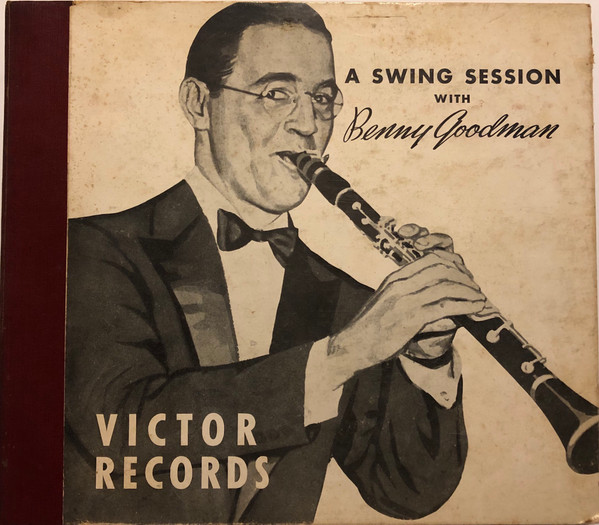
Benny Goodman became one of the period's most popular personalities. His ensembles and recordings, several of which were collected on releases such as A Swing Session With Benny Goodman, demonstrate the importance of the clarinet and large dance orchestras.
Swing also developed significantly through saxophone players. Coleman Hawkins and Lester Young established two very different approaches to improvisation, leaving a lasting influence on tenor saxophone performance.
Female singers played an essential role during this period. Ella Fitzgerald first gained recognition with Chick Webb's orchestra before becoming one of the greatest voices in jazz history. Her sense of rhythm and mastery of vocal improvisation helped establish her international reputation.
Billie Holiday developed a more intimate approach, characterized by highly personal phrasing and a remarkable ability to transform the emotional meaning of a melody.
Pianists and female composers also contributed to this creative environment. Mary Lou Williams established herself as a major figure in arranging and composition, while Fats Waller helped popularize a brilliant piano style strongly influenced by stride.
In Europe, jazz found new forms of expression. In France, Django Reinhardt and violinist Stéphane Grappelli developed, notably within the Quintette du Hot Club de France, an aesthetic that would become known as gypsy jazz.
This period represented extraordinary commercial growth, but African American artists continued to face segregation and professional inequality. Jazz's popularity did not eliminate the discrimination deeply embedded in American society.
The 1940s — The Bebop Revolution
In New York, a new generation of musicians gradually began challenging the conventions of swing.
In Harlem clubs and informal jam sessions, particularly around Minton's Playhouse, instrumentalists experimented with fast tempos, increasingly complex harmonies, and highly elaborate melodic phrases.
Charlie Parker, nicknamed "Bird," became one of the central figures of this transformation. His alto saxophone playing profoundly renewed the concept of improvisation.
Alongside Dizzy Gillespie, he developed bebop, a movement in which instrumental virtuosity, harmonic complexity, and individual invention played essential roles.
Pianist Thelonious Monk contributed to this revolution through an immediately recognizable musical language, characterized by dissonances, silences, and original melodic structures. His early recorded compositions, collected notably on Genius of Modern Music, Volume 1, became major references in modern jazz.
Bud Powell helped transform the language of jazz piano, while Kenny Clarke and Max Roach redefined the role of drums in small ensembles.
Bebop marked a cultural turning point. Jazz was no longer limited to music intended for dancing: it also established itself as an art of listening, virtuosity, and experimentation.
The 1950s — Diversification and New Aesthetics
During the 1950s, jazz experienced another period of intense creativity.
Cool jazz offered an approach that was often more restrained and attentive to instrumental colors. Miles Davis contributed to this development with the sessions that would become Birth of the Cool, while Gerry Mulligan and Chet Baker became important representatives of certain West Coast scenes.
Meanwhile, hard bop extended the legacy of bebop by placing renewed emphasis on influences from blues, gospel, and rhythm and blues.
Art Blakey and Horace Silver played decisive roles in this evolution, developing energetic music based on strong arrangements and intense rhythmic interaction.
Saxophonist Sonny Rollins established himself through his inventive improvisations, while Charles Mingus created a distinctive body of work combining blues traditions, orchestral composition, and considerable expressive freedom.
His album Mingus Ah Um, released in 1959, illustrates the richness of this approach, balancing structured compositions with the spontaneity of the musicians.
Jazz piano also underwent significant transformations. Bill Evans developed an approach based on harmonic richness and collective interaction within the trio. The album Waltz for Debby, drawn from his 1961 recordings at the Village Vanguard, became one of the major references of modern jazz piano.
Oscar Peterson embodied another tradition, characterized by extraordinary virtuosity and remarkable mastery of swing.
In 1959, Miles Davis recorded and released Kind of Blue, which became one of the most influential albums in jazz history. By favoring improvisation based partly on modes rather than complex chord progressions, the work helped popularize modal jazz.
That same year, Dave Brubeck released Time Out, whose unusual time signatures contributed to expanding the possibilities of modern jazz.
The 1960s — Freedom, Spirituality and the Avant-Garde
During the 1960s, several musicians sought to move beyond the traditional structures of improvisation.
John Coltrane developed an increasingly personal musical language, exploring the harmonic and expressive possibilities of the saxophone. His album A Love Supreme, recorded in 1964 and released in 1965, combined musical exploration with a spiritual dimension in a work that became essential to jazz history.
Ornette Coleman played a decisive role in the emergence of free jazz. With The Shape of Jazz to Come, released in 1959, he challenged certain harmonic and structural conventions of the genre.
Cecil Taylor explored a radical approach to piano improvisation, while Sun Ra developed an original musical universe combining large ensembles, experimentation, and cosmic imagery.
The work of Pharoah Sanders and Alice Coltrane also expanded jazz toward new sonic and spiritual experiences.
These transformations unfolded during a decade marked by the Civil Rights Movement, political demands, and cultural changes in American society.
For many artists, jazz became a space for individual and collective affirmation, where musical freedom maintained close connections with the social aspirations of their time.
Movements and Subgenres
Traditional Jazz and New Orleans Jazz
Traditional jazz encompasses the earliest forms developed in New Orleans and their subsequent evolution.
It is characterized particularly by collective improvisation, wind instruments, and a rhythm section derived from dance band practices.
Louis Armstrong, Sidney Bechet, and King Oliver are among its major historical figures.
Swing and Big Band Jazz
Developed primarily during the 1930s, swing is built around a driving rhythmic pulse and arrangements designed for large instrumental ensembles.
Duke Ellington, Count Basie, and Benny Goodman contributed to its international popularity.
Big bands allowed for particularly sophisticated orchestral writing while preserving opportunities for solo improvisation.
Bebop
Emerging during the 1940s, bebop renewed jazz through fast tempos, complex melodies, and considerable freedom of improvisation.
Charlie Parker, Dizzy Gillespie, and Thelonious Monk were among its principal creators.
Its influence remains fundamental to the teaching and performance of modern jazz.
Cool Jazz and Hard Bop
Cool jazz developed an approach that often placed particular emphasis on arrangements, nuance, and balance between instruments.
Hard bop, which emerged during the 1950s, retained the harmonic invention of bebop while reaffirming jazz's connections with blues, gospel, and African American musical traditions.
These two movements developed in parallel rather than representing obligatory stages of a single evolution.
Modal Jazz
Modal jazz emphasizes the use of modes and sometimes more open harmonic structures, providing greater space for melodic exploration.
Miles Davis and John Coltrane contributed substantially to its popularity, particularly during the late 1950s and early 1960s.
The theoretical research of George Russell also played an important role in its development.
Free Jazz and the Avant-Garde
Free jazz challenged several conventions of traditional jazz, particularly fixed harmonic progressions, certain rhythmic structures, and familiar compositional forms.
Ornette Coleman, Cecil Taylor, and other artists developed approaches emphasizing experimentation and collective interaction.
The movement took numerous forms, ranging from small-group performance to large-scale orchestral improvisation.
Latin Jazz and Afro-Cuban Jazz
Connections between jazz and Caribbean music date back to the genre's origins, but took on a new dimension during the 1940s.
Mario Bauzá and Machito contributed to the development of Afro-Cuban jazz, while Dizzy Gillespie collaborated notably with percussionist Chano Pozo.
These encounters brought together jazz improvisation, Afro-Cuban rhythms, and large orchestral ensembles.
From the late 1950s onward, the development of bossa nova in Brazil opened further exchanges. Antônio Carlos Jobim and João Gilberto contributed to the emergence of this movement, while Stan Getz helped introduce it to international jazz audiences.
Gypsy Jazz
Developed primarily in France during the 1930s, gypsy jazz is based on acoustic instrumentation in which the guitar plays a central role.
Django Reinhardt and Stéphane Grappelli became its principal historical references.
The style combines jazz improvisation with instrumental techniques and European musical traditions.
Jazz Fusion and Jazz-Funk
During the late 1960s, certain musicians began incorporating electric instruments and rhythms from rock and funk.
Miles Davis played a major role in this transformation with In a Silent Way in 1969, followed by Bitches Brew in 1970.
Jazz fusion subsequently developed around artists such as Chick Corea, Joe Zawinul, and Wayne Shorter, who explored new instrumental and rhythmic combinations.
Herbie Hancock helped bring jazz closer to funk and synthesizers. His album Head Hunters, released in 1973, became one of the emblematic recordings of this evolution.
Jaco Pastorius also contributed to transforming the role of electric bass in jazz fusion, expanding its melodic and expressive possibilities.
Contemporary Jazz, Acid Jazz and Nu Jazz
Since the 1980s, jazz has continued to evolve through very different approaches.
Some artists, notably Wynton Marsalis, participated in a movement reaffirming acoustic traditions and the legacy of swing and bebop.
Others explored new relationships with popular music. Acid jazz, which emerged in the United Kingdom during the late 1980s, combined jazz, funk, soul, and club culture.
Nu jazz and various forms of electronic jazz extended these exchanges through digital production techniques.
Contemporary jazz is therefore not a single style, but a collection of musical practices in which acoustic heritage, improvisation, experimentation, and international influences coexist.
Legacy and Influence Today
Jazz occupies a major place in the history of modern music. Its influence can be found in rhythm and blues, soul, funk, rock, hip-hop, and numerous forms of electronic music.
Its contribution extends beyond instruments and harmonic structures alone. Jazz profoundly transformed concepts of rhythm, performance, and improvisation, making interaction between musicians an essential element of musical creation.
The influence of swing and bebop can be heard throughout 20th-century popular music, while jazz fusion helped bring acoustic traditions closer to electric instruments.
Hip-hop also developed close connections with this heritage. Producers used samples of jazz recordings, while certain groups directly incorporated live musicians and improvisation into their compositions. The Roots notably illustrate this meeting of instrumental music, jazz, and rap.
Jazz also experienced international expansion. In Europe, the French, British, Scandinavian, and German scenes developed their own aesthetics.
Artists such as Esbjörn Svensson helped renew European jazz piano by incorporating influences from rock and electronic music.
In the United States, several generations continued this spirit of experimentation. Robert Glasper built bridges between jazz, R&B, and hip-hop. Esperanza Spalding explored the relationships between improvisation, composition, and singing, while Kamasi Washington developed large ensembles combining spiritual jazz, funk, and orchestral traditions.
In London, Nubya Garcia and Shabaka Hutchings contributed to a particularly dynamic scene enriched by Caribbean and African traditions and British electronic music.
In Chicago, Makaya McCraven developed an approach combining recorded improvisations, editing, and production techniques inspired by hip-hop.
These approaches demonstrate that jazz is no longer confined to an exclusively American tradition. Its history has continued through encounters with numerous cultures, while maintaining its African American roots.
From singers such as Billie Holiday, Sarah Vaughan, and Ella Fitzgerald to contemporary performers, vocal expression also remains one of its greatest strengths.
The genre maintains an important place in festivals, clubs, conservatories, and musical institutions. Historical recordings continue to be reissued and studied, while new albums constantly renew its musical language.
In 2011, UNESCO proclaimed April 30 International Jazz Day, recognizing the genre's role in cultural exchange, freedom of expression, and dialogue between peoples.
More than a century after its emergence, jazz remains a constantly evolving musical tradition. Its history is not a succession of styles simply replacing one another, but a story of traditions meeting, transforming, and continuing to coexist.
Born within the African American communities of New Orleans, jazz has become an international musical language in which collective creation and the individuality of each performer occupy a fundamental place.
From the earliest sounds of street brass bands to contemporary experimentation, jazz continues to pursue the same ambition: to make music a space for freedom, dialogue, and invention.