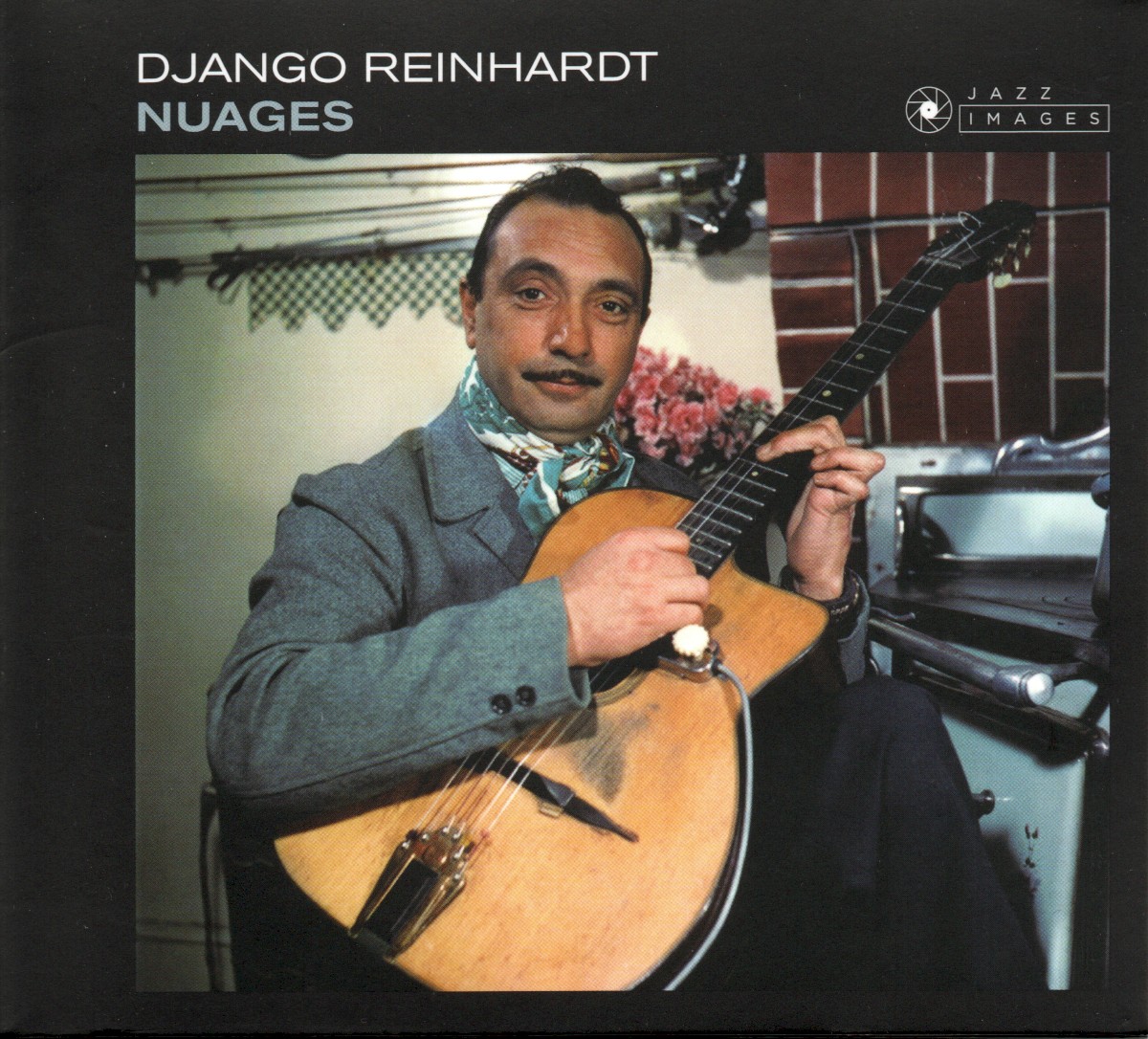
Django Reinhardt was a jazz guitarist and composer born in Belgium and a founding figure of gypsy jazz. Raised in a Manouche musical family, he developed a virtuosic playing style despite a serious injury to his left hand. Together with violinist Stéphane Grappelli, he founded the Quintette du Hot Club de France and helped establish the guitar as a major solo instrument in jazz. His compositions, including Minor Swing, Nuages and Djangology, combined swing, improvisation and European musical traditions. His influence remains fundamental to the history of jazz and guitar playing.
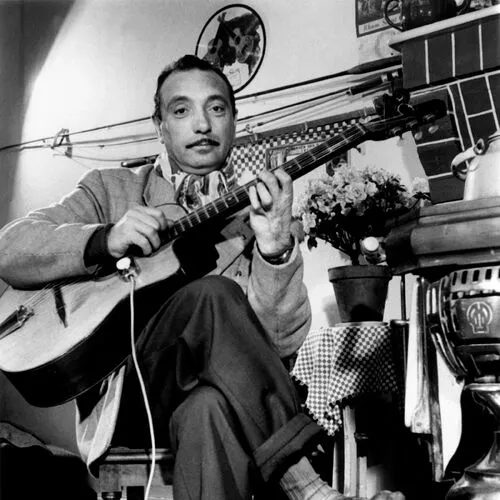
Django Reinhardt
Six strings, two virtuoso fingers and a swing sound that transformed jazz history.
Details
- Type
- Music
- Countries
- 🇧🇪 Belgium
- Genres
- Jazz, Gypsy jazz
- Albums
- 2
Synopsis
Django Reinhardt
Glossary terms: Accompaniment, Acoustics, Arpeggio, Bebop, Chromaticism, Composer, Composition, Drum kit / drums, Electric guitar, Fundamental, Harmonic (overtone), Jazz, Low register / bass, Phrasing, Piano, Pulse, Rhythm, Row / record, Session, Short story, Story, Swing, Technique, Tracking (type), Variation, Virtuosity
Trailer
Watch the trailer
Overview
Presentation
Django Reinhardt was a jazz guitarist and composer born on January 23, 1910, in Liberchies, Belgium, into a family of Manouche musicians. He spent much of his childhood in France, learning violin, banjo and guitar before performing in Parisian dance halls. In 1928, a fire in his caravan caused severe burns and permanently reduced the mobility of two fingers on his left hand. He relearned the guitar by developing a personal technique based largely on the agility of his index and middle fingers. His discovery of American jazz, particularly the music of Louis Armstrong and Duke Ellington, helped transform his musical approach.
In 1934, Reinhardt founded the Quintette du Hot Club de France with violinist Stéphane Grappelli. This unusual ensemble combined violin, guitars and double bass without piano or drums. Alongside his brother Joseph Reinhardt and other musicians, he developed an acoustic swing style characterised by rapid improvisations, driving rhythms and continuous interaction between guitar and violin. Recordings such as Djangology (1935), Minor Swing (1937) and Daphne helped establish this distinctive musical approach. During the Second World War, while Grappelli remained in England, Reinhardt continued performing in France and composed Nuages (1940), one of his most celebrated pieces.
Following the war, Django Reinhardt toured the United States in 1946 as a guest soloist with Duke Ellington's orchestra. He subsequently explored new sounds on electric guitar and became increasingly interested in modern jazz developments, particularly bebop. His final years included recordings combining his established musical language with more contemporary ensembles. He died on May 16, 1953, in Samois-sur-Seine, France, aged 43.
Key Takeaways
Django Reinhardt helped transform the guitar from a primarily rhythmic instrument into a major solo voice in jazz. His playing combined virtuosity, chromatic passages, rapid arpeggios, melodic variations and harmonic improvisation. The technique he developed after his accident contributed to his distinctive phrasing, while the accompanying rhythm guitar provided the driving pulse associated with gypsy jazz, often known as la pompe.
His partnership with Stéphane Grappelli established a form of string-based jazz combining American swing with European musical traditions. His compositions became standards performed by numerous musicians. His influence extends beyond gypsy jazz to generations of jazz guitarists, swing performers and improvising musicians.
Conclusion
Django Reinhardt holds a fundamental place in the history of European jazz. His approach to guitar playing, his compositions and his work with the Quintette du Hot Club de France helped establish a musical language whose influence continues throughout gypsy jazz and modern guitar playing.
Did You Know?
- Identity: Django Reinhardt, born January 23, 1910, in Liberchies, Belgium, and died May 16, 1953, in Samois-sur-Seine, France.
- Cultural background: born into a Manouche family of travelling musicians.
- Instruments: guitar, banjo-guitar and violin during his youth.
- Signature ensemble: Quintette du Hot Club de France, founded in 1934 with Stéphane Grappelli.
- Major collaborations: Stéphane Grappelli, Joseph Reinhardt, Louis Vola, Hubert Rostaing and Duke Ellington.
- Signature compositions: Minor Swing, Nuages, Djangology, Daphne, Belleville, Swing 42 and Manoir de mes rêves.
- Notable recordings: Quintette du Hot Club de France sessions from the 1930s and 1940s, alongside his later electric guitar recordings.
- Distinctive technique: following the 1928 fire, he developed a soloing technique relying primarily on two fingers of his left hand.
- Gypsy jazz: a style combining swing, guitar improvisation and the rhythmic accompaniment known as la pompe.
- Legacy: a founding figure of gypsy jazz and a major influence on European jazz guitar.
Link graph
Open in the full graphLoading the graph…
Only the strongest links are shown.
View the list ({count})
Discography
Discography (2)