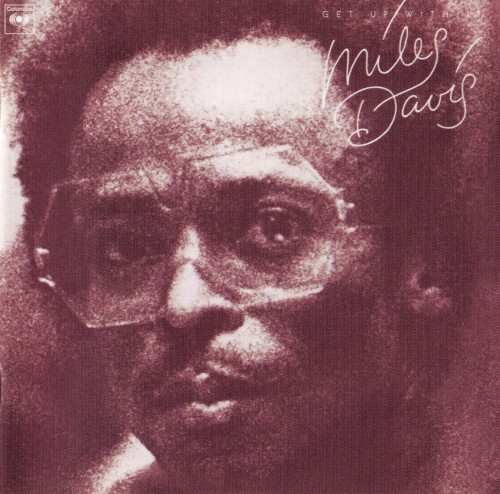
Miles Davis was an American trumpeter, composer and bandleader who became a major figure in jazz history. Emerging from the bebop movement alongside Charlie Parker, he subsequently contributed to the development of cool jazz, modal jazz and jazz fusion. Albums including Birth of the Cool, Kind of Blue, Sketches of Spain, In a Silent Way and Bitches Brew reflect his many musical transformations. Known for his economical phrasing, improvisational approach and influential ensembles, he played a central role in several major developments in twentieth-century jazz.
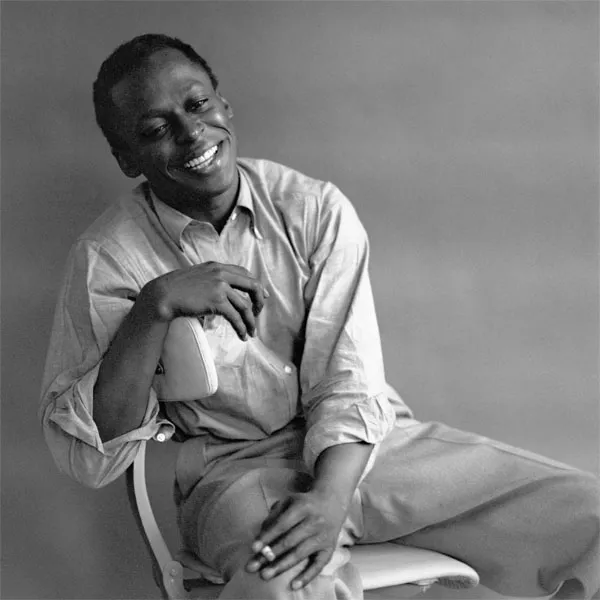
Details
- Type
- Music
- Countries
- 🇺🇸 United States
- Genres
- Jazz, Bebop, Jazz fusion
- Albums
- 15
Synopsis
Miles Davis
Glossary terms: Album, Bebop, Blues, Composer, Composition, Development, Discography, Emergence, Emergence, Ensemble, Experimentation, Fundamental, Funk, Harmonic (overtone), Identity, Jazz, Master (recording), Modal harmony, Movement, Phrasing, Rhythm, Rock, Row / record, Story, Synthesizer, Timbre, Transformation
Trailer
Watch the trailer
Overview
Presentation
Miles Davis, born Miles Dewey Davis III in Alton, Illinois, in 1926, was an American trumpeter, composer and bandleader. Raised in East St. Louis, he began learning the trumpet during his adolescence. In 1944, he moved to New York to study at the Juilliard School while visiting the clubs where bebop was developing. He performed alongside Charlie Parker, whose fast compositions and complex improvisations contributed to his musical education. In the late 1940s, Davis assembled a nonet with musicians and arrangers including Gil Evans and Gerry Mulligan. The recordings made by this ensemble, later collected as Birth of the Cool, contributed to the emergence of cool jazz.
During the 1950s, Davis established his instrumental identity and formed a quintet with John Coltrane, Red Garland, Paul Chambers and Philly Joe Jones. He recorded albums including 'Round About Midnight while developing an orchestral partnership with Gil Evans on Miles Ahead, Porgy and Bess and Sketches of Spain. In 1959, Kind of Blue marked an important stage in the history of modal jazz. With John Coltrane, Cannonball Adderley, Bill Evans, Paul Chambers and Jimmy Cobb, alongside Wynton Kelly on one track, Davis favored open harmonic structures that encouraged improvisation. So What, Freddie Freeloader, Blue in Green and All Blues became established jazz standards.
In the mid-1960s, Miles Davis formed his second great quintet with Wayne Shorter, Herbie Hancock, Ron Carter and Tony Williams. Albums such as E.S.P., Miles Smiles, Sorcerer and Nefertiti explored complex rhythms, original compositions and unusually flexible collective interaction. Toward the end of the decade, Davis increasingly incorporated electric instruments and rhythms inspired by rock and funk. In a Silent Way (1969) and Bitches Brew (1970) contributed to the emergence of jazz fusion, while On the Corner (1972) extended his rhythmic and sonic experimentation.
After a career hiatus during the second half of the 1970s, Davis returned to recording and performing in the early 1980s. He developed music influenced by funk, synthesizers and contemporary electronic production. With Tutu (1986), created largely in collaboration with Marcus Miller, and Amandla (1989), he continued exploring contemporary jazz. He remained musically active until his death in 1991, leaving a discography spanning several major movements in American music.
Key Takeaways
Miles Davis's musical identity was shaped by a trumpet style emphasizing space, subtle dynamics and melodic construction. His often restrained phrasing treated silence as an expressive element. He also used the Harmon mute, whose distinctive tone became one of his signature sounds. His playing continued to evolve, from bebop vocabulary to modal improvisation and electric textures.
His contribution extended beyond instrumental performance. Davis assembled ensembles that became spaces for collective experimentation, helping musicians such as John Coltrane, Herbie Hancock, Wayne Shorter and Tony Williams develop their artistic voices. By repeatedly transforming his repertoire, groups and recording methods, he contributed to the development of cool jazz, hard bop, modal jazz and the fusion of jazz with rock and funk.
Conclusion
Miles Davis holds a fundamental place in the evolution of twentieth-century jazz. His career reflects successive transformations of the genre, from bebop to electric experimentation. His recordings and collaborations remain important references in the history of improvisation, composition and music production.
Did You Know?
- Full name: Miles Dewey Davis III.
- Origins: Alton, Illinois, United States (1926–1991); raised in East St. Louis.
- Instruments: trumpet and flugelhorn.
- Early influences: Charlie Parker, Dizzy Gillespie and the bebop movement.
- Cool jazz: the Birth of the Cool nonet recordings, made between 1949 and 1950.
- First great quintet: Miles Davis, John Coltrane, Red Garland, Paul Chambers and Philly Joe Jones.
- Modal jazz: Kind of Blue (1959), featuring So What, Blue in Green and All Blues.
- Second great quintet: Wayne Shorter, Herbie Hancock, Ron Carter and Tony Williams, who joined Davis by 1964.
- Landmark albums: Birth of the Cool, 'Round About Midnight, Milestones, Kind of Blue, Sketches of Spain, E.S.P., In a Silent Way, Bitches Brew and Tutu.
- Jazz fusion: In a Silent Way (1969), Bitches Brew (1970) and On the Corner (1972).
- Major collaborators: Gil Evans, John Coltrane, Bill Evans, Herbie Hancock, Wayne Shorter, Chick Corea, John McLaughlin and Marcus Miller.
- Recognition: named an NEA Jazz Master in 1984 and posthumously inducted into the Rock & Roll Hall of Fame in 2006.
Link graph
Open in the full graphLoading the graph…
Only the strongest links are shown.
View the list ({count})
Discography
Discography (15)